Strength Training for Seniors: The Complete Guide
By Kristen Nielsen, Founder & Senior Fitness Specialist · Updated · 12 minute read
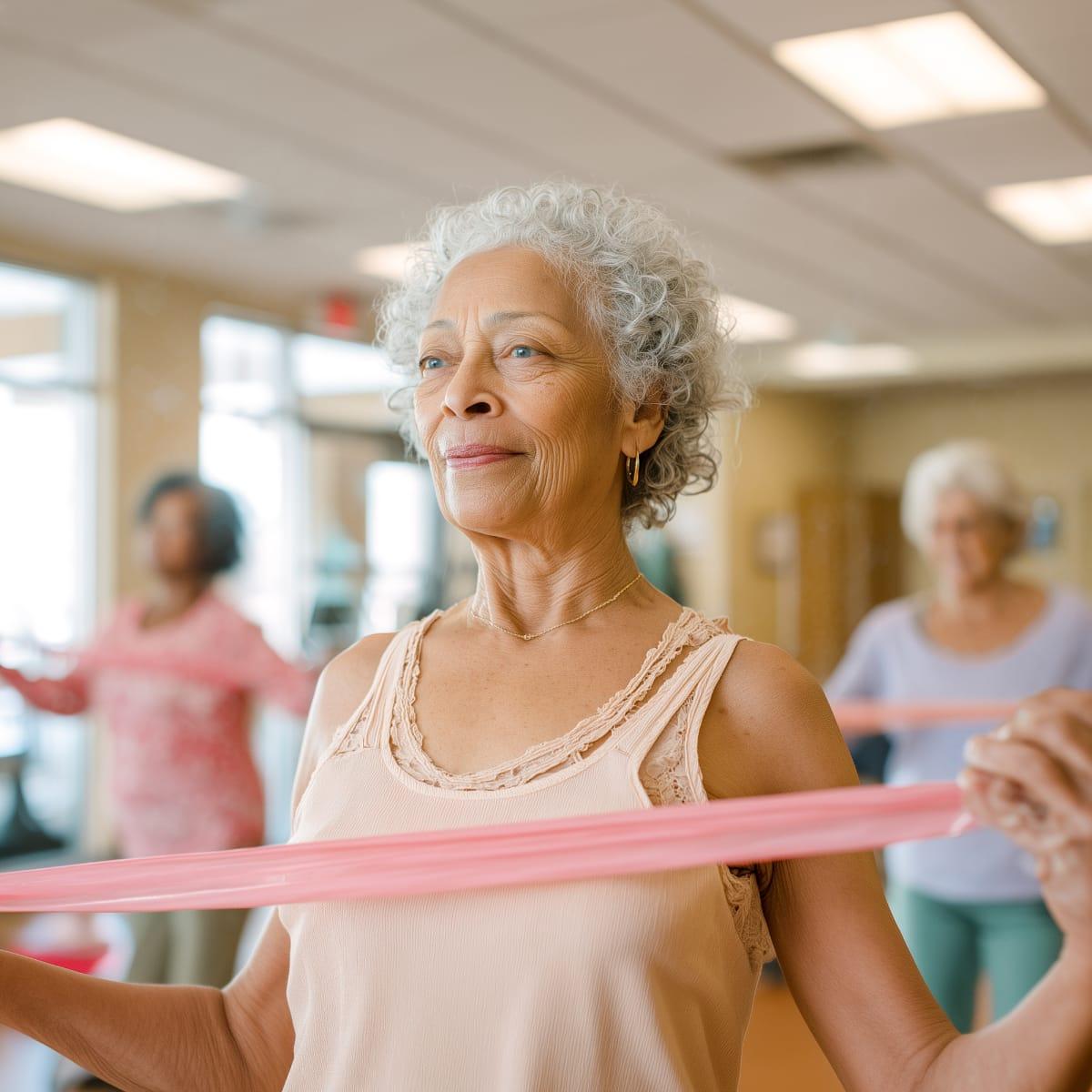
Strength training for seniors means working your major muscle groups against resistance, such as your body weight, resistance bands or light dumbbells, two to three days a week. After 60 it slows muscle loss and supports your bones, balance, mood and independence. Start light, use good form, and progress until the last few reps feel hard.
Key takeaways
- Starting around age 30, adults lose about 3–8% of their muscle mass each decade, and the loss speeds up after 60. Strength training is one of the best ways to slow, stop and even reverse it.
- Aim for 2–3 strength days a week that work your legs, hips, core, back and arms, starting with body weight, bands or light dumbbells.
- For each exercise, 8–10 repetitions should feel very hard by the end, with only one or two more left in you. Muscle fatigue is expected; sharp pain, dizziness or numbness means stop.
- You don't need a gym. Chairs, bands, soup cans and milk jugs all work, and blood flow restriction (BFR) training can build strength with very light weights.
One of the main misconceptions I encounter when discussing fitness is that strength training is optional, or just for people who want to improve their appearance. It isn't. Strength training is essential for lifelong health and function, especially as we age.
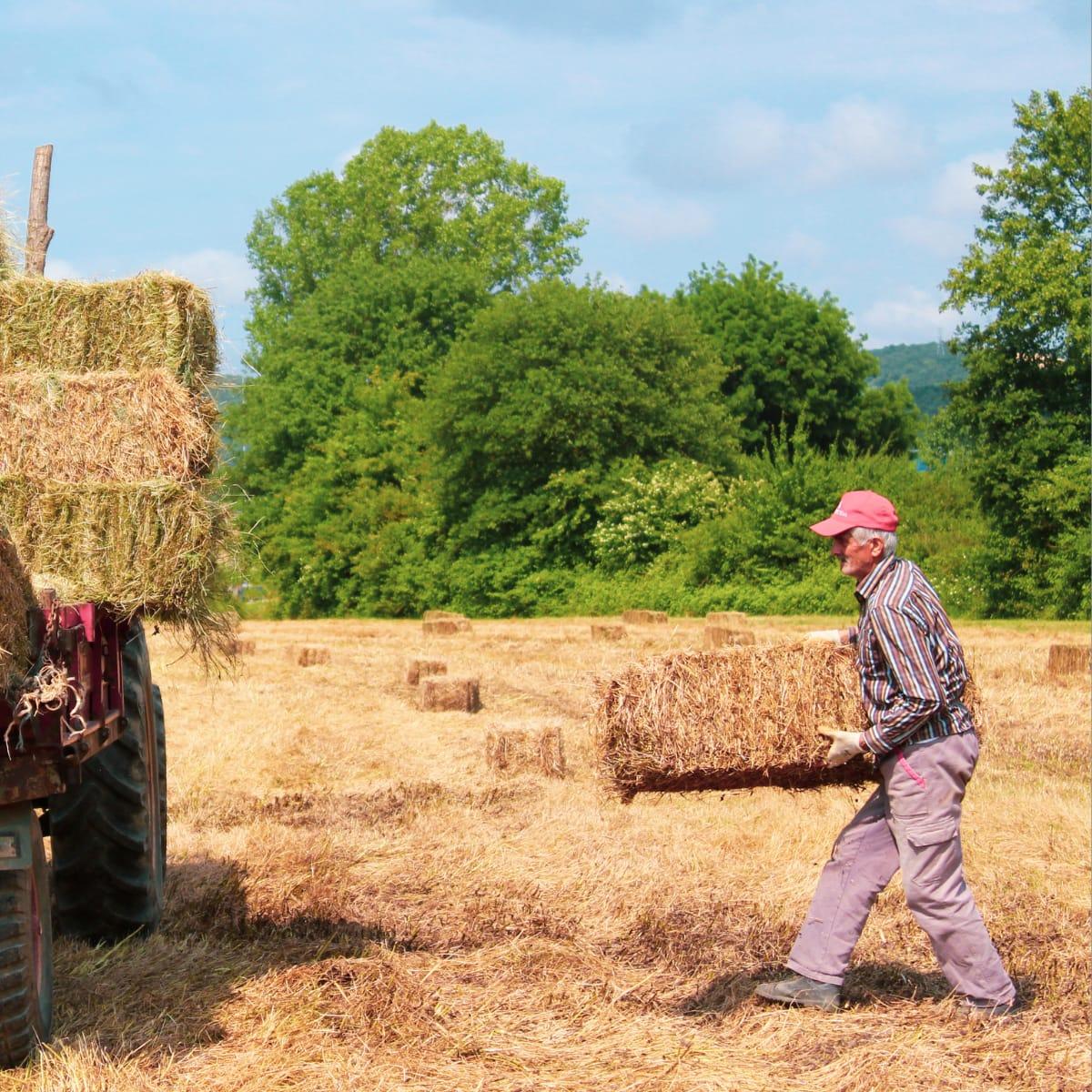
In past cultures, strength training was a natural part of life. People bent, lifted and carried heavy loads every day for farming, building and gathering food. It wasn't something they set aside time for. It was built into everyday life. Today most of us don't need our muscles for survival, and that has consequences.
This guide pulls together what I've written over the years about getting stronger after 60: why it matters, how to start safely, how hard to work, simple exercises you can do at home, and the mistakes I see most often.
What Strength Training Means After 60
Strength training (also called resistance training) simply means asking your muscles to work against a load. That load can be your own body weight, a resistance band, a dumbbell, a grocery bag or a gallon of milk.
As a personal trainer, I build my workouts around the basic movement patterns we use every day: push and pull, bend and lift, single leg, and rotation. When my clients train these patterns, everyday tasks like vacuuming, picking something up, climbing stairs and reaching into a cupboard stay easier. I explain each pattern, with everyday ways to practice it, in functional exercises for seniors.
The goal isn't to look like a bodybuilder. It's to keep doing the things you love, on your own terms.
Why Strength Matters More After 60
Most people don't realize it's happening, but starting around age 30, adults lose about 3–8% of their muscle mass each decade if they aren't actively maintaining it.1 That rate speeds up after 60, when we can lose up to 1–2% per year.2,3 The decline is so gradual that many people barely notice it until everyday life starts to feel harder.

Signs You May Be Losing Muscle
Age-related loss of muscle strength and mass has a name: sarcopenia.4 Here are the signs I watch for:
- Everyday tasks feel harder. Climbing stairs, standing up from a low chair or lifting groceries takes more effort than it used to.
- Your walking has slowed. Shorter steps, shuffling, or feeling "less springy" can all point to declining leg strength.
- Your grip is weaker. Trouble opening jars, tightening lids or carrying heavier objects often reflects total-body strength loss.
- You feel less steady. More wobbling, hesitating on uneven ground or relying on railings can signal reduced muscle power and stability.
- You tire more easily. If tasks you once handled without effort now feel draining, your muscles may be producing less force.
- You've lost weight without trying. Unintentional weight loss in older adults often means muscle loss, not just fat loss.5
Grip deserves a special mention. One large study of nearly 140,000 adults in 17 countries found that lower grip strength was linked to a higher risk of heart disease, stroke and early death.6 That's why I use grip strength as one of my first assessments with new clients. You can check yours with our grip strength test, and read more about why it matters in why grip strength matters and how to improve it.
The good news: muscle loss happens gradually, but you're not powerless. Strength training reliably improves muscle strength and physical function in older adults.7,8
The Benefits Go Far Beyond Muscle
When I'm running low on motivation for a workout, these are the benefits I remind myself of:
- Stronger bones. Loading your bones signals them to build new tissue. In the LIFTMOR trial, women with low bone mass who did supervised resistance and impact training twice a week for 8 months gained bone density at the spine and hips, where fractures are most likely.9 For more on this, see how to increase bone density naturally with exercise and what the COMB study found about supplements and bone.
- Fewer falls. Strong muscles can shift your weight quickly and catch you when you meet a slippery floor or an unexpected step. Exercise programs that include strength and balance work reduce falls in older adults.10
- Better mood. A meta-analysis of more than 30 clinical trials found that resistance training significantly reduced symptoms of depression.11
- A sharper brain. Women aged 65–75 who did resistance training twice a week for a year improved cognitive function and had less progression of white matter lesions in the brain.12 I cover the brain side in depth in exercise for brain health after 60.
- Better sleep. Adults who strength train regularly tend to fall asleep faster and wake less during the night.13
- Help with chronic conditions. Strengthening the muscles around your joints can ease arthritis pain and stiffness,14 resistance training helps with blood sugar control,15 and it supports heart health.16
I go through five of these in more detail in 5 surprising benefits of strength training after 60.
You're not just lifting weights. You're lifting your quality of life.
How to Start Strength Training Safely
If you're new to strength training, or it's been a while, starting slow and focusing on good form is key. A safe start looks like this:
- 2–3 days per week of strength-focused exercise. National guidelines recommend muscle-strengthening activities at least two days a week for adults, including older adults.17
- Work all the major muscle groups: legs, hips, core, back and arms.
- Begin with body weight, light dumbbells or resistance bands.
- Move slowly, with control and good form.
- Pair strength with balance and mobility for full-body resilience.
- Take rest days. They're when your muscles recover and repair, and they help prevent overtraining and injury.
Before you begin, it helps to know your starting point. The 30-second chair stand test is a simple way to measure leg strength at home and track your progress over time.
If you have a health condition, a recent injury or surgery, or you're unsure where to begin, check with your doctor first. Working with a trainer who understands older adults can also help you build strength safely. I work with clients one-on-one or in small groups, and training can happen right in your home, so there's no need to travel. My full starting guide is how to start strength training safely after 60.
How Hard Should You Work?
Walking, stretching and staying generally active all matter. But when it comes to building strength, protecting bone density and maintaining independence, our muscles need something more specific. They need a reason to grow.
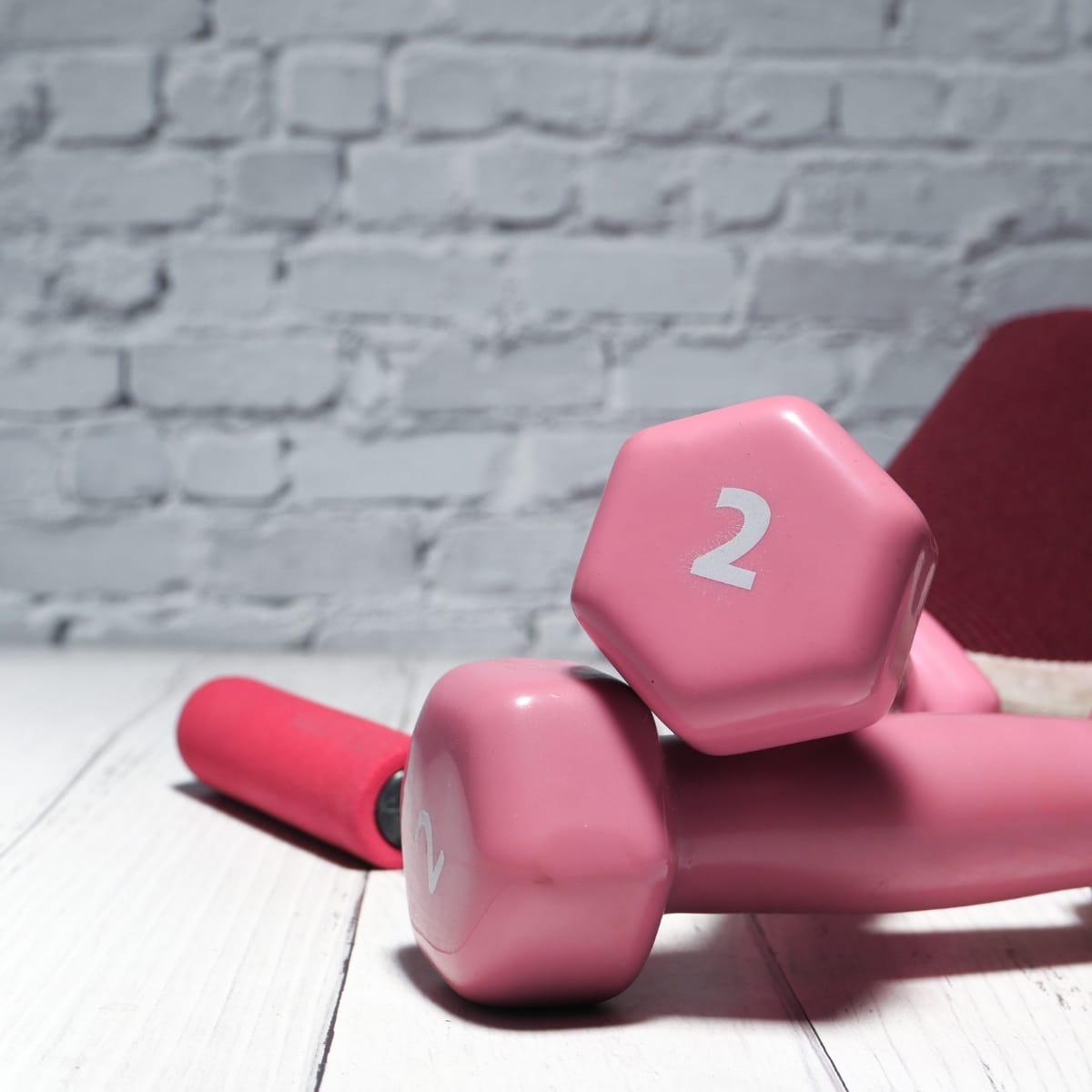
With many of our clients, we use a range of 8 to 10 repetitions for each strength exercise. By the end of those reps, the exercise should feel very hard to complete with good form. You should feel like you could maybe do one or two more, but not many more.18
If you finish all 10 and could easily keep going, the exercise probably isn't challenging enough. The weight may be too light, the band too easy, or the movement needs to be progressed.
That doesn't mean exercise should be painful. Muscle fatigue is expected. Sharp pain, joint pain, dizziness, numbness or feeling unsteady are signs to stop or modify. I explain this in more depth in how hard should seniors strength train to get stronger?
When Progress Stalls
After a while, the same workout stops creating the same change. That's a plateau, and it's actually a sign your body has adapted and is ready for a new challenge. Small, smart changes get you moving again:
- Add 5–10% more effort, like 2 more pounds, a few more seconds, or an extra block of walking.19
- Increase either weight or repetitions. One study found both worked equally well, so choose what feels best for your joints.20
- Add variety, like a new exercise or standing instead of seated work.
- Focus on quality over quantity, with good form and good breathing.
- Recover well with sleep, hydration and rest days.
More strategies are in hit a fitness plateau after 60?
A Simple Starter Routine
Here are five exercises I use with many clients. Do 8–10 repetitions of each (or the time listed), rest, and repeat for 2–3 rounds, 2–3 days a week. Keep a counter, wall or sturdy chair nearby for support.
1. Sit-to-Stand
If I had to pick one strength exercise for most people over 60, this would be it. It builds your legs, glutes and core for getting up from a chair, bed or car.
- Sit toward the front of a sturdy chair, feet flat and shoulder-width apart.
- Engage your core and press through your heels to stand up, keeping your back straight.
- Think "glutes first" and use your hips, not just your knees, to power up.
- Slowly lower yourself back down with control. Don't collapse into the chair.
Easier: push off the chair with your hands. Harder: hold a heavy object at your chest, or add an overhead press with a resistance band.
2. Seated Glute Squeeze
Your glutes are your body's engine. They stabilize your hips and pelvis, protect your knees and back, and help you climb stairs and recover from a stumble. This wakes them up.
- Sit tall at the edge of a chair, feet flat, shoulders relaxed.
- Squeeze your buttocks together as if lifting yourself slightly off the seat (don't actually move).
- Hold for 3–5 seconds, then relax.
- Repeat 10–15 times, once or twice a day.
More in glute exercises for seniors.
3. Wall Push-Up
- Stand a few feet from a wall and place your hands on it at shoulder height.
- Keeping your body in a straight line, bend your elbows to bring your chest toward the wall.
- Push back to the start with slow, controlled movement.
4. Resistance Band Row
- Anchor a band at chest height in a door or around a sturdy post.
- Stand facing it with feet shoulder-width apart, holding one end in each hand, arms extended.
- Pull your hands back toward your torso, squeezing your shoulder blades together.
- Return slowly. Don't let the band snap back.
5. One-Arm Suitcase Carry
Carrying weight on one side teaches your core to keep you centered, which transfers directly to carrying groceries, a purse or a laundry basket. Trunk strength plays a big role in balance and fall prevention.21
- Hold a grocery bag, dumbbell or milk jug in one hand.
- Stand tall, shoulders down, and walk slowly for about 10 seconds.
- Switch sides. If you notice yourself leaning, slow down and reset.
Watch the one-minute demo in the suitcase carry: the best core exercise for real life.
No Gym Required
A common misconception is that you need equipment or a gym membership to get stronger. You don't.
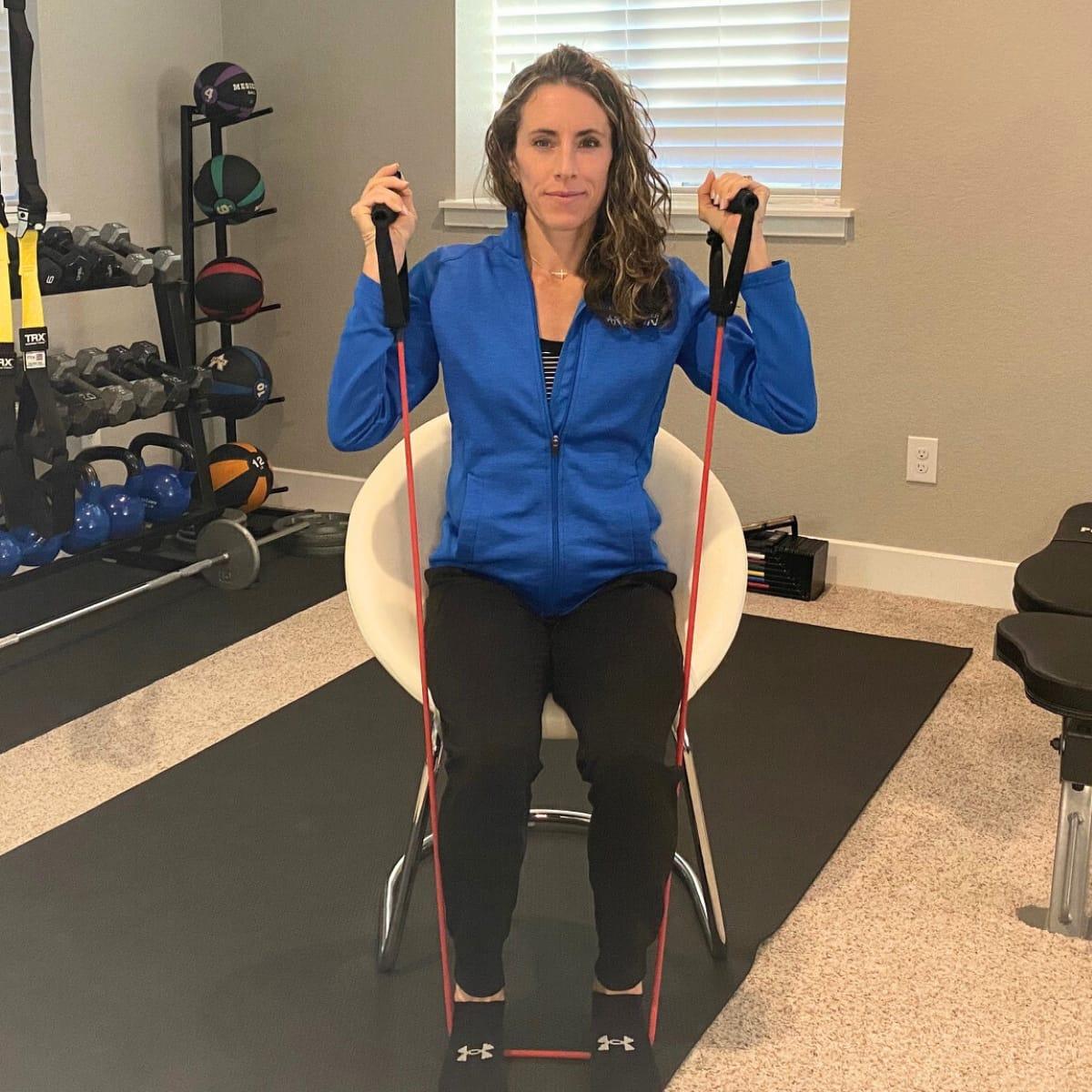
- Resistance bands are affordable, portable and easy on the joints, and research shows elastic resistance builds strength about as well as conventional weights.22 A basic set with handles, several resistance levels and a door anchor covers most exercises. Try the three I use most in resistance band exercises for seniors.
- Household objects work too. A soup can, a water bottle and a milk jug filled with water can give you a full-body workout in 20–30 minutes. Here are ten exercises using everyday objects.
- Everyday tasks count. Open that stubborn jar yourself, carry the heavier grocery bag, take the stairs. These little moments add up.
- Traveling? Try the two no-equipment routines in hotel room workouts for seniors.
If you'd rather have a coach guide you through workouts at home by video, online personal training is another option.
Common Mistakes (and What to Do Instead)
Doing only cardio. Walking, biking and swimming are wonderful, but they don't stop age-related muscle and bone loss on their own. Add strength work 2–3 times a week. See 3 common exercise mistakes older adults make.
Going too easy, or too hard. Some people train like they did 30 years ago and end up sore or injured. Others are so cautious their muscles never get a reason to grow. Use the 8–10 rep guideline above to find the middle.
Letting your strong side do all the work. After an injury, surgery or arthritis flare-up, it's natural to favor one side. But every time you do, the stronger side gets another repetition and the weaker side misses one. Side-to-side strength differences have been linked to less steady walking in older women.23 Train each side separately when it's appropriate. I explain how in is one side weaker? how to fix muscle imbalances.
Avoiding stairs. Many people choose homes without stairs, then lose the ability to climb them. Instead, embrace the stairs. If they're already hard, start with a low step and work up.
Skipping rest days. Muscles grow during recovery, not during the workout.
When Heavy Weights Aren't an Option: BFR Training
Not everyone can, or should, lift heavy. Arthritis, joint replacements, tendon issues or simple discomfort can limit how much load the body tolerates. That's where blood flow restriction (BFR) training comes in.
BFR uses a specialized cuff at the top of the arm or leg that gently limits blood leaving the muscle while you exercise with very light weights, often just 20–30% of what you could normally lift.24 Even though the weights are light, your muscles respond as if they're working much harder. A review of BFR studies in older adults found that low-load BFR training improved muscle strength and muscle size.25
My client Pat started BFR at 82. Over 7 weeks and 13 sessions, he improved in every measured category, including a 316.7% gain on the leg press, and gained strength in a previously injured shoulder. BFR didn't improve his knee arthritis, but it didn't make it worse either. BFR isn't right for everyone, and screening matters. Read what BFR training is and Pat's results.
It's Never Too Late
Researchers recently tested the muscles of Emma Maria Mazzenga, a 91-year-old world-record sprinter. About 57% of her muscle fibers were fast-twitch, an unusually high share for her age.26 She hadn't escaped aging, but so much had been preserved. The lesson isn't that everyone should sprint. It's that muscle power stays trainable, and power training can be scaled to any level, like standing up from a chair a little more quickly and sitting back down slowly. Read more in building muscle at 91.
Exercise doesn't stop aging. But aging doesn't mean we have to simply surrender our capacity either.
When to Get Help
Check with your doctor before starting if you have a heart condition, uncontrolled blood pressure, a recent surgery or osteoporosis. Sudden weakness, new numbness, significant pain or a recent change in walking should be checked by a healthcare professional, not treated as a simple strength problem.
And if you'd like a program built for your body, your goals and your home, I'd be happy to help. Small, consistent steps can restore strength, and it's never too late to start.
This guide is for general education and isn't medical advice. Please talk with your doctor before starting a new exercise, nutrition or supplement routine.
Read more from Kristen
Body · Balance
Losing Muscle After 60? Start Strength Training Now
Adults lose 3–8% of muscle per decade after 30, faster after 60. Six reasons strength training matters as we age, and how to start safely.
November 2, 2024 · 5 min read
Body
How Heavy Should Seniors Lift? The 8–10 Rep Rule
Lift heavy enough that the last of 8 to 10 reps feels very hard, with only 1 or 2 left in you. How to tell if your strength exercises are hard enough.
July 18, 2026 · 3 min read
Body · Brain
5 Surprising Benefits of Strength Training After 60
Beyond muscle: strength training can sharpen your brain, improve sleep, support gut health, build bone where it breaks most, and lift your mood.
July 19, 2025 · 3 min read
Body
Resistance Band Exercises for Seniors
Resistance bands are cheap, portable and joint-friendly. What kind to buy, plus three step-by-step band exercises for strength, balance and rotation.
November 23, 2024 · 5 min read

Body
Why Grip Strength Matters and How to Improve It
Grip strength is one of the strongest predictors of health as we age. Learn why it matters and how farmer's carries and daily tasks can build it.
August 2, 2025 · 3 min read
Stories · Body
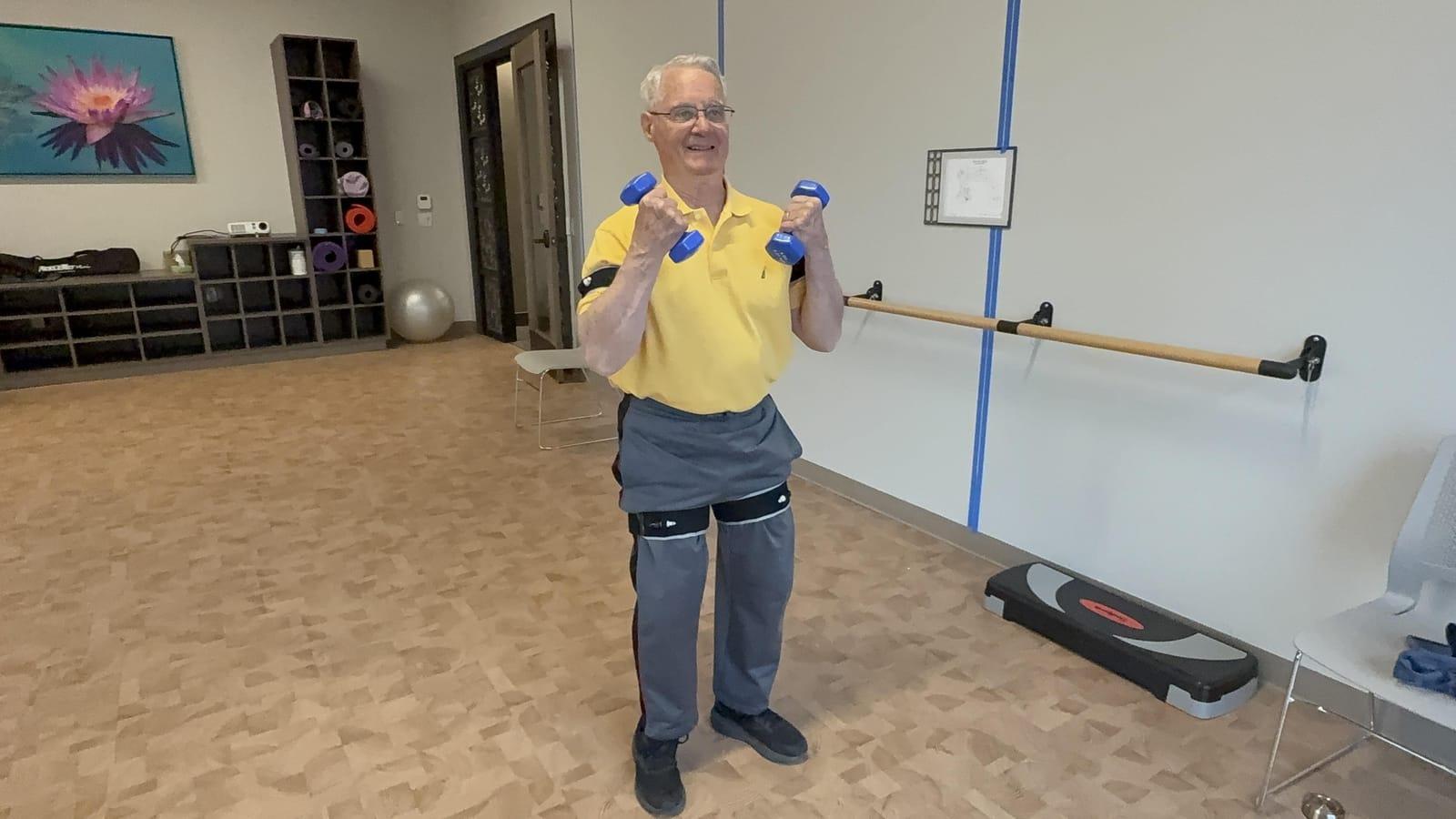
Can You Get Stronger at 82? Pat's BFR Training Results
In 13 blood flow restriction (BFR) sessions, 82-year-old Pat got stronger in every measured category using light weights. Here are his results.
May 16, 2026 · 4 min read
Recipes to try

Snack
Cottage Cheese Crunch Bowl
A savory high-protein, low-sugar snack of cottage cheese topped with pumpkin or sunflower seeds, cucumber or cherry tomatoes and a drizzle of olive oil.
1 serving

Breakfast
Sweet Potato Toast
Toasted sweet potato slices make a fun, gluten-free, fiber-rich swap for bread. Top with avocado, eggs, nut butter or hummus.
4 slices
Frequently asked questions
How many days a week should seniors do strength training?
Two to three days a week is a good target for most adults over 60. Work all the major muscle groups (legs, hips, core, back and arms) and leave a day of rest, light walking or stretching between harder sessions so your muscles can recover and grow.
What weight should a beginner over 60 start with?
Start with your own body weight, a light resistance band or light dumbbells, then choose a load that makes the last of 8 to 10 repetitions feel hard while your form stays good.
If you can finish 10 reps and easily keep going, it's time to add a little weight, a stronger band, or a few more reps.
Can you still build muscle in your 70s and 80s?
Yes. Muscles keep responding to the right challenge at any age. My client Pat improved in every measured strength category over 13 blood flow restriction sessions at age 82, and research on older adults consistently shows gains in strength and function with appropriate resistance training.
Is strength training safe if I have arthritis in my knees?
In most cases, yes, and proper strength training will most likely lead to less pain, not more. Stronger muscles around a joint help support it. Start with low-impact exercises, focus on good form, and stop any movement that causes sharp pain.
Do I need a gym membership to strength train after 60?
No. A sturdy chair, a set of resistance bands, and household items like soup cans, water bottles and a milk jug filled with water can give you a full-body workout at home in about 20–30 minutes.
Sources
- Volpi E, Nazemi R, Fujita S. Muscle tissue changes with aging. Curr Opin Clin Nutr Metab Care. 2004;7(4):405-410. doi:10.1097/01.mco.0000134362.76653.b2 View source
- Wilkinson DJ, Piasecki M, Atherton PJ. The age-related loss of skeletal muscle mass and function: measurement and physiology of muscle fibre atrophy and muscle fibre loss in humans. Ageing Res Rev. 2018;47:123-132. doi:10.1016/j.arr.2018.07.005 View source
- von Haehling S, Morley JE, Anker SD. An overview of sarcopenia: facts and numbers on prevalence and clinical impact. J Cachexia Sarcopenia Muscle. 2010;1(2):129-133. doi:10.1007/s13539-010-0014-2 View source
- Cruz-Jentoft AJ, Bahat G, Bauer J, et al. Sarcopenia: revised European consensus on definition and diagnosis. Age Ageing. 2019;48(1):16-31. View source
- Fried LP, Tangen CM, Walston J, et al. Frailty in older adults: evidence for a phenotype. J Gerontol A Biol Sci Med Sci. 2001;56(3):M146-M156. View source
- Leong DP, Teo KK, Rangarajan S, et al. Prognostic value of grip strength: findings from the Prospective Urban Rural Epidemiology (PURE) study. Lancet. 2015;386(9990):266-273. View source
- Peterson MD, Rhea MR, Sen A, Gordon PM. Resistance exercise for muscular strength in older adults: a meta-analysis. Ageing Res Rev. 2010;9(3):226-237. View source
- Liu CJ, Latham NK. Progressive resistance strength training for improving physical function in older adults. Cochrane Database Syst Rev. 2009;2009(3):CD002759. doi:10.1002/14651858.CD002759.pub2 View source
- Watson SL, Weeks BK, Weis LJ, Harding AT, Horan SA, Beck BR. High-intensity resistance and impact training improves bone mineral density and physical function in postmenopausal women with osteopenia and osteoporosis: the LIFTMOR randomized controlled trial. J Bone Miner Res. 2018;33(2):211-220. doi:10.1002/jbmr.3284 View source
- Sherrington C, Fairhall NJ, Wallbank GK, et al. Exercise for preventing falls in older people living in the community. Cochrane Database Syst Rev. 2019;1(1):CD012424. doi:10.1002/14651858.CD012424.pub2 View source
- Gordon BR, McDowell CP, Hallgren M, Meyer JD, Lyons M, Herring MP. Association of efficacy of resistance exercise training with depressive symptoms: meta-analysis and meta-regression analysis of randomized clinical trials. JAMA Psychiatry. 2018;75(6):566-576. doi:10.1001/jamapsychiatry.2018.0572 View source
- Bolandzadeh N, Tam R, Handy TC, et al. Resistance training and white matter lesion progression in older women: exploratory analysis of a 12-month randomized controlled trial. J Am Geriatr Soc. 2015;63(10):2052-2060. View source
- Kovacevic A, Mavros Y, Heisz JJ, Fiatarone Singh MA. The effect of resistance exercise on sleep: a systematic review of randomized controlled trials. Sleep Med Rev. 2018;39:52-68. View source
- Fransen M, McConnell S, Harmer AR, Van der Esch M, Simic M, Bennell KL. Exercise for osteoarthritis of the knee. Cochrane Database Syst Rev. 2015;1(1):CD004376. doi:10.1002/14651858.CD004376.pub3 View source
- Colberg SR, Sigal RJ, Yardley JE, et al. Physical activity/exercise and diabetes: a position statement of the American Diabetes Association. Diabetes Care. 2016;39(11):2065-2079. doi:10.2337/dc16-1728 View source
- Paluch AE, Boyer WR, Franklin BA, et al. Resistance exercise training in individuals with and without cardiovascular disease: 2023 update: a scientific statement from the American Heart Association. Circulation. 2024;149(3):e217-e231. doi:10.1161/CIR.0000000000001189 View source
- Piercy KL, Troiano RP, Ballard RM, et al. The Physical Activity Guidelines for Americans. JAMA. 2018;320(19):2020-2028. View source
- Fragala MS, Cadore EL, Dorgo S, et al. Resistance training for older adults: position statement from the National Strength and Conditioning Association. J Strength Cond Res. 2019;33(8):2019-2052. View source
- American College of Sports Medicine. American College of Sports Medicine position stand. Progression models in resistance training for healthy adults. Med Sci Sports Exerc. 2009;41(3):687-708. View source
- Plotkin D, Coleman M, Van Every D, et al. Progressive overload without progressing load? The effects of load or repetition progression on muscular adaptations. PeerJ. 2022;10:e14142. View source
- Granacher U, Gollhofer A, Hortobágyi T, Kressig RW, Muehlbauer T. The importance of trunk muscle strength for balance, functional performance, and fall prevention in seniors: a systematic review. Sports Med. 2013;43(7):627-641. View source
- Lopes JSS, Machado AF, Micheletti JK, de Almeida AC, Cavina AP, Pastre CM. Effects of training with elastic resistance versus conventional resistance on muscular strength: a systematic review and meta-analysis. SAGE Open Med. 2019;7:2050312119831116. View source
- LaRoche DP, Cook SB, Mackala K. Strength asymmetry increases gait asymmetry and variability in older women. Med Sci Sports Exerc. 2012;44(11):2172-2181. View source
- Patterson SD, Hughes L, Warmington S, et al. Blood flow restriction exercise: considerations of methodology, application, and safety. Front Physiol. 2019;10:533. View source
- Centner C, Wiegel P, Gollhofer A, König D. Effects of blood flow restriction training on muscular strength and hypertrophy in older individuals: a systematic review and meta-analysis. Sports Med. 2019;49(1):95-108. View source
- Colosio AL, Dobrzycki A, Teigen LE, et al. The other half of the sprinting coin: the neuromuscular profile of a 91-yr-old female world record sprinter. J Appl Physiol. 2026. View source
This guide is for general education and isn't medical advice. Please talk with your doctor before starting a new exercise, nutrition or supplement routine. See our health disclaimer.

About the author
Kristen Nielsen
Kristen founded TogetherWON after watching what strength training could do for older adults — including her own grandparents. She's an ACE Certified Personal Trainer with 10+ years in functional aging, a University of Central Florida graduate, and a former Division I swimmer and track & field athlete.
Senior Fitness Specialist · Functional Aging Specialist · Parkinson's Disease Specialist · Brain Health Trainer · Corrective Exercise Specialist
want these in your inbox?
Get my Saturday letters
One idea for your body, brain or balance each week, usually with a recipe. Unsubscribe any time.