How Strong Do You Need to Be to Stay Independent?
By Kristen Nielsen, Founder & Senior Fitness Specialist
· Body · 4 minute read
Part of our guide: Strength Training for Seniors: The Complete Guide
Key takeaways
- Independence depends on your strength reserve: how much strength you have beyond what everyday tasks like getting out of a chair, climbing stairs or carrying groceries require.
- When a task that once took 30% of your leg strength starts taking 80 or 90%, it feels much harder, even though the task itself hasn't changed.
- Losing strength with age is common, but older muscles still respond to strength training, and you can train at home with resistance bands and things you already have.
- Start while you're still moving well. It's much easier to build strength before everyday tasks become difficult than after.
How strong do you need to be to stay independent as you age? Strong enough that everyday tasks, like getting out of a chair, climbing stairs and carrying groceries, use only part of your strength, with some left in reserve. (Our guide to strength training for seniors shows how to start building it.)
One thing I see often in working with older adults is the assumption that if you can do everything you need to do today, you'll probably be able to keep doing it.
Until suddenly, you can't.
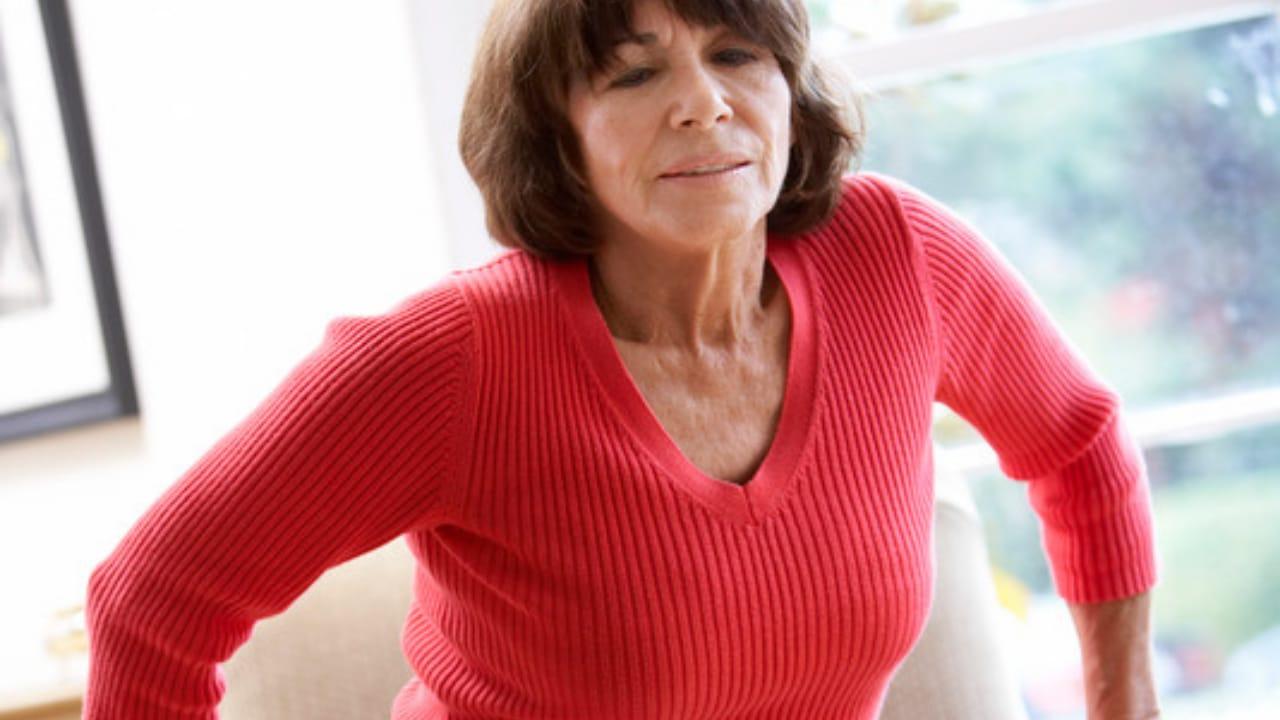
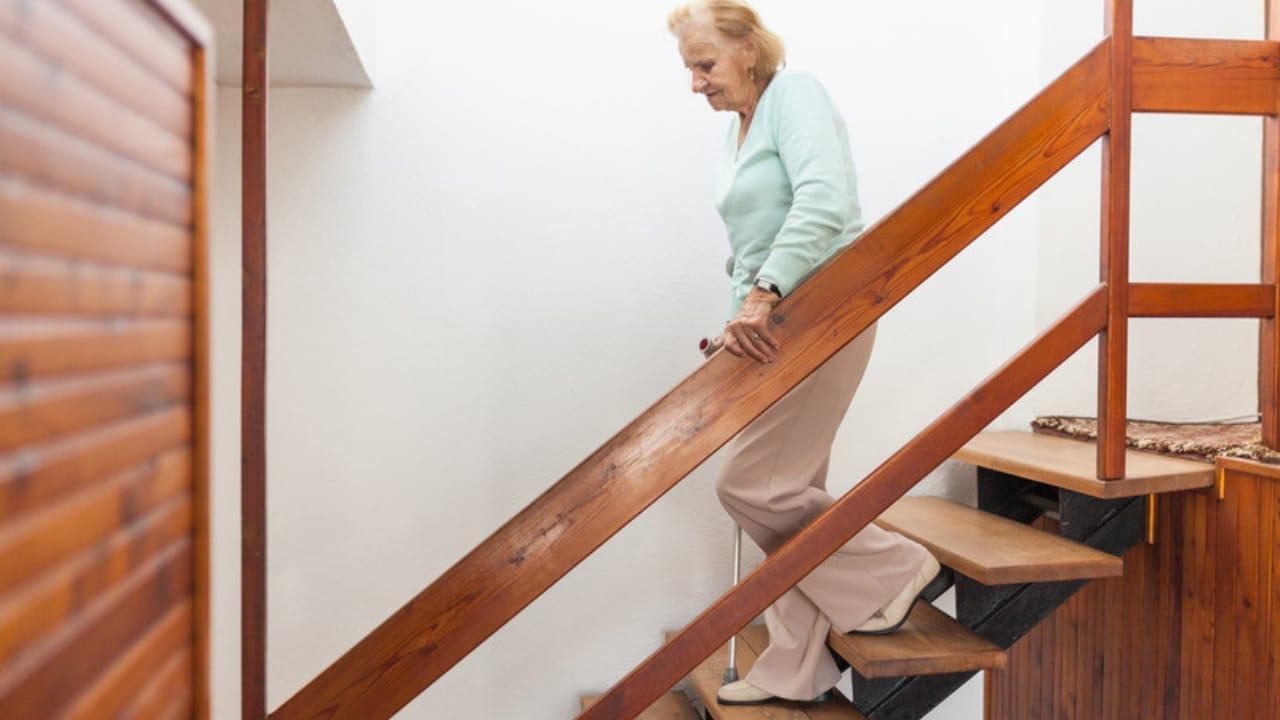
Getting out of a low chair becomes harder. You start using the railing to pull yourself up the stairs. Carrying groceries takes more effort. Getting down to the floor, and especially getting back up, starts to feel like something you'd rather avoid. It's easy to look at those changes and say, "Well, I'm getting older."
But age is only part of the story.
What Is a Strength Reserve?
The question isn't just how strong you are. It's how much strength you have in reserve.
Imagine that getting up from a chair requires a certain amount of leg strength. If that movement only requires 30% of the strength you have available, getting up is easy. You don't think about it. But if you gradually lose strength and now that same chair requires 80 or 90% of what your legs can produce, it feels completely different. You may need your hands. You may have to rock forward. You may start avoiding lower chairs altogether.
The chair didn't change. Your reserve did.
The same thing happens with climbing stairs, carrying a suitcase, getting out of the bathtub, walking uphill, lifting something from the floor or catching yourself if you stumble.
That is one reason strength matters so much for staying independent.
Can You Check These Boxes?
- Stand up from a chair without having to push heavily through your arms.
- Climb a flight of stairs without it feeling like an all-out effort.
- Carry groceries or other everyday objects from one place to another.
- Get down to and back up from the floor, with support if needed.
- Step up onto a curb confidently.
- Push, pull, reach and lift the things you regularly use around your home.
- Walk far enough to do the things you enjoy without your legs giving out before you're finished.
- Respond when something unexpected happens, such as catching your balance after a stumble.
How many could you comfortably check? The goal isn't that every activity has to be effortless. But if several of these are becoming very difficult, or you've started avoiding them, that may be a sign that your strength reserve is getting smaller. Independence doesn't just require enough strength for the easiest day. You need some strength in reserve for the harder days too.
To put a number on your leg strength, try the 30-second chair stand test and see how you compare with others your age.
Is Losing Strength With Age Inevitable?
Losing strength with age is common. Becoming weak is not inevitable.
Our muscles do change as we get older. Strength and muscle power tend to decrease with age, particularly if we aren't doing anything to challenge them. But one of the biggest misconceptions I see is the belief that once strength has been lost, there's nothing you can do about it. That simply isn't true.
Older muscles still respond to training. Strength training can make muscles stronger and improve the physical abilities we use in everyday life.
Do You Need a Gym to Get Stronger?
No. You don't need a gym full of equipment to do it.
Most of the training we do with TogetherWON clients happens right in their homes with fairly minimal equipment. A few resistance bands and things you already have around the house can go a long way.
In fact, I often find that once clients get started and realize what they're capable of, they enjoy it enough that they want to add more equipment. But you certainly don't need a lot of space, expensive equipment or a gym membership to become stronger. Your muscles simply need to be challenged enough to give them a reason to adapt.
Walking is wonderful for many things, but walking alone generally doesn't provide enough resistance to maintain all of the strength you'll need for the decades ahead. For a more in-depth look at why walking should be supplemented, see what to add to your walking routine after 60.
Don't Wait Until Everyday Life Becomes the Workout
This is probably the biggest message I want people to understand. It is much easier to maintain and build strength while you're still moving well than it is to wait until getting out of a chair, climbing the stairs or carrying groceries has become difficult. And if some of those things are already getting harder, don't assume it's simply your new normal.
You may have more ability to improve than you think.
The goal of strength training as we get older isn't just bigger muscles. It's getting out of your chair. Taking the stairs. Carrying your own groceries. Traveling. Playing with your grandchildren. Getting up from the floor. And continuing to do the things you love without needing someone else to do them for you.
That is what being strong is really for.
Kristen
Try the recipe: Fall is here! Celebrate the change of season with this easy butternut squash soup — get the recipe.
Sources
- Mitchell WK, Williams J, Atherton P, Larvin M, Lund J, Narici M. Sarcopenia, dynapenia, and the impact of advancing age on human skeletal muscle size and strength; a quantitative review. Front Physiol. 2012;3:260. doi:10.3389/fphys.2012.00260 View source
- Peterson MD, Rhea MR, Sen A, Gordon PM. Resistance exercise for muscular strength in older adults: a meta-analysis. Ageing Res Rev. 2010;9(3):226-237. View source
- Liu CJ, Latham NK. Progressive resistance strength training for improving physical function in older adults. Cochrane Database Syst Rev. 2009;2009(3):CD002759. doi:10.1002/14651858.CD002759.pub2 View source
This article is for general education and isn't medical advice. Please talk with your doctor before starting a new exercise, nutrition or supplement routine. See our health disclaimer.


About the author
Kristen Nielsen
Kristen founded TogetherWON after watching what strength training could do for older adults — including her own grandparents. She's an ACE Certified Personal Trainer with 10+ years in functional aging, a University of Central Florida graduate, and a former Division I swimmer and track & field athlete.
Senior Fitness Specialist · Functional Aging Specialist · Parkinson's Disease Specialist · Brain Health Trainer · Corrective Exercise Specialist
want these in your inbox?
Get my Saturday letters
One idea for your body, brain or balance each week, usually with a recipe. Unsubscribe any time.
Keep reading
Body
Why Grip Strength Matters and How to Improve It
Grip strength is one of the strongest predictors of health as we age. Learn why it matters and how farmer's carries and daily tasks can build it.
August 2, 2025 · 3 min read
Body
Hit a Fitness Plateau After 60? How to Keep Progressing
Hit a fitness plateau after 60? It means your body adapted. Small, smart changes, variety, good form and better recovery get progress moving again.
August 23, 2025 · 3 min read
Body · Balance
Losing Muscle After 60? Start Strength Training Now
Adults lose 3–8% of muscle per decade after 30, faster after 60. Six reasons strength training matters as we age, and how to start safely.
November 2, 2024 · 5 min read