Resistance Band Exercises for Seniors
By Kristen Nielsen, Founder & Senior Fitness Specialist
· Updated · Body · 5 minute read
Part of our guide: Strength Training for Seniors: The Complete Guide
Key takeaways
- The best band exercises for seniors are full-body moves like a sit to stand with overhead press, a rotational press and alternating rows, done for 2–3 sets of 8–12 reps.
- Resistance bands are affordable, portable and easy on the joints, and a 2019 meta-analysis found they build strength about as well as conventional weights.
- A basic set with handles, multiple resistance levels and a door anchor covers most exercises.
- Keep control through both the pull and the return so the band never snaps back.
The best resistance band exercises for seniors work several muscles at once: a sit to stand with overhead press, a rotational press and alternating rows with rotation are three of my favorites, and I've laid out each one step by step below. Bands are one of the most versatile tools for strength training for seniors, improving balance, and enhancing mobility — no matter your fitness level. Lightweight, portable, and easy on the joints, they're perfect for workouts at home, on the go, or even while traveling. Whether you're new to fitness or looking to add variety to your workouts, resistance bands offer a fun and accessible way to reach your goals.
Why Are Resistance Bands Good for Seniors?
Resistance bands give you real strength training without heavy weights, which is why I use them with most of my clients. Here are the top benefits:
- Affordable
- Portable and lightweight — perfect for home or travel
- Suitable for all fitness levels by adjusting resistance
- Helps enhance mobility, stability, and muscle strength
Research backs this up: a 2019 meta-analysis found that training with elastic resistance produced strength gains similar to training with conventional weights and machines.
What Kind of Resistance Bands Should You Buy?
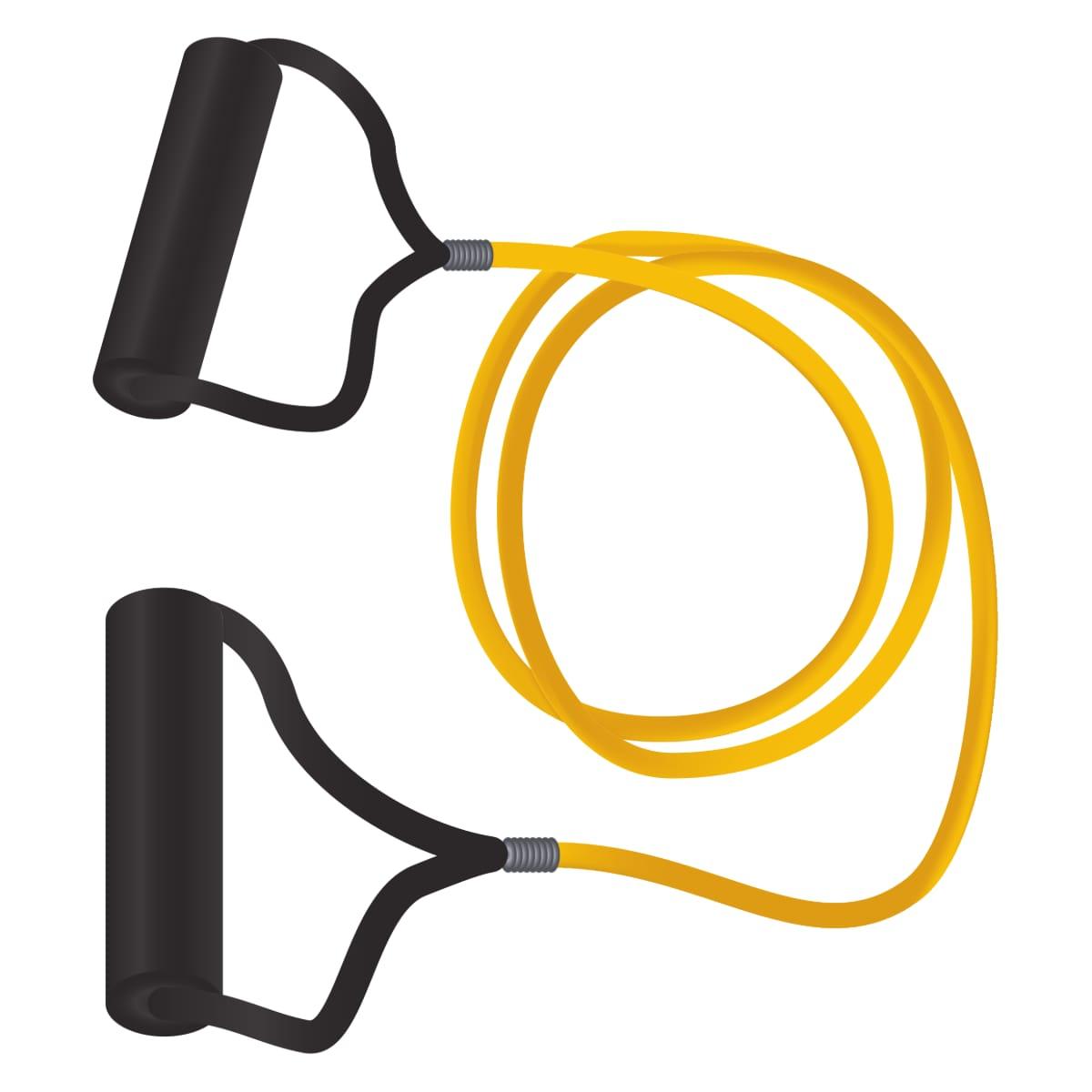
For most exercises, a basic set of resistance bands with handles is ideal. In some cases, the bands need to be secured around a sturdy piece of furniture, a post, or anchored in a door. To use a door, you'll need a door anchor, which is often included in resistance band sets. Look for a set that includes multiple resistance levels and a door anchor.
3 Resistance Band Exercises for Strength and Balance
When planning exercises, I focus on movements that help my clients build strength for everyday activities. Each exercise is carefully chosen to strengthen the body in a functional way. Resistance bands are especially effective because they provide tension during both the pulling phase and the return phase of the movement. To maximize benefits, avoid letting the bands "snap" back — always maintain control throughout the exercise.
If you experience back pain, be cautious when trying exercises that involve rotational movements. If you're unsure which exercises are safe for you, consult your doctor before starting.
1. Sit to Stand with Overhead Press
Purpose: Strengthen your legs, shoulders, and arms while improving balance and coordination.
Setup:
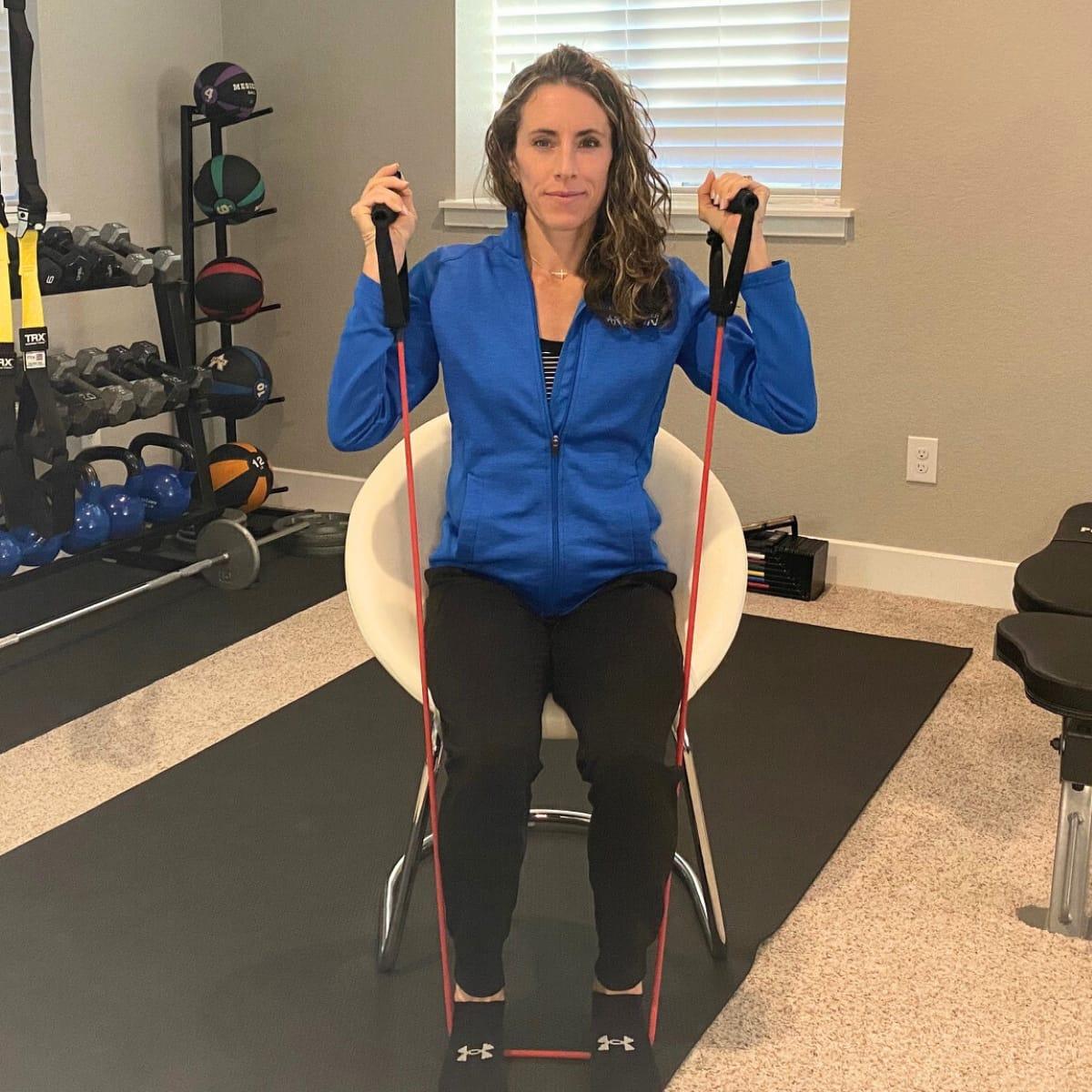
- Sit in a sturdy chair with your feet flat on the floor, hip-width apart.
- Place a resistance band under your feet and hold one end in each hand.
Starting position:
- Sit tall, holding the band handles at shoulder height with palms facing forward or inward.
- Keep the band taut but not overstretched.
Stand up:
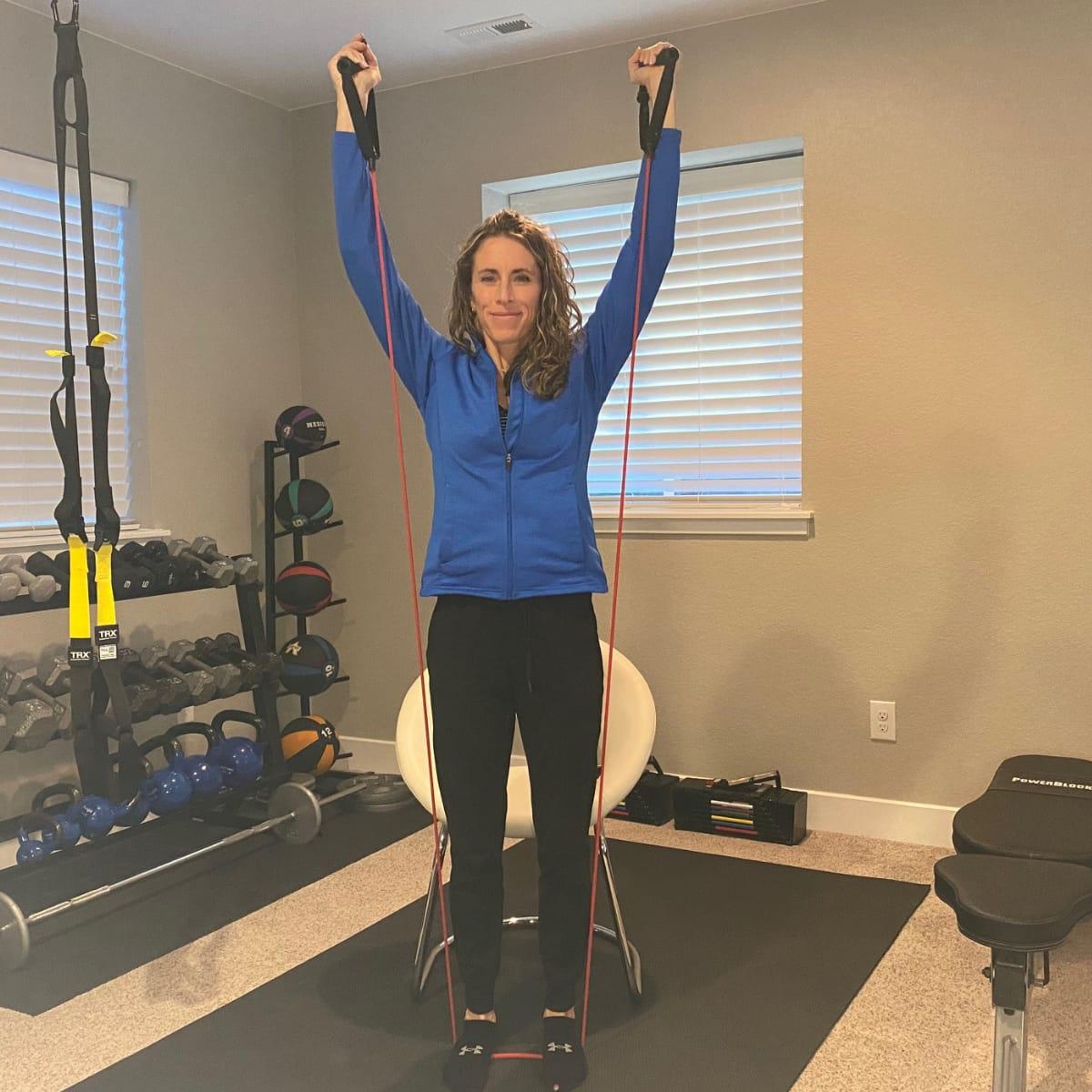
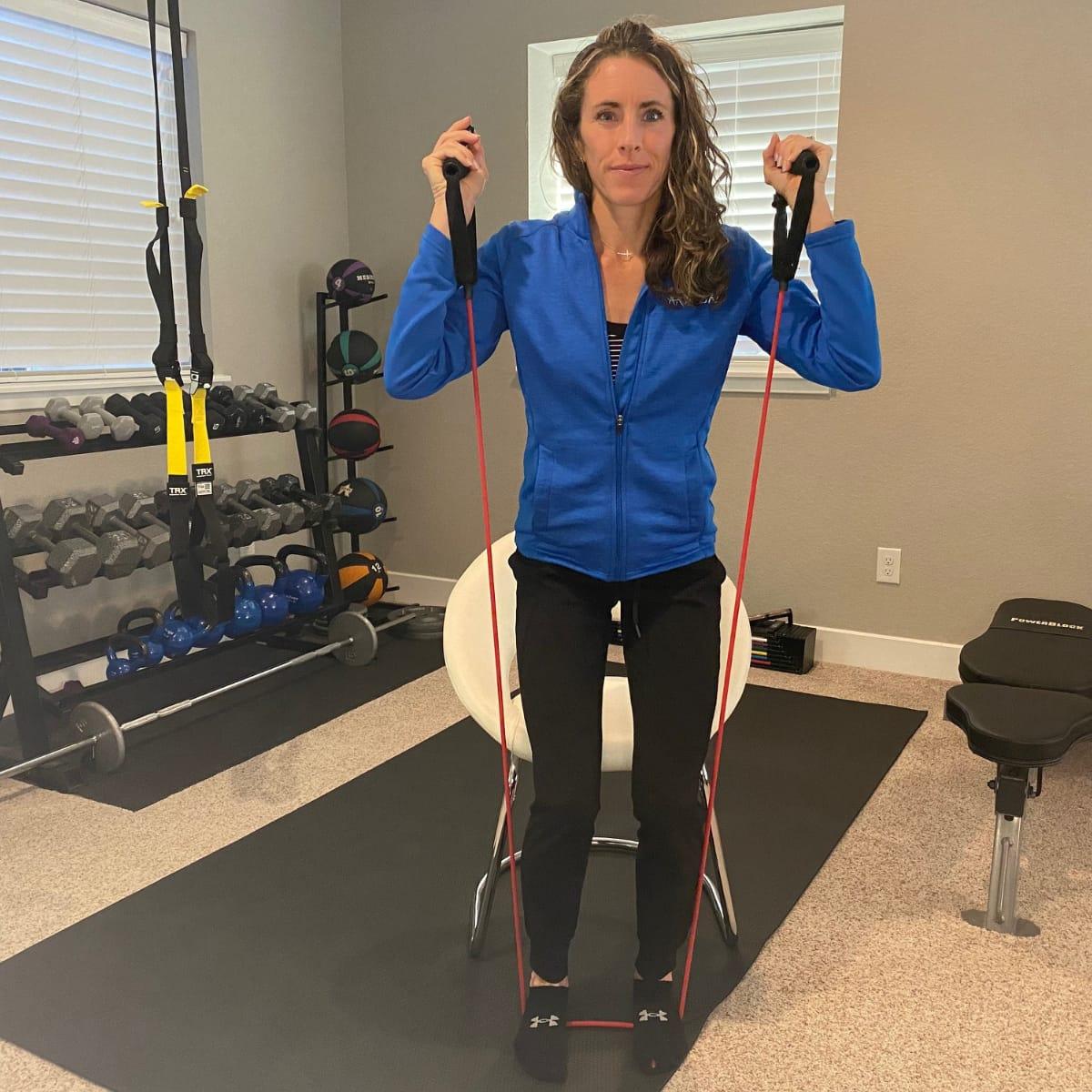
- Press through your heels to stand up while simultaneously pressing the band overhead.
- Fully extend your arms at the top, keeping your core engaged and back straight.
Sit down:
- Slowly lower yourself back into the chair while bringing the band back to shoulder height with control.
- Avoid collapsing into the chair — descend slowly.
Repeat:
- Perform 8–10 repetitions, rest, and repeat for 2–3 sets.
To make it easier: Start by doing a sit to stand without the resistance bands, pushing off the chair with your hands if necessary. (Curious how your legs measure up? Try our 30-second chair stand test.)
To make it harder: Use a band with a greater resistance.
2. Rotational Press
Purpose: Strengthen your core, shoulders, and arms while improving rotational stability and balance.
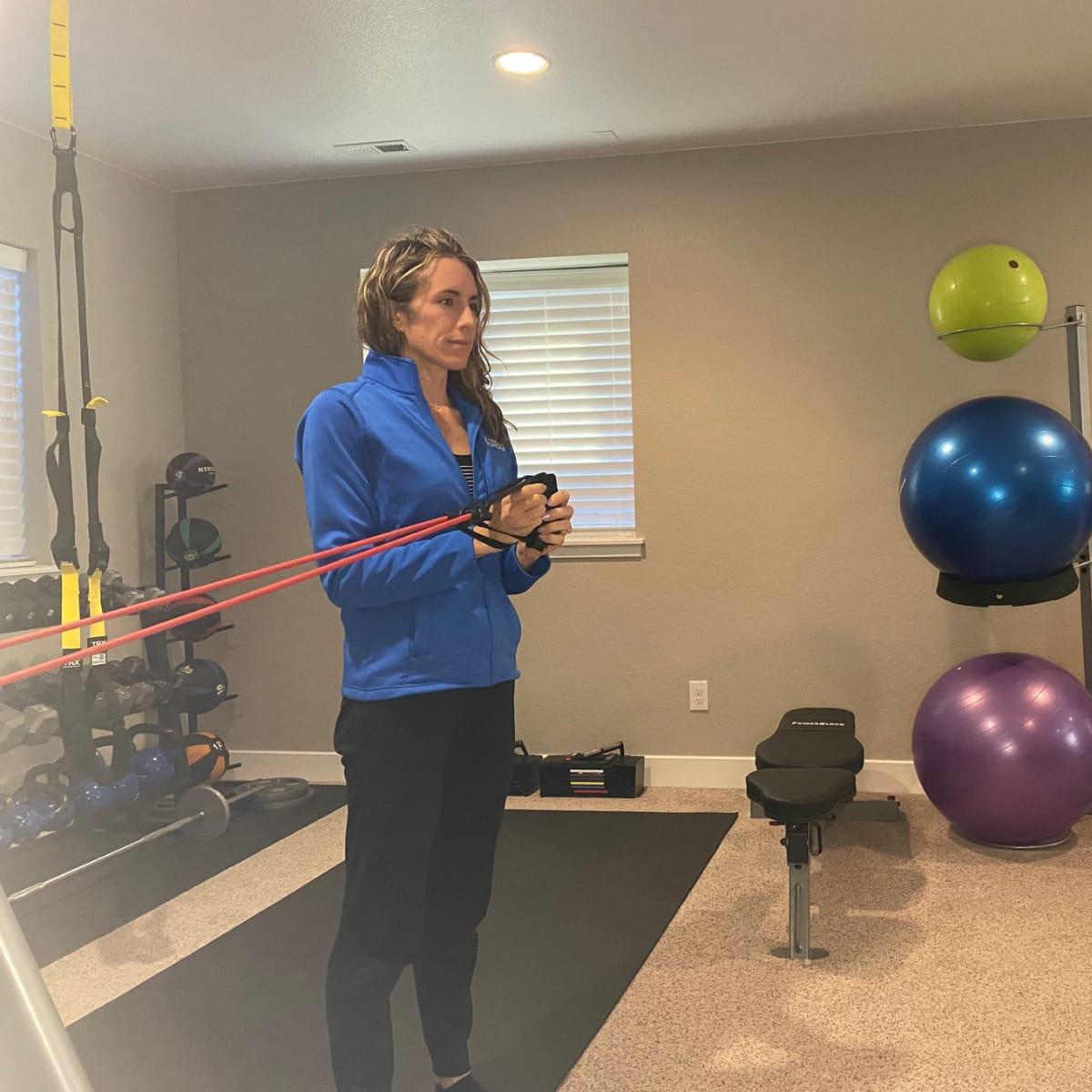
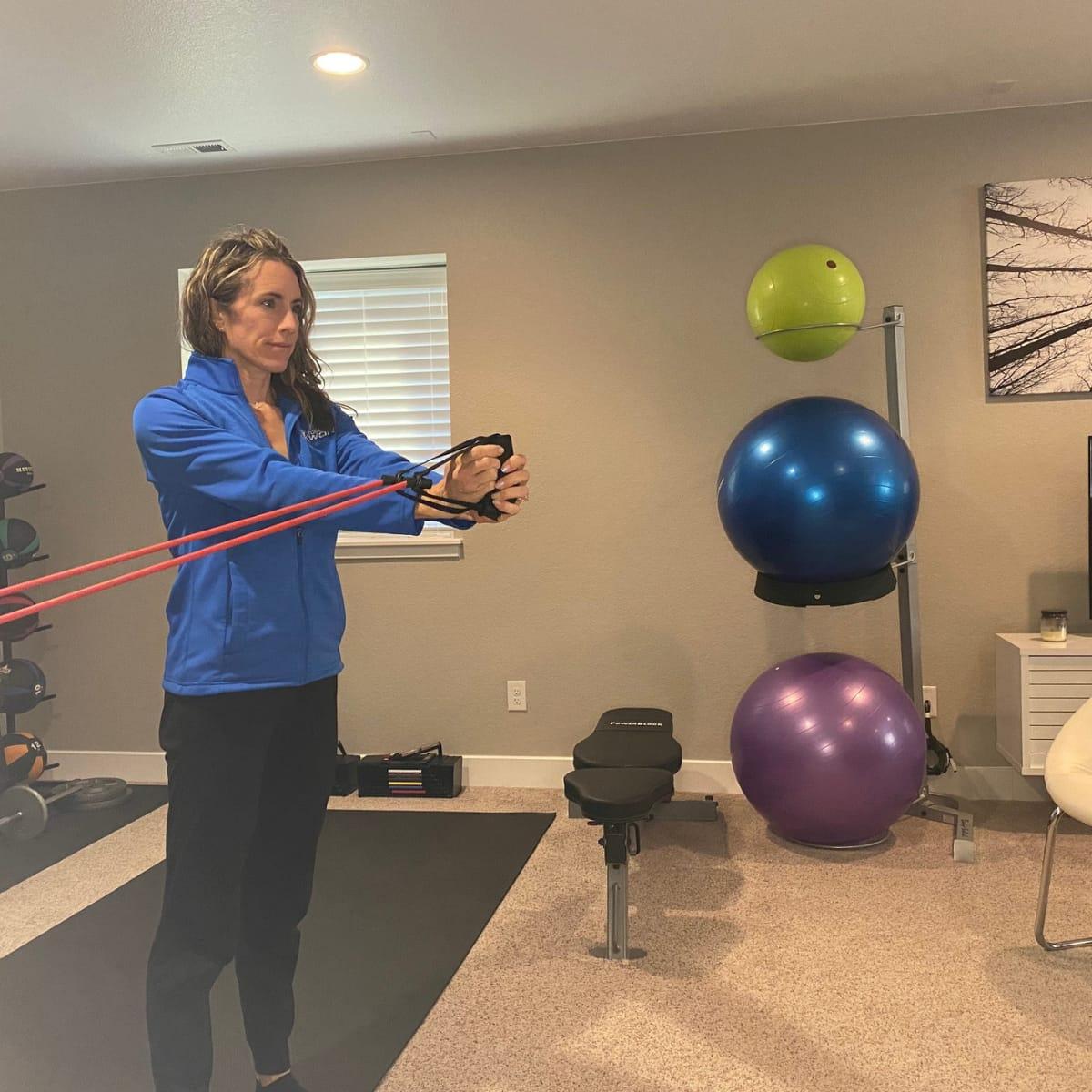
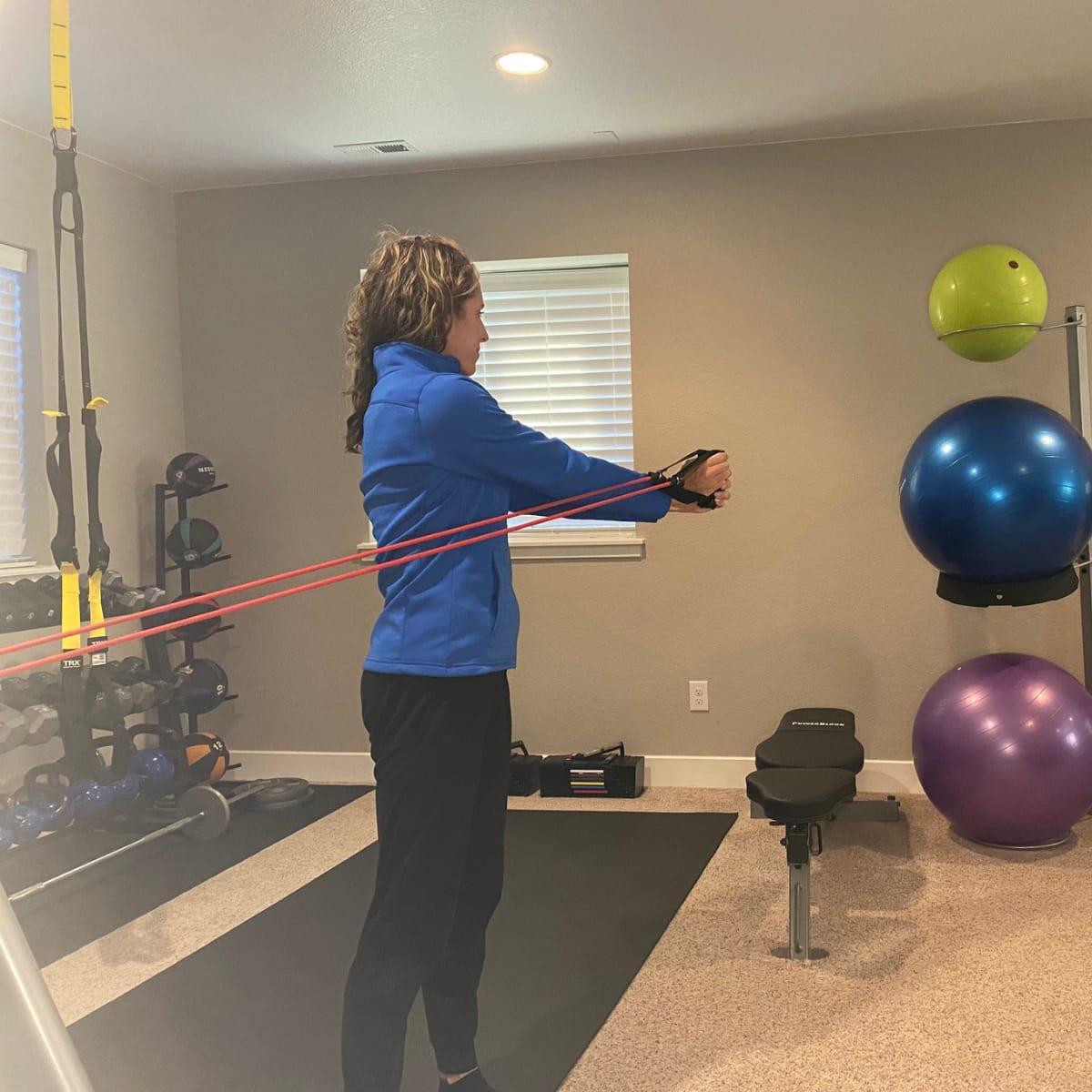
Setup:
- Anchor a resistance band at chest height (secure it to a sturdy surface or door).
- Stand sideways to the anchor point, holding the band with both hands at your chest.
Starting position:
- Stand with your feet shoulder-width apart, knees slightly bent.
- Face forward, keeping your body upright and your core engaged.
Press and rotate:
- Press the band forward with both hands, extending your arms straight in front of you.
- As you press, rotate your torso away from the anchor point.
- Return to the starting position with control.
Repeat:
- Perform 8–12 repetitions on one side, then turn around to work the other side.
To make it easier: Press out on the band without rotating, using a light band for less resistance.
To make it harder: Use a heavier band for more resistance, and/or move your feet closer together to increase the balance challenge.
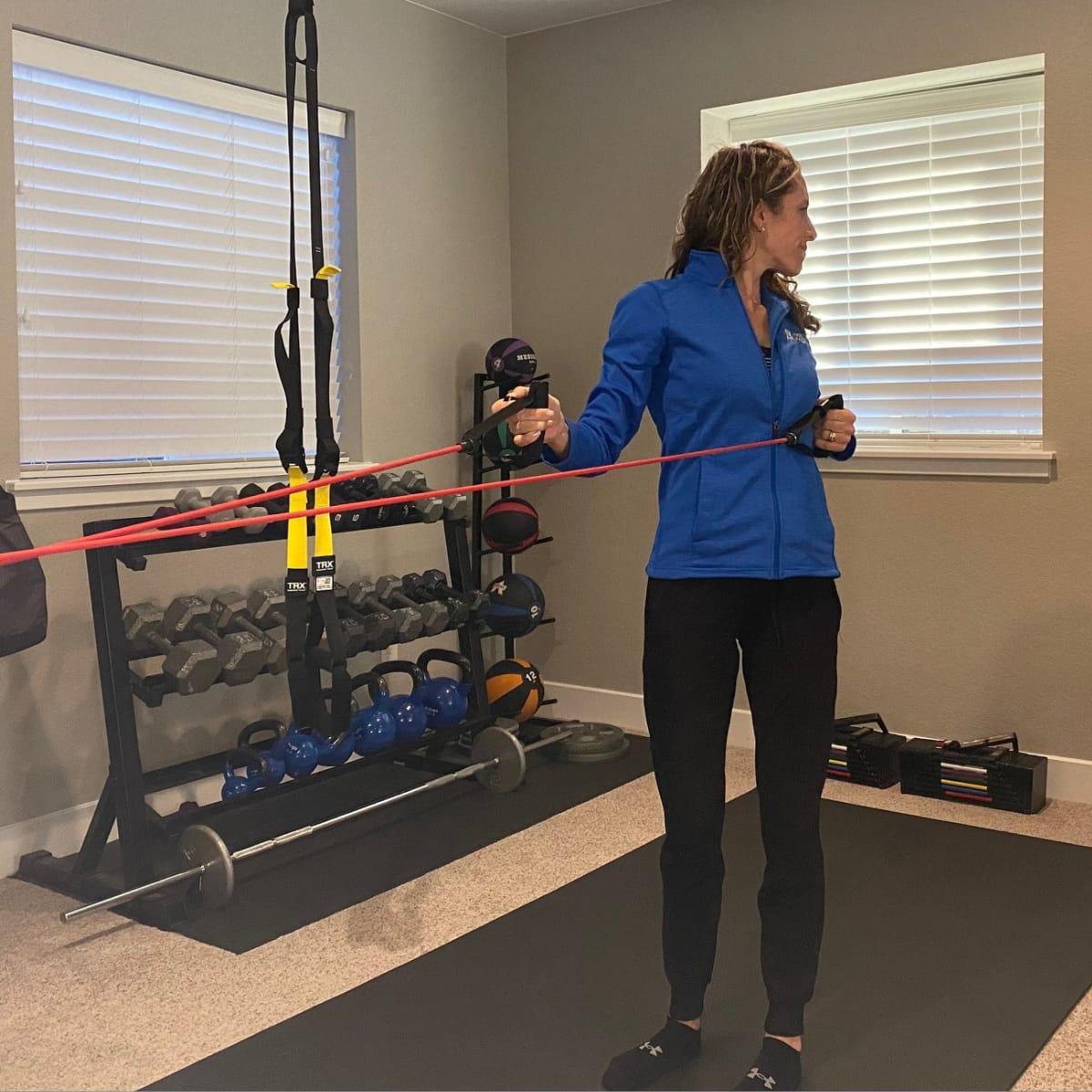
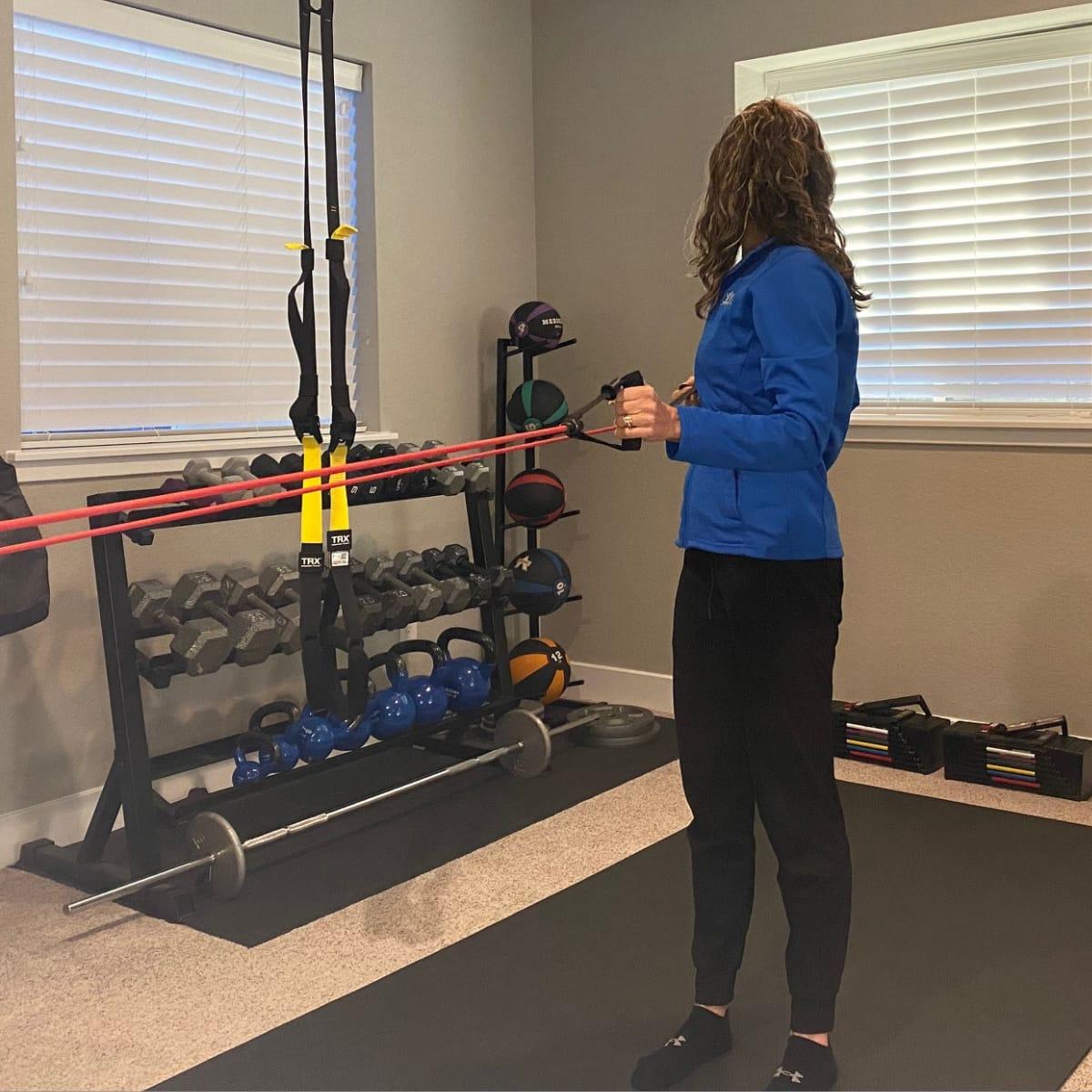
3. Alternating Rows with Rotation
Purpose: Strengthen your back, shoulders, and arms while engaging your core and improving rotational stability and coordination.
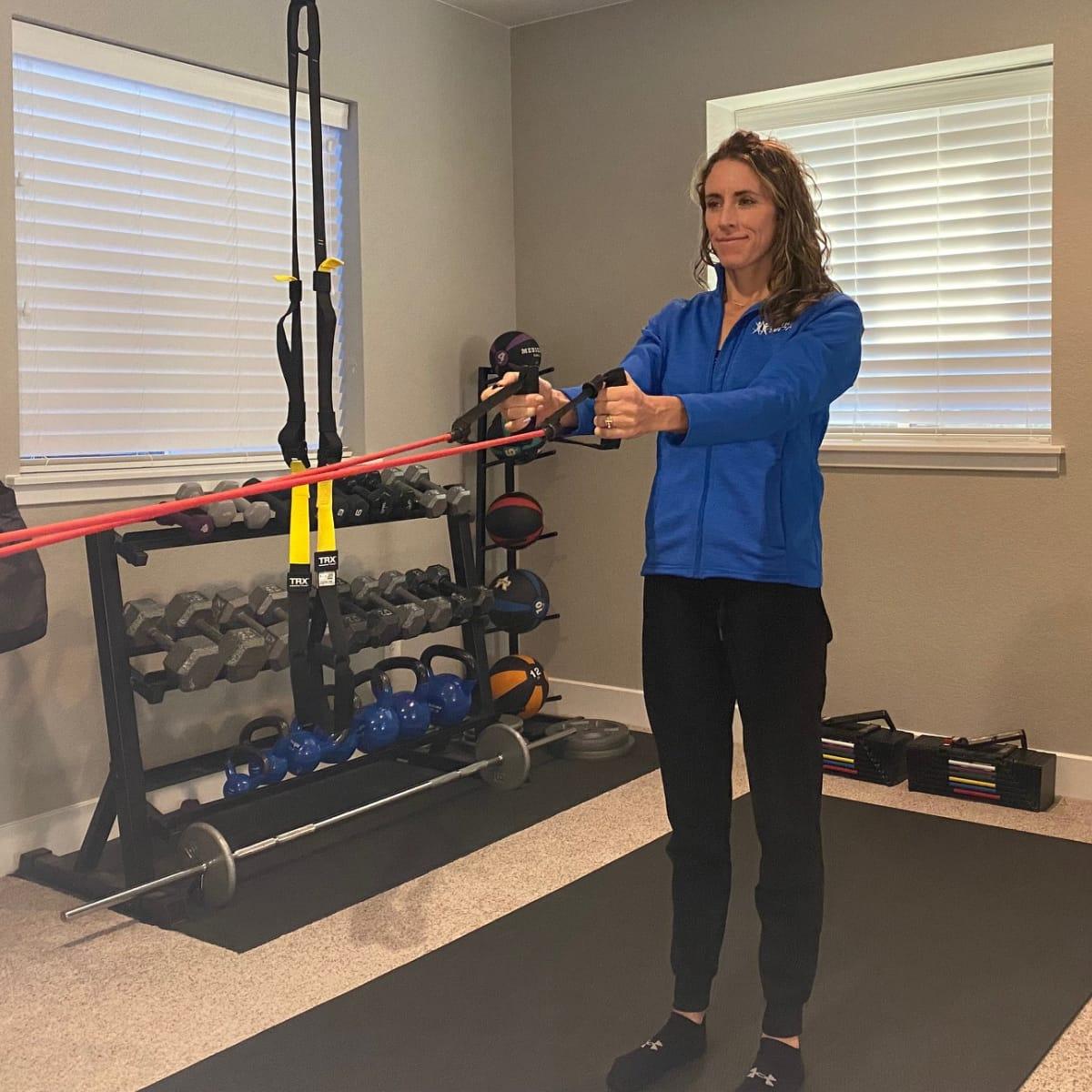
Setup:
- Anchor a resistance band at chest height (secure it to a sturdy surface or door).
- Stand facing the anchor point, holding one end of the band in each hand.
Starting position:
- Stand with your feet shoulder-width apart, knees slightly bent.
- Extend both arms forward, keeping slight tension in the band.
Row and rotate:
- Pull your right hand back toward your torso, bending your elbow and squeezing your shoulder blade toward your spine.
- As you row, rotate your torso to the right, allowing your hips to follow slightly.
- Return to the starting position with control.
Alternate:
- Pull your left hand back in the same manner, rotating your torso to the left.
- Continue alternating sides in a smooth, controlled motion.
Repeat:
- Perform 10–16 total repetitions (5–8 per side), rest, and repeat for 2–3 sets as comfortable.
To make it easier: Row with both arms at the same time without rotating.
To make it harder: Use a band with a heavier resistance and further rotate your body by taking a step in the direction of your rotation.
Where Resistance Bands Fit in Your Weekly Routine
Resistance bands are a simple yet powerful tool for improving strength, balance, and mobility at any fitness level. By incorporating these versatile exercises into your weekly routine, you can build a stronger, more resilient body that supports your daily activities and helps prevent injury. Whether you're looking to maintain independence, enhance functional movement, or just try something new, resistance band training is a great choice.
Feel free to reach out if you have any specific questions regarding these exercises. We use bands in both in-home personal training and online personal training, so they're an easy way to train with us wherever you are.
Kristen
Try the recipe: This garlic butter shrimp with zucchini noodles is a healthy, tasty, and simple way to enjoy shrimp — get the recipe.
Sources
- Lopes JSS, Machado AF, Micheletti JK, de Almeida AC, Cavina AP, Pastre CM. Effects of training with elastic resistance versus conventional resistance on muscular strength: a systematic review and meta-analysis. SAGE Open Med. 2019;7:2050312119831116. View source
This article is for general education and isn't medical advice. Please talk with your doctor before starting a new exercise, nutrition or supplement routine. See our health disclaimer.


About the author
Kristen Nielsen
Kristen founded TogetherWON after watching what strength training could do for older adults — including her own grandparents. She's an ACE Certified Personal Trainer with 10+ years in functional aging, a University of Central Florida graduate, and a former Division I swimmer and track & field athlete.
Senior Fitness Specialist · Functional Aging Specialist · Parkinson's Disease Specialist · Brain Health Trainer · Corrective Exercise Specialist
want these in your inbox?
Get my Saturday letters
One idea for your body, brain or balance each week, usually with a recipe. Unsubscribe any time.
Keep reading
Body · Stories
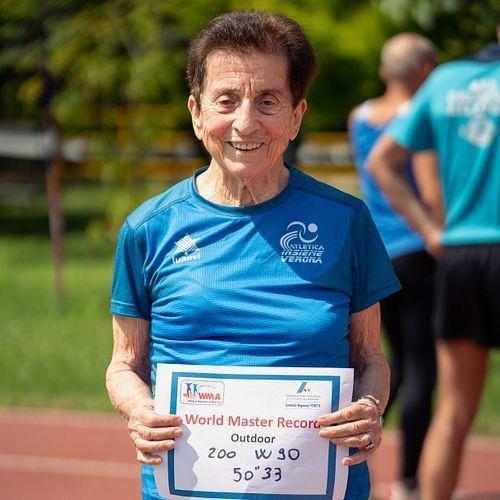
Building Muscle at 91: What a Sprinter Teaches Us
Researchers tested the muscles of a 91-year-old world-record sprinter. What they found shows why strength and power stay trainable as we age.
September 19, 2026 · 3 min read

Brain · Body
Music and Movement: A Brain-Body Workout to a Song
Pick a favorite song and let it set your pace. This simple music-and-movement workout challenges your brain and body at any fitness level.
September 12, 2026 · 2 min read
Body
2-Minute Step Test: Check Your Cardio Fitness at Home
The 2-Minute Step Test is a simple at-home check of your endurance. Here's how to do it, how to compare your score, and why cardio fitness matters.
September 5, 2026 · 2 min read