
Recovery · Body
How to Rebuild Strength After an Injury Over 60
Coming back from an injury after 60? Six steps to rebuild strength safely, from respecting healing time and easing back into load to using pain as a guide.
July 12, 2025 · 3 min read
Briargate sits on the north side of Colorado Springs, the same side of town as Kristen’s home studio. Train one-on-one in your own living room or at the studio, with a program built for adults over 60.
We focus on the stretch after physical therapy ends, when a new knee or hip or a hospital stay has left you less sure of yourself, and on steady strength and balance work for the long run. It all starts with a free 1-hour consultation.
Last updated
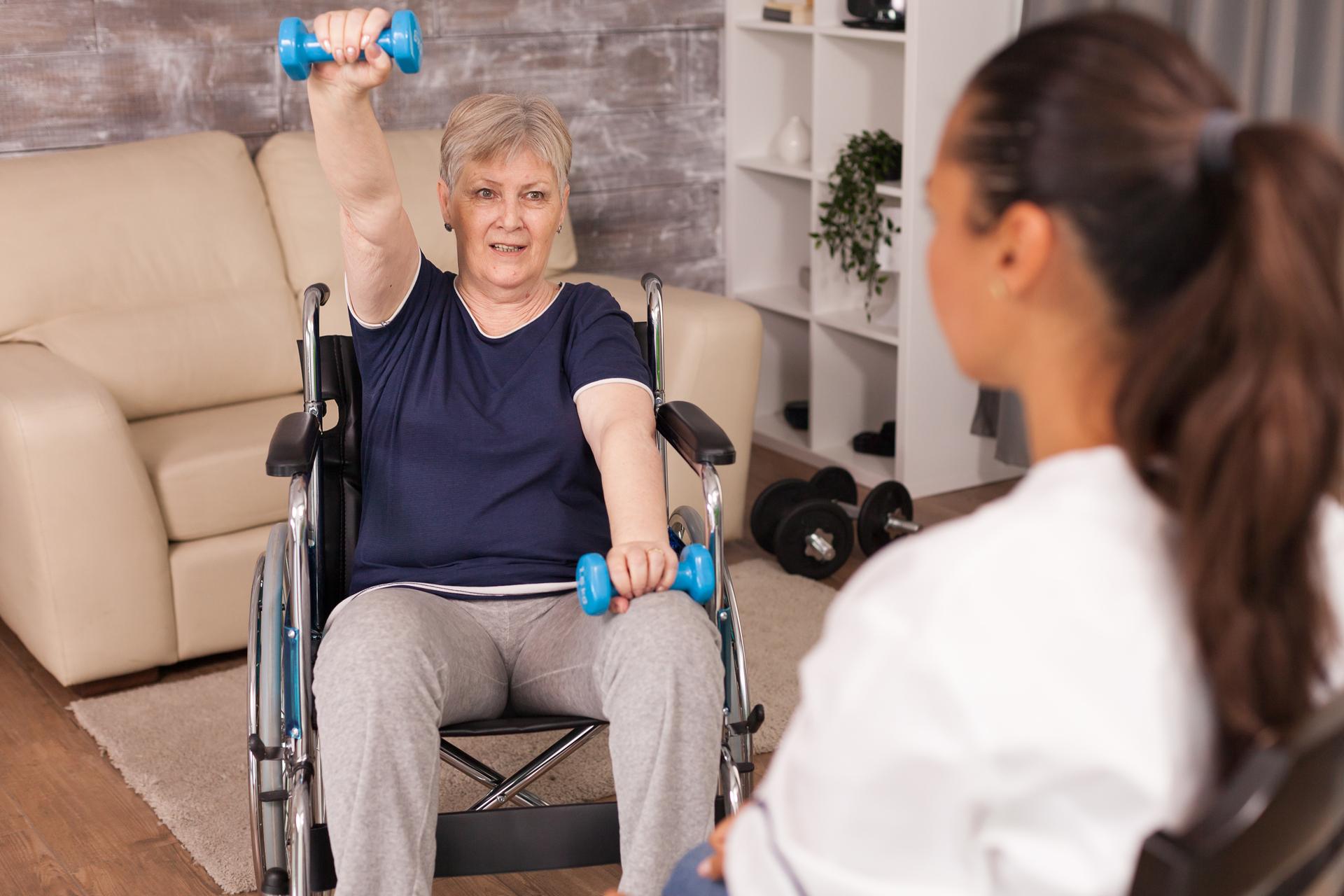
Some clients like the privacy of their own living room; others like getting out of the house. Kristen’s home studio, also on the north side of the city, gives you both options.
About one in three adults over 70 leave the hospital less able to handle everyday tasks than before. When physical therapy ends, we keep the progress going at home.1
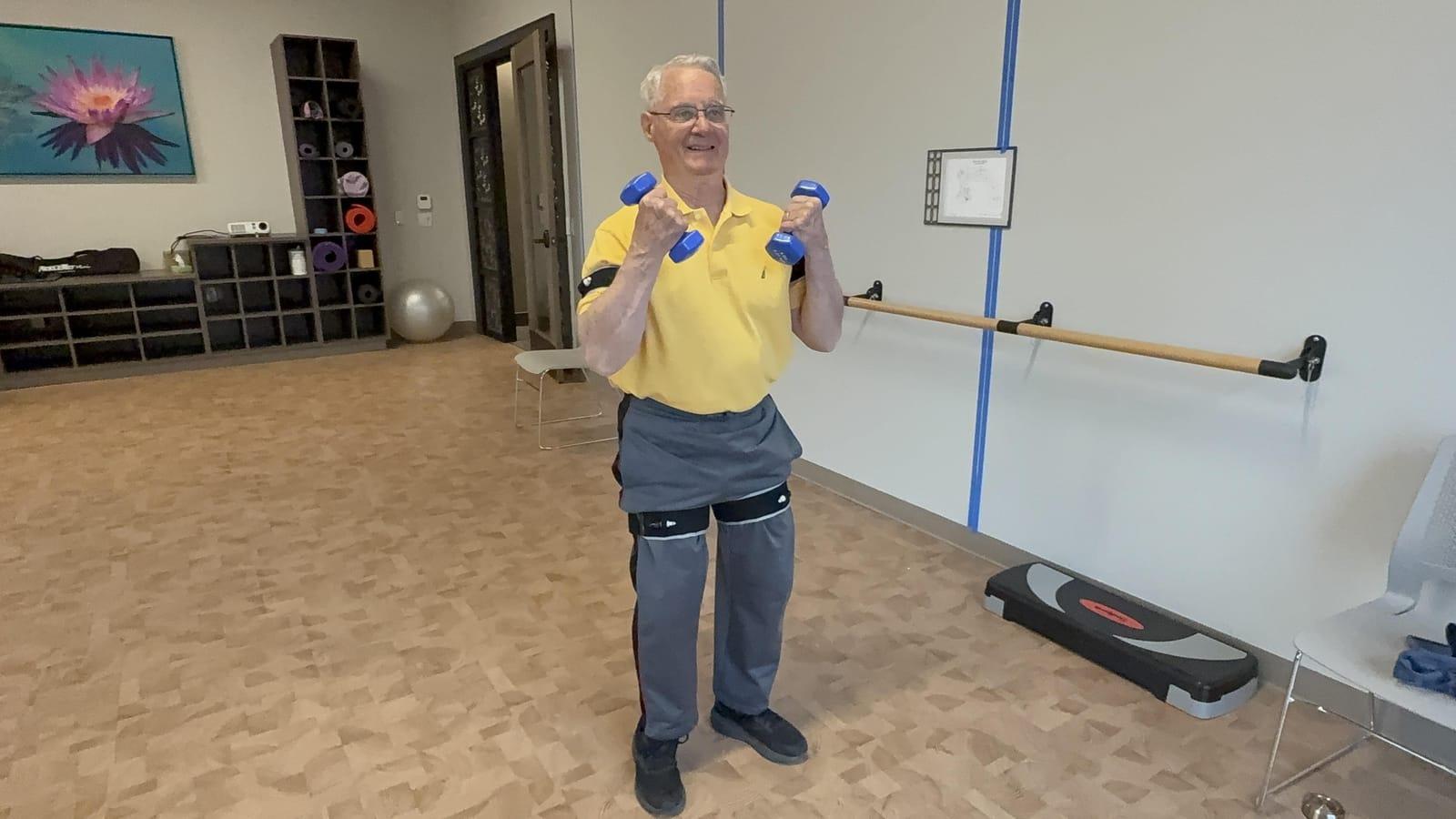
BFR training challenges your muscles with light weights, which helps when sore knees or an old shoulder injury rule out heavy lifting.
We start from where you are right now. Here’s where each program usually fits.
New knee or hip
Once therapy wraps up, we rebuild strength, walking and confidence around your new joint, starting with what it can handle and progressing from there.
After therapy
After surgery, an injury or a hospital stay, we follow your care team’s guidance and keep the gains you made in therapy from slipping away.
Light weights
At 82, our client Pat gained strength in a previously injured shoulder and more endurance in his legs, without making his knee arthritis worse. We screen your medical history before you start.
Together
In one study, adults who joined a fitness program with their spouse stuck with it far better over 12 months than those who joined alone. You and your spouse are welcome to train side by side.2
What the handoff usually looks like, with something to read at each step.
Before therapy ends
Call while you’re still in therapy, and we’ll plan your first session for the week it finishes, so your progress doesn’t stall.
Your first visit
We go over your surgery and restrictions and time a 30-second chair stand, a simple test you can try on your own first.
The first few months
Sessions start well inside your limits and build steadily, the way Julie rebuilt after her hip replacement by starting with only what she could handle.
Every week
Sleep, stress and rest days shape how quickly you get stronger, so we plan them into your week along with the workouts.
Small changes are easy to explain away. If any of these sound familiar, now is a great time to start.
A free consultation is a good next step. We’ll check your strength and balance and tell you honestly what we see.
Reach us at (719) 286-9450. Tell us a little about your goals and any recent surgery or falls.
At home or at the studio, we test your strength, balance and walking and go over your health history.
We recommend a program, decide on home, studio or both, and set regular weekday session times.
Your trainer leads each session and leaves you short routines to log between visits, then raises the challenge as you improve.
In Briargate you can train at home, at our nearby north Colorado Springs studio or online, and the price is the same either way: from $198 a month for one session to $720 a month for two sessions a week.
Recovery · Body
Coming back from an injury after 60? Six steps to rebuild strength safely, from respecting healing time and easing back into load to using pain as a guide.
July 12, 2025 · 3 min read
Stories · Body
In 13 blood flow restriction (BFR) sessions, 82-year-old Pat got stronger in every measured category using light weights. Here are his results.
May 16, 2026 · 4 min read

Stories · Body
It's not too late to start exercising. A trainer on the one thing her successful clients share, whatever their starting point — hope that today matters.
May 3, 2025 · 2 min read
Yes. We come to homes throughout Briargate, including Pine Creek, Wolf Ranch, Cordera and Northgate. If you’d rather get out of the house, book your sessions at the studio.
Usually, yes. Once your care team clears you for exercise, we can start. At the free consultation we ask about your surgery or illness and any restrictions, and we begin well within them.
If therapy is still going, we can plan to start the week it ends, so there’s no gap.
Training after physical therapyIn-home sessions are scheduled on weekdays between 8 a.m. and 5 p.m. We’ll find regular times that fit your week, and live online sessions are another option when you’re busy or away.
Yes. Sit in a sturdy chair, cross your arms over your chest and stand up as many times as you can in 30 seconds. Our free tool shows how your count stacks up for your age.
Try the chair stand testOften, yes. With blood flow restriction (BFR), a cuff on your arm or leg gently limits blood flow, so light resistance still works your muscles hard without heavy loads on sore joints.
Because it isn’t right for everyone, a health screening comes first, and sometimes a note from your doctor.
Pat’s BFR results at 82Your first session is free: a one-hour consultation and movement assessment where we learn your goals and build a plan that fits your life.