Training after knee or hip replacement in Colorado Springs
Get your strength, balance and confidence back. When physical therapy ends, TogetherWON’s posthab training helps adults over 60 in Colorado Springs, Monument and online keep getting stronger after a knee or hip replacement, starting with a free consultation.
Last updated
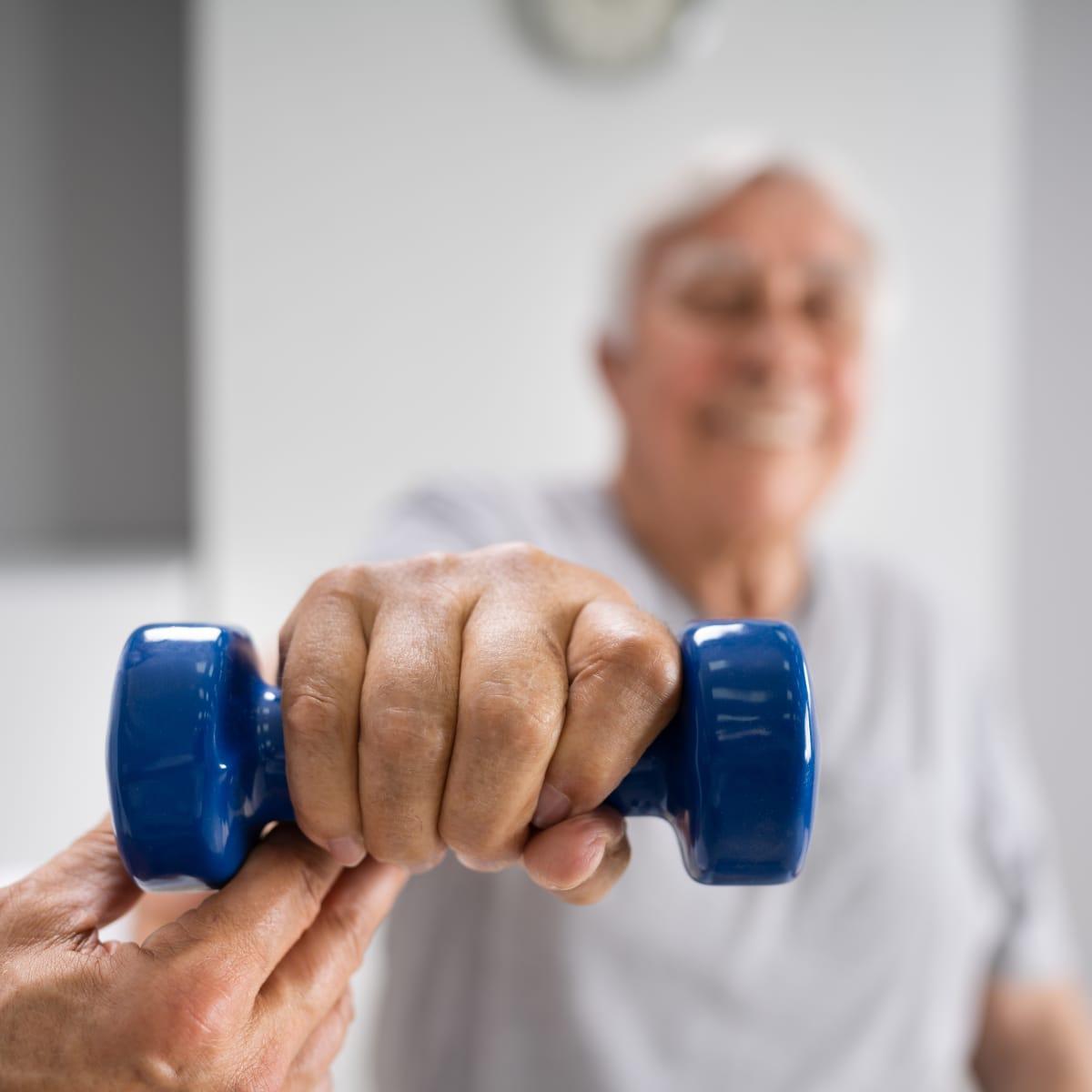
No gap after therapy
Start as your physical therapy ends, with your therapist’s home exercises and your surgeon’s guidance built into your plan.
Strength that keeps building
We progress your training steadily, so you keep getting stronger instead of leveling off.
Steady and confident
Balance and brain training help you walk, climb stairs and get around with confidence on your new joint.
Physical therapy ended. Your recovery didn’t.
Physical therapy is built to get you through the first phase of recovery: walking without help, bending your new knee or hip far enough, and managing safely at home. Strength, balance and stamina often take months longer to come back, and without a next step, many people stall or slowly slide backward.
You might feel nervous on stairs and curbs, frustrated that you’re not where you hoped to be, or afraid of a fall undoing all your hard work.
You had surgery to get your life back. Your progress shouldn’t stop just because your therapy did.
Sound familiar?
- You’ve finished, or are finishing, physical therapy after a knee or hip replacement
- You still feel weaker or less steady than you’d like, months or even years after surgery
- Stairs, curbs or getting up from the floor make you nervous
- You want to get back to walking, hiking, golf, travel or time with grandkids
Why recovery can’t stop when therapy does
Physical therapy gets you walking again. Research shows strength and steadiness take much longer to come back after a knee or hip replacement.
- less thigh strength one month after a knee replacement than before surgery1
- 62%
- less thigh strength a year after a hip replacement than healthy adults have2
- 17%
- of people with a knee replacement have trouble with some everyday activities, compared with 22% of people with healthy knees3
- 52%
- of people who fell before a knee replacement fell again in the year after surgery4
- 46%
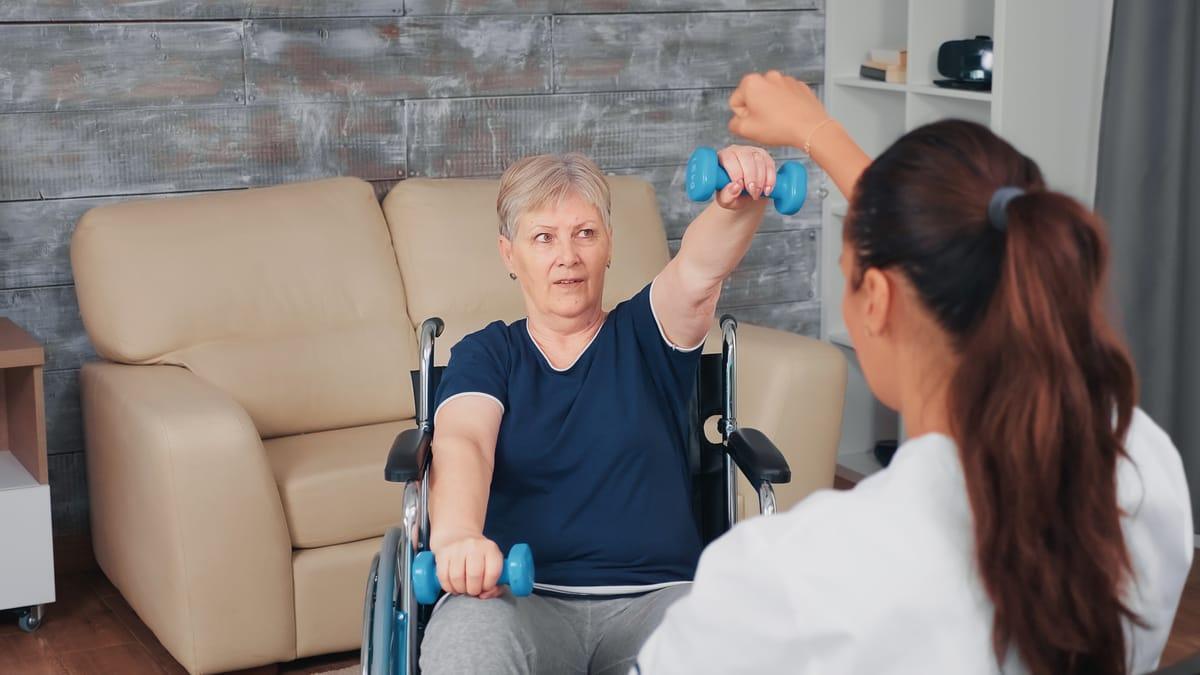
TogetherWON is your next step after therapy
At TogetherWON, we know how hard you worked in therapy, and how discouraging it is when progress stalls. We saw it firsthand when our founder’s mom, Julie, was hesitant to get moving again after her hip replacement. Today, she calls that hip one of her “better” joints.
- Trainers who specialize in older adults, led by TogetherWON founder Kristen Nielsen, a Senior Fitness Specialist
- We build on your physical therapist’s home program instead of starting over
- Progressive strength, balance and brain training that keeps challenging you as you improve
- Short daily workouts in our app between sessions, so your progress doesn’t stall
How posthab helps your body, brain and balance
Here’s what the research says about recovery after joint replacement, and why continued training makes a difference.
Body
Strength doesn’t fully come back on its own
A month after knee replacement, thigh strength can drop by more than 60%. A year later, people in one study were still 28% to 39% weaker in the thigh and 43% to 51% slower on stairs than people their age. After hip replacement, thigh weakness can linger for a year.1,2,5
Progressive training works
In a trial of 200 people after knee replacement, those who did progressive strength training were stronger and moved better a year later than people who had standard care alone.6
Brain
Thinking while walking
Walking while talking or thinking is part of everyday life. After knee replacement, one study found pain improved, but walking while doing a mental task, balance and balance confidence had not improved 4.5 months later. We train your brain and body together.7
Confidence drives recovery
Believing in your ability to recover, measured after surgery, is consistently linked with walking farther, walking faster and exercising more often. Every session is designed to build that confidence.8
Balance
Falls remain a real risk
In one study, nearly half of people who had fallen before knee replacement fell again in the year after surgery.4
Balance training helps
Across the research, adding balance training after knee replacement improved balance, walking and day-to-day function more than standard exercise alone, and the gains lasted 6 to 12 months.9
Keep progressing in 3 simple steps
Book your free consultation
Call or send a message. In one free hour, we review your surgery, your therapy and any restrictions, and check your strength and balance.
Get your posthab plan
Share your discharge notes or home exercises, and your trainer builds on them with strength, balance and brain training that fits your body.
Keep getting stronger
Train at home or online, with short workouts in our app between sessions. Your trainer raises the challenge as you improve.
Your recovery timeline
Recovery from a joint replacement doesn’t end when therapy does. Here’s how training fits in over the months that follow.
Your therapist leads
During physical therapy
Physical therapy restores motion and gets you walking safely. Follow your therapist’s plan, and reach out to us before discharge so there’s no gap.
Pick up where therapy left off
When therapy ends
Your free consultation reviews your discharge notes and measures your strength and balance, and your plan starts from your home exercises.
Keep building
Over the months that follow
Progressive strength training, balance on stairs, curbs and uneven ground, and walking while thinking or talking, with the challenge rising as you improve.
Stay strong for good
For a year and beyond
Many people are still weaker than their peers a year after surgery. Ongoing training protects your new joint, your other joints and your independence.
What’s at stake if you stop at therapy
- Lingering weakness that makes stairs, curbs and getting up harder than they should be
- A higher risk of falling, just when you’re trusting a new joint
- Slowly losing the progress you worked so hard for
What it looks like when you keep going
- You feel strong and steady on stairs, curbs and uneven ground
- You trust your new joint and worry less about falling
- You’re back to walking, travel, golf and time with the people you love
- You have a trainer and a plan to keep you strong for years to come
Stories from the TogetherWON community
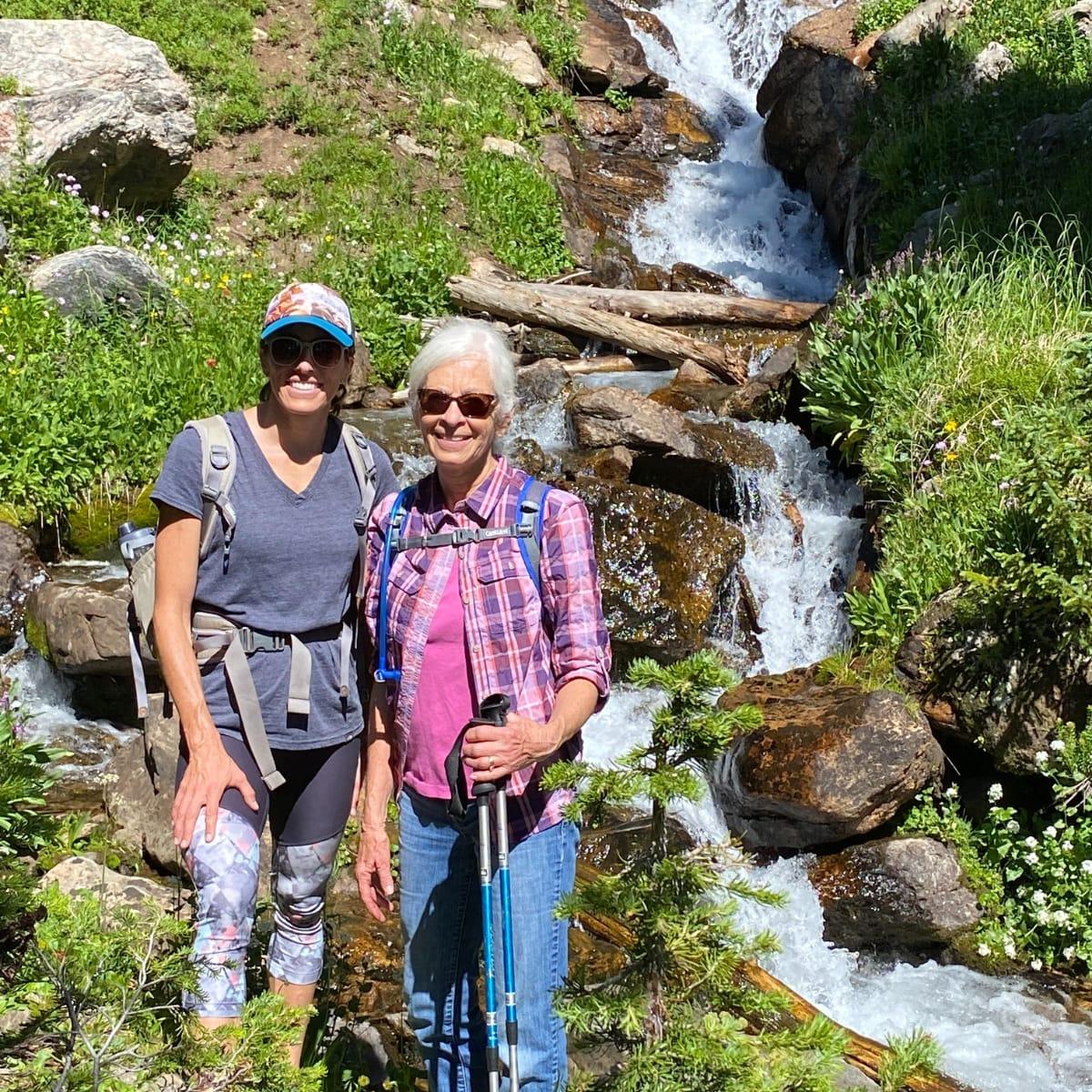
“I was hesitant to get going again, but when I did, you assessed my needs and helped me start with what I could handle. Now, that hip is one of my ‘better’ joints.”
Julie, 75, after her hip replacement Strong at 75 After a Hip Replacement: Julie's Story
Read the story
“Freedom is earned one workout, one walk, one set of stairs, and one small decision at a time.”
Kristen, on rebuilding after a setback Staying Independent as You Age: Freedom Is Earned
Read the story
“Hope is the element that successful clients have in common.”
Kristen, on what her successful clients share Is It Too Late to Start Exercising? A Trainer's Answer
Read the story
Training after joint replacement in Colorado Springs, explained
Posthab is the training you do after physical therapy ends to keep recovering from a knee or hip replacement. Research shows many people are still weaker, slower on stairs and less steady than their peers a year after surgery, and that progressive strength and balance training helps close that gap.
TogetherWON starts where your discharge notes leave off. After a free one-hour assessment, we build on your therapist’s home exercises and gradually add the strength, balance and thinking-while-moving challenges everyday life demands, from curbs and stairs to hiking trails.
You can train in your home anywhere in Colorado Springs and the Tri-Lakes area, or online from anywhere in the U.S., with short app workouts in between so your progress doesn’t stall between sessions.
want these in your inbox?
Get my Saturday letters
One idea for your body, brain or balance each week, usually with a recipe. Unsubscribe any time.
One-on-one training starts at $198 a month, month to month, and your first one-hour consultation is free.
Frequently asked questions
When can I start training after a knee or hip replacement?
Once your surgeon or physical therapist clears you for exercise. Many people start with us as their therapy ends, so there’s no gap in their progress. Share any restrictions from your care team and we’ll build your plan around them.
Why does physical therapy end before I feel fully recovered?
Insurance, including Medicare, covers therapy while it’s medically necessary. Once you can walk safely and bend your new joint far enough, it typically stops. Getting back your full strength, balance and stamina often takes months longer, and that’s where we come in.
Is it ever too late to get stronger after a joint replacement?
No. Many people still have weakness or balance problems a year or more after surgery, and strength training can help at any age. We start from where you are today and build from there.
Sources
- Mizner RL, Petterson SC, Stevens JE, et al. Early quadriceps strength loss after total knee arthroplasty: the contributions of muscle atrophy and failure of voluntary muscle activation. J Bone Joint Surg Am. 2005;87(5):1047-1053. View source
- Judd DL, Dennis DA, Thomas AC, et al. Muscle strength and functional recovery during the first year after THA. Clin Orthop Relat Res. 2014;472(2):654-664. View source
- Noble PC, Gordon MJ, Weiss JM, et al. Does total knee replacement restore normal knee function? Clin Orthop Relat Res. 2005;(431):157-165. View source
- Swinkels A, Newman JH, Allain TJ. A prospective observational study of falling before and after knee replacement surgery. Age Ageing. 2009;38(2):175-181. View source
- Walsh M, Woodhouse LJ, Thomas SG, Finch E. Physical impairments and functional limitations: a comparison of individuals 1 year after total knee arthroplasty with control subjects. Phys Ther. 1998;78(3):248-258. View source
- Mizner RL, Petterson SC, Stevens JE, et al. Early quadriceps strength loss after total knee arthroplasty: the contributions of muscle atrophy and failure of voluntary muscle activation. J Bone Joint Surg Am. 2005;87(5):1047-1053. View source
- Azzam I, Rozen N, Eliyahu A, et al. The effect of total knee replacement on dual-task gait performance in older adults. Phys Ther. 2024;104(8):pzae067. View source
- Magklara E, Burton CR, Morrison V. Does self-efficacy influence recovery and well-being in osteoarthritis patients undergoing joint replacement? A systematic review. Clin Rehabil. 2014;28(9):835-846. View source
- Doma K, Grant A, Morris J. The effects of balance training on balance performance and functional outcome measures following total knee arthroplasty: a systematic review and meta-analysis. Sports Med. 2018;48(10):2367-2385. View source
Ready to get started?
Your first session is free: a one-hour consultation and movement assessment where we learn your goals and build a plan that fits your life.