
Brain
Forgetful After 60? 7 Habits That Help Protect Your Memory
Forgetting why you walked into a room is often normal with age. Seven habits, from strength training to sleep, that help protect your memory after 60.
August 15, 2026 · 4 min read
Exercise can’t cure dementia, but it can help someone living with memory loss stay stronger, steadier and more engaged in the moments that matter. And staying active is one of the most powerful things anyone can do for brain health.
TogetherWON trainers specialize in older adults and adapt every session for cognitive changes, with simple one-step instructions, a calm pace, favorite music and visual cues. We train in your home in the Colorado Springs area, with family and caregivers welcome, and lead group classes in memory care communities.
Last updated
Leg strength and walking practice for the movements that keep someone independent: standing up, walking, stairs and getting in and out of a car.
Movement paired with simple thinking tasks and pattern activities, at a pace that challenges without overwhelming.4
Supported balance practice that builds confidence on two feet and lowers the risk of falls.5
Exercise isn’t a cure, but the evidence that staying active supports the brain keeps growing.
Dementia affects everyone differently, so every session is built around the person in front of us.
Trouble following several steps
Short, simple instructions, one direction and one task at a time, with each movement shown as well as explained.
Feeling overwhelmed
Training at home avoids the noise and choices of a busy gym. Fewer words, fewer options and a slower pace make it easier to take part.
Movement that feels stuck
A favorite song or a marker on the floor can give the brain another signal to follow. One of our clients trains to the Beach Boys and Roy Orbison.
Less steady on their feet
Sit-to-stands, step practice and supported balance work for the movements that keep someone independent at home.
Fewer chances to connect
Partner activities and family members joining in add social connection, and caregivers join the TogetherWON app for free.
Good days and hard days
Every session adjusts to how the person is doing that day, and progress is measured in small, meaningful wins.
Training looks different as needs change. Here’s how it fits at each stage, always with guidance from the person’s doctor.
Noticing memory changes
Challenging cardio, strength training and moving-while-thinking drills, the habits linked with a healthier brain.
After a diagnosis
Regular strength, balance and brain-body training, with routines set up early so they become familiar habits and family learns alongside.
As needs grow
Shorter instructions, favorite music and the same routine at the same time of day, with a caregiver helping between sessions.
In memory care
Professionally led group classes for memory care and assisted living residents, who join seated, standing with support or independently.
A little practice between sessions helps. These simple habits make it easier for both of you.
Caregivers and family members join the TogetherWON app for free, so you can see the exercises and follow progress together.
Your free consultation covers health history, what the person enjoys, what they still do well and what the family hopes for. Family members are welcome to join.
One instruction at a time, shown as well as said, with a slower pace whenever the brain needs more time to process.
Favorite songs and visual markers on the floor give the brain another signal to follow when movement feels stuck.
Progress is measured in what matters to the family, like a few steps without a walker or standing up from a chair with less help.
In-home training uses our standard plans, from $198 to $720 a month, month to month, and caregivers join the app at no cost. Long-term care insurance can sometimes help, so ask us whether a policy might qualify.
$198a month
For people who are comfortable exercising independently but want an expert to create their program, oversee their progress and provide accountability.
Most popular
$447a month
For people who want regular coaching, progression and accountability.
$720a month
For people who want the highest level of live coaching, hands-on guidance and support.
Caring for a parent with memory loss? You can book the free consultation for them and be there for it, and we’ll show you how to help between sessions. Our guide for families covers how to bring up exercise gently.
How to help an aging parent start exercisingBook a consultation for a parent
“Kristen is a picture of warmth and kindness mixed with knowledge and expertise… This program adjusts to the needs of clients based on injuries and lifestyle changes — it is excellent.”
Client story
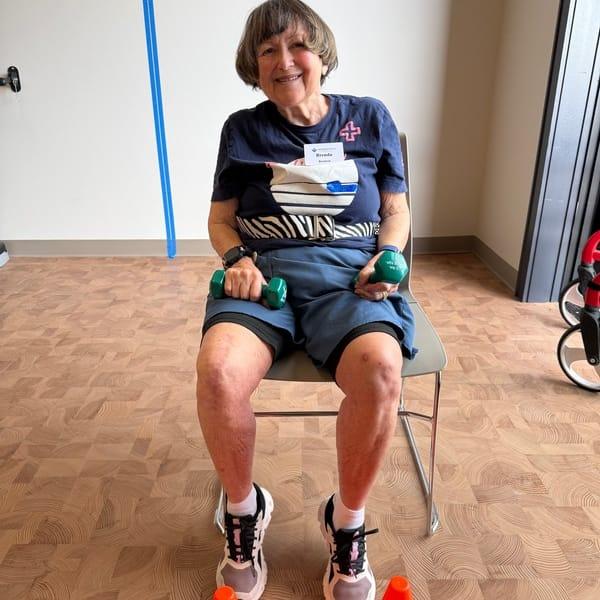
Brenda, a former English teacher living with dementia and Parkinson’s-type symptoms, trains with music, visual cues and one-step instructions, and has taken steps without her walker.
Read the storyBrain
Forgetting why you walked into a room is often normal with age. Seven habits, from strength training to sleep, that help protect your memory after 60.
August 15, 2026 · 4 min read

Brain · Body
Strength training helps your brain as well as your muscles. What the research shows, how BDNF works, and a simple mini-circuit to try at home.
April 26, 2025 · 2 min read

Brain · Body
Brain-body exercises pair movement with a mental challenge. Try the Rule-Switch March, a simple standing or seated drill for focus and balance.
July 11, 2026 · 3 min read
Yes, in ways that matter day to day. Exercise can’t cure dementia or stop it, but it can help someone stay stronger, steadier and more engaged, and keep doing everyday things like walking and getting up from a chair.
Research also shows that combining movement with thinking tasks helps both thinking and physical function in older adults, including people with mild cognitive impairment.
Yes, with the right setup. We start with a consultation and movement assessment, keep a sturdy chair or counter within reach, use supported balance work and adjust each session to how the person is doing that day.
Check with their doctor before starting, especially if they have heart disease or a recent change in their health.
By keeping it simple, familiar and fun: one instruction at a time, favorite music, visual cues and activities built around what the person enjoys. We slow down when the brain needs more time and celebrate small wins.
Yes. We bring professionally led Body • Brain • Balance group classes to assisted living and memory care communities in Colorado Springs, Monument and the Tri-Lakes area. Residents take part seated, standing with support or independently.
Group training for senior living communitiesYour first session is free: a one-hour consultation and movement assessment where we learn your goals and build a plan that fits your life.