Forgetful After 60? 7 Habits That Help Protect Your Memory
By Kristen Nielsen, Founder & Senior Fitness Specialist
· Updated · Brain · 4 minute read


Part of our guide: Exercise for Brain Health After 60
Key takeaways
- Some memory slips, like slower recall of names, are normal with age, and 7 habits help protect memory: cardio, strength training, brain challenges, moving while thinking, balance, whole foods and sleep.
- Aerobic exercise and strength training both appear to benefit the brain, and combining thinking tasks with movement and balance work challenges mind and body together.
- An overall anti-inflammatory eating pattern, such as Mediterranean-style eating, and protecting your sleep also support a healthy brain.
Walking into a room and forgetting why you went there, or searching for a name or word that used to come easily, is often a normal part of aging. Some changes in memory are normal: our brains may process information a little more slowly, and retrieving something we know can take longer than it used to.
Those moments can be frustrating — and as we get older, it's natural to wonder whether they mean our memory is getting worse. But here's the encouraging part:
How our brains age isn't completely out of our control.
The way we move, challenge our brains, eat, sleep, and take care of our overall health can all influence cognitive health.
And that's one reason I talk so much about training the Body, Brain, and Balance together, and why exercise for brain health is such a big part of what I teach.
Can Exercise Improve Your Memory?
Yes, exercise can help: if you want to protect your brain, exercise matters. Exercise isn't just an investment in your muscles and heart — it's an investment in your brain too.
In a 2011 randomized study of older adults, a year of aerobic exercise increased the size of the hippocampus — an area heavily involved in memory — by about 2% and was associated with better memory performance.
Strength training also appears to benefit several areas of cognition, including executive function.
So keep walking. Keep getting your heart rate up. And keep lifting weights.
Your brain has a stake in that workout too.
Why Combine Brain Challenges With Movement?
Moving while you think trains your brain the way you actually use it in daily life. Crossword puzzles, reading, and other mentally challenging activities are worthwhile. But in real life, we rarely use our brains while sitting perfectly still.
We walk through a store while remembering what we need. We carry on a conversation while navigating stairs. We change direction while responding to what's happening around us.
Our brains and bodies are constantly working together.
That's why we combine cognitive challenges with movement during in-home personal training — recalling words while balancing, reversing a sequence of numbers while exercising, or making decisions while stepping in different directions. You can try a few of these brain-body exercises at home.
Research on combined cognitive and physical training suggests that this type of training can improve aspects of both cognitive and physical function in older adults.
Don't Forget Balance
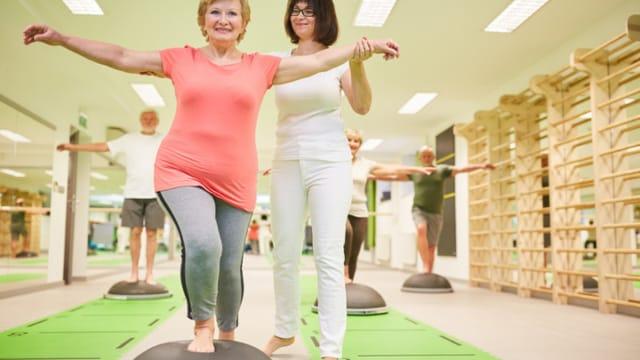
Balance itself requires your brain to process a tremendous amount of information: what you see, what you feel under your feet, where your body is in space, and how you need to respond.
Add a thinking task to that, and your brain and body have to communicate under more realistic conditions.
What Foods Help Protect Your Memory?
An overall anti-inflammatory eating pattern, rather than any single "brain food," appears to matter most. What we eat may also influence how our brains age.
Researchers are increasingly studying the relationship between chronic inflammation, diet, and cognitive health. Diets that are more inflammatory have been associated with a greater risk of cognitive impairment and dementia.
The encouraging part is that an anti-inflammatory eating pattern doesn't require an exotic list of "brain foods."
Think:
- Vegetables and fruits
- Berries
- Beans and legumes
- Nuts
- Whole grains
- Fish
- Olive oil and other minimally processed healthy fats
Mediterranean-style eating patterns — which emphasize many of these foods — have shown promising effects on cognition in clinical research.
That doesn't mean blueberries or olive oil are magic memory treatments. The evidence points much more toward the overall pattern of how we eat over time.
In other words, feed your brain much the same way you would feed the rest of a healthy body.
Does Sleep Affect Memory?
Yes. Don't overlook sleep: it plays an important role in helping the brain consolidate memories — taking information from the day and helping store it.
So protecting your sleep is part of protecting your brain too.
Seven Habits That Help Protect Your Memory
- Move enough to challenge your cardiovascular system.
- Strength train.
- Give your brain something new to solve.
- Think and move at the same time.
- Challenge your balance safely.
- Choose mostly whole, minimally processed foods.
- Protect your sleep.
We can't stop every change that comes with aging.
But when it comes to keeping our brains healthy, there is a lot more we can do than simply hope our memory stays sharp.
Kristen
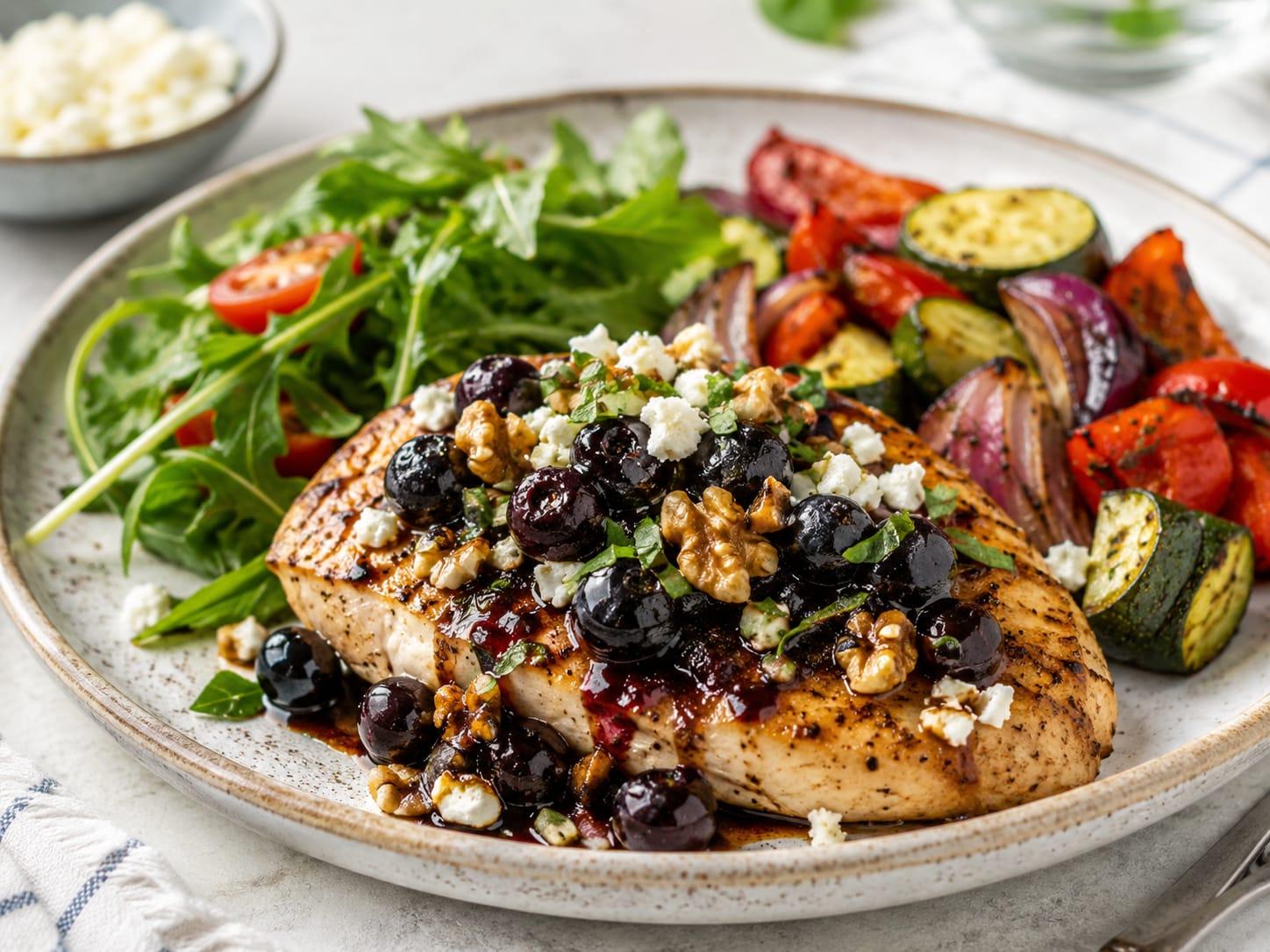
Try the recipe: It sounds a little unusual, but savory chicken with warm blueberries, balsamic, walnuts and herbs works very well — get the recipe.
Sources
- Erickson KI, Voss MW, Prakash RS, et al. Exercise training increases size of hippocampus and improves memory. Proc Natl Acad Sci U S A. 2011;108(7):3017-3022. View source
- Li Z, Peng X, Xiang W, Han J, Li K. The effect of resistance training on cognitive function in the older adults: a systematic review of randomized clinical trials. Aging Clin Exp Res. 2018;30(11):1259-1273. View source
- Gavelin HM, Dong C, Minkov R, et al. Combined physical and cognitive training for older adults with and without cognitive impairment: a systematic review and network meta-analysis of randomized controlled trials. Ageing Res Rev. 2021;66:101232. View source
- Charisis S, Ntanasi E, Yannakoulia M, et al. Diet inflammatory index and dementia incidence: a population-based study. Neurology. 2021;97(24):e2381-e2391. View source
- Valls-Pedret C, Sala-Vila A, Serra-Mir M, et al. Mediterranean diet and age-related cognitive decline: a randomized clinical trial. JAMA Intern Med. 2015;175(7):1094-1103. View source
- Mander BA, Rao V, Lu B, et al. Prefrontal atrophy, disrupted NREM slow waves and impaired hippocampal-dependent memory in aging. Nat Neurosci. 2013;16(3):357-364. View source
This article is for general education and isn't medical advice. Please talk with your doctor before starting a new exercise, nutrition or supplement routine. See our health disclaimer.

About the author
Kristen Nielsen
Kristen founded TogetherWON after watching what strength training could do for older adults — including her own grandparents. She's an ACE Certified Personal Trainer with 10+ years in functional aging, a University of Central Florida graduate, and a former Division I swimmer and track & field athlete.
Senior Fitness Specialist · Functional Aging Specialist · Parkinson's Disease Specialist · Brain Health Trainer · Corrective Exercise Specialist
want these in your inbox?
Get my Saturday letters
One idea for your body, brain or balance each week, usually with a recipe. Unsubscribe any time.
Keep reading

Brain · Body
Music and Movement: A Brain-Body Workout to a Song
Pick a favorite song and let it set your pace. This simple music-and-movement workout challenges your brain and body at any fitness level.
September 12, 2026 · 2 min read

Brain · Balance
Dual-Task Walking Exercises: Train to Walk and Think
Dual-tasking, or moving while thinking, can get harder with age, but it can be trained. Try three simple exercises that pair walking with a mental task.
August 1, 2026 · 3 min read
Brain · Body
Brain-Body Exercises for Seniors: The Rule-Switch March
Brain-body exercises pair movement with a mental challenge. Try the Rule-Switch March, a simple standing or seated drill for focus and balance.
July 11, 2026 · 3 min read