Body
What Is Blood Flow Restriction (BFR) Training?
Blood flow restriction (BFR) training builds muscle with very light weights. How it works, what the research says, and why it may be kinder to joints.
February 21, 2026 · 2 min read
Blood flow restriction (BFR) training uses specialized cuffs on the arms or legs so your muscles get a strong strengthening signal from very light weights, typically 20–40% of the most you could lift once.
That makes BFR a joint-friendly way to build muscle for older adults, especially with arthritis, a joint replacement or while recovering from surgery. TogetherWON offers BFR training in Colorado Springs, Monument and the Tri-Lakes area.
Last updated
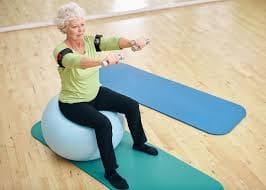
A 2019 review of studies in older adults found light-weight BFR built more strength than the same training without cuffs, and muscle growth similar to heavy lifting.1
Because the loads are light, BFR can challenge your muscles during pain flare-ups, with arthritis, or when heavy lifting isn’t an option.
In a review of BFR in musculoskeletal rehabilitation, it built more strength than the same light training without cuffs.2
Both build muscle. The difference is how much weight it takes to get there.
| BFR training | Traditional strength training | |
|---|---|---|
| Typical weight | 20–40% of the most you can lift once | 50–85% of the most you can lift once |
| Typical sets | 30 reps, then 3 sets of 15, with short rests | 2–3 sets of 6–12 reps |
| Stress on joints | Low, because the weights are light | Higher, because the weights are heavier |
| Muscle growth | Similar to heavy lifting in older adults | Strong |
| Strength gains | Good, though somewhat smaller than heavy lifting | The largest |
| Equipment | Special cuffs with controlled pressure, plus light weights or bands | Weights, machines or bands |
| Best for | Painful joints, arthritis, or times when heavy weights aren’t an option | People who can safely handle heavier weights |
BFR is safe for most people when it’s done with proper screening and equipment. Because it briefly limits blood flow, some health histories call for a doctor’s input first. Tell us if any of these apply to you:3
If none of these apply, BFR may be a great fit. In a survey of more than 12,000 people in Japan who trained with BFR, blood clots were reported in fewer than 1 in 1,000 (0.055%).
BFR isn’t right for everyone, so we review your health history before using the cuffs, and recommend medical clearance when needed.
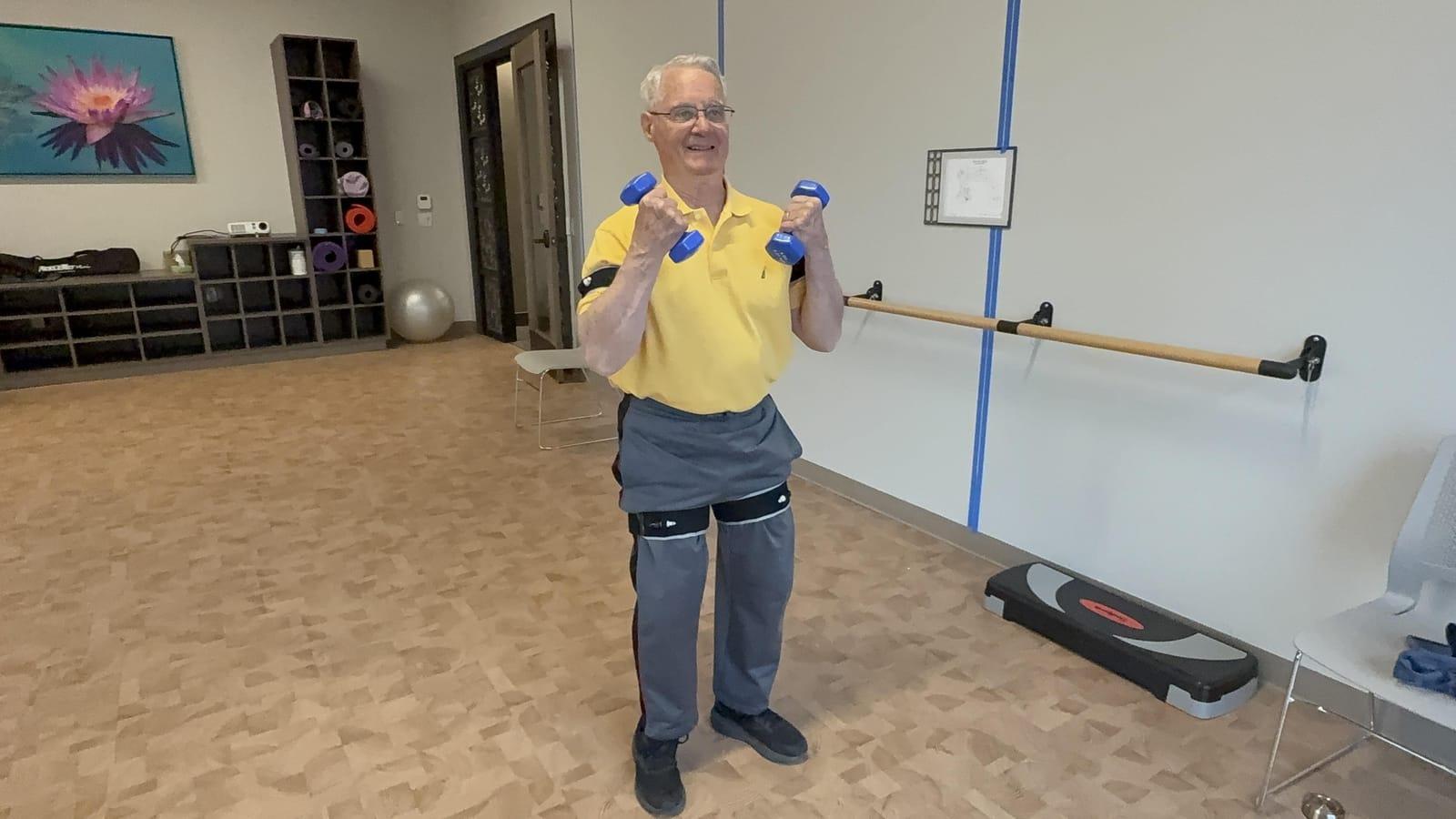
The cuffs gently limit blood leaving the muscle while you do simple exercises with light weights or bands.
Pat’s sessions lasted about 40 minutes and combined upper- and lower-body moves like sit-to-stands, rows, curls and grip squeezes.
We measure your strength and endurance so you can see the results for yourself.
One-on-one training starts at $198 a month, month to month, and your first one-hour consultation is free.
Body
Blood flow restriction (BFR) training builds muscle with very light weights. How it works, what the research says, and why it may be kinder to joints.
February 21, 2026 · 2 min read
Stories · Body
In 13 blood flow restriction (BFR) sessions, 82-year-old Pat got stronger in every measured category using light weights. Here are his results.
May 16, 2026 · 4 min read

Body · Brain
Beyond muscle: strength training can sharpen your brain, improve sleep, support gut health, build bone where it breaks most, and lift your mood.
July 19, 2025 · 3 min read
Blood Flow Restriction (BFR) training uses specialized cuffs on the arms or legs to build muscle with much lighter weights than traditional strength training.
Because the loads are light, BFR is gentler on joints, which makes it especially useful for older adults and people recovering from surgery or injury.
Your trainer reviews your health history before using BFR to make sure it is right for you.
For the right person, and with proper screening and equipment, research supports BFR as a safe and effective option for older adults. It isn’t right for everyone, which is why we review your health history first and recommend checking with your doctor.
Anyone with a history of blood clots, a clotting disorder, recent major surgery or a recent fracture should talk with their doctor first, and may not be a good candidate. We review your health history before using the cuffs and recommend medical clearance when needed.
It varies from person to person. As one example, our client Pat, 82, improved in every measured category after 13 sessions over 7 weeks.
Your first session is free: a one-hour consultation and movement assessment where we learn your goals and build a plan that fits your life.