What Is Blood Flow Restriction (BFR) Training?
By Kristen Nielsen, Founder & Senior Fitness Specialist
· Updated · Body · 2 minute read
Part of our guide: Strength Training for Seniors: The Complete Guide
Key takeaways
- Blood flow restriction (BFR) training uses a cuff on the arm or leg so very light weights, often 20–30% of your usual load, can build strength and muscle.
- A 2017 review found low-load BFR training significantly improved muscle strength and size in older adults, often comparable to traditional heavy training.
- Because it avoids heavy loads, BFR may be kinder to the joints, but it isn't for everyone and screening matters.
Blood Flow Restriction (BFR) training is a way to build strength and muscle with very light weights while wearing a special cuff on your arm or leg. It's something you may start hearing more about, and it's one of the options I cover in my guide to strength training for seniors.
It might sound intense, but the idea behind it is actually pretty simple — and pretty fascinating.
How Does BFR Training Work?
BFR training uses a specialized cuff placed at the top of the arm or leg. The cuff gently limits the blood leaving the muscle (while still allowing blood to enter), and then you perform exercises using very light weights — often just 20–30% of what you could normally lift.
Here's the interesting part:
Even though the weights are light, your muscles respond as if they're working much harder.
In other words, you can stimulate strength and muscle growth without having to lift heavy loads.
Why Does BFR Matter for Older Adults?
It offers a way to keep building muscle when heavy weights aren't an option. As we get older, maintaining muscle is critical. Muscle supports:
- Balance
- Joint protection
- Bone health
- Blood sugar regulation
- Independence
But not everyone can — or should — lift heavy weights. Arthritis, joint replacements, tendon issues, or simple discomfort can limit how much load the body tolerates.
BFR offers another option.
Does BFR Training Really Build Muscle?
Research in older adults suggests it can.
A 2017 systematic review and meta-analysis published in Experimental Gerontology found that low-load BFR training significantly improved muscle strength and muscle size in older adults. In many cases, the improvements were comparable to traditional heavy resistance training.
That's powerful — especially for those who can't comfortably lift heavy.
A small 2023 study of young men with obesity, published in Frontiers in Physiology, found that low-intensity exercise combined with BFR improved glucose and lipid metabolism markers. Because muscle plays such a large role in regulating blood sugar, this opens the door to potential metabolic benefits as well.
BFR is also being used more frequently in rehabilitation settings. A 2025 review published in Medicina highlighted its effectiveness in reducing muscle loss and improving strength when heavy resistance training isn't appropriate — including after knee surgeries and joint replacements. Research in total knee arthroplasty patients has shown improved quadriceps strength and functional outcomes when BFR is introduced safely and appropriately.
In short: it's not just a fitness trend. It's being used in clinical settings for a reason.
Is BFR Training Easier on Your Joints?
It may be, because the weights are so light, though it isn't right for everyone. What excites me most is this:
BFR may allow us to train muscles effectively while being kinder to the joints.
For many older adults, that combination can feel like a game changer — especially during periods of pain, flare-ups, or recovery.
It's not for everyone, and screening matters. But the growing body of research suggests it can be a valuable tool when used properly. To see what it looks like in real life, read how one client got stronger at 82 with BFR.
If you're curious or just want to talk through it, I'm always happy to answer questions.
Kristen
Try the recipe: Light, high-protein and ready in about 20 minutes — my 5-ingredient lemon chicken & spinach soup — get the recipe.
Sources
- Patterson SD, Hughes L, Warmington S, et al. Blood flow restriction exercise: considerations of methodology, application, and safety. Front Physiol. 2019;10:533. View source
- Su Y, Wang F, Wang M, He S, Yang X, Luan Z. Effects of blood flow restriction training on muscle fitness and cardiovascular risk of obese college students. Front Physiol. 2023;14:1252052. View source
- Tiss B, Layouni S, Ghali H, et al. Blood flow restriction training in knee arthroplasty: a systematic review of current evidence on postoperative muscle strength and function. Medicina (Kaunas). 2025;61(10):1879. View source
- Kwon S, Bae KC, Yon CJ, Kim DH. Current narrative review—application of blood flow restriction exercise in clinical knee problems. Medicina (Kaunas). 2025;61(8):1377. View source
This article is for general education and isn't medical advice. Please talk with your doctor before starting a new exercise, nutrition or supplement routine. See our health disclaimer.


About the author
Kristen Nielsen
Kristen founded TogetherWON after watching what strength training could do for older adults — including her own grandparents. She's an ACE Certified Personal Trainer with 10+ years in functional aging, a University of Central Florida graduate, and a former Division I swimmer and track & field athlete.
Senior Fitness Specialist · Functional Aging Specialist · Parkinson's Disease Specialist · Brain Health Trainer · Corrective Exercise Specialist
want these in your inbox?
Get my Saturday letters
One idea for your body, brain or balance each week, usually with a recipe. Unsubscribe any time.
Keep reading
Body · Stories
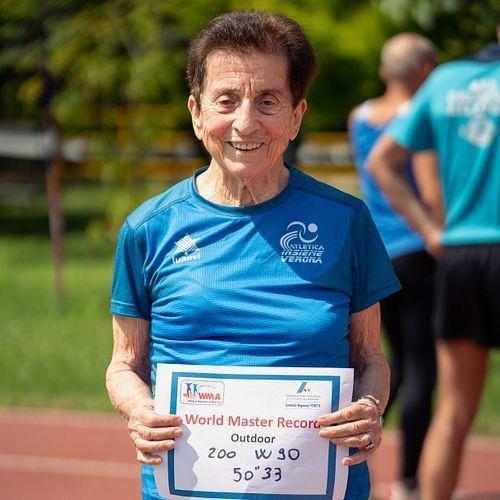
Building Muscle at 91: What a Sprinter Teaches Us
Researchers tested the muscles of a 91-year-old world-record sprinter. What they found shows why strength and power stay trainable as we age.
September 19, 2026 · 3 min read

Brain · Body
Music and Movement: A Brain-Body Workout to a Song
Pick a favorite song and let it set your pace. This simple music-and-movement workout challenges your brain and body at any fitness level.
September 12, 2026 · 2 min read
Body
2-Minute Step Test: Check Your Cardio Fitness at Home
The 2-Minute Step Test is a simple at-home check of your endurance. Here's how to do it, how to compare your score, and why cardio fitness matters.
September 5, 2026 · 2 min read