What Sleep Does for Your Body and How to Sleep Better
By Kristen Nielsen, Founder & Senior Fitness Specialist
· Updated · Recovery & Brain · 3 minute read

Part of our guide: Recovery After 60: Rest, Sleep and Stress
Key takeaways
- While you sleep, your body repairs muscle and tissue, your brain clears out waste and your cells recharge, which is why poor sleep is linked to faster aging and chronic disease.
- During deep sleep, your body repairs muscle and tissue while your brain clears out waste products, including beta-amyloid.
- Sleep patterns shift as you age, but habits like a consistent schedule, morning daylight, a cool dark room and less afternoon caffeine can help you rest better.
While you sleep, your body repairs muscle and tissue, your brain clears out waste, and your cells recharge. That's why sleep is one of the pillars of recovery after 60, and why a few simple habits can make such a difference in how you feel.
Why Does Poor Sleep Speed Up Aging?
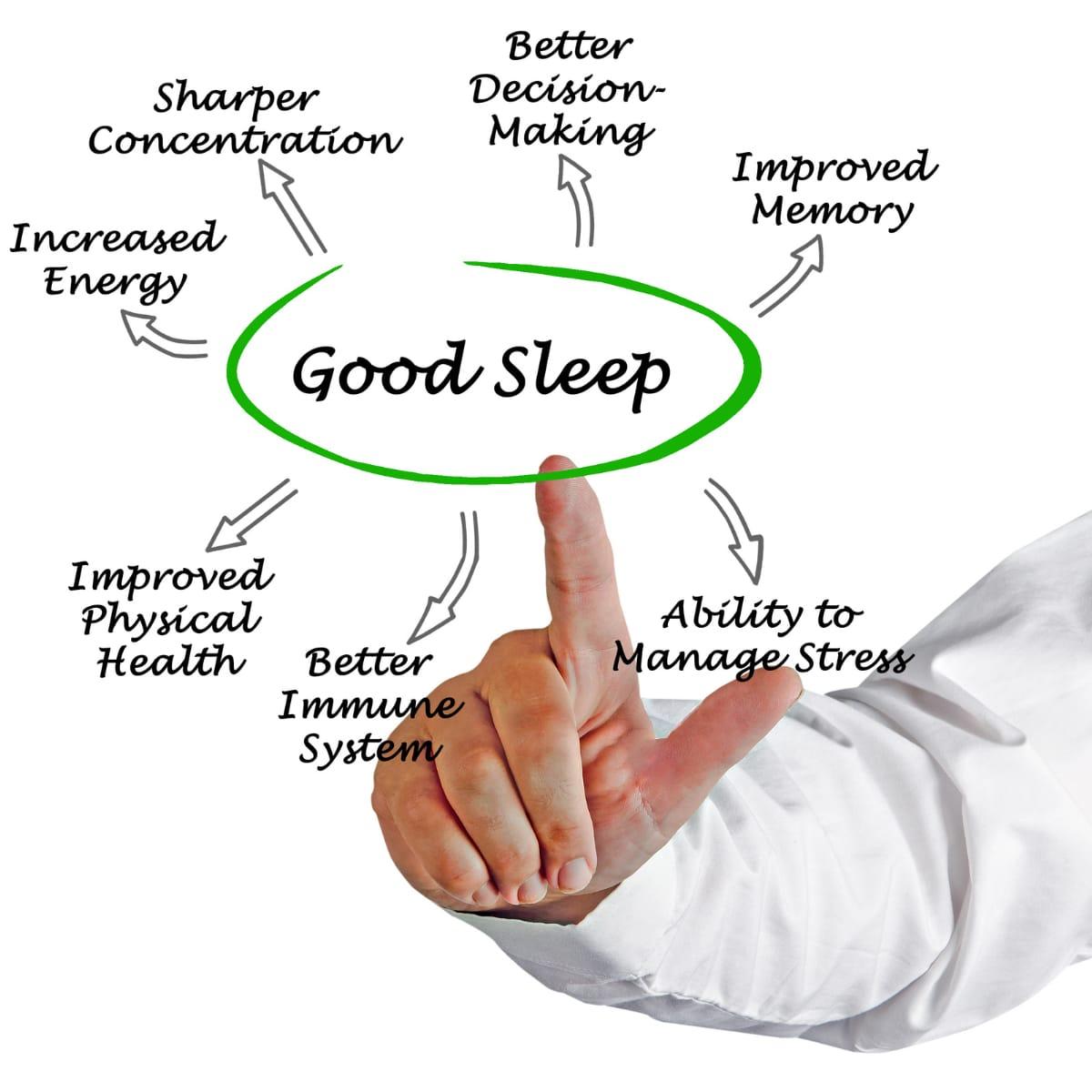
Poor sleep isn't just a nightly inconvenience; it's closely linked to accelerated aging and an increased risk of chronic diseases. Research indicates that inadequate or disturbed sleep can contribute to conditions such as obesity, diabetes, hypertension, heart disease, stroke, anxiety, and depression. Sleep quality is also related to functional cognition, as seen in the illustration below. A 2019 review published in Nature Reviews Cardiology found that chronic sleep deprivation is associated with an increased risk of cardiovascular disease. Similarly, research in The Lancet Neurology highlights how disrupted sleep can contribute to the development of neurodegenerative diseases like Alzheimer's (one more reason sleep matters for brain health).
As we age, sleep patterns naturally shift, making it harder to fall and stay asleep. However, the good news is that there are proven strategies to improve sleep quality — leading to better energy, brain function, and overall well-being. Let's look at what happens when we sleep at a cellular level, then explore some ways we can maximize our sleep!
What Happens to Your Body While You Sleep?
During sleep, the body undergoes essential cellular repair and maintenance. Deep sleep stages trigger the release of growth hormone, which supports muscle repair, tissue regeneration, and overall cellular restoration. Additionally, the brain clears out toxic waste products, including beta-amyloid, a protein associated with Alzheimer's disease. Mitochondria, the powerhouses of our cells, also undergo repair and energy optimization, which is crucial for preventing oxidative stress and slowing down aging. Inadequate sleep disrupts these processes, leading to increased inflammation, impaired immune function, and accelerated cellular aging.
What Helps You Sleep Better After 60?
Consistent timing, daylight, a cool dark room and a few smart habits help most. Here are eight research-backed strategies:
1. Maintain a consistent sleep schedule. Going to bed and waking up at the same time every day — even on weekends — helps regulate your body's internal clock, making it easier to fall asleep and wake up naturally.
2. Get natural light during the day. Exposure to natural sunlight, especially in the morning, helps regulate your circadian rhythm and signals to your body when it's time to be awake and when it's time to rest.
3. Limit blue light before bed. Screens from phones, tablets, and TVs emit blue light that disrupts melatonin production. Try reducing screen exposure at least an hour before bedtime or use blue light-blocking glasses.
4. Create a cool, dark, and quiet sleep environment. A slightly cooler room (around 65°F), blackout curtains, and white noise machines can help create an optimal sleep setting. If you wake frequently, try using a weighted blanket for added comfort, and see my tips on waking up at night.
5. Cut back on caffeine and alcohol. Caffeine can stay in your system for up to 10 hours, so it's best to avoid it in the afternoon. While alcohol might help you fall asleep initially, it disrupts deep sleep cycles, leaving you groggy the next day.

6. Exercise regularly. Physical activity — especially earlier in the day — can improve sleep quality by reducing stress and promoting deeper rest. However, avoid intense workouts too close to bedtime. If you'd like help building a routine you'll stick with, that's what our in-home personal training is for.
7. Practice relaxation techniques. Deep breathing (like the cyclic sigh) or gentle stretching before bed can signal to your nervous system that it's time to wind down. A simple bedtime routine can make a big difference.
8. Consider magnesium and herbal remedies. Magnesium-rich foods (like nuts, seeds, and leafy greens) or supplements may promote relaxation. Herbal teas like chamomile and valerian root may also help some people sleep.

Quality sleep is a key cornerstone for aging well and maintaining health. Implementing these research-backed strategies can lead to significant improvements in your sleep quality and overall vitality. Start with one or two of these tips, and observe the positive changes in your well-being.
Kristen
Try the recipe: For a magnesium-rich treat to help you sleep, try this creamy banana almond smoothie — get the recipe.
Sources
- Watson NF, Badr MS, Belenky G, et al. Recommended amount of sleep for a healthy adult: a joint consensus statement of the American Academy of Sleep Medicine and Sleep Research Society. Sleep. 2015;38(6):843-844. View source
- Tobaldini E, Fiorelli EM, Solbiati M, Costantino G, Nobili L, Montano N. Short sleep duration and cardiometabolic risk: from pathophysiology to clinical evidence. Nat Rev Cardiol. 2019;16(4):213-224. View source
- Irwin MR, Vitiello MV. Implications of sleep disturbance and inflammation for Alzheimer's disease dementia. Lancet Neurol. 2019;18(3):296-306. View source
- Van Cauter E, Leproult R, Plat L. Age-related changes in slow wave sleep and REM sleep and relationship with growth hormone and cortisol levels in healthy men. JAMA. 2000;284(7):861-868. View source
- Xie L, Kang H, Xu Q, et al. Sleep drives metabolite clearance from the adult brain. Science. 2013;342(6156):373-377. View source
- Blume C, Garbazza C, Spitschan M. Effects of light on human circadian rhythms, sleep and mood. Somnologie (Berl). 2019;23(3):147-156. View source
- Chang AM, Aeschbach D, Duffy JF, Czeisler CA. Evening use of light-emitting eReaders negatively affects sleep, circadian timing, and next-morning alertness. Proc Natl Acad Sci U S A. 2015;112(4):1232-1237. View source
- Okamoto-Mizuno K, Mizuno K. Effects of thermal environment on sleep and circadian rhythm. J Physiol Anthropol. 2012;31(1):14. View source
- Ekholm B, Spulber S, Adler M. A randomized controlled study of weighted chain blankets for insomnia in psychiatric disorders. J Clin Sleep Med. 2020;16(9):1567-1577. View source
- Drake C, Roehrs T, Shambroom J, Roth T. Caffeine effects on sleep taken 0, 3, or 6 hours before going to bed. J Clin Sleep Med. 2013;9(11):1195-1200. View source
- Ebrahim IO, Shapiro CM, Williams AJ, Fenwick PB. Alcohol and sleep I: effects on normal sleep. Alcohol Clin Exp Res. 2013;37(4):539-549. View source
- Kredlow MA, Capozzoli MC, Hearon BA, Calkins AL, Otto MW. The effects of physical activity on sleep: a meta-analytic review. J Behav Med. 2015;38(3):427-449. View source
- Stutz J, Eiholzer R, Spengler CM. Effects of evening exercise on sleep in healthy participants: a systematic review and meta-analysis. Sports Med. 2019;49(2):269-287. View source
- Abbasi B, Kimiagar M, Sadeghniiat K, Shirazi MM, Hedayati M, Rashidkhani B. The effect of magnesium supplementation on primary insomnia in elderly: a double-blind placebo-controlled clinical trial. J Res Med Sci. 2012;17(12):1161-1169. View source
- Hieu TH, Dibas M, Surya Dila KA, et al. Therapeutic efficacy and safety of chamomile for state anxiety, generalized anxiety disorder, insomnia, and sleep quality: a systematic review and meta-analysis. Phytother Res. 2019;33(6):1604-1615. View source
- Fernández-San-Martín MI, Masa-Font R, Palacios-Soler L, Sancho-Gómez P, Calbó-Caldentey C, Flores-Mateo G. Effectiveness of valerian on insomnia: a meta-analysis of randomized placebo-controlled trials. Sleep Med. 2010;11(6):505-511. View source
- Leach MJ, Page AT. Herbal medicine for insomnia: a systematic review and meta-analysis. Sleep Med Rev. 2015;24:1-12. View source
This article is for general education and isn't medical advice. Please talk with your doctor before starting a new exercise, nutrition or supplement routine. See our health disclaimer.


About the author
Kristen Nielsen
Kristen founded TogetherWON after watching what strength training could do for older adults — including her own grandparents. She's an ACE Certified Personal Trainer with 10+ years in functional aging, a University of Central Florida graduate, and a former Division I swimmer and track & field athlete.
Senior Fitness Specialist · Functional Aging Specialist · Parkinson's Disease Specialist · Brain Health Trainer · Corrective Exercise Specialist
want these in your inbox?
Get my Saturday letters
One idea for your body, brain or balance each week, usually with a recipe. Unsubscribe any time.
Keep reading

Recovery · Brain
Break the Stress Loop with a 60-Second Brain-Body Reset
When stress keeps replaying, movement that needs focus can interrupt the loop. Try this 60-second brain-body reset, seated or standing, to ease tension.
June 27, 2026 · 3 min read

Brain · Recovery
Gardening for Brain Health: Why a Little Dirt Helps
Gardening combines movement, planning, sunlight and purpose. Here's what research says about gardening, stress and dementia risk, and easy ways to start.
April 25, 2026 · 4 min read
Recovery · Brain
How Chronic Stress Affects Your Body and Brain After 60
A little stress can sharpen you, but chronic stress wears down body and brain. How it affects older adults, plus seven practical ways to manage it.
April 12, 2025 · 4 min read