Break the Stress Loop with a 60-Second Brain-Body Reset
By Kristen Nielsen, Founder & Senior Fitness Specialist
· Updated · Recovery & Brain · 3 minute read


Part of our guide: Recovery After 60: Rest, Sleep and Stress
Key takeaways
- To break a stress loop, try a 60-second brain-body reset: march or tap your feet while counting back from 20, say "reset" on multiples of 3, then take two slow breaths.
- Stress can become a loop where your mind replays a worry and your body stays tense, and it is not always something you can think your way out of.
- Movement that requires focus, like marching while counting backward, gives your brain a task that pulls attention away from the worry loop and can ease physical tension.
The quickest way I know to break a stress loop is a minute of movement that asks your brain to focus, like marching in place while counting backward. It works because sometimes stress is not something we can think our way out of.
We may know what is bothering us. We may even know what needs to happen next. But that does not always stop the body from staying tense or the mind from replaying the same concern over and over.
I shared this tool at a workshop I led on managing stress because it is something you can use almost anywhere, and it does not require special equipment or a long workout. It's one of my favorite everyday tools for recovery, sleep and stress after 60.
How Does Stress Show Up?
One thing I have noticed over the years of working with clients is that stress does not always show up as someone saying, "I feel stressed."
Sometimes it shows up as feeling more scattered than usual.
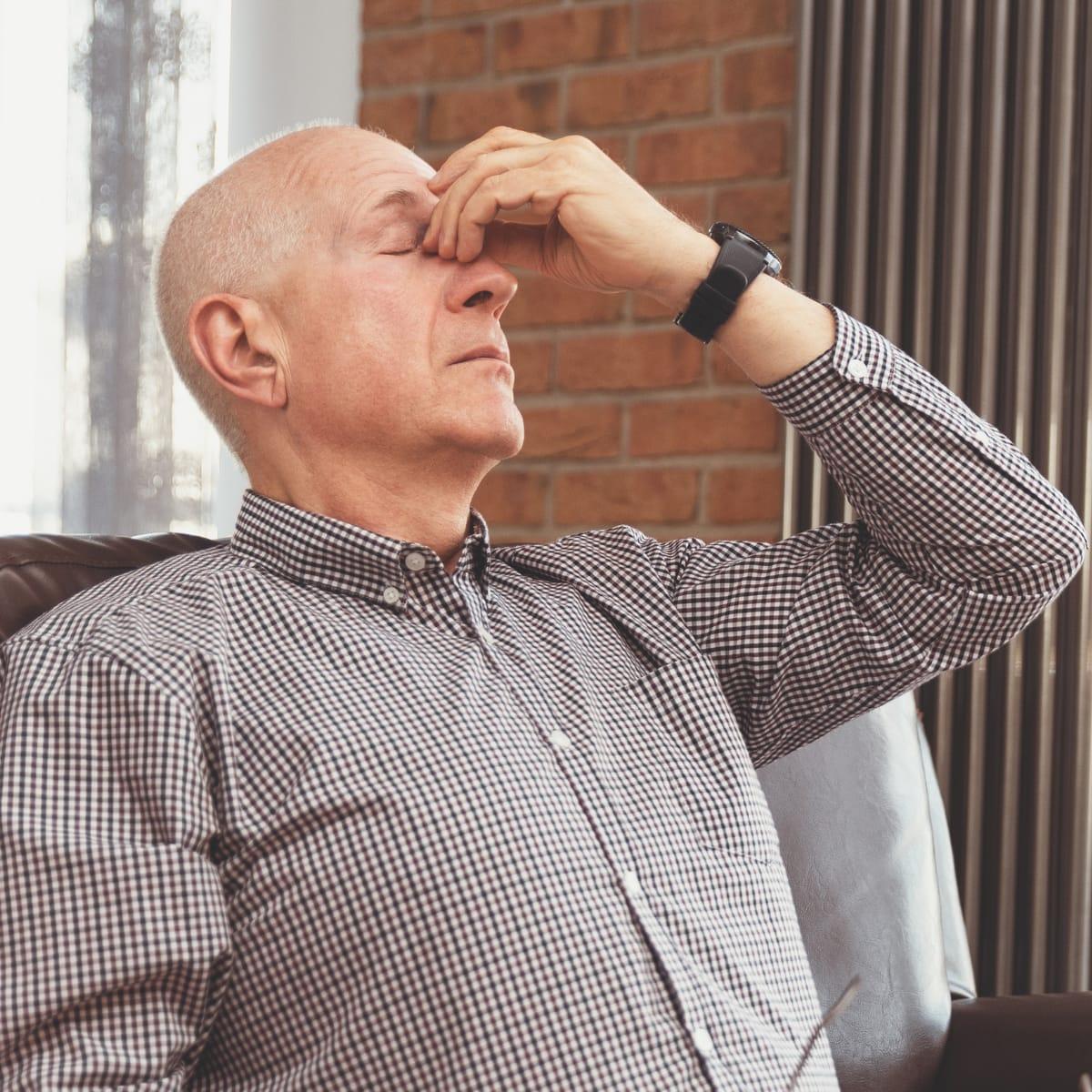
Sometimes it looks like poor sleep, trouble concentrating, tense shoulders, low patience, or feeling like your mind keeps circling the same concern. For many people, especially when there are health issues, family responsibilities, or a lot of life changes happening at once, stress can become something the body carries all day.

The challenge is that stress can become a loop. Your mind keeps returning to the same worry. Your body stays tense. The more tense your body feels, the more your brain reads that tension as evidence that something is wrong.
That is where brain-body exercise can be helpful.
Why Does Brain-Body Exercise Help With Stress?
A simple movement that requires focus does more than keep the body active. It gives the brain something specific to organize, track, and respond to.
When you are counting backward while marching (or walking while thinking), switching hand patterns, naming categories while tossing a ball, or stepping to a rhythm, your attention has to move away from the worry loop and into the present task. You are not necessarily solving the problem that caused the stress, but you are briefly reducing the amount of mental space available for replaying it.

At the same time, movement can help lower physical tension, increase circulation, and give your body a chance to shift out of the "on edge" posture that often comes with stress. The goal is not to pretend difficult things are not happening. It is simply to give your brain and body a short break from staying locked into the same stress response.
Research suggests that physical activity can help people respond less negatively to everyday stressors, and that even a single bout of exercise may improve mood, attention, and rumination. Brain-and-body activities can add another helpful layer because they require concentration, coordination, and mental flexibility — not just movement.
How to Do the 60-Second Brain-Body Reset
Choose a safe position: seated in a sturdy chair or standing near a counter for support.
- Slowly march in place or tap your feet one at a time.
- While you move, count backward from 20.
- Every time you reach a multiple of 3, say "reset" instead of the number.
- Continue for one minute.
- Finish by taking two slow breaths and notice whether your shoulders, jaw, or hands feel less tense.
This is a simple exercise, but it asks your brain to focus, remember a rule, coordinate movement, and adjust attention. That combination can help interrupt the pattern of sitting still while mentally replaying the same stressor.
In our in-home training sessions at TogetherWON, we include brain-body exercises because daily life requires more than strength alone. We need to move while paying attention, make quick adjustments, stay steady when things are distracting, and shift our focus when life feels demanding.
Sometimes a few minutes of purposeful movement is enough to create a little space between the stressor and your response.
Kristen
Try the recipe: A crisp, hydrating cucumber lime mint spritzer is easy to keep in the refrigerator for a warm afternoon — get the recipe.
Sources
- Puterman E, Weiss J, Beauchamp MR, Mogle J, Almeida DM. Physical activity and negative affective reactivity in daily life. Health Psychol. 2017;36(12):1186-1194. View source
- Basso JC, Suzuki WA. The effects of acute exercise on mood, cognition, neurophysiology, and neurochemical pathways: a review. Brain Plast. 2017;2(2):127-152. View source
- Brand S, Colledge F, Ludyga S, et al. Acute bouts of exercising improved mood, rumination and social interaction in inpatients with mental disorders. Front Psychol. 2018;9:249. View source
This article is for general education and isn't medical advice. Please talk with your doctor before starting a new exercise, nutrition or supplement routine. See our health disclaimer.


About the author
Kristen Nielsen
Kristen founded TogetherWON after watching what strength training could do for older adults — including her own grandparents. She's an ACE Certified Personal Trainer with 10+ years in functional aging, a University of Central Florida graduate, and a former Division I swimmer and track & field athlete.
Senior Fitness Specialist · Functional Aging Specialist · Parkinson's Disease Specialist · Brain Health Trainer · Corrective Exercise Specialist
want these in your inbox?
Get my Saturday letters
One idea for your body, brain or balance each week, usually with a recipe. Unsubscribe any time.
Keep reading

Brain · Recovery
Gardening for Brain Health: Why a Little Dirt Helps
Gardening combines movement, planning, sunlight and purpose. Here's what research says about gardening, stress and dementia risk, and easy ways to start.
April 25, 2026 · 4 min read
Recovery · Brain
How Chronic Stress Affects Your Body and Brain After 60
A little stress can sharpen you, but chronic stress wears down body and brain. How it affects older adults, plus seven practical ways to manage it.
April 12, 2025 · 4 min read

Recovery · Brain
What Sleep Does for Your Body and How to Sleep Better
What happens in your cells while you sleep, why poor sleep speeds up aging, and eight research-backed ways to rest better as you get older.
March 8, 2025 · 3 min read