Dual-Task Walking Exercises: Train to Walk and Think
By Kristen Nielsen, Founder & Senior Fitness Specialist
· Updated · Brain & Balance · 3 minute read
Part of our guide: Exercise for Brain Health After 60
Key takeaways
- Dual-task walking exercises, like marching while naming animals or walking while counting backward, train your body and brain to move and think at the same time.
- Walking while thinking, called dual-tasking, can become harder with age, but research suggests it can be trained.
- A 2024 systematic review found that dual-task training may improve balance in healthy older adults.
- Practice near a sturdy counter or chair, and if you feel unsteady, slow down or simplify the mental task.
Dual-task walking exercises train you to walk while your brain is busy with something else, like talking, counting or looking for your car. That skill can slip as we age, but it can be practiced, and it's one of my favorite ways to combine exercise for brain health with balance work.
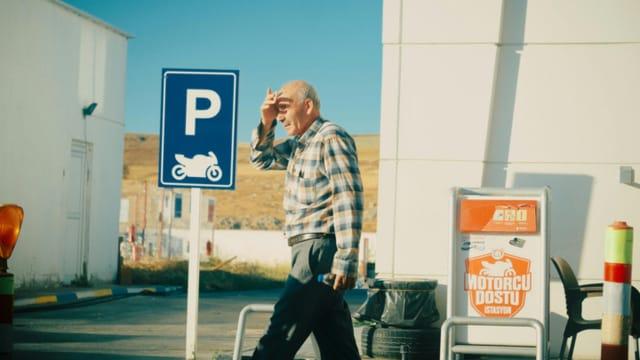
Think about everything happening when you walk through a busy parking lot.
You may be listening to someone, looking for your car, watching for traffic, stepping over a curb, and remembering where you parked — all at once.
Everyday movement rarely requires only your body. Your brain is also processing information, making decisions, and responding to your surroundings.
This ability to move while completing a mental task is called dual-tasking.
Why Is It Harder to Walk and Talk as You Get Older?
As we age, dividing our attention between movement and another task can become more challenging, because walking and thinking start competing for the same attention.
You may notice that you:
- Slow down when someone talks to you while walking
- Feel less steady when carrying groceries
- Need to stop moving to answer a question
- Become more cautious in crowded or unfamiliar places

Researchers sometimes measure the dual-task cost — the change in a person's walking or balance when a mental task is added. Someone may walk more slowly, take shorter steps, or become less steady because movement and thinking are competing for attention.
Can Dual-Task Walking Be Improved With Practice?
Yes. A 2024 systematic review found that dual-task training may improve balance in healthy older adults.
In a 2009 study, older adults with balance difficulties practiced balance exercises either by themselves or while completing an additional mental task. Those who specifically practiced the combined activities improved their walking speed while dual-tasking.
Practicing balance alone may not fully prepare us to balance when our attention is divided.
Real life is rarely quiet and predictable. We walk while talking, carrying objects, searching for something, changing direction, and reacting to what is around us.
What Are Some Simple Dual-Task Walking Exercises?
Three easy ones to start with are March and Name, Walk and Count, and Step and Switch. Begin near a sturdy counter or chair and choose movements that feel safe.
March and Name
March slowly in place while naming animals, foods, cities, or items found in a kitchen.
Walk and Count
Walk through a clear area while counting backward from 20. For more challenge, start at 51 and count backward by 4's.
Step and Switch
Step from side to side while passing a lightweight object from one hand to the other. You could also name the months of the year as you move.
What If You Feel Unsteady While Dual-Tasking?
If you become noticeably unsteady, simplify the mental task, slow down, hold on for support, or practice each activity separately.
Adding a thinking task may cause you to move more slowly at first. That is normal.
The goal is not to make movement sloppy. It is to gradually help your body and brain manage more than one demand at a time.
Strong legs matter (the 30-second chair stand test is a quick way to check yours), but balance also depends on attention, vision, reaction time, and coordination. This is why we train the 3 B's: Body, Brain, and Balance. If you'd like more ideas, these brain-body exercises and our guide to balance exercises for seniors are good next steps.
Kristen
Try the recipe: A lot of my clients ask for simple ways to add more protein, and this chicken ranch wrap has about 40 grams — get the recipe.
Sources
- Al-Yahya E, Dawes H, Smith L, Dennis A, Howells K, Cockburn J. Cognitive motor interference while walking: a systematic review and meta-analysis. Neurosci Biobehav Rev. 2011;35(3):715-728. View source
- Ercan Yildiz S, Fidan O, Gulsen C, Colak E, Genc GA. Effect of dual-task training on balance in older adults: a systematic review and meta-analysis. Arch Gerontol Geriatr. 2024;121:105368. View source
- Silsupadol P, Shumway-Cook A, Lugade V, et al. Effects of single-task versus dual-task training on balance performance in older adults: a double-blind, randomized controlled trial. Arch Phys Med Rehabil. 2009;90(3):381-387. View source
This article is for general education and isn't medical advice. Please talk with your doctor before starting a new exercise, nutrition or supplement routine. See our health disclaimer.


About the author
Kristen Nielsen
Kristen founded TogetherWON after watching what strength training could do for older adults — including her own grandparents. She's an ACE Certified Personal Trainer with 10+ years in functional aging, a University of Central Florida graduate, and a former Division I swimmer and track & field athlete.
Senior Fitness Specialist · Functional Aging Specialist · Parkinson's Disease Specialist · Brain Health Trainer · Corrective Exercise Specialist
want these in your inbox?
Get my Saturday letters
One idea for your body, brain or balance each week, usually with a recipe. Unsubscribe any time.
Keep reading
Balance · Brain
Vestibular Balance Exercise: Head Turns on One Foot
Your inner ear's vestibular system keeps you steady, and it's trainable. Try head turns on one foot to sharpen gaze stability and balance.
November 15, 2025 · 2 min read
Balance · Brain
Gaze Stability Exercise for Better Balance and Focus
Your eyes play a key role in balance. Learn the "Gaze Shifts with Thumbs" drill to train eye-head coordination, with a video demonstration.
October 25, 2025 · 3 min read

Brain · Body
Music and Movement: A Brain-Body Workout to a Song
Pick a favorite song and let it set your pace. This simple music-and-movement workout challenges your brain and body at any fitness level.
September 12, 2026 · 2 min read