Exercise with Dementia and Parkinson's: Brenda's Story
By Kristen Nielsen, Founder & Senior Fitness Specialist
· Updated · Stories & Brain · 4 minute read
Part of our guide: Exercise for Brain Health After 60
Key takeaways
- Exercising with dementia and Parkinson's-type symptoms works best with favorite music, visual cues for foot placement, and simple one-step instructions at a slower pace.
- Brenda, a former 4'10" English teacher living with Parkinson's-type symptoms and dementia, shows up strong and works hard every time she trains.
- Through leg strengthening, walking and stair practice, Brenda has been able to take some steps without her walker, a meaningful win for her family.
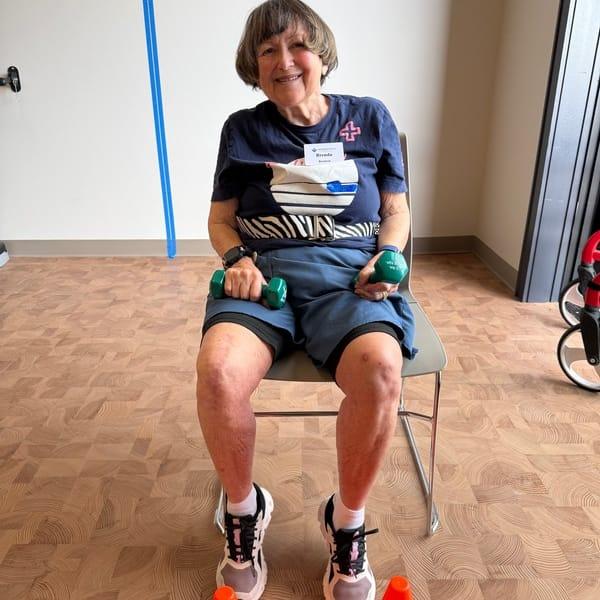
Exercise can still help people living with dementia and Parkinson's-type symptoms stay mobile, but it has to look different: music, visual cues, simple one-step instructions and a slower pace. One of my incredible clients, Brenda, shows what that looks like, and why exercise for brain health is about so much more than a workout.
Brenda is living with Parkinson's-type movement symptoms and dementia. That is an important part of her story, but it is not the whole story.
A 4'10" Powerhouse
Before Brenda was facing these challenges, she was a 4'10" powerhouse teaching 11th grade English.
According to her family, she was feared as much by coaches as she was by the 6'4" athletes in her classroom. She took no compromises on English essays and research papers, regardless of wrestling tournaments or state championship playoffs.
And when the male athletes challenged her in class, she would tell them she'd meet them after school for a pull-up contest to see if they could do more than her 20.
No one ever took her up on it.
Her female athletes loved her, and many still stay in touch.
That is part of what makes Brenda's story so meaningful. She is not just someone living with Parkinson's-type symptoms and dementia. She is a wife, mom, grandmother, teacher, sports fan, animal-documentary watcher, Roy Orbison listener, and someone with a smile and sense of humor her family loves.
Showing Up Strong
Brenda does not say a lot with words, but she still communicates in other ways. She has an amazing smile. She is steady, peaceful, and incredibly hard-working. She shows up strong every time we train.
Some days, her body does not respond the way she wants it to. At times, her brain may be telling her body to move, but the movement does not come easily. Her left side is especially challenging, and she experiences symptoms of freezing, which can happen for people living with Parkinson's-type conditions.
For Brenda and her family, the goal is not just exercise for the sake of exercise.
The goal is life.
Her family wants her to stay as mobile, engaged, and present as possible so she can continue participating in the moments that matter. As they put it, they love seeing "glimpses of the Brenda 1.0" they remember. They do not expect miracles, but they know she is fun, deeply loved, and deserving of the best quality of life they can help her obtain.
How Do You Exercise With Dementia and Parkinson's?
With cues, simple instructions, and a slower pace. That is why her training looks different from a typical workout.
When someone is living with Parkinson's-type symptoms, training is not only about strengthening muscles. Parkinson's is a neurological disorder, which means the brain and nervous system are deeply involved in how movement happens (here's more on why exercise for Parkinson's is worth the effort).
Sometimes the body needs a different kind of doorway into movement.
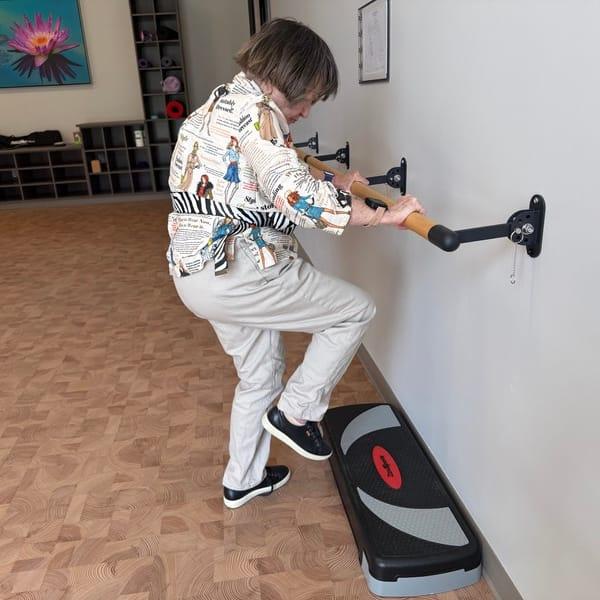
For Brenda, music helps. We often use favorite artists like the Beach Boys, Blake Shelton, and Roy Orbison. We also use visual cues to help guide where she places her feet. These cues can give the brain another signal to follow when movement feels stuck.
We work on leg strength, walking, step length, stair navigation, and simple pattern-recognition activities using both her arms and her feet.
Because Brenda is also living with cognitive challenges, we keep the instructions simple: one direction at a time, one task at a time, and a slower pace when her brain needs more time to process. For someone living with cognitive changes, too much information at once can feel overwhelming. A busy environment, too many words, too many choices, or too many instructions can make it harder to participate. Slowing down helps create a better path for success.
Can Exercise Help Someone With Parkinson's Walk Better?
For Brenda, the work is showing up in her walking: she has been able to take some steps without using her walker.
For Brenda and her family, that is a meaningful win.
And when her left foot takes a normal step with the walker, her family describes it as thrilling.
It is one more sign that the work she is doing matters: the leg strengthening, the walking practice, the stair training, the music, the visual cues, and the simple patterns we practice together.
Why Personalized Training Matters With Movement and Cognitive Changes
Brenda's story is a reminder that training does not have to look the same for every person. When someone is living with movement and cognitive challenges, the goal is to meet them where they are and help them keep participating in life as much as possible.
That is what we are working toward with Brenda — one session, one step, and one small win at a time.
Kristen
Try the recipe: In honor of Brenda, here's a simple chicken salad with fresh greens, a meal she enjoys — get the recipe.
Sources
- National Institute of Neurological Disorders and Stroke. Parkinson's disease. Reviewed July 23, 2026. View source
- Lee SJ, Yoo JY, Ryu JS, Park HK, Chung SJ. The effects of visual and auditory cues on freezing of gait in patients with Parkinson disease. Am J Phys Med Rehabil. 2012;91(1):2-11. View source
This article is for general education and isn't medical advice. Please talk with your doctor before starting a new exercise, nutrition or supplement routine. See our health disclaimer.


About the author
Kristen Nielsen
Kristen founded TogetherWON after watching what strength training could do for older adults — including her own grandparents. She's an ACE Certified Personal Trainer with 10+ years in functional aging, a University of Central Florida graduate, and a former Division I swimmer and track & field athlete.
Senior Fitness Specialist · Functional Aging Specialist · Parkinson's Disease Specialist · Brain Health Trainer · Corrective Exercise Specialist
want these in your inbox?
Get my Saturday letters
One idea for your body, brain or balance each week, usually with a recipe. Unsubscribe any time.
Keep reading

Brain · Stories
How a Positive View of Aging Helps You Age Better
Believing "I can improve" helps older adults start and stick with exercise. What research on self-efficacy and age beliefs shows, and how to build it.
May 23, 2026 · 4 min read
Body · Stories
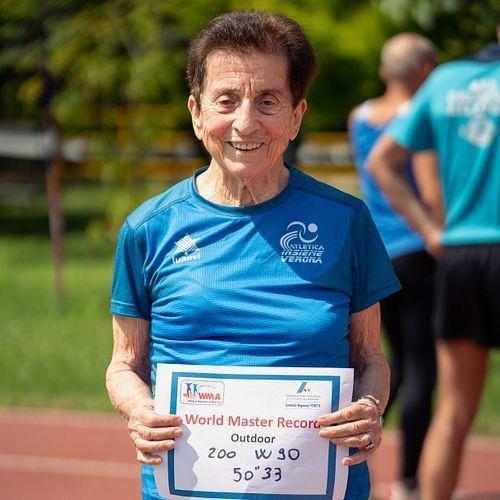
Building Muscle at 91: What a Sprinter Teaches Us
Researchers tested the muscles of a 91-year-old world-record sprinter. What they found shows why strength and power stay trainable as we age.
September 19, 2026 · 3 min read
Brain · Body
Music and Movement: A Brain-Body Workout to a Song
Pick a favorite song and let it set your pace. This simple music-and-movement workout challenges your brain and body at any fitness level.
September 12, 2026 · 2 min read