Lower Back Pain Exercises for Seniors
By Kristen Nielsen, Founder & Senior Fitness Specialist
· Updated · Body & Recovery · 6 minute read

Part of our guide: Bone and Joint Health After 60: Exercises That Help
Key takeaways
- Gentle moves like cat-cow, bird-dog, glute bridges and the figure 4 stretch, done at least 3 times a week, can ease lower back pain caused by weak muscles, poor posture or stiffness.
- About 25–30% of older adults experience back pain, and the prevalence increases with age.
- Back pain caused by fractures, infections or severe herniated discs needs medical care and should not be addressed with exercise alone.
Gentle strengthening and stretching exercises, like cat-cow, bird-dog and glute bridges, can ease many kinds of lower back pain in older adults, especially pain from weak muscles, poor posture or stiffness. It's one of the most common challenges I help clients overcome, and it's a big part of bone and joint health after 60. The good news is, there's a path to relief. If you have experienced this, you are not alone. According to studies, about 25–30% of older adults experience back pain, with the prevalence increasing with age. For example:
- A study published in the Journal of Pain Research in 2017 found that 25% of adults aged 65 and older report persistent lower back pain.
- The Global Burden of Disease Study identified low back pain as one of the leading causes of disability worldwide, particularly among older adults.
- Research indicates that nearly 36% of older adults over 80 experience chronic back pain, often due to age-related conditions like degenerative disc disease, osteoarthritis, or spinal stenosis.
Back pain is a significant issue that can affect mobility, quality of life, and independence, making it important to address.
What Types of Back Pain Can Exercise Help?
Exercise can address several types of back pain, particularly those caused by muscle weakness, poor posture, or lack of flexibility. Here are some common types of back pain that can benefit from exercise:
1. Muscle Strain or Weakness
- Cause: Overuse, improper lifting, or weak core and back muscles.
- How exercise helps: Strengthening the core and back muscles can provide better support for the spine, reducing strain and pain.
2. Poor Posture or Alignment Issues
- Cause: Sitting or standing in poor posture for extended periods, often exacerbated by muscle imbalances.
- How exercise helps: Posture correction exercises, stretches, and strengthening muscles that support the spine can improve alignment.
3. Degenerative Disc Disease
- Cause: Age-related wear and tear on spinal discs.
- How exercise helps: Gentle strengthening exercises and low-impact activities like swimming or walking can help reduce pressure on the discs and improve spinal stability.
4. Osteoarthritis of the Spine
- Cause: Wear and tear of cartilage in the joints of the spine.
- How exercise helps: Low-impact exercises, like stretching and swimming, help maintain mobility, reduce stiffness, and strengthen supporting muscles.
5. Sciatica (from Mild Nerve Compression)
- Cause: Compression of the sciatic nerve, most often from a bulging or herniated disc in the lower back, and sometimes from tightness in the piriformis muscle.
- How exercise helps: Stretching and strengthening the hips, glutes, and lower back muscles can relieve nerve compression and pain.
6. Spinal Stenosis
- Cause: Narrowing of the spinal canal, often due to aging.
- How exercise helps: Flexion-based exercises (like forward bends) and core strengthening can relieve pressure on the spine.
7. General Stiffness and Reduced Flexibility
- Cause: Sedentary lifestyle or aging-related loss of mobility.
- How exercise helps: Stretching and mobility exercises, such as cat-cow stretches or pelvic tilts, can improve range of motion and reduce stiffness.
When Should You See a Doctor Instead of Exercising?
See your doctor first when back pain may be caused by something exercise can't fix. Some back pain, such as that caused by fractures, infections, or severe herniated discs, requires medical intervention and should not be addressed solely with exercise. If you have one of these conditions, reach out to your healthcare professional to ensure that exercise is safe and suitable for your condition.
What Are the Best Exercises for Lower Back Pain?
The best exercises for lower back pain gently strengthen your core, glutes and hips and loosen stiff areas around the spine. Here are some exercises that have helped my clients experiencing lower back pain. Many people have successfully reduced or even eliminated their back pain by consistently incorporating these exercises into their routines. In most cases, these exercises can be done daily, but at a minimum, aim to perform them three times a week to see noticeable improvements. If you're coming back from an injury or surgery, our post-rehab training picks up where physical therapy leaves off.
Cat-Cow
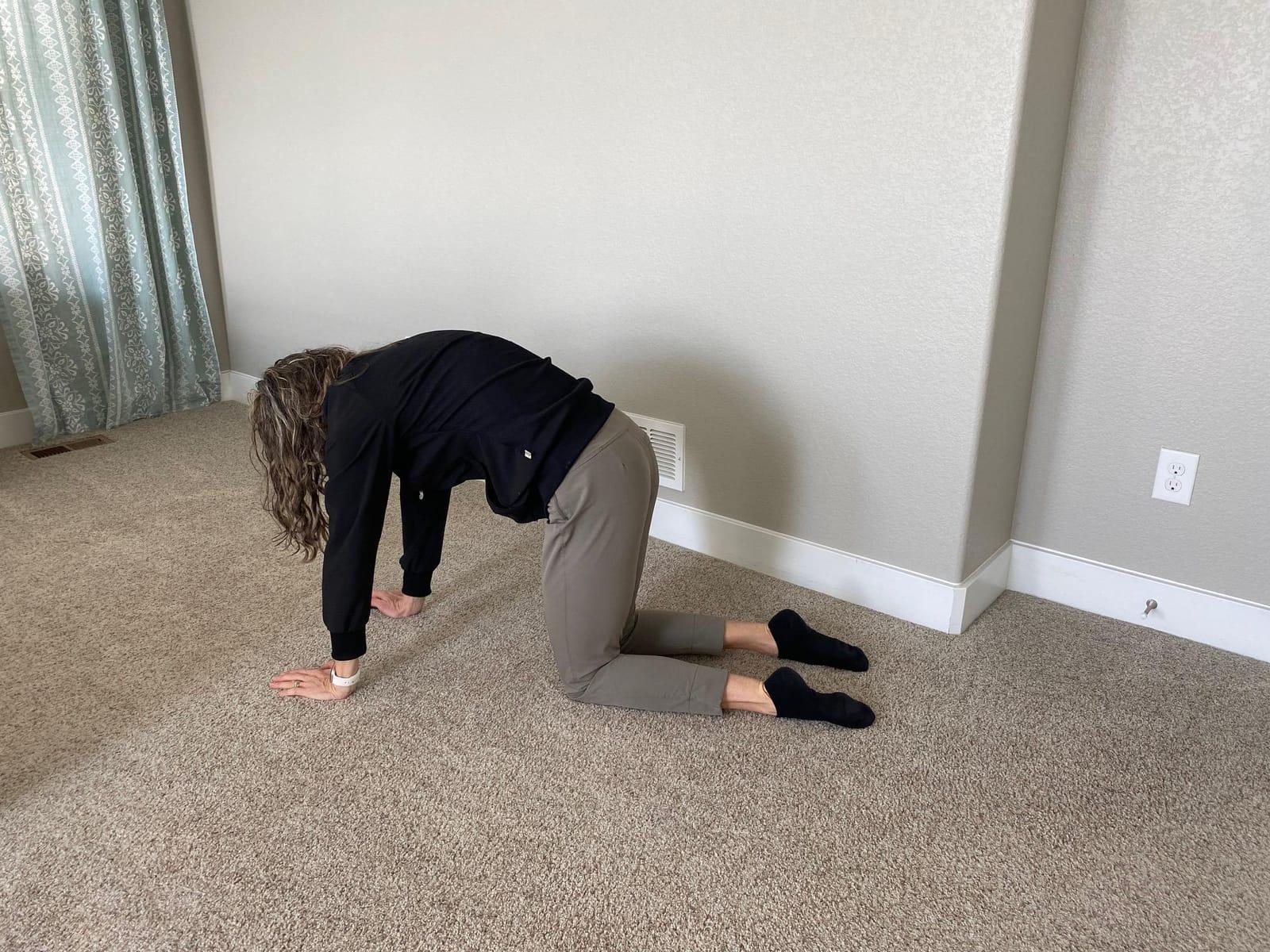
- Start: On hands and knees, wrists under shoulders, knees under hips.
- Cat pose: Exhale, round your back, tuck your chin, and draw your belly in.
- Cow pose: Inhale, drop your belly, lift your chest and tailbone, and look up slightly.
- Repeat: Flow gently for 5–10 rounds, syncing with your breath.
Bird-Dog
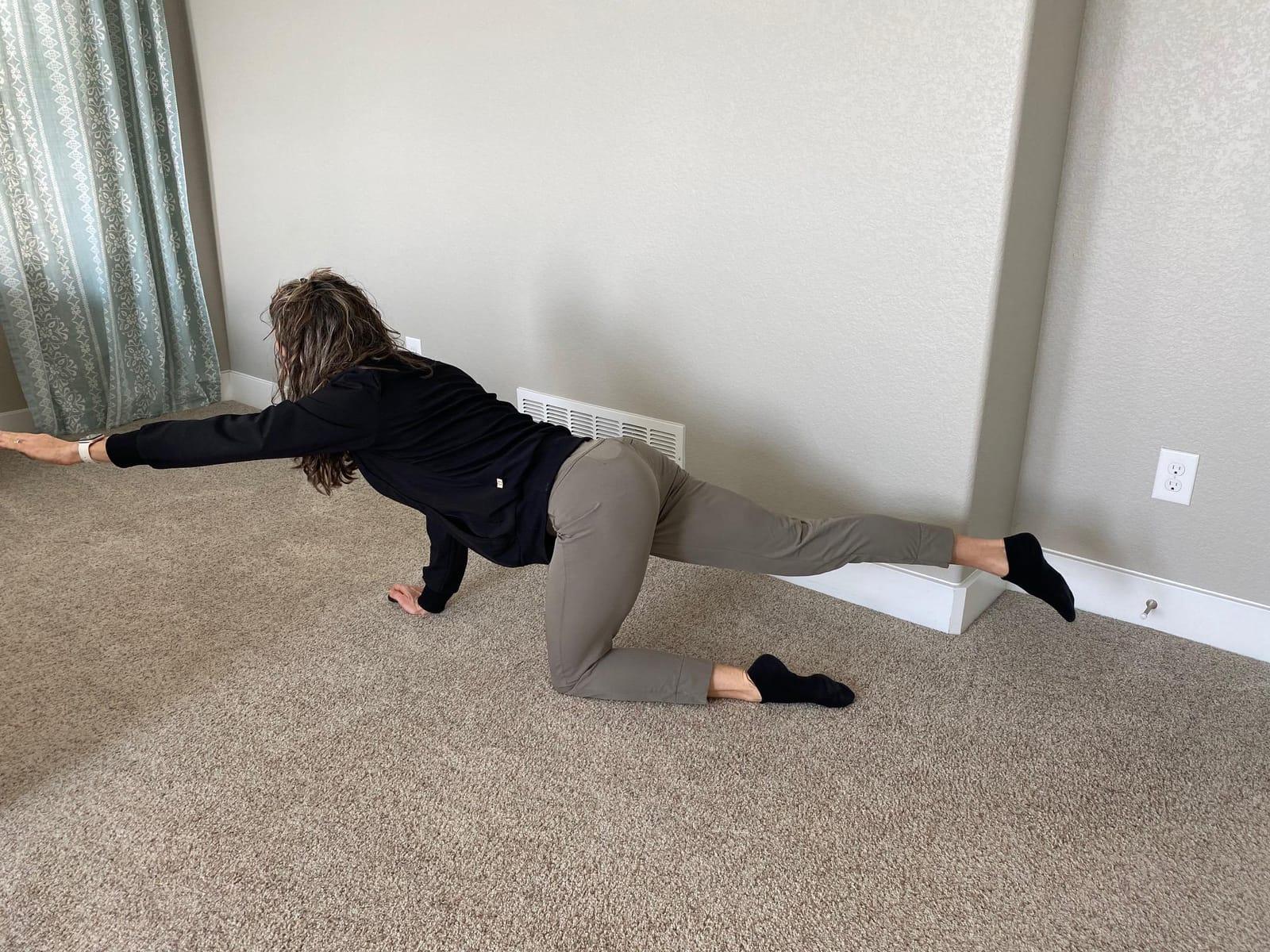
- Start: On hands and knees, wrists under shoulders, knees under hips.
- Extend: Lift your right arm and left leg until they're straight.
- Hold: Keep your back flat and core engaged for a few seconds.
- Switch: Lower and repeat on the opposite side.
- Repeat: 8–10 times per side.
Kneeling Side Plank
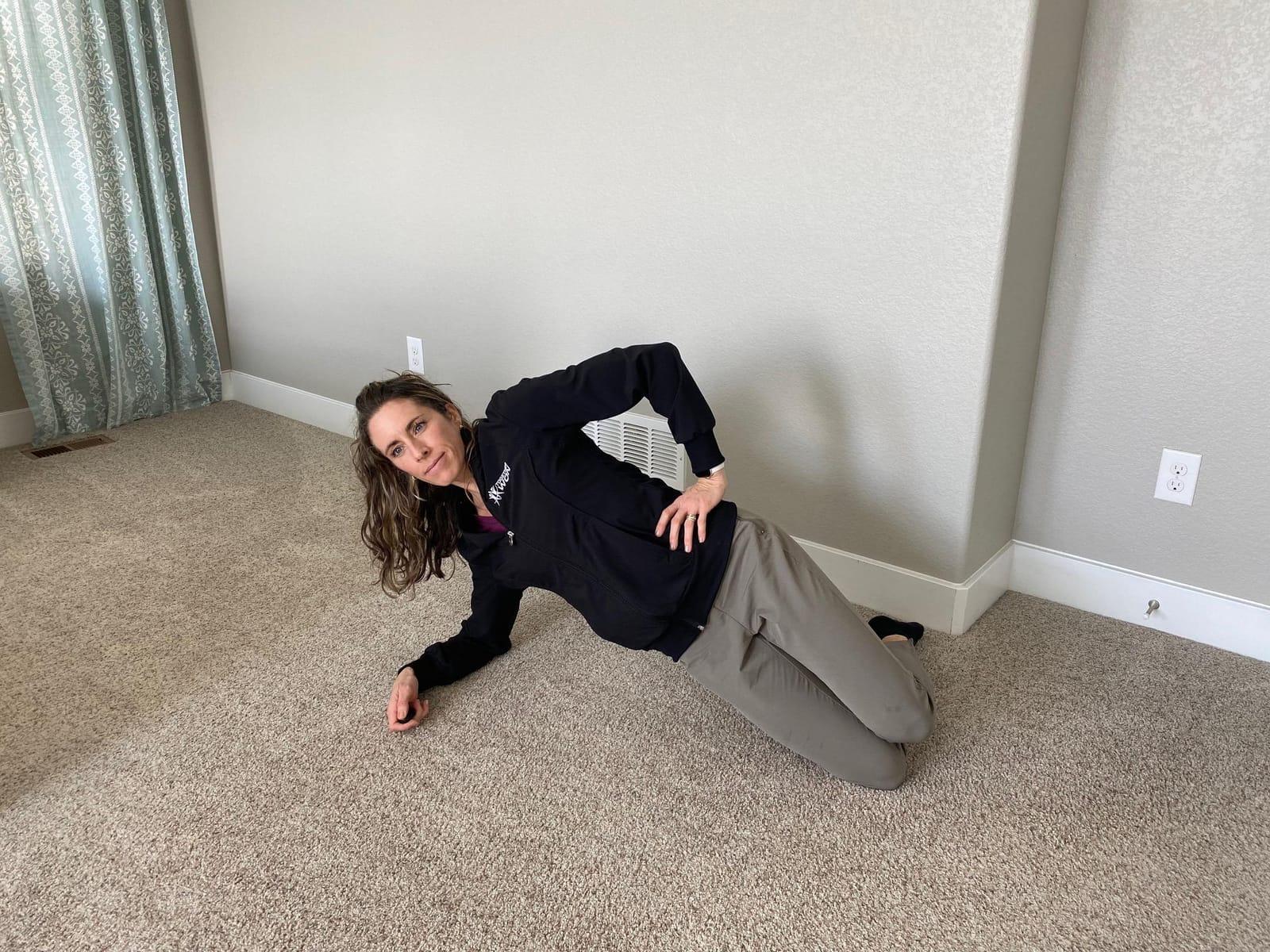
- Start: On your side, knees bent, forearm under your shoulder.
- Lift: Raise hips until your body forms a straight line.
- Hold: Keep core tight for 10–20 seconds.
- Switch: Lower and repeat on the other side.
- Repeat: 2–3 times per side.
Modified Curl-Up
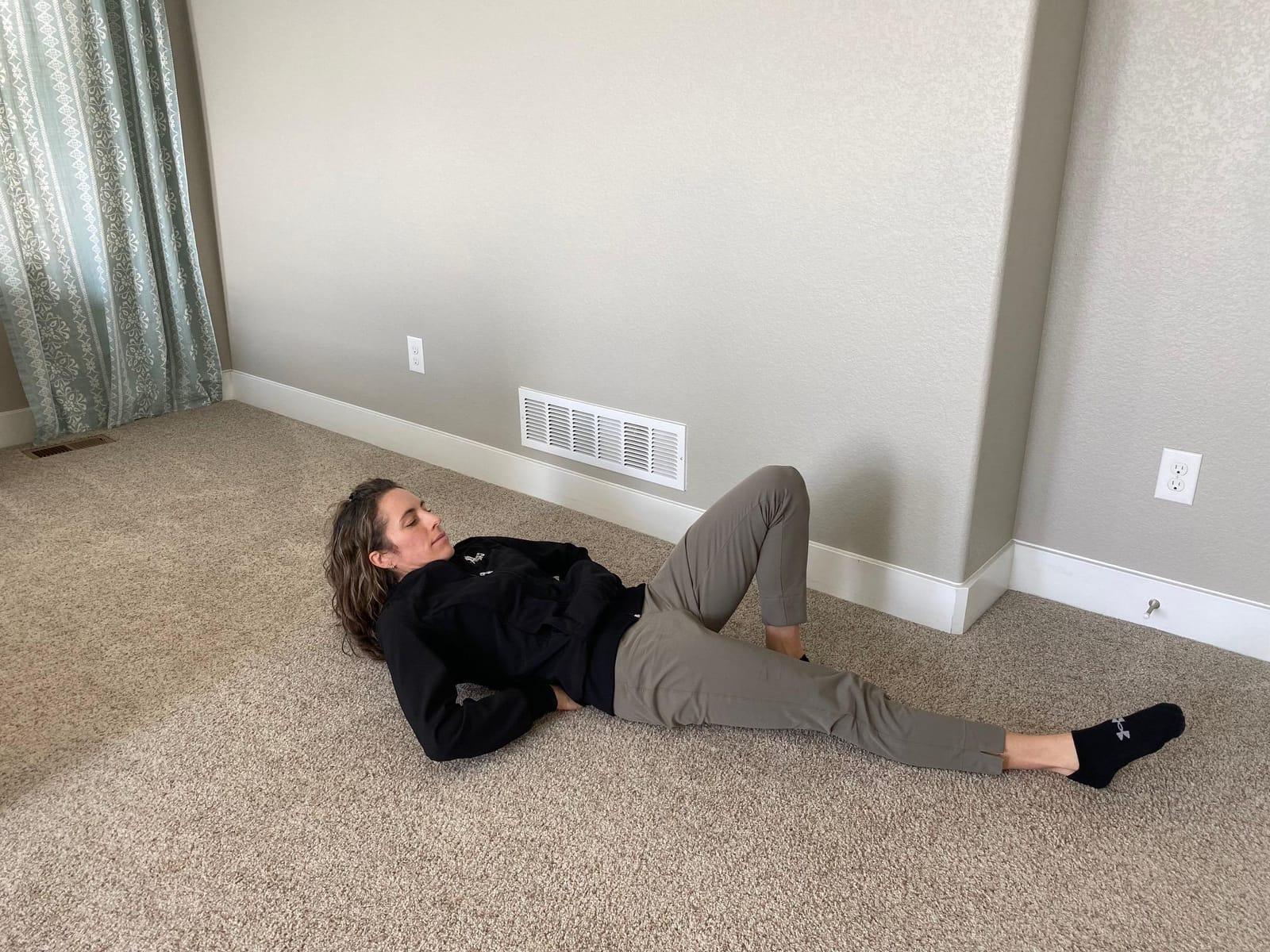
- Start: Lie on your back, one knee bent, the other leg straight. Hands under your lower back. Engage core.
- Lift: Raise your head, neck, and shoulders slightly off the floor.
- Hold: Keep neck relaxed for 5–10 seconds.
- Lower: Gently return to the floor.
- Repeat: 8–10 times.
Glute Bridge
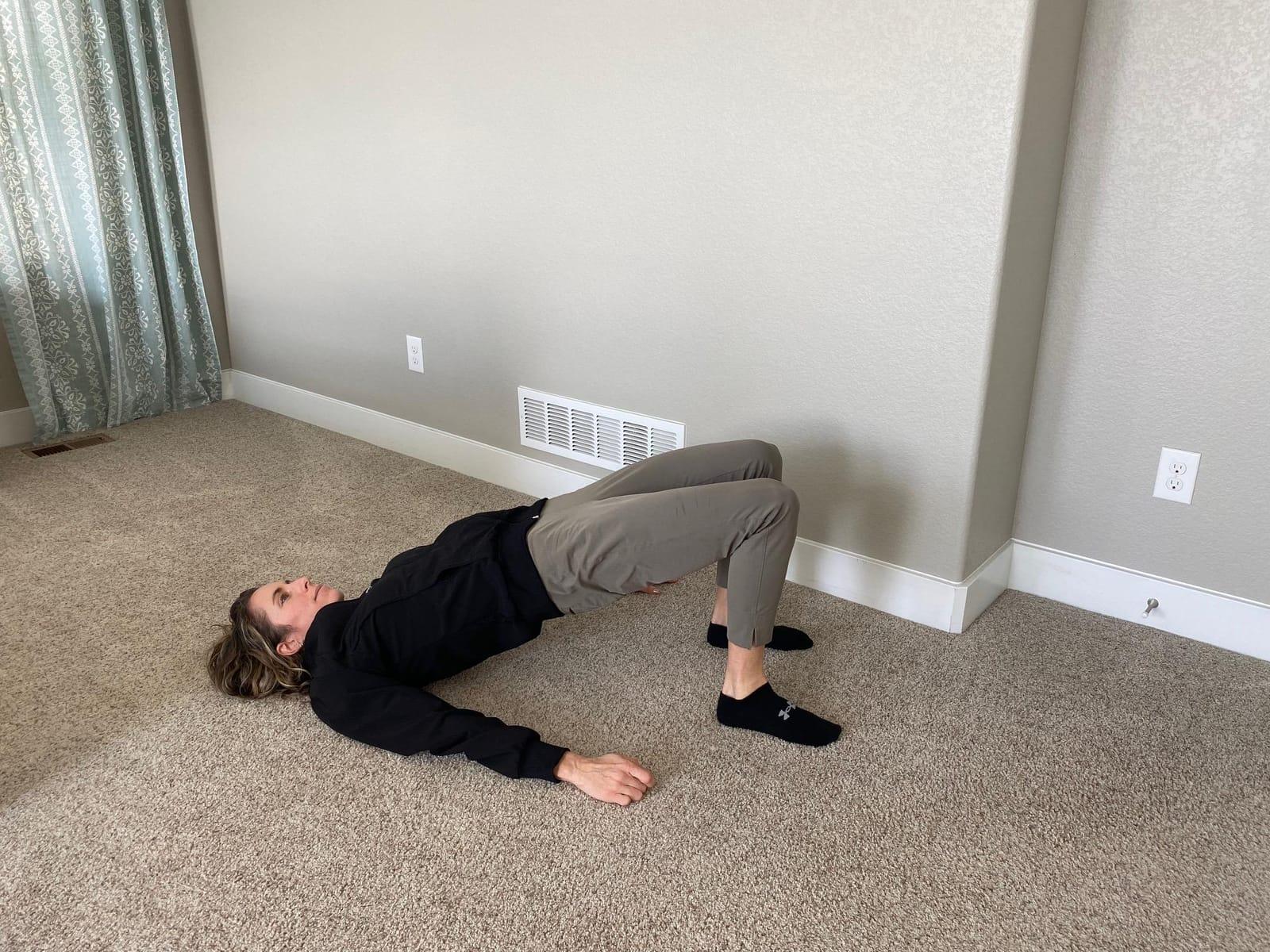
- Start: Lie on your back, knees bent, feet flat, arms at your sides.
- Lift: Press through your heels to raise hips until your body forms a straight line.
- Hold: Squeeze glutes for 5–10 seconds.
- Lower: Slowly return hips to the floor.
- Repeat: 8–10 times.
For more ways to strengthen this area, see my favorite glute exercises.
Figure 4 Stretch
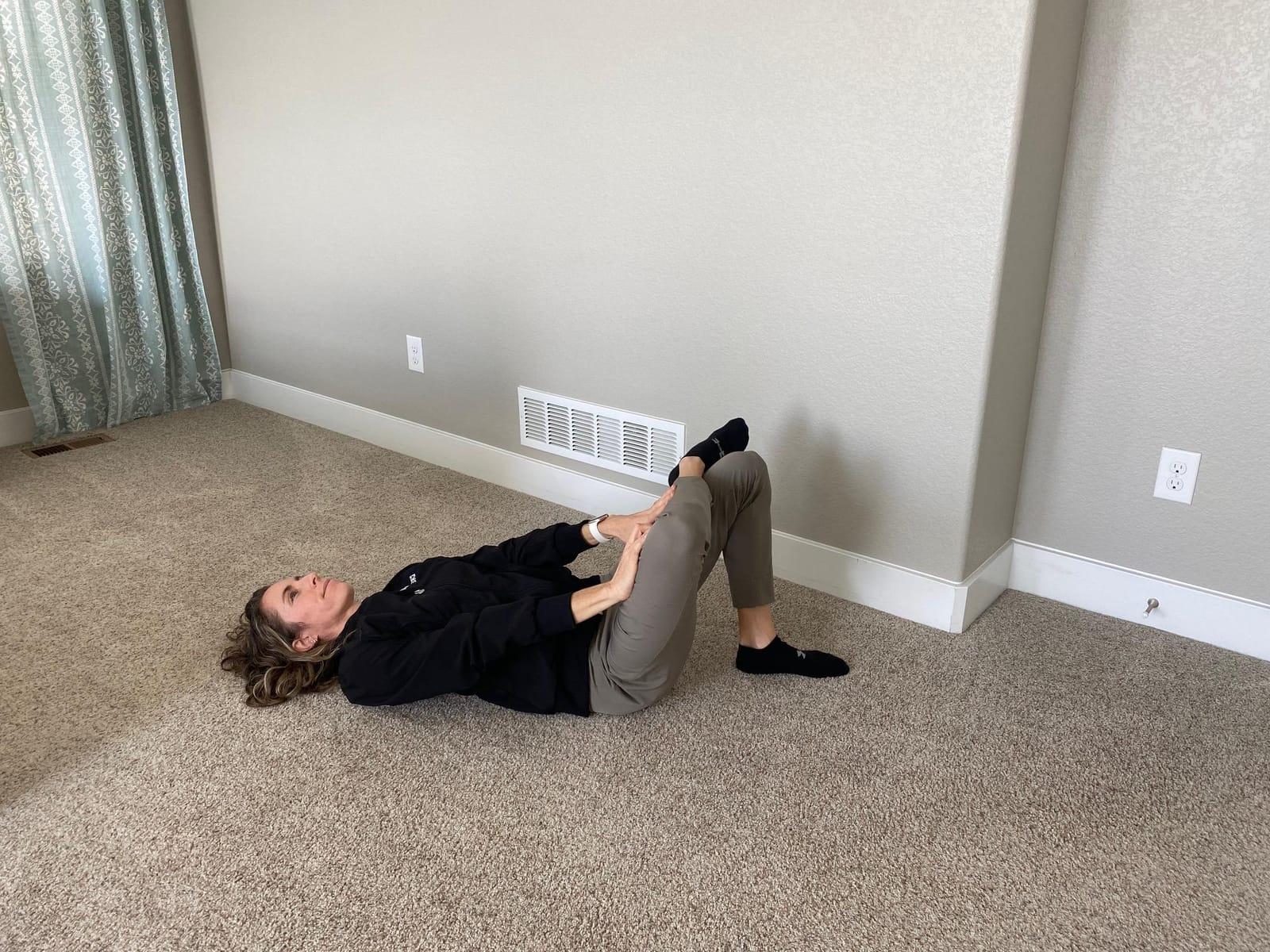
- Start: Lie on your back, knees bent, feet flat.
- Cross: Place your right ankle over your left knee.
- Stretch: Gently press your right knee away from your body with your hand.
- Hold: Feel the stretch in your right hip for 20–30 seconds.
- Switch: Repeat on the other side.
Runner's Lunge
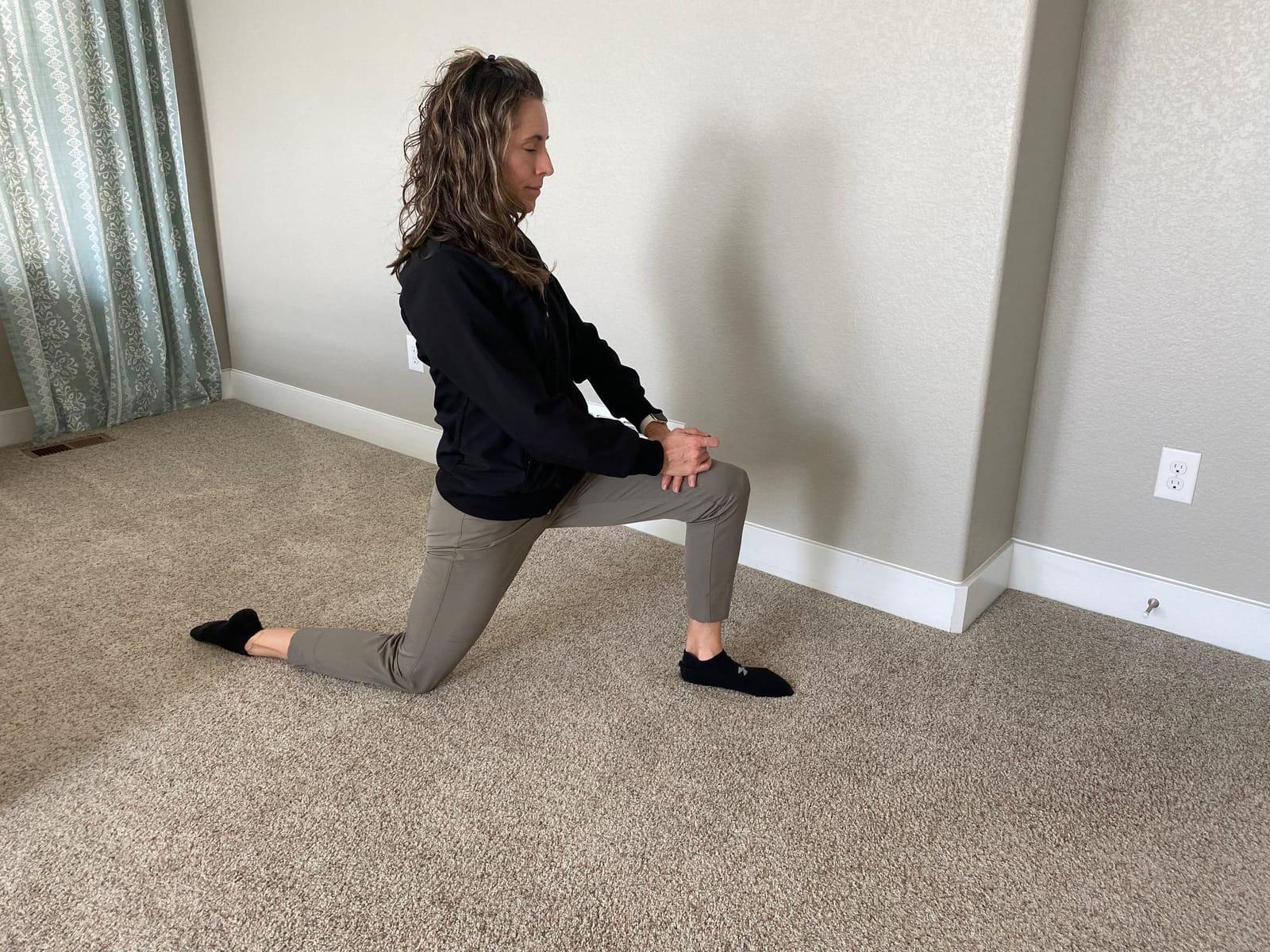
- Start: Kneel on your right knee, left foot forward with the knee bent at 90 degrees.
- Lunge: Shift your hips forward until you feel a stretch in your right hip.
- Hold: Keep your chest tall and hold for 20–30 seconds.
- Switch: Repeat on the other side.
Doorway Stretch
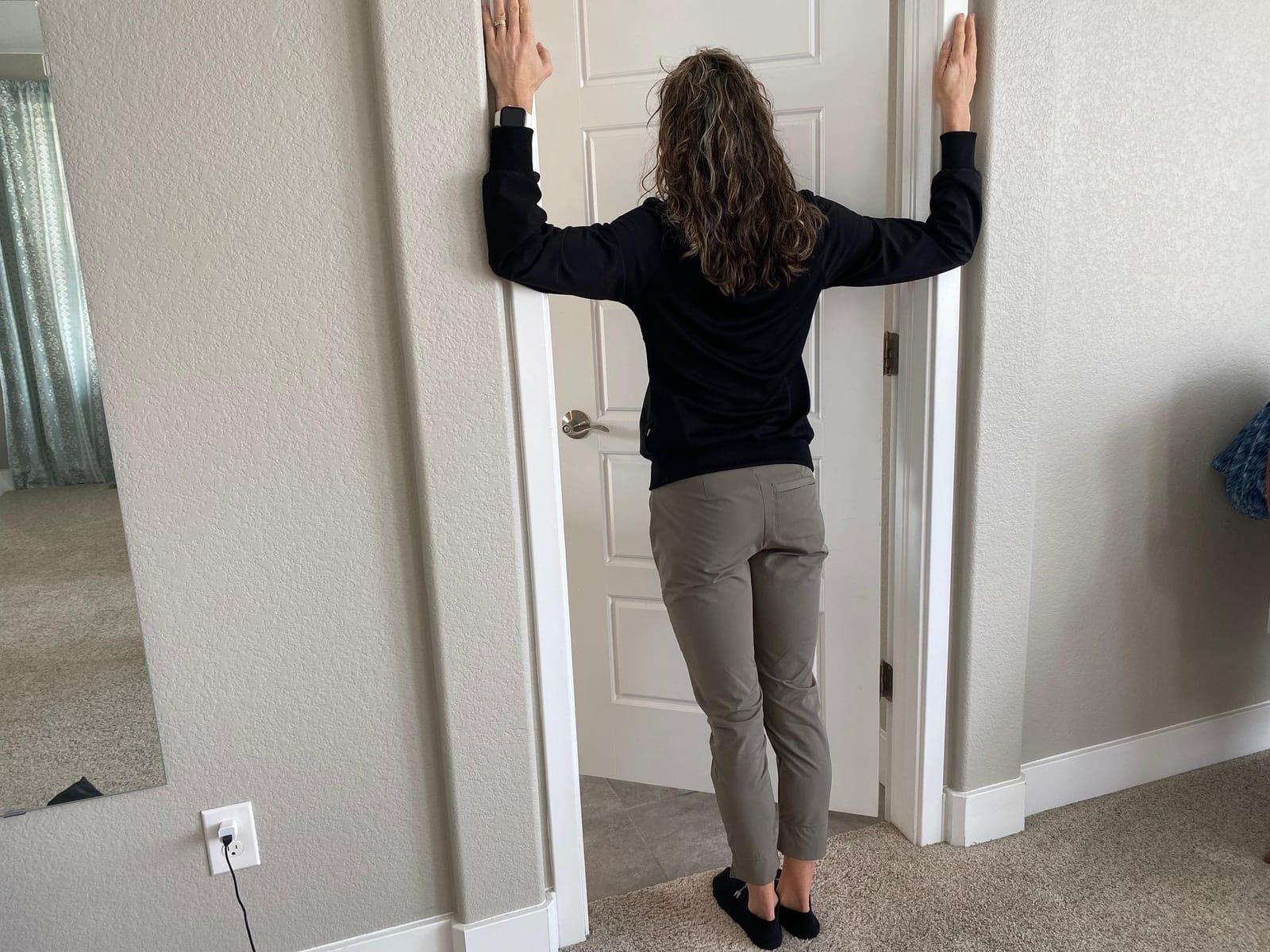
- Start: Stand in a doorway with your arms bent at 90 degrees, hands on the doorframe.
- Stretch: Step one foot forward and gently press your chest through the doorway.
- Hold: Keep your shoulders relaxed and hold for 20–30 seconds.
- Switch: Step back and repeat as needed.
Note: Always perform these exercises gently and within your comfort level. If you're unable to do these exercises as shown, there are modifications available to suit your needs. Feel free to reach out if you have any questions or require assistance with adjustments. As always, consult with a doctor or physical therapist before starting if you experience significant pain or have medical concerns.
Kristen
Try the recipe: These creamy avocado and chicken salad lettuce wraps are filling and packed with healthy fats — get the recipe.
Sources
- de Souza IMB, Sakaguchi TF, Yuan SLK, et al. Prevalence of low back pain in the elderly population: a systematic review. Clinics (Sao Paulo). 2019;74:e789. View source
- GBD 2021 Low Back Pain Collaborators. Global, regional, and national burden of low back pain, 1990-2020, its attributable risk factors, and projections to 2050: a systematic analysis of the Global Burden of Disease Study 2021. Lancet Rheumatol. 2023;5(6):e316-e329. View source
- Hartvigsen J, Hancock MJ, Kongsted A, et al. What low back pain is and why we need to pay attention. Lancet. 2018;391(10137):2356-2367. View source
- Hayden JA, Ellis J, Ogilvie R, Malmivaara A, van Tulder MW. Exercise therapy for chronic low back pain. Cochrane Database Syst Rev. 2021;9(9):CD009790. View source
- Comer C, Williamson E, McIlroy S, et al. Exercise treatments for lumbar spinal stenosis: a systematic review and intervention component analysis of randomised controlled trials. Clin Rehabil. 2024;38(3):361-374. View source
- Kreiner DS, Shaffer WO, Baisden JL, et al. An evidence-based clinical guideline for the diagnosis and treatment of degenerative lumbar spinal stenosis (update). Spine J. 2013;13(7):734-743. View source
This article is for general education and isn't medical advice. Please talk with your doctor before starting a new exercise, nutrition or supplement routine. See our health disclaimer.


About the author
Kristen Nielsen
Kristen founded TogetherWON after watching what strength training could do for older adults — including her own grandparents. She's an ACE Certified Personal Trainer with 10+ years in functional aging, a University of Central Florida graduate, and a former Division I swimmer and track & field athlete.
Senior Fitness Specialist · Functional Aging Specialist · Parkinson's Disease Specialist · Brain Health Trainer · Corrective Exercise Specialist
want these in your inbox?
Get my Saturday letters
One idea for your body, brain or balance each week, usually with a recipe. Unsubscribe any time.
Keep reading

Recovery · Body
How to Rebuild Strength After an Injury Over 60
Coming back from an injury after 60? Six steps to rebuild strength safely, from respecting healing time and easing back into load to using pain as a guide.
July 12, 2025 · 3 min read
Recovery · Body
Post-Workout Recovery Tips for Older Adults
Nine ways to recover better after exercise, from hydration, protein and foam rolling to sleep, warm soaks, active recovery and breath training.
February 15, 2025 · 3 min read
Recovery · Body
Overtraining After 60: 5 Warning Signs and When to Stop
Five warning signs of overtraining after 60, from lingering fatigue to a higher resting heart rate, plus how to find balance and when to stop.
February 8, 2025 · 2 min read