Posture Exercises for Seniors: Why Posture Matters
By Kristen Nielsen, Founder & Senior Fitness Specialist
· Updated · Body & Balance · 5 minute read
Part of our guide: Bone and Joint Health After 60: Exercises That Help
Key takeaways
- Posture matters because it changes how your body works: good alignment reduces strain on your muscles and joints and improves breathing and balance.
- As your head tilts forward, the load on your neck climbs from about 10 to 12 pounds to about 60 pounds at 60 degrees.
- Wall angels, cat-cow stretches, chin tucks, band pull-aparts and the doorway stretch take just a few minutes. Done 3–4 times a week, they can make a big difference.
Posture matters because it changes how your whole body works, not just how you look. Good alignment takes strain off your neck and back, helps you breathe and balance, and makes everyday movement easier, and it's one of the simplest places to start protecting your bone and joint health after 60.
When I start to work on posture with my clients I often hear stories about their moms trying to encourage good posture with them growing up. Those that received this message should have thanked their moms! Many people believe that good posture is simply about appearance. Good posture is more than just standing up straight; it's the foundation for your overall health and well-being. Proper alignment reduces strain on your muscles and joints, improves breathing and balance, and even boosts confidence. Poor posture, on the other hand, can lead to back pain, fatigue, and decreased mobility over time.
Why Does Posture Matter as You Age?
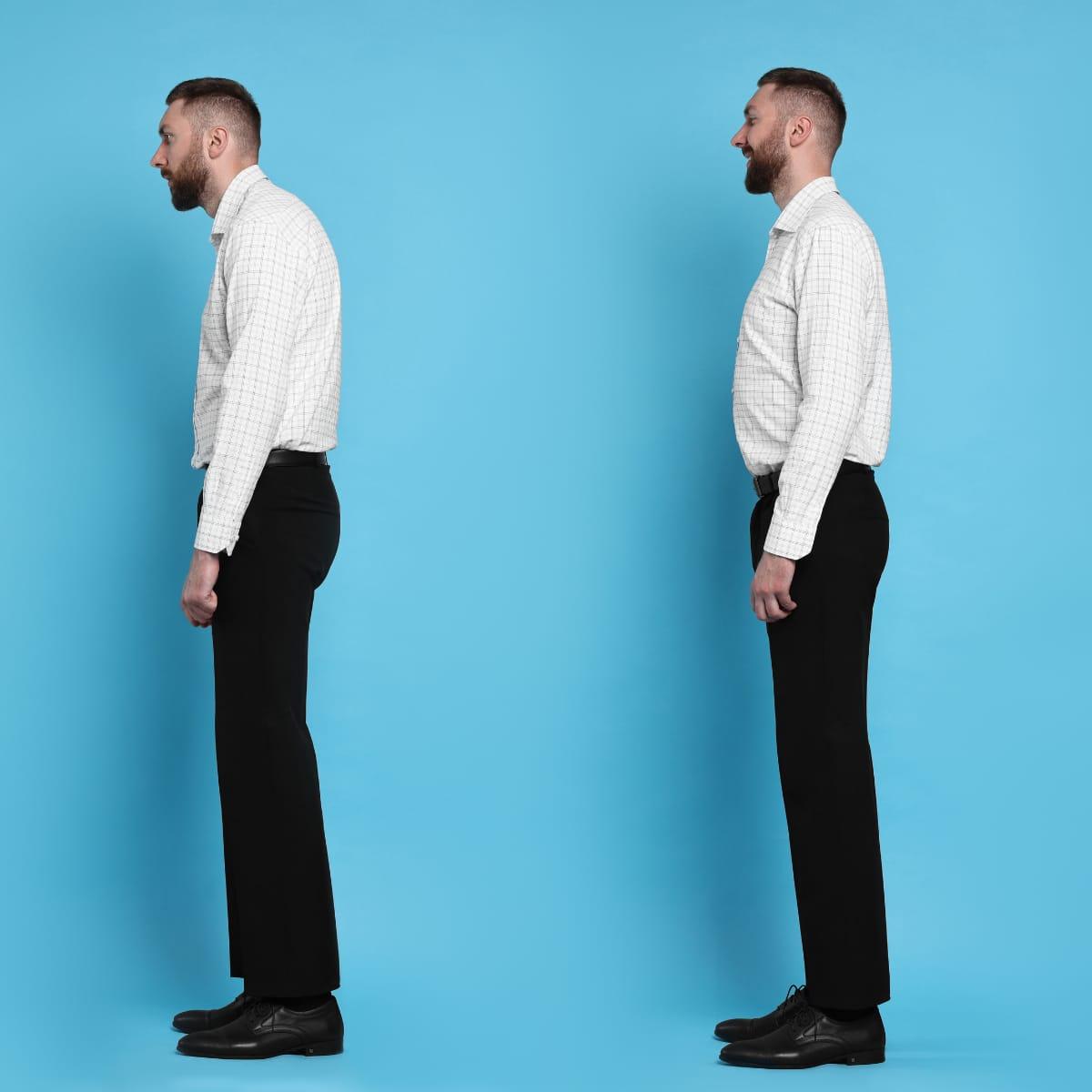
Forward head posture puts a surprising amount of extra load on your neck. Your head weighs about 10 to 12 pounds, but as it tilts forward, the load on your neck climbs to about 27 pounds at 15 degrees and about 60 pounds at 60 degrees (source: Hansraj, K. K., "Assessment of Stresses in the Cervical Spine Caused by Posture and Position of the Head," Surgical Technology International, 2014). Not only does this affect your center of gravity, leading to compromised balance (which is why posture work belongs alongside balance exercises for seniors); over time, this added strain can also contribute to chronic neck and back pain, headaches, and even reduced lung capacity.
How Does Posture Affect Your Movement? Try the Arm-Lift Test
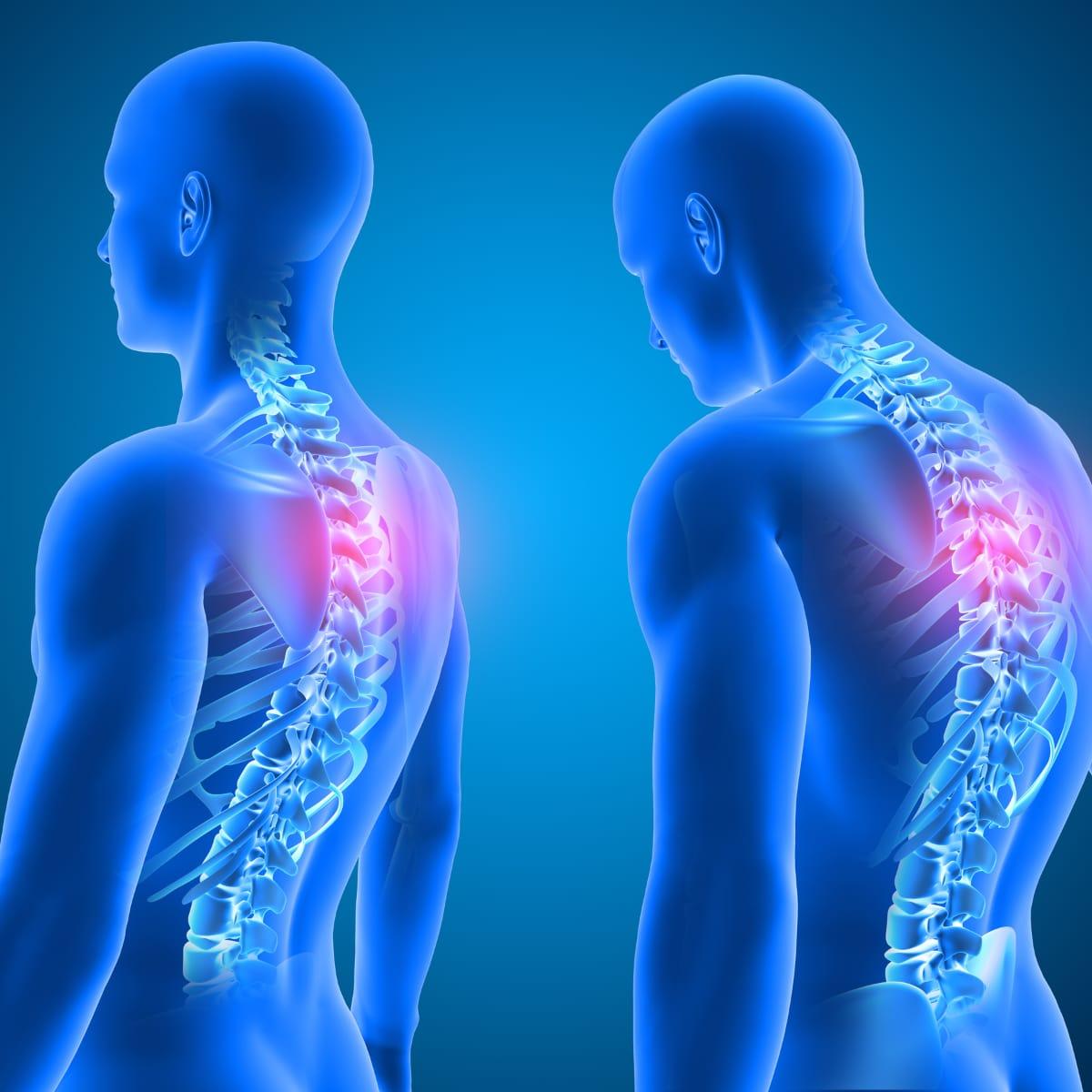
Posture directly limits how far you can move, and a simple way to evaluate how posture affects movement is by performing an arm lift experiment. Start by standing with poor posture: intentionally hunch your shoulders forward and push your head out of alignment. From this position, try lifting your arms in front of you and overhead. You'll likely find it very difficult to lift them all the way up!
Now, stand with the best posture you can. Pull your shoulders back and down while aligning your head with your shoulders. From this position, try lifting your arms again. Do you notice a difference in your range of motion? If done correctly, you should feel a significant improvement in how high you can lift your arms. Good posture allows our body to move more effectively!
The good news? You can improve your posture with a few simple exercises that fit right into your day.
What Are the Best Posture Exercises for Seniors?
These five moves strengthen your upper back and open up your chest, the two things that help most with a slouch and a forward head.
Wall Angels
- Stand with your back against a wall, feet a few inches away.
- Move your back into a "neutral spine" (not too arched and not completely flat).
- Bring your shoulders back towards the wall and down towards the floor.
- Slowly raise your arms to form a "W," then straighten them into a "Y."
- Repeat 8–10 times.
Cat-Cow Stretch
- Start on all fours with your wrists under shoulders and knees under hips.
- Inhale, arch your back, and look up (Cow).
- Exhale, round your spine, and tuck your chin (Cat).
- Repeat for 1–2 minutes.
Chin Tucks
- Sit or stand tall.
- Gently tuck your chin toward your chest without tilting your head.
- Hold for 5 seconds and release.
- Repeat 10 times.
Band Pull-Aparts
Purpose: Strengthen the upper back and shoulder muscles to counteract the effects of slouching and forward head posture. By activating stabilizer muscles around the shoulder joints, band pull-aparts also enhance shoulder health and stability.
- Stand upright with feet shoulder-width apart.
- Hold a resistance band with both hands at shoulder height, arms extended forward.
- Keep your arms straight with a slight bend in the elbows.
- Pull the band apart by moving your hands out to the sides until your arms are in line with your shoulders.
- Slowly return to the starting position.
- Repeat for 10–15 repetitions.
Tips: Maintain a neutral spine, control the movement to avoid snapping the band, and choose a resistance level that allows you to complete the set with proper form.
Doorway Stretch
Purpose: Open up the chest and front shoulder muscles to alleviate tightness and promote an upright posture. Lengthening the pectoralis minor can improve scapular positioning and promote a more efficient range of shoulder motion, and it helps relieve tension in the neck and upper back.
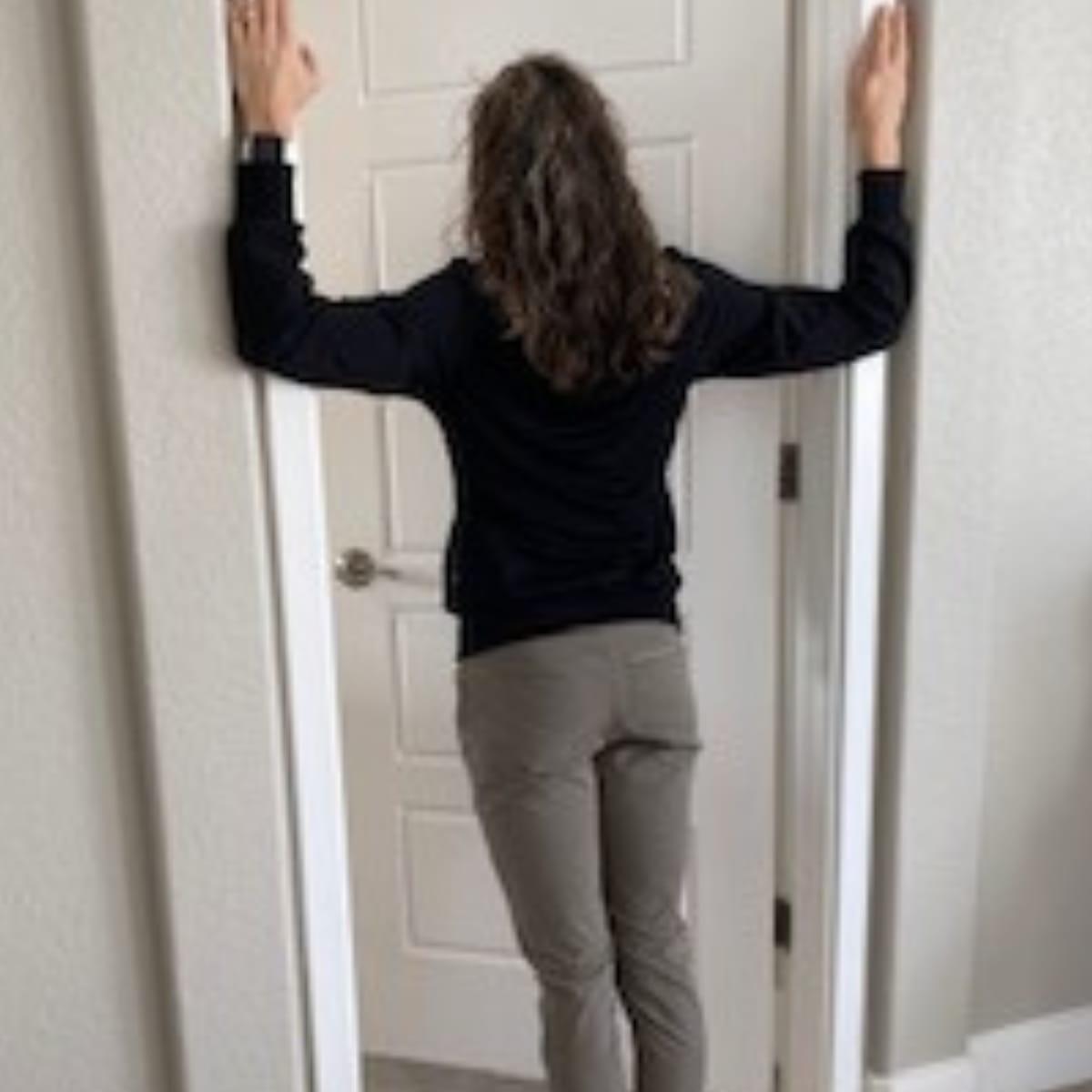
- Stand in an open doorway.
- Place your forearms on either side of the door frame at shoulder height or slightly lower, elbows bent at 90 degrees.
- Lean forward, gently pressing your chest through the doorway until a stretch is felt in the chest and shoulders.
- Hold the stretch for 20–30 seconds. Repeat 2–3 times.
Tips: Keep the movements slow and controlled. Avoid overstretching; the stretch should be comfortable, not painful. Ensure your back remains straight and avoid arching during the stretch.
Pro Tip: Regular breaks during long periods of sitting can do wonders, and they work like little exercise snacks. Set a timer to stand, do some posture exercises, or walk around every 60 minutes. Taking mini-breaks during computer work to perform these exercises can be particularly beneficial.
How Often Should You Do Posture Exercises?
For optimal results, do these exercises 3–4 times a week. Better posture starts with small steps. These exercises take just a few minutes but can make a big difference when done consistently.
If you need help working on your posture, please reach out. I'm happy to help, whether that's with in-home personal training or through our fall prevention and balance training program!
Kristen
Try the recipe: These easy-to-make vegetable egg muffins are packed with protein and veggies — get the recipe.
Sources
- Hansraj KK. Assessment of stresses in the cervical spine caused by posture and position of the head. Surg Technol Int. 2014;25:277-279. View source
- Koseki T, Kakizaki F, Hayashi S, Nishida N, Itoh M. Effect of forward head posture on thoracic shape and respiratory function. J Phys Ther Sci. 2019;31(1):63-68. View source
- Gasavi Nezhad Z, Gard SA, Arazpour M. The effects of hyperkyphosis on balance and fall risk in older adults: a systematic review. Gait Posture. 2025;118:154-167. View source
- Borstad JD. Resting position variables at the shoulder: evidence to support a posture-impairment association. Phys Ther. 2006;86(4):549-557. View source
- Borstad JD, Ludewig PM. Comparison of three stretches for the pectoralis minor muscle. J Shoulder Elbow Surg. 2006;15(3):324-330. View source
This article is for general education and isn't medical advice. Please talk with your doctor before starting a new exercise, nutrition or supplement routine. See our health disclaimer.


About the author
Kristen Nielsen
Kristen founded TogetherWON after watching what strength training could do for older adults — including her own grandparents. She's an ACE Certified Personal Trainer with 10+ years in functional aging, a University of Central Florida graduate, and a former Division I swimmer and track & field athlete.
Senior Fitness Specialist · Functional Aging Specialist · Parkinson's Disease Specialist · Brain Health Trainer · Corrective Exercise Specialist
want these in your inbox?
Get my Saturday letters
One idea for your body, brain or balance each week, usually with a recipe. Unsubscribe any time.
Keep reading
Body · Balance
Is One Side Weaker? How to Fix Muscle Imbalances
Favoring your stronger side can hide weakness and widen the gap between sides. How to notice the pattern and give your weaker side safe practice.
August 8, 2026 · 5 min read
Body · Balance
What to Add to Your Walking Routine After 60
Walking is a great foundation after 60, but it doesn't train everything. How to add strength, balance and brain-body work to your walks.
July 25, 2026 · 5 min read
Body · Balance
3 Common Exercise Mistakes Older Adults Make
Doing only cardio, skipping balance work and training at the wrong intensity are three common exercise mistakes after 60. Here's what to do instead.
February 7, 2026 · 3 min read