Exercise Snacks for Seniors: 5-Minute Movement Breaks
By Kristen Nielsen, Founder & Senior Fitness Specialist
· Updated · Body & Balance · 4 minute read
Part of our guide: How Much Exercise Do Seniors Need? A Weekly Plan
Key takeaways
- Exercise snacks are 1–5 minute bursts of movement done several times a day, and for seniors three 5-minute snacks (morning, midday and evening) are an easy way to build strength and balance.
- Research suggests these short bouts can improve muscle strength, blood sugar control, heart and brain health, and balance, especially when they break up long sitting.
- They suit older adults well because they reduce stiffness and boost balance without overloading your joints.
- No gym or special clothes needed: sneak movement into everyday moments with sit-to-stands, heel raises at the sink and parking farther away.
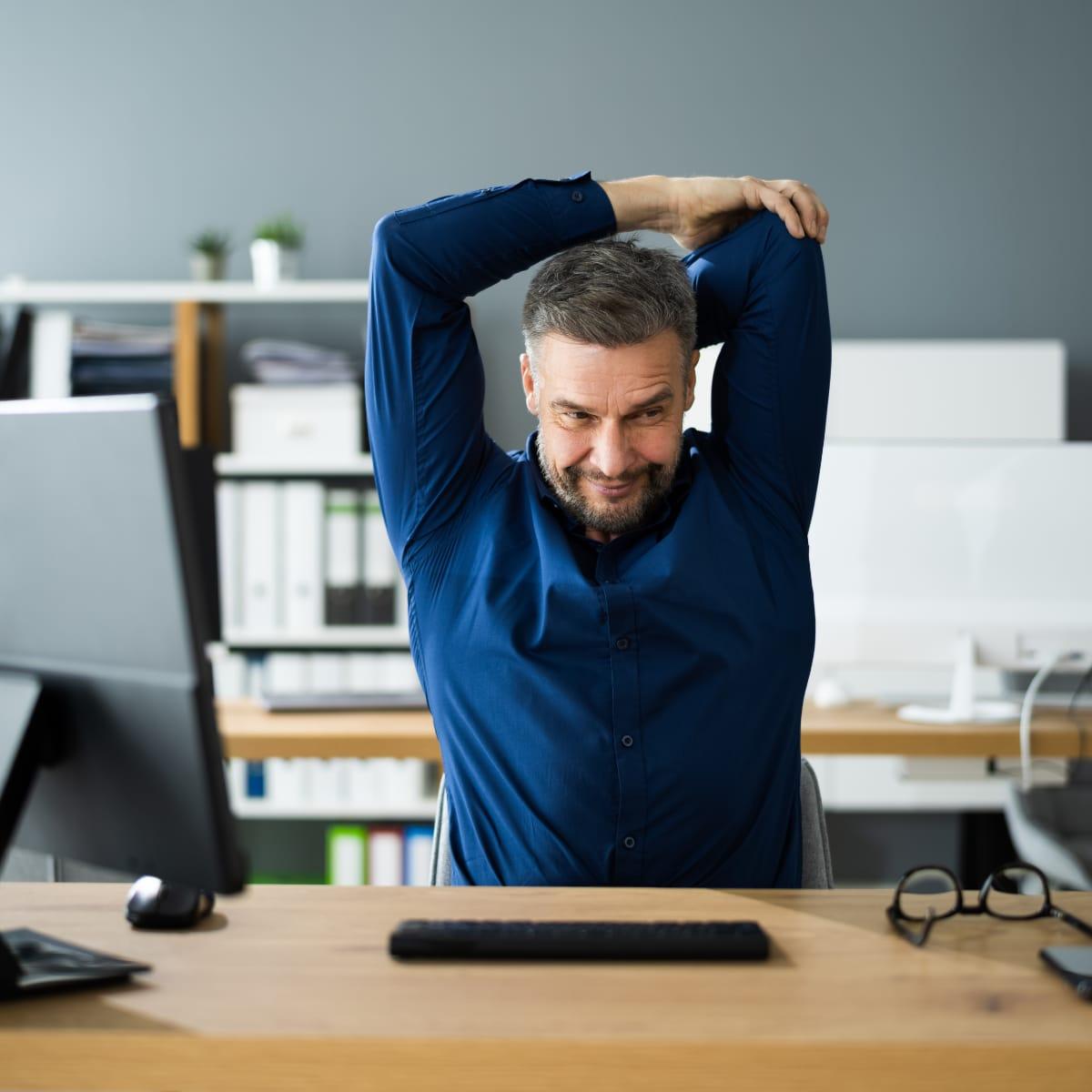
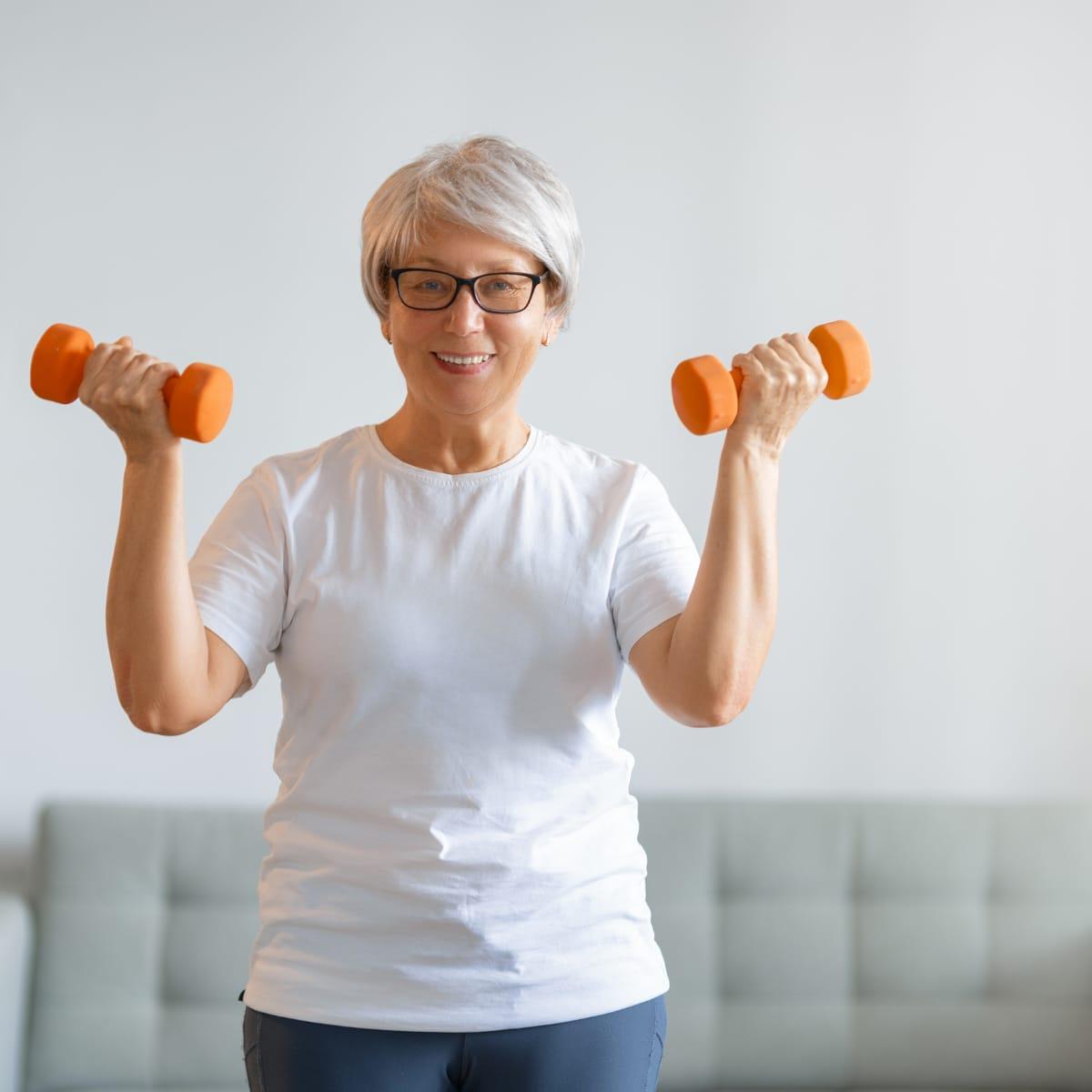
Exercise snacks are just a few minutes of movement spread throughout your day, and for seniors they can make a big difference in strength, balance, and energy. And no — it's not about eating during a workout! (Too bad!) They're one of the easiest ways to reach the amount of exercise seniors need without carving out a big block of time.
What Are "Exercise Snacks"?
"Exercise snacks" are short bursts of activity, typically lasting 1–5 minutes, done several times a day. They don't require a gym or special clothes — just a little bit of movement at home, in your kitchen, or even outside. Think of them as bite-sized workouts that keep your body strong, limber, and energized throughout the day.
And here's the best part: they're especially effective for older adults because they reduce stiffness, boost balance, and improve circulation without overloading your joints.
Do Exercise Snacks Actually Work?
Research says yes. Studies from institutions like McMaster University, published in journals like the Journal of Applied Physiology, suggest that even short bouts of movement (1–5 minutes) performed throughout the day can improve:
- Muscle strength and function
- Blood sugar control and insulin sensitivity (one reason short walks help avoid blood sugar spikes)
- Heart and brain health
- Balance and fall prevention
A 2022 review published in Exercise and Sport Sciences Reviews highlighted that these short bursts of exercise can improve aerobic capacity and metabolic health, especially when they break up long periods of sitting.
In other words, movement "snacks" add up — just like walking steps do!
5-Minute Exercise Snack Routines for Morning, Midday and Evening
Here are a few evidence-informed snack-sized routines to try during your day:
Morning Mobility Snack
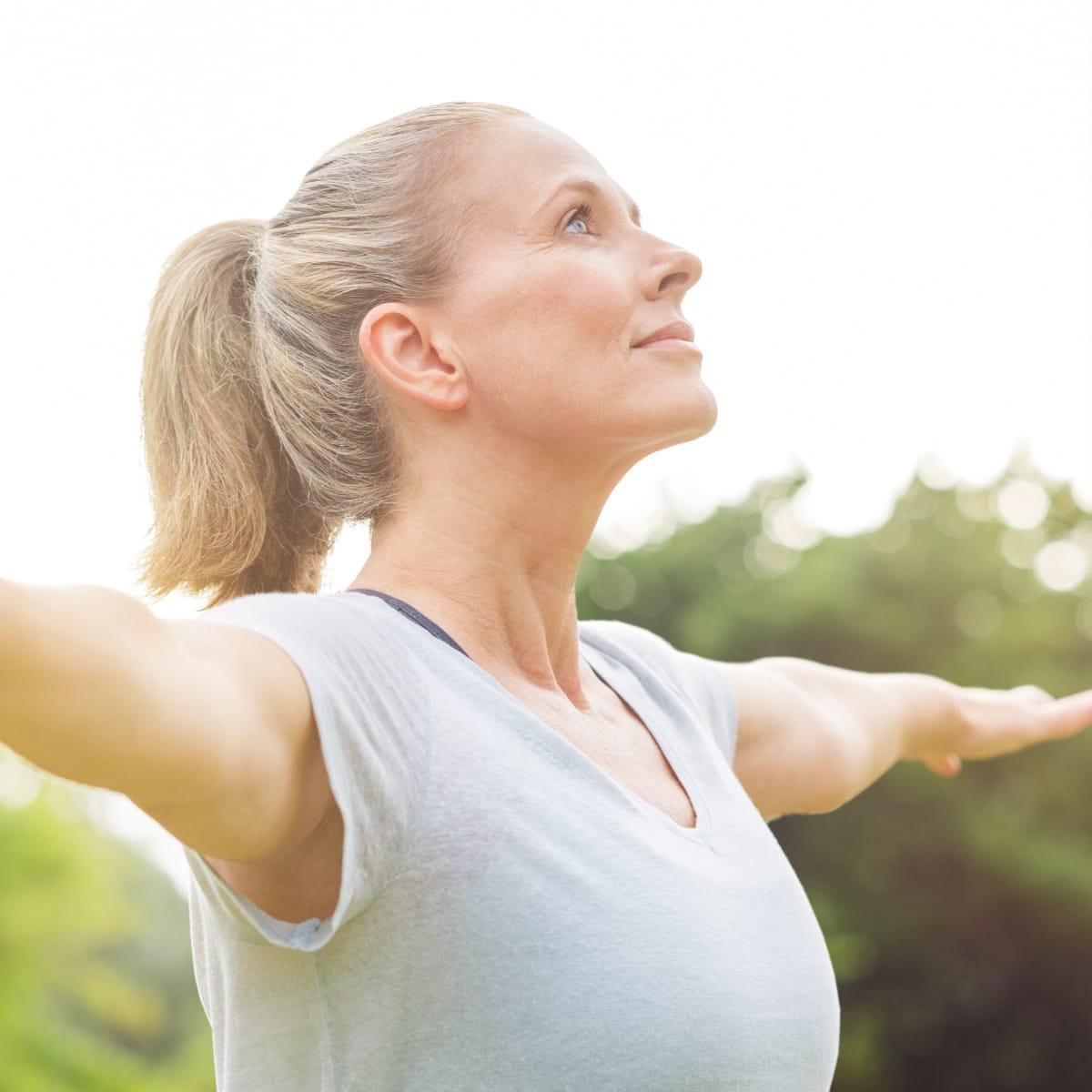
- March in place – 30 seconds
- Arm circles – 30 seconds
- Toe & heel raises – 1 minute
- Gentle spinal twists – 30 seconds each side
- Side steps with reach – 2 minutes
- Deep breathing – 30 seconds
Boosts joint mobility, circulation, and wakes up your nervous system.
Midday Muscle Snack
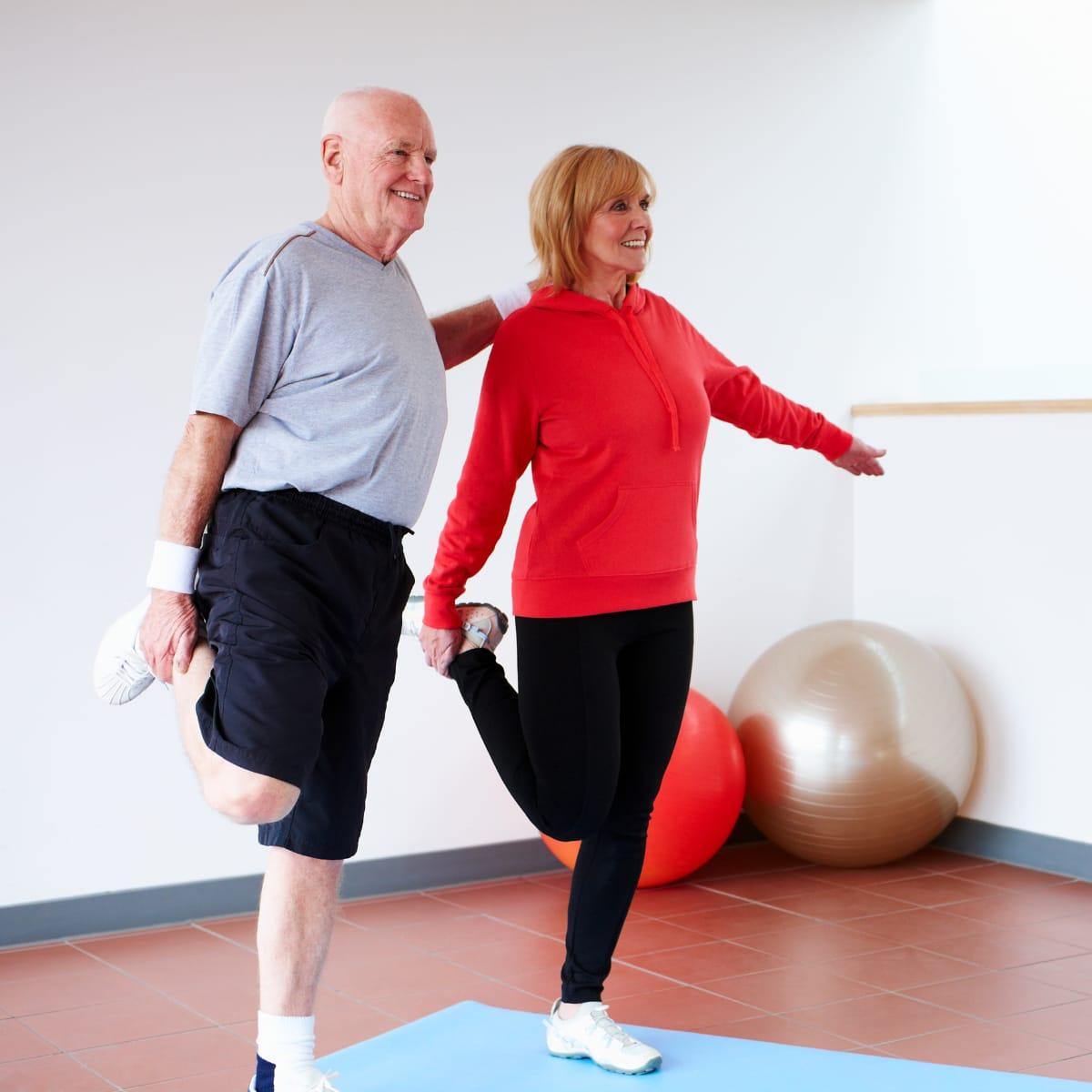
- Sit-to-stand from a sturdy chair – 10 reps (the same move as our 30-second chair stand test)
- Wall push-ups – 10–15 reps
- Step taps (side or stairs) – 1 minute
- Balance on one foot – 30 seconds per leg
- Shoulder squeezes – 10 reps
Builds leg and arm strength, improves balance and reduces fall risk.
Evening Wind-Down Snack
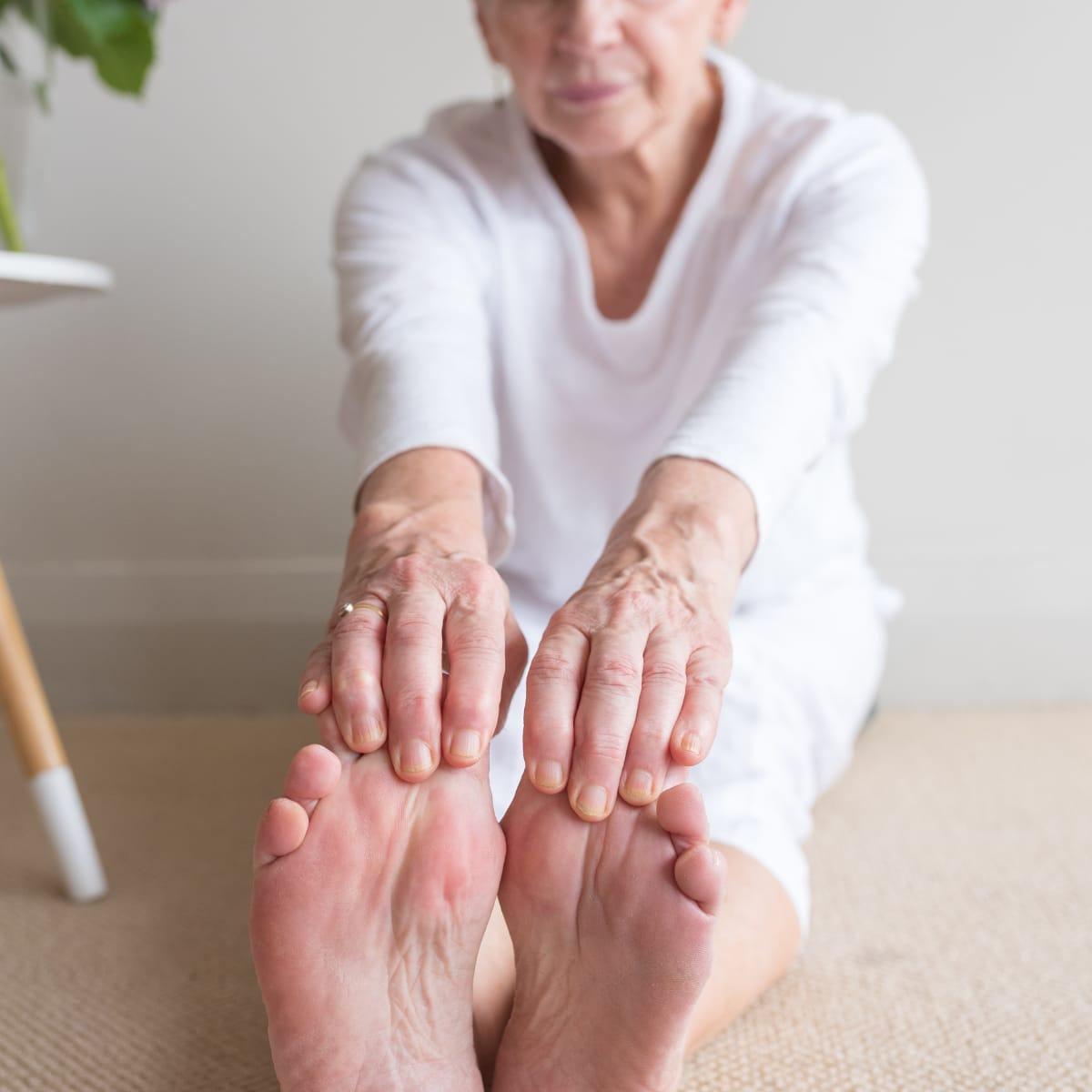
- Seated forward fold – 1 minute
- Gentle neck rolls – 1 minute
- Calf stretch (wall or seated) – 1 minute
- Controlled belly breathing – 2 minutes
Calms the nervous system and improves recovery overnight.
How Can You Fit Exercise Snacks Into Your Day?
The easiest way is to attach them to things you already do: standing up from a chair, brushing your teeth, parking the car, or waiting for the microwave.
I'll never forget the day I spent WAY too long driving around the gym parking lot, waiting for a close spot. Suddenly it dawned on me: "Why am I trying so hard to avoid walking when I'm here intentionally to work out?!" I had to laugh at myself — and admittedly, I felt a little silly.
Snacks don't even need their own time slot. Studies show that spreading light and moderate activity throughout the day helps older adults stay mobile and reduces the risk of losing independence in walking. In a 2012 trial, weaving short bouts of balance and strength work into daily activities lowered the rate of falls by about a third. These movements don't require extra time — just a little intention:
- Sit-to-stands with purpose. Instead of just standing up from a chair, pause and do 3–5 sit-to-stands. This builds leg strength and improves balance — two key factors in preventing falls.
- Reach with intention. Put frequently used items on higher shelves so you have to reach overhead. This helps maintain shoulder mobility and keeps your upper body strong.
- Park and walk. Park a little farther away at the store, church, or gym (I'm preaching to myself!). Those extra steps add up quickly — and walking on different surfaces helps with balance.
- Heel raises at the sink. While brushing your teeth or washing dishes, rise up onto your toes for 10–15 reps. This strengthens your calves and ankles, which are essential for balance and stability.
- Balance while you wait. Standing at the counter or waiting for the microwave? Try a tandem stance (one foot directly in front of the other) or stand on one foot while holding the counter lightly for support. These quick moments train your balance without taking extra time.
Why Do Short Bursts of Exercise Work So Well?
These short, purposeful sessions improve your neuromuscular coordination, reduce stiffness, and help your body stay metabolically active throughout the day. And because they're low-impact and easy to do at home, they're perfect for consistency — which is key to long-term health. If you'd like help building snacks into a routine that fits your home and your goals, that's exactly what we do in in-home personal training.
So next time you're standing at the kitchen counter or waiting for the kettle to boil — give your body a 1–5 minute gift. Your future self will thank you!
Kristen
Try the recipe: This strawberry spinach salad with honey poppy seed dressing is a bright, easy side for a family dinner — get the recipe.
Sources
- Jenkins EM, Nairn LN, Skelly LE, Little JP, Gibala MJ. Do stair climbing exercise "snacks" improve cardiorespiratory fitness? Appl Physiol Nutr Metab. 2019;44(6):681-684. View source
- Gillen JB, Estafanos S, Williamson E, et al. Interrupting prolonged sitting with repeated chair stands or short walks reduces postprandial insulinemia in healthy adults. J Appl Physiol (1985). 2021;130(1):104-113. View source
- Francois ME, Baldi JC, Manning PJ, et al. 'Exercise snacks' before meals: a novel strategy to improve glycaemic control in individuals with insulin resistance. Diabetologia. 2014;57(7):1437-1445. View source
- Perkin OJ, McGuigan PM, Stokes KA. Exercise snacking to improve muscle function in healthy older adults: a pilot study. J Aging Res. 2019;2019:7516939. View source
- Liang IJ, Perkin OJ, Williams S, McGuigan PM, Thompson D, Western MJ. The efficacy of 12-week progressive home-based strength and Tai-chi exercise snacking in older adults: a mixed-method exploratory randomised control trial. J Frailty Aging. 2024;13(4):572-581. View source
- Islam H, Gibala MJ, Little JP. Exercise snacks: a novel strategy to improve cardiometabolic health. Exerc Sport Sci Rev. 2022;50(1):31-37. View source
- Jones MD, Clifford BK, Stamatakis E, Gibbs MT. Exercise snacks and other forms of intermittent physical activity for improving health in adults and older adults: a scoping review of epidemiological, experimental and qualitative studies. Sports Med. 2024;54(4):813-835. View source
- Pahor M, Guralnik JM, Ambrosius WT, et al. Effect of structured physical activity on prevention of major mobility disability in older adults: the LIFE study randomized clinical trial. JAMA. 2014;311(23):2387-2396. View source
- Clemson L, Fiatarone Singh MA, Bundy A, et al. Integration of balance and strength training into daily life activity to reduce rate of falls in older people (the LiFE study): randomised parallel trial. BMJ. 2012;345:e4547. View source
- Sherrington C, Fairhall NJ, Wallbank GK, et al. Exercise for preventing falls in older people living in the community. Cochrane Database Syst Rev. 2019;1:CD012424. View source
This article is for general education and isn't medical advice. Please talk with your doctor before starting a new exercise, nutrition or supplement routine. See our health disclaimer.

About the author
Kristen Nielsen
Kristen founded TogetherWON after watching what strength training could do for older adults — including her own grandparents. She's an ACE Certified Personal Trainer with 10+ years in functional aging, a University of Central Florida graduate, and a former Division I swimmer and track & field athlete.
Senior Fitness Specialist · Functional Aging Specialist · Parkinson's Disease Specialist · Brain Health Trainer · Corrective Exercise Specialist
want these in your inbox?
Get my Saturday letters
One idea for your body, brain or balance each week, usually with a recipe. Unsubscribe any time.
Keep reading
Body · Balance
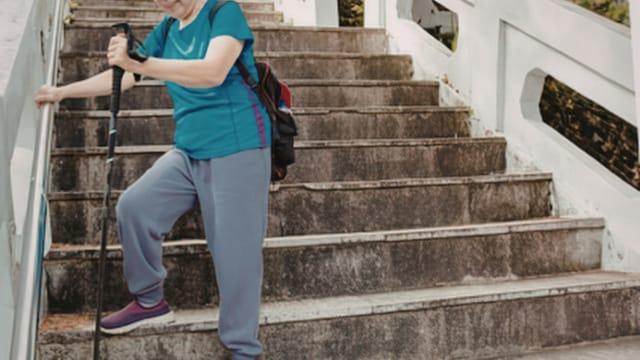
Is One Side Weaker? How to Fix Muscle Imbalances
Favoring your stronger side can hide weakness and widen the gap between sides. How to notice the pattern and give your weaker side safe practice.
August 8, 2026 · 5 min read
Body · Balance
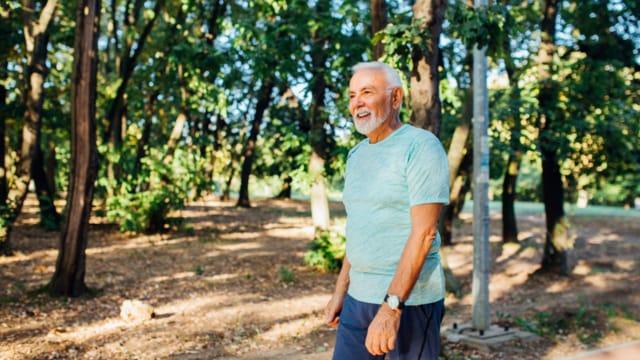
What to Add to Your Walking Routine After 60
Walking is a great foundation after 60, but it doesn't train everything. How to add strength, balance and brain-body work to your walks.
July 25, 2026 · 5 min read
Body · Balance
3 Common Exercise Mistakes Older Adults Make
Doing only cardio, skipping balance work and training at the wrong intensity are three common exercise mistakes after 60. Here's what to do instead.
February 7, 2026 · 3 min read