Staying Active in Winter and Changing Seasons
By Kristen Nielsen, Founder & Senior Fitness Specialist
· Updated · Body & Balance · 4 minute read

Part of our guide: How Much Exercise Do Seniors Need? A Weekly Plan
Key takeaways
- To stay active in winter, walk outside on mild, sunny days, use indoor walking spaces at malls and community centers, and add short home workouts.
- A few minutes of daily balance practice and bodyweight moves like squats, wall push-ups and chair stands can all be done indoors without equipment.
- Dancing, exercise bands and setting activity goals with friends or a small group can keep winter workouts fun and consistent.
You can stay just as active in winter as you are in summer — it just takes a few changes to your exercise routine. Think of it like switching to a winter wardrobe: it's simply time to adjust for the season!
In November 2024, Colorado reminded us that winter had arrived with a good 18 inches of snow at our house. While the beauty of snow often brings excitement, it can also lead to spending more time indoors. Many people find themselves exercising less during the winter for a variety of reasons, but the amount of exercise seniors need doesn't change with the weather. Here are some ways to stay active as the seasons change.
Where Can You Walk When It's Cold Outside?
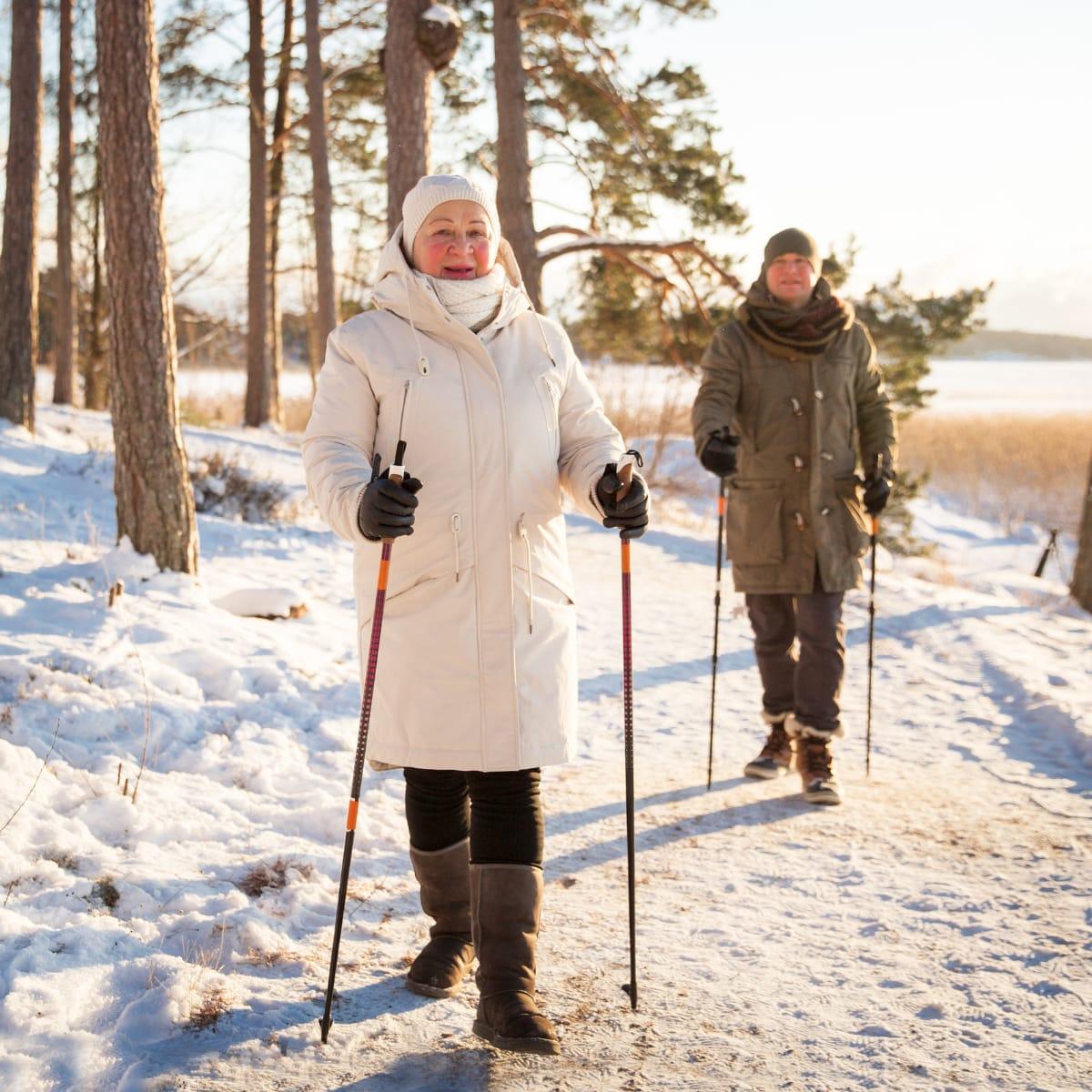
Walk outdoors on mild, sunny days, and move indoors to a mall or community center when it's too cold or icy.
- Take advantage of sunny days: Bundle up and head outdoors when the weather is mild. Even a short walk in the fresh air can lift your spirits and provide essential vitamin D. In the winter months, I like to move my outdoor workouts to the middle of the day so that I have maximum sun and warmth exposure!
- Explore indoor walking options: Many malls or community centers offer indoor walking spaces, which can be a warm and safe alternative in colder weather.
What Exercises Can You Do Indoors Without Equipment?
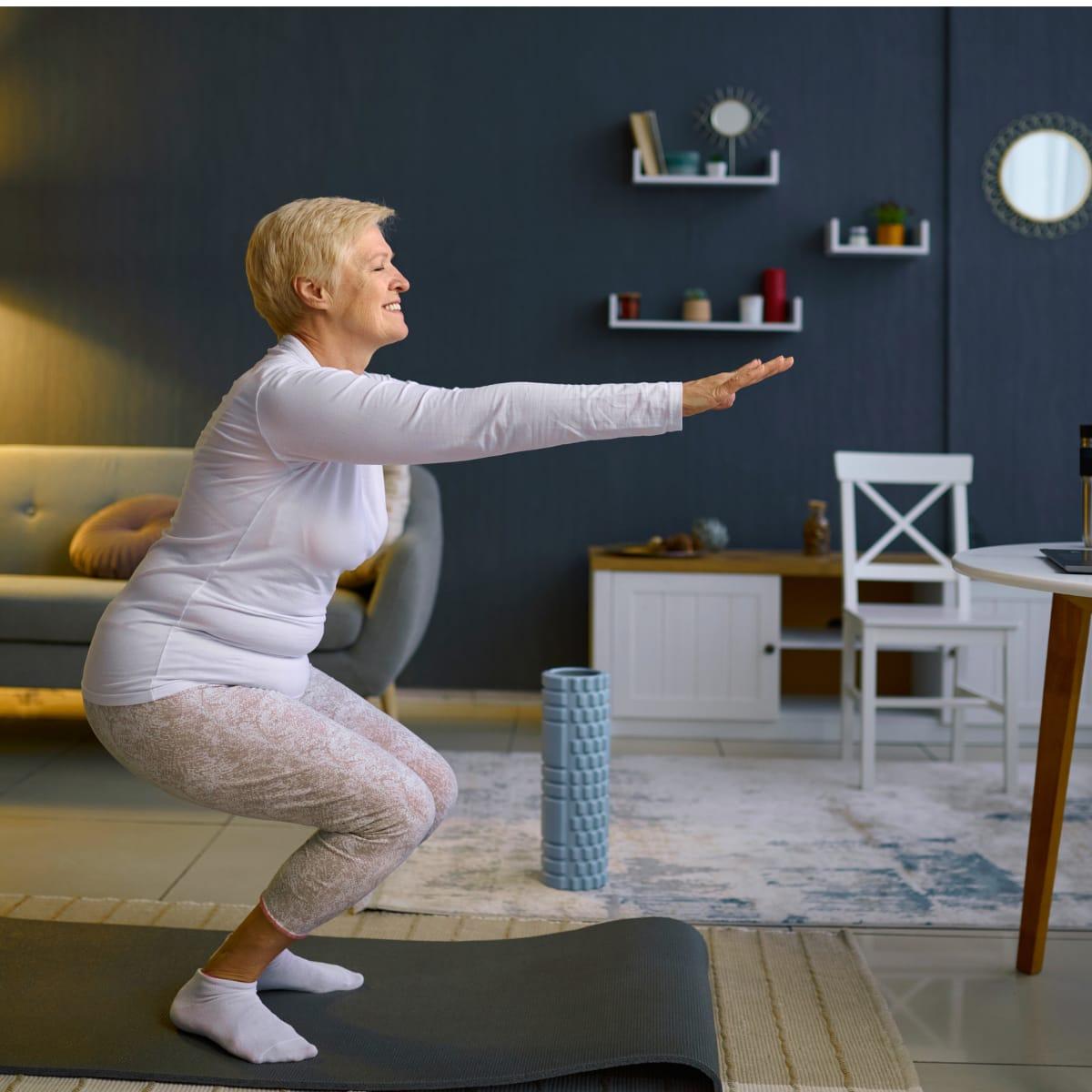
Balance practice and simple bodyweight strength moves can all be done in your living room, no gym required.
- Balance practice: Set aside a few minutes daily to work on balance exercises, such as standing on one leg or practicing heel-to-toe walks. These can be done indoors and reduce the risk of falls, which is especially important in slippery conditions. I shared some simple balance exercises you can do at home in another post, if you missed it.
- Bodyweight exercises: Simple exercises like squats, wall push-ups, and chair stands (try the 30-second chair stand test to see where you're starting) can help maintain strength without needing a gym or equipment.
- Use household items as weights: If you don't have access to dumbbells, use canned goods or water bottles to add resistance to your exercises. For ideas, see my post on exercises you can do with everyday objects.
Try a New Indoor Activity
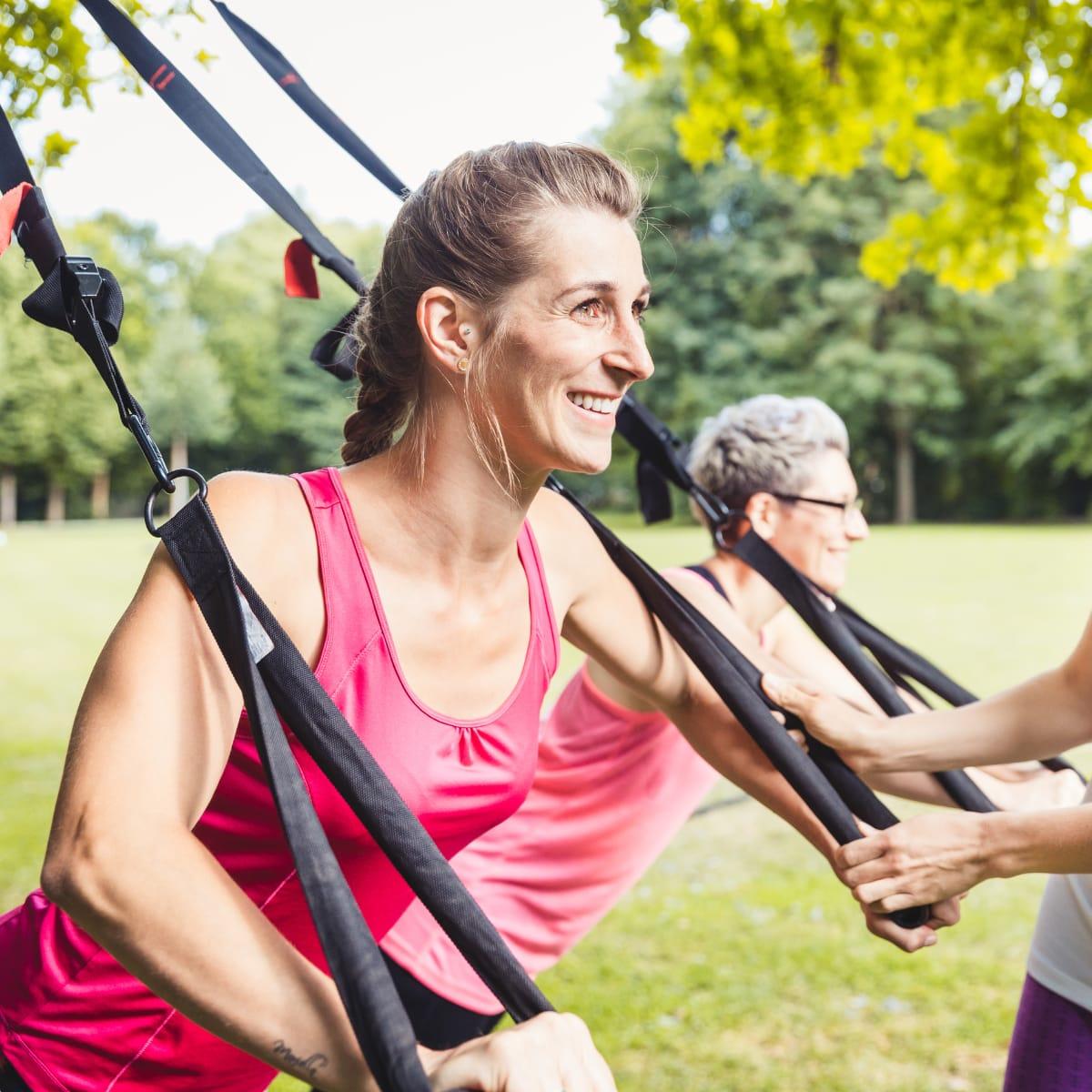
- Suspension training: Suspension trainers are a fun and versatile piece of workout equipment, perfectly suited for the winter months! They are relatively inexpensive and don't take up permanent space. I've written more about them in another post.
- Dancing: Put on some favorite tunes and dance! Dancing is great for cardio fitness, balance, and overall mood. That same month, I had the privilege of serving at the Senior Dinner Dance in Colorado Springs. It was fun to see so many people out on the dance floor. They definitely got a good workout! Here's a 20-minute dance workout for seniors by SilverSneakers that you can follow along with for a great indoor workout.
- Exercise bands: These are lightweight, inexpensive, and perfect for resistance training at home. They help maintain muscle strength without requiring heavy equipment. I share some exercises you can do with bands in a follow-up post!
How Do You Stay Motivated to Exercise in Winter?
Exercising with other people is one of the best ways to stay consistent when the days are cold and dark.
- Engage in group classes: If it's safe and convenient, join a local fitness class geared toward seniors. The social interaction can help with motivation and accountability.
- Set goals with friends: Set weekly activity goals with friends or family members, even if they're in different locations. This can create a fun way to check in with each other and stay motivated.
- Form a small group for group training: Many personal trainers offer small group training, which is a fantastic way to enjoy a more personalized approach to fitness. For example, I provide in-home training for groups of 2–6 people. Each group member benefits from my in-person guidance a couple of times a week and receives customized workouts to follow on the days we don't train together. This approach makes it easier to stay consistent, reach your goals, and maintain accountability — especially during the winter months!

Create an Inviting Workout Space at Home
- Designate an exercise spot: Make an area in your home an inviting place to work out. Add a mat, light weights, a stability ball, or anything else you might use. It is helpful for motivation to have a dedicated space with all your equipment easily accessible.
- Layer up: Keep some warm, layered workout clothing handy, especially if you'll be exercising in a cooler room. This will make it easier to get started without feeling chilly. Once you get going, exercise is the best way to warm up on a chilly day!
I hope this offers you some fresh ideas or motivation for embracing exercise during the winter months! Feel free to reach out if you have any specific questions.
Kristen
Try the recipe: Here's a simple and delicious 5-ingredient soup that's both nourishing and easy to prepare — get the recipe.
Sources
- Tucker P, Gilliland J. The effect of season and weather on physical activity: a systematic review. Public Health. 2007;121(12):909-922. View source
- Sherrington C, Fairhall NJ, Wallbank GK, et al. Exercise for preventing falls in older people living in the community. Cochrane Database Syst Rev. 2019;1(1):CD012424. View source
- Centers for Disease Control and Prevention. Older adult activity: an overview. Updated December 4, 2025. View source
This article is for general education and isn't medical advice. Please talk with your doctor before starting a new exercise, nutrition or supplement routine. See our health disclaimer.


About the author
Kristen Nielsen
Kristen founded TogetherWON after watching what strength training could do for older adults — including her own grandparents. She's an ACE Certified Personal Trainer with 10+ years in functional aging, a University of Central Florida graduate, and a former Division I swimmer and track & field athlete.
Senior Fitness Specialist · Functional Aging Specialist · Parkinson's Disease Specialist · Brain Health Trainer · Corrective Exercise Specialist
want these in your inbox?
Get my Saturday letters
One idea for your body, brain or balance each week, usually with a recipe. Unsubscribe any time.
Keep reading

Body · Balance
Is One Side Weaker? How to Fix Muscle Imbalances
Favoring your stronger side can hide weakness and widen the gap between sides. How to notice the pattern and give your weaker side safe practice.
August 8, 2026 · 5 min read
Body · Balance
What to Add to Your Walking Routine After 60
Walking is a great foundation after 60, but it doesn't train everything. How to add strength, balance and brain-body work to your walks.
July 25, 2026 · 5 min read

Body · Balance
3 Common Exercise Mistakes Older Adults Make
Doing only cardio, skipping balance work and training at the wrong intensity are three common exercise mistakes after 60. Here's what to do instead.
February 7, 2026 · 3 min read