4 Easy Balance Exercises to Practice 2–3 Times a Week
By Kristen Nielsen, Founder & Senior Fitness Specialist
· Updated · Balance & Body · 3 minute read
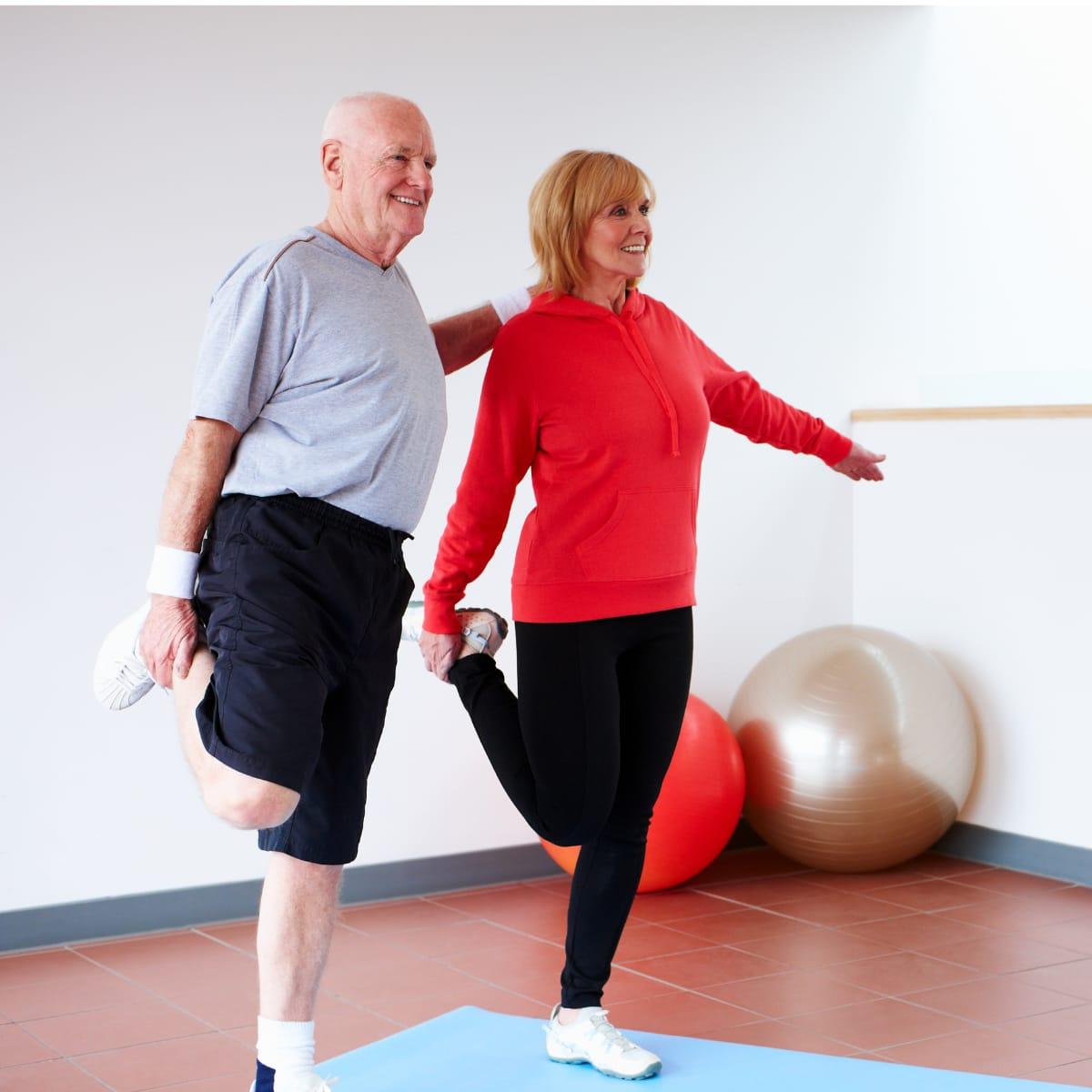
Part of our guide: Balance Exercises for Seniors: How to Prevent Falls
Key takeaways
- Four simple balance exercises to do at home are the single leg stand, heel to toe walk, standing march and chair squats, practiced at least 2–3 times a week.
- Each year, 1 in 4 adults over 65 in the U.S. experiences a fall, and a 2019 Cochrane review found strength and balance training reduced the rate of falls by about 23%.
- Pair an exercise with something you already do, like a few chair squats before you sit down, and use a chair or wall for support if needed.
- If a new medication seems to affect your balance, check its side effects and talk with your doctor.
Four simple balance exercises I include in almost every client's program are the single leg stand, heel to toe walk, standing march and chair squats. Practice them at least two to three times a week at home, and they're a great starting point for the balance exercises for seniors in our full guide.
Why Does Balance Training Matter After 65?
Falls are common, and balance training is one of the best ways to prevent them. Each year, 1 in 4 adults over 65 in the U.S. experiences a fall. After a fall, many older adults develop a fear of falling, which can lead to decreased physical activity and, ultimately, reduced muscle strength and balance — further increasing the risk of future falls (National Institute on Aging, 2023). As I discuss in my post on starting strength training, strength training helps reduce fall risk, and combining it with balance training is an especially effective approach. Research suggests that regular exercise, particularly strength and balance training, can reduce the rate of falls by about 23% in older adults (Cochrane review, 2019).
There are a few balance exercises I always like to include in my clients' programs. These exercises are easy to incorporate into your daily routine. With consistency — practicing them at least two to three times a week — you'll start to notice improvements in your balance and confidence.
1. Single Leg Stand
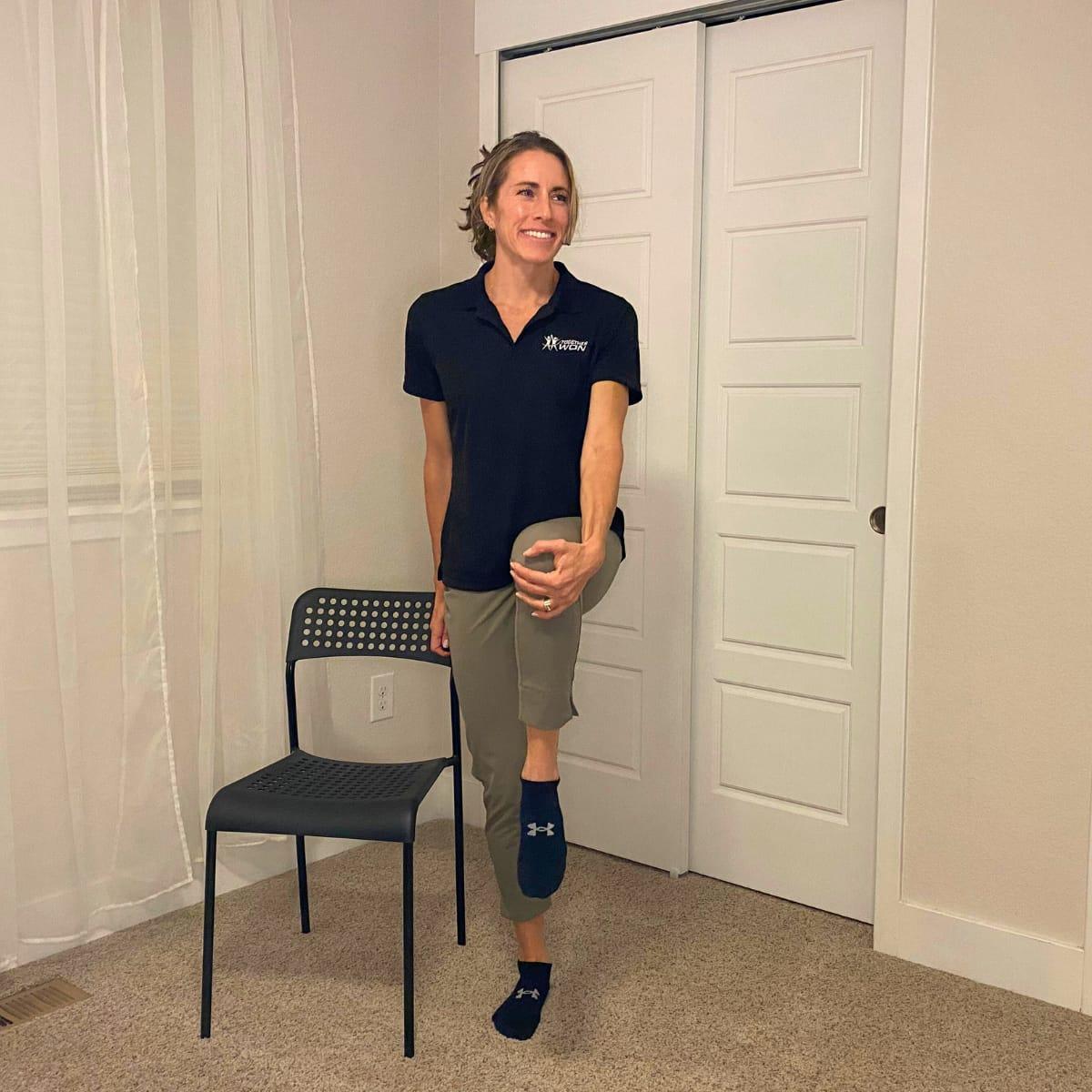
How to do it: Stand next to a wall or chair, holding it for balance if needed. Lift your knee furthest from the chair and hold it with your free hand. Gradually reduce support by hovering your support hand, then try balancing without holding on.
Benefits: Strengthens ankles, knees, and core while improving balance.
2. Heel to Toe Walk
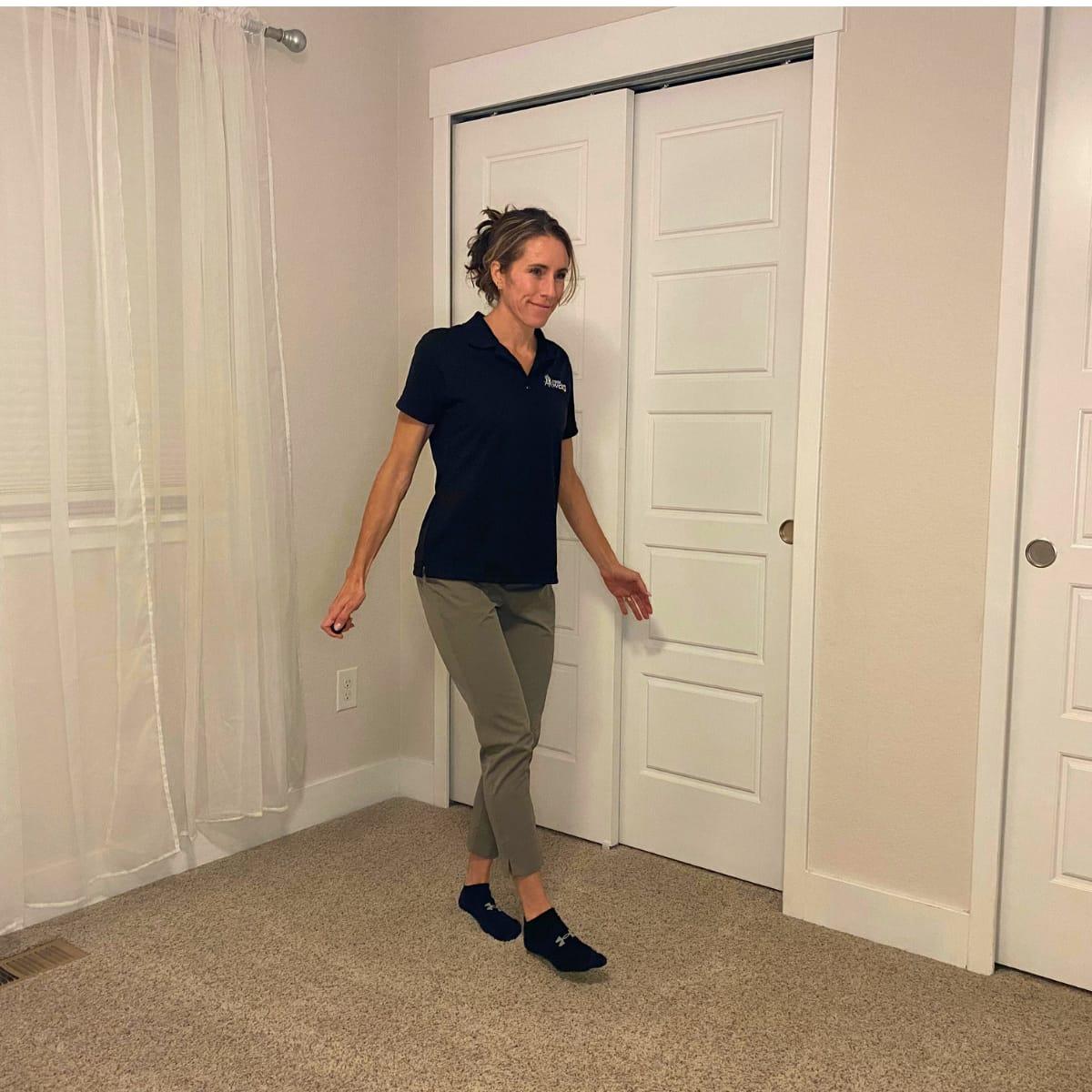
How to do it: Walk in a straight line, placing the heel of one foot directly in front of the toes of the other. Use a wall for support if needed.
If it's too difficult to place one foot directly in front of the other, place it next to the other and slightly ahead.
Benefits: Enhances coordination and balance.
3. Standing March
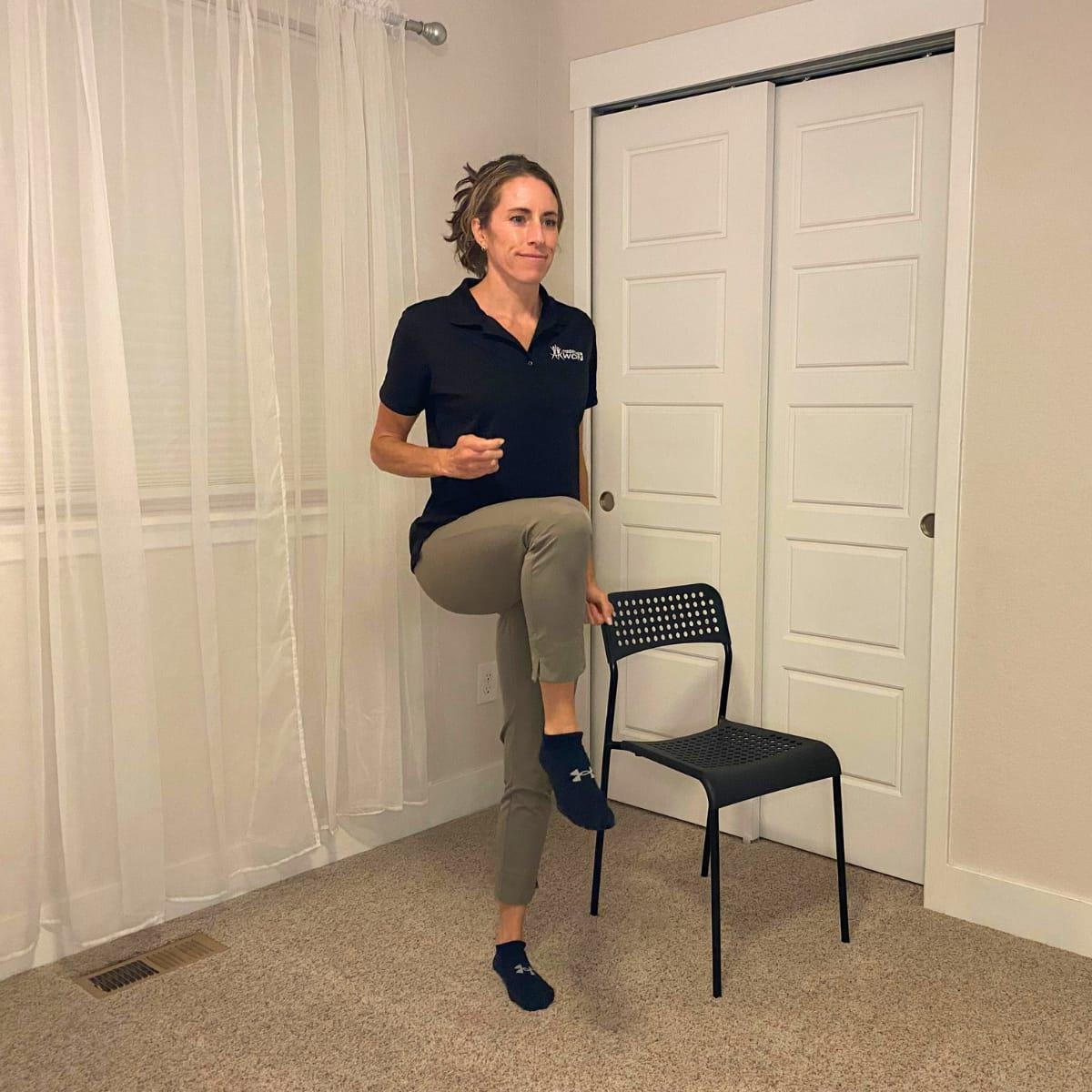
How to do it: Stand tall and lift one knee as high as possible, then lower and repeat with the other leg. Hold onto a sturdy chair or wall for support if needed.
Benefits: Improves balance and hip strength, mimicking natural walking movement.
4. Chair Squats
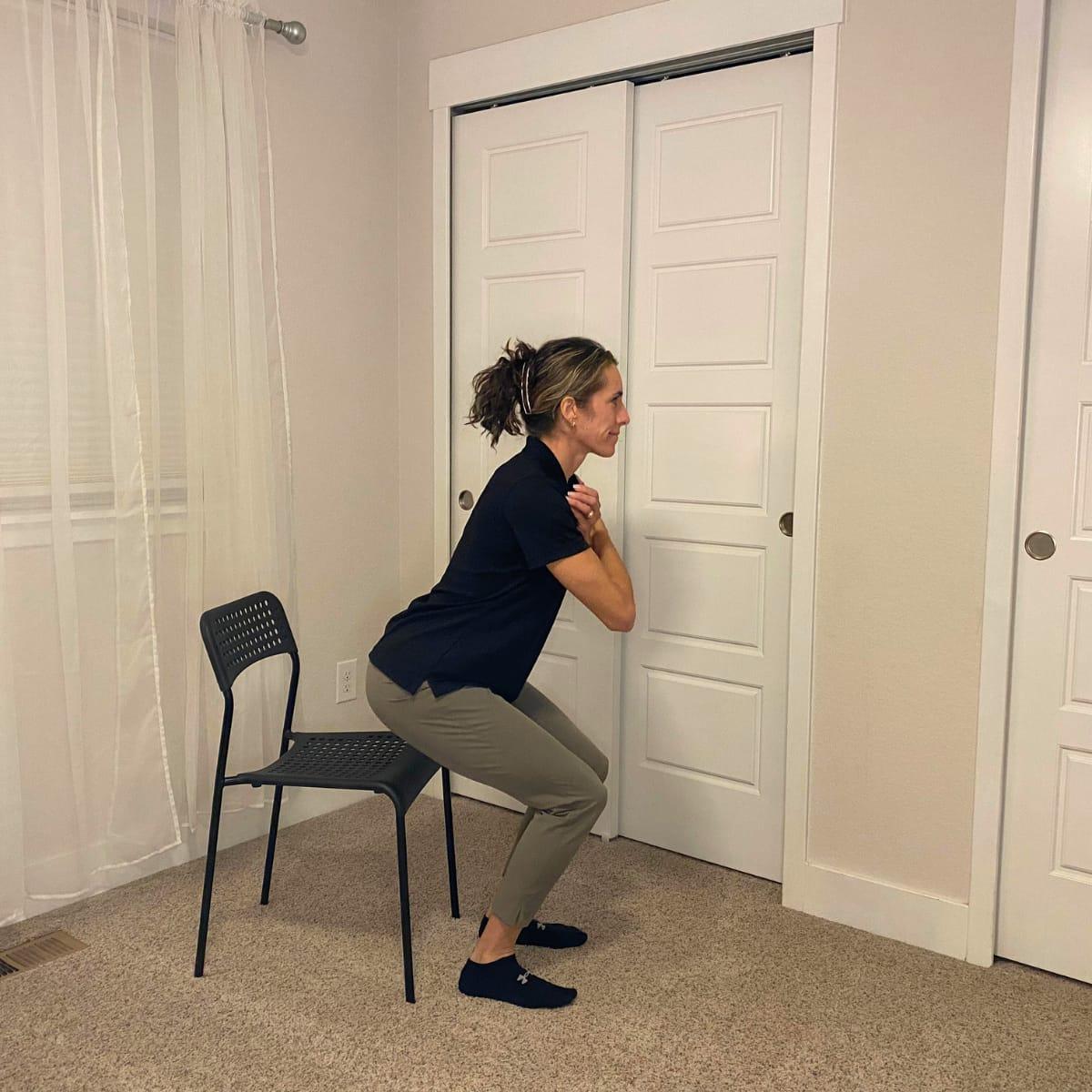
How to do it: Stand in front of a chair, lower yourself until you're about to sit, and then return to standing without fully sitting down. (To see how your leg strength compares, try our 30-second chair stand test.)
If this is too difficult at first, use the armrests or a table for assistance. Gradually work up to doing this exercise without using your arms for assistance.
Benefits: Strengthens leg muscles and core, improving stability and posture.
How Often Should You Do Balance Exercises?
Try to incorporate these balance exercises at least 2–3 times a week. It can be easier to make them part of your routine by taking short breaks throughout the day to do an exercise or by pairing them with something you already do regularly. For example, before you sit down, try doing a few chair squats first!
Feel free to reach out if you have any specific questions regarding these exercises.
Can Medications Affect Your Balance?
Ever since I switched to a new medication, I am experiencing more balance issues. Could the two be related?
Yes! Many common medications can cause dizziness and affect your balance. Be sure to check the side effects of your prescriptions, and if you think one might be impacting your stability, talk with your doctor. They can help you explore alternatives or suggest options that might be easier on your balance. I cover the most common culprits in my post on medications that affect balance.
Kristen
Try the recipe: These Thai meatballs with coconut-peanut sauce are a delicious recipe that makes my family very happy — get the recipe.
Sources
- Moreland B, Kakara R, Henry A. Trends in nonfatal falls and fall-related injuries among adults aged ≥65 years—United States, 2012-2018. MMWR Morb Mortal Wkly Rep. 2020;69(27):875-881. doi:10.15585/mmwr.mm6927a5 View source
- Centers for Disease Control and Prevention. Older adult falls data / facts about falls. CDC; accessed 2026. View source
- National Institute on Aging. Falls and fractures in older adults: causes and prevention. NIH; accessed 2026. View source
- Sherrington C, Fairhall NJ, Wallbank GK, et al. Exercise for preventing falls in older people living in the community. Cochrane Database Syst Rev. 2019;1(1):CD012424. doi:10.1002/14651858.CD012424.pub2 View source
- Woolcott JC, Richardson KJ, Wiens MO, et al. Meta-analysis of the impact of 9 medication classes on falls in elderly persons. Arch Intern Med. 2009;169(21):1952-1960. doi:10.1001/archinternmed.2009.357 View source
This article is for general education and isn't medical advice. Please talk with your doctor before starting a new exercise, nutrition or supplement routine. See our health disclaimer.


About the author
Kristen Nielsen
Kristen founded TogetherWON after watching what strength training could do for older adults — including her own grandparents. She's an ACE Certified Personal Trainer with 10+ years in functional aging, a University of Central Florida graduate, and a former Division I swimmer and track & field athlete.
Senior Fitness Specialist · Functional Aging Specialist · Parkinson's Disease Specialist · Brain Health Trainer · Corrective Exercise Specialist
want these in your inbox?
Get my Saturday letters
One idea for your body, brain or balance each week, usually with a recipe. Unsubscribe any time.
Keep reading

Body · Balance
Is One Side Weaker? How to Fix Muscle Imbalances
Favoring your stronger side can hide weakness and widen the gap between sides. How to notice the pattern and give your weaker side safe practice.
August 8, 2026 · 5 min read

Body · Balance
What to Add to Your Walking Routine After 60
Walking is a great foundation after 60, but it doesn't train everything. How to add strength, balance and brain-body work to your walks.
July 25, 2026 · 5 min read

Body · Balance
3 Common Exercise Mistakes Older Adults Make
Doing only cardio, skipping balance work and training at the wrong intensity are three common exercise mistakes after 60. Here's what to do instead.
February 7, 2026 · 3 min read