Medications That Can Affect Balance and Raise Fall Risk
By Kristen Nielsen, Founder & Senior Fitness Specialist
· Updated · Balance · 2 minute read

Part of our guide: Balance Exercises for Seniors: How to Prevent Falls
Key takeaways
- Yes, many medications can affect your balance, and taking four or more is associated with an increased risk of falls in older adults.
- Sleep aids, anti-anxiety medications, blood pressure medications, antidepressants, opioid pain medications and diuretics can all affect reaction time, blood pressure, alertness or coordination.
- Bring a full list of everything you take, including supplements, to your doctor or pharmacist and ask whether any could be affecting your balance or fall risk.
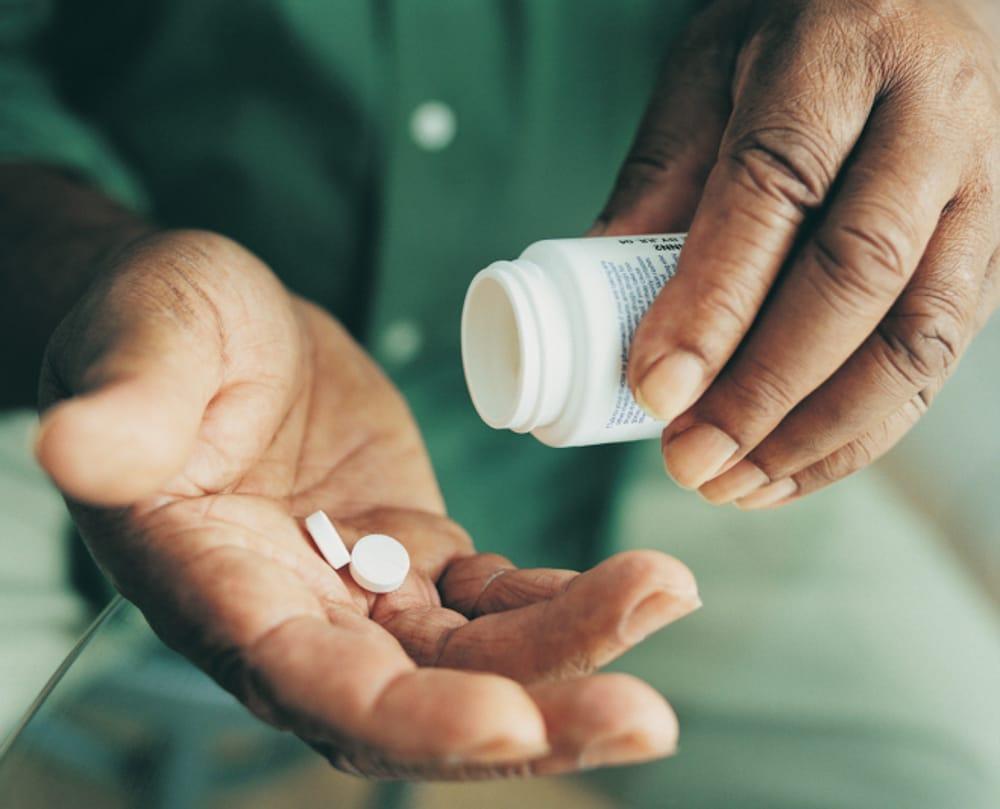
Many common medications can affect your balance, especially when you take several at once. So if you've felt a little more unsteady than usual and weren't quite sure why, your medicine cabinet is worth a look.
It's easy to assume changes in balance are just part of aging, and balance exercises for seniors help a lot. But in many cases, there's something else contributing:
Medications.
How Can Medications Affect Your Balance?
Many medications — especially when combined — can affect how your body maintains balance.
They may influence:
- Reaction time
- Blood pressure
- Alertness
- Coordination
This doesn't mean the medications are necessarily "bad." But it does mean they can have side effects that are easy to overlook.
One important concept here is polypharmacy, which simply means taking multiple medications at once.
Research has shown that taking four or more medications is associated with an increased risk of falls in older adults.

Which Medications Can Affect Balance?
The types of medications most often linked to balance problems include:
- Sleep aids: may cause lingering drowsiness or slower reaction time
- Anti-anxiety medications: can reduce alertness and coordination
- Blood pressure medications: may lead to dizziness, especially when standing up quickly
- Antidepressants: can sometimes affect balance, particularly during adjustments
- Pain medications (especially opioids): may cause sedation and slower reflexes
- Diuretics ("water pills"): can contribute to dehydration or electrolyte imbalances
These are often referred to as "fall-risk-increasing drugs" in the research literature.
Medication and Balance Checklist
A quick self-check you can use or share:
- I take 4 or more medications daily
- I sometimes feel dizzy when standing up
- I've noticed more fatigue or brain fog
- I feel less steady when walking than I used to
- I've had a near-fall in the past 3–6 months
- I'm unsure how my medications might interact
If you checked even one or two of these, it may be worth taking a closer look.
What Should You Ask Your Doctor About Your Medications?
At your next doctor or pharmacy visit, bring a full list of everything you take (including supplements) and ask:
"Could any of these be affecting my balance or increasing my fall risk?"
This simple question can uncover helpful insights.
Medications Are One Piece of the Balance Puzzle
Balance is influenced by many systems — your muscles, your vision, your inner ear, and your brain. The strength side is easy to check with the 30-second chair stand test.
Even when medications play a role, understanding the "why" behind changes can help you respond more confidently.
Sometimes the smallest insights can make the biggest difference.
Understanding what's influencing your balance can help you move through your day with more confidence — and fewer surprises.
Kristen
Try the recipe: My turkey avocado power sandwich combines protein, healthy fats and fiber for steady energy — get the recipe.
Sources
- Leipzig RM, Cumming RG, Tinetti ME. Drugs and falls in older people: a systematic review and meta-analysis: II. Cardiac and analgesic drugs. J Am Geriatr Soc. 1999;47(1):40-50. View source
- Leipzig RM, Cumming RG, Tinetti ME. Drugs and falls in older people: a systematic review and meta-analysis: I. Psychotropic drugs. J Am Geriatr Soc. 1999;47(1):30-39. View source
- Seppala LJ, Wermelink AMAT, de Vries M, et al. Fall-risk-increasing drugs: a systematic review and meta-analysis: II. Psychotropics. J Am Med Dir Assoc. 2018;19(4):371.e11-371.e17. View source
- de Vries M, Seppala LJ, Daams JG, van de Glind EMM, Masud T, van der Velde N. Fall-risk-increasing drugs: a systematic review and meta-analysis: I. Cardiovascular drugs. J Am Med Dir Assoc. 2018;19(4):371.e1-371.e9. View source
- Seppala LJ, van de Glind EMM, Daams JG, et al. Fall-risk-increasing drugs: a systematic review and meta-analysis: III. Others. J Am Med Dir Assoc. 2018;19(4):372.e1-372.e8. View source
This article is for general education and isn't medical advice. Please talk with your doctor before starting a new exercise, nutrition or supplement routine. See our health disclaimer.


About the author
Kristen Nielsen
Kristen founded TogetherWON after watching what strength training could do for older adults — including her own grandparents. She's an ACE Certified Personal Trainer with 10+ years in functional aging, a University of Central Florida graduate, and a former Division I swimmer and track & field athlete.
Senior Fitness Specialist · Functional Aging Specialist · Parkinson's Disease Specialist · Brain Health Trainer · Corrective Exercise Specialist
want these in your inbox?
Get my Saturday letters
One idea for your body, brain or balance each week, usually with a recipe. Unsubscribe any time.
Keep reading

Body · Balance
Is One Side Weaker? How to Fix Muscle Imbalances
Favoring your stronger side can hide weakness and widen the gap between sides. How to notice the pattern and give your weaker side safe practice.
August 8, 2026 · 5 min read

Brain · Balance
Dual-Task Walking Exercises: Train to Walk and Think
Dual-tasking, or moving while thinking, can get harder with age, but it can be trained. Try three simple exercises that pair walking with a mental task.
August 1, 2026 · 3 min read

Body · Balance
What to Add to Your Walking Routine After 60
Walking is a great foundation after 60, but it doesn't train everything. How to add strength, balance and brain-body work to your walks.
July 25, 2026 · 5 min read