Vestibular Balance Exercise: Head Turns on One Foot
By Kristen Nielsen, Founder & Senior Fitness Specialist
· Updated · Balance & Brain · 2 minute read

Part of our guide: Balance Exercises for Seniors: How to Prevent Falls
Key takeaways
- To train your vestibular (inner ear) balance system, stand on one foot with support nearby and slowly turn your head side to side 10 times, eyes on a distant point, then switch legs.
- Your inner ear's vestibular system helps keep you steady, and although it can lose sensitivity with age, it is trainable.
- Practicing 1–2 sets a day can help you recover more quickly when you stumble or turn your head suddenly.
One of the simplest ways to train your balance system is to stand on one foot and slowly turn your head. It challenges your vestibular system, a small but powerful sensory network inside your inner ear, and it's one of the balance exercises for seniors I come back to again and again. If quick head turns or walking in dim light make you feel a little off-balance, that's this system at work. It sends signals to your brain about motion, head position and spatial orientation, helping you stay upright and steady with every step.
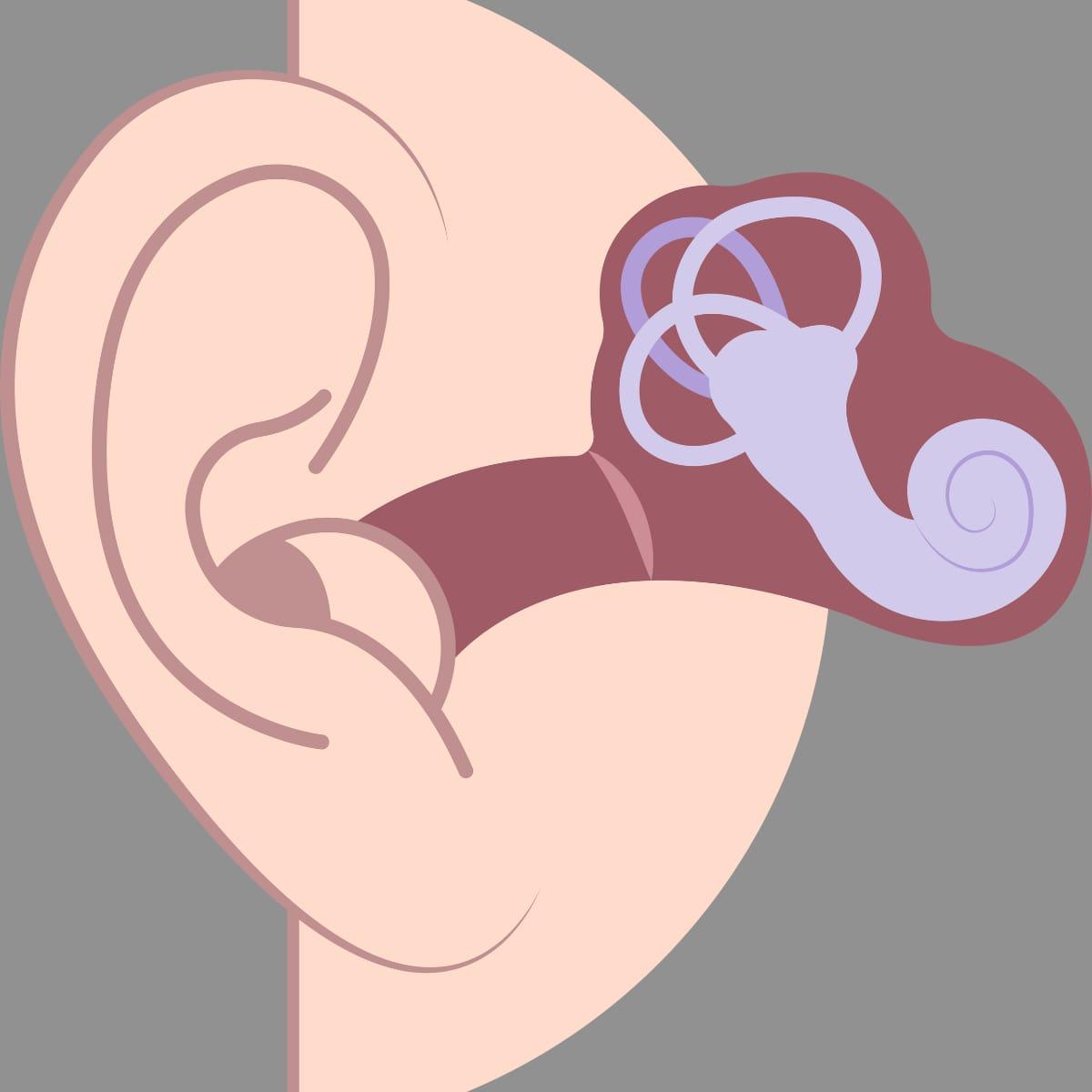
As we age, the vestibular system can lose sensitivity, especially if it's not challenged regularly. Studies show that age-related vestibular decline contributes directly to slower balance reactions and increased fall risk. The great news is that the vestibular system is trainable — just like muscles or coordination.
How Do You Do Head Turns on One Foot?
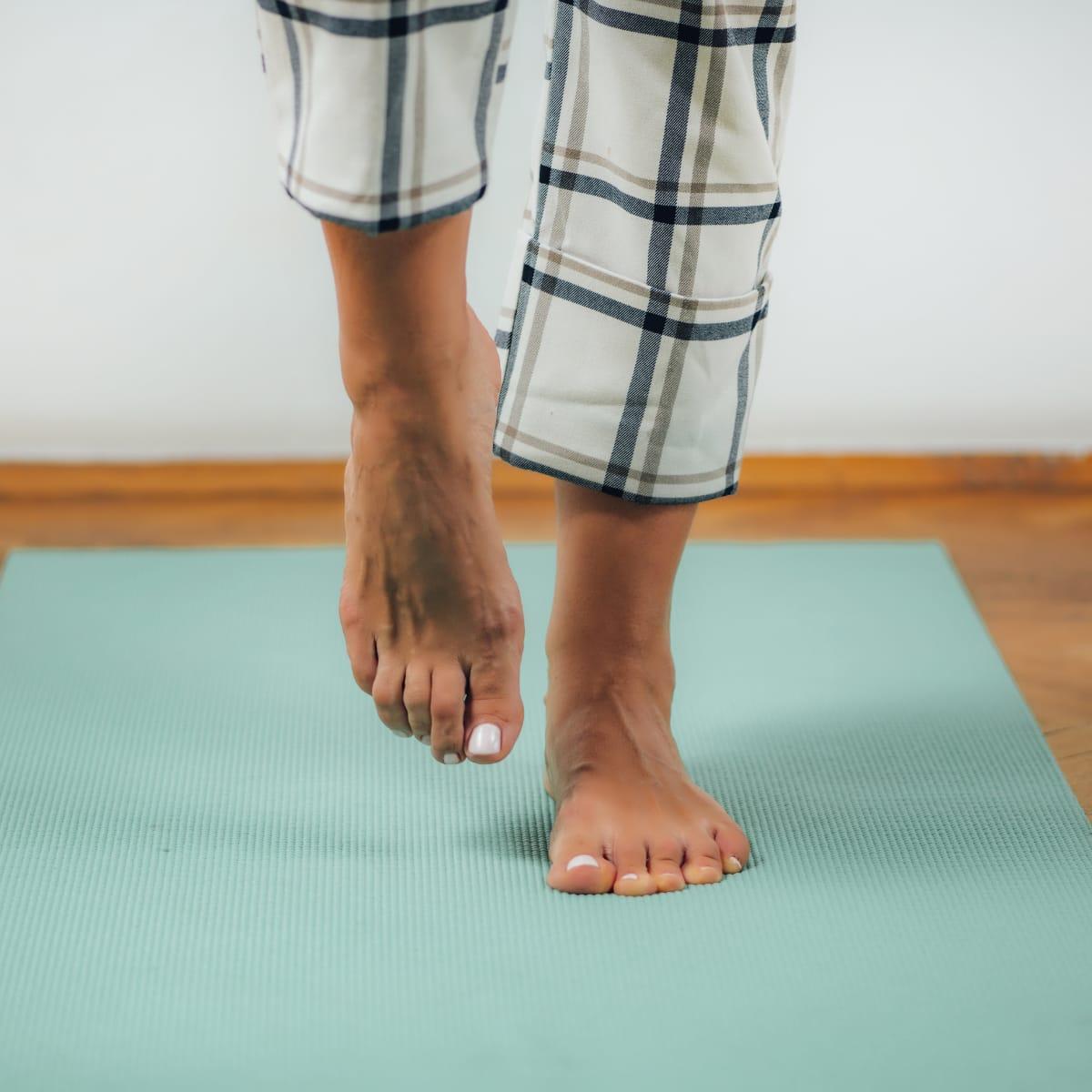
Stand on one leg near a counter, then slowly turn your head side to side while your eyes stay on one point.
- Stand tall with one foot lifted slightly off the ground (hold onto a counter if needed).
- Turn your head slowly side-to-side, keeping your eyes focused on a distant point as long as possible.
- Perform 10 head turns, then switch legs.
For more challenge: try a softer surface (like a foam pad).
This exercise targets the vestibulo-ocular reflex (VOR) — the reflex that stabilizes your gaze while your head moves. A well-trained VOR means your eyes and inner ear communicate efficiently, helping your body make instant micro-adjustments to maintain balance.
A 2010 study in the Journal of Neurologic Physical Therapy showed that exercises stimulating the vestibular system, including gaze-stabilization drills like this one, improved dynamic balance and reduced dizziness in older adults. Over time, these small movements can enhance your ability to recover quickly when you stumble or turn your head suddenly — key for fall prevention and daily confidence. If you want another eye-and-inner-ear drill to pair with it, try this gaze stability exercise.
Why Do Vestibular Exercises Improve Balance?
They make your eyes, inner ear and joint sensors work together, so your brain gets faster at correcting small losses of balance.
- Activates multiple systems: Combines sensory input from your eyes, inner ear and proprioceptors (joint sensors).
- Improves brain-body coordination: Strengthens the connection between your vestibular system and the cerebellum, the part of your brain that controls balance and precision.
- Enhances stability: Encourages your body to stabilize from the top down, rather than relying only on your legs.
How Often Should You Practice Vestibular Exercises?
Practice 1–2 sets per day. The more often you challenge your balance safely, the sharper your vestibular system becomes. Strong legs help too, so it's worth checking where you stand with the 30-second chair stand test.
Small steps lead to stronger balance, better movement, and greater confidence — from the inside out.
Kristen
Try the recipe: I tried this spicy peanut sweet potato soup and it was a big hit in the Nielsen house — get the recipe.
Sources
- Agrawal Y, Carey JP, Della Santina CC, Schubert MC, Minor LB. Disorders of balance and vestibular function in US adults: data from the National Health and Nutrition Examination Survey, 2001-2004. Arch Intern Med. 2009;169(10):938-944. View source
- Hall CD, Heusel-Gillig L, Tusa RJ, Herdman SJ. Efficacy of gaze stability exercises in older adults with dizziness. J Neurol Phys Ther. 2010;34(2):64-69. View source
This article is for general education and isn't medical advice. Please talk with your doctor before starting a new exercise, nutrition or supplement routine. See our health disclaimer.


About the author
Kristen Nielsen
Kristen founded TogetherWON after watching what strength training could do for older adults — including her own grandparents. She's an ACE Certified Personal Trainer with 10+ years in functional aging, a University of Central Florida graduate, and a former Division I swimmer and track & field athlete.
Senior Fitness Specialist · Functional Aging Specialist · Parkinson's Disease Specialist · Brain Health Trainer · Corrective Exercise Specialist
want these in your inbox?
Get my Saturday letters
One idea for your body, brain or balance each week, usually with a recipe. Unsubscribe any time.
Keep reading
Brain · Balance
Dual-Task Walking Exercises: Train to Walk and Think
Dual-tasking, or moving while thinking, can get harder with age, but it can be trained. Try three simple exercises that pair walking with a mental task.
August 1, 2026 · 3 min read
Balance · Brain
Gaze Stability Exercise for Better Balance and Focus
Your eyes play a key role in balance. Learn the "Gaze Shifts with Thumbs" drill to train eye-head coordination, with a video demonstration.
October 25, 2025 · 3 min read
Brain · Body
Music and Movement: A Brain-Body Workout to a Song
Pick a favorite song and let it set your pace. This simple music-and-movement workout challenges your brain and body at any fitness level.
September 12, 2026 · 2 min read