How Much Exercise Do Seniors Need? A Weekly Plan
By Kristen Nielsen, Founder & Senior Fitness Specialist · Updated · 10 minute read
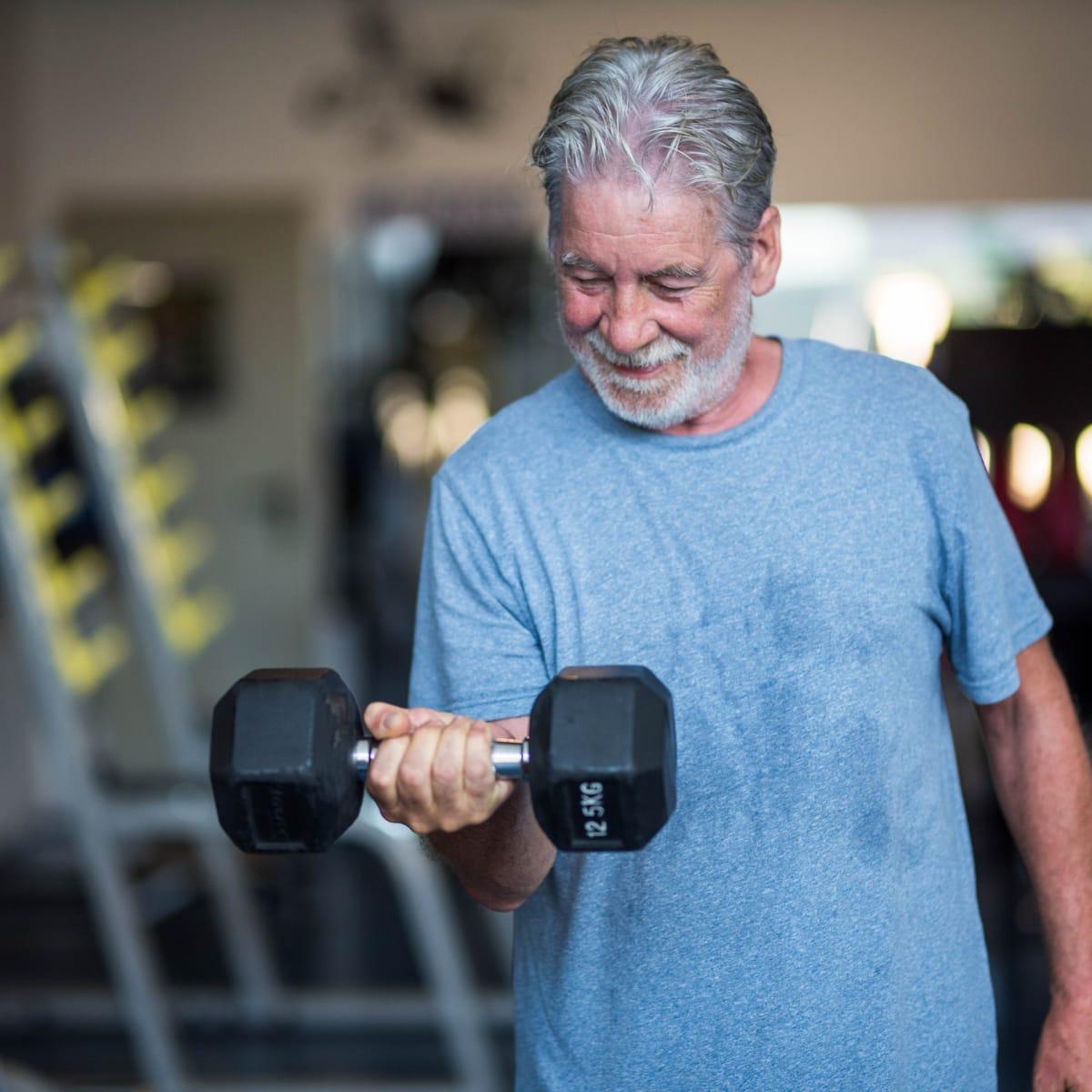
Adults over 65 should aim for at least 150 minutes a week of moderate activity like brisk walking, strength training on 2 or more days, and balance training on about 3 days. If that feels like too much, start with 5–10 minutes a few times a week and build up. Consistency matters more than perfection.
Key takeaways
- Aim for 150 minutes of moderate cardio (or 75 vigorous), strength training at least 2 days, and balance work about 3 days a week, plus regular stretching.
- Many people combine strength and balance in the same 30–40 minute session, so a full week can fit into three or four focused days plus walks.
- If the full plan feels overwhelming, start with 5–10 minutes a few times a week. Some activity is better than none.
- It takes less time to maintain strength than to rebuild it, so protect your routine and plan rest days on purpose.
A question I hear often: "How many days a week do I need to exercise to actually see results?"
When it comes to strength, balance and staying independent, the answer matters. But it might not be as complicated (or as intimidating) as you think. Most adults over 60 can build and maintain strength with less time than expected, if the right things are practiced consistently.
This guide brings together the official recommendations, a sample week that puts them into practice, a smaller starter week, and what I've learned from years of helping clients actually stick with it.
How Much Exercise Do Seniors Need Each Week?
The U.S. Physical Activity Guidelines, the CDC and the World Health Organization agree on the basics for adults 65 and older:1,2,3
- Cardio (aerobic activity): at least 150 minutes a week of moderate-intensity activity, like brisk walking, or 75 minutes of vigorous activity, like jogging, fast cycling or interval training. A mix of the two works too.
- Strength training: at least 2 days a week, working all the major muscle groups (legs, hips, back, chest, shoulders, arms and core).
- Balance: as part of a weekly routine. The U.S. guidelines call for "multicomponent" activity that includes balance training, and the WHO recommends activities that emphasize balance and strength on 3 or more days a week to prevent falls.
Organizations such as the American College of Sports Medicine add flexibility work and recommend balance, or "neuromotor," exercise on 2–3 days a week, especially for people at risk of falling.4,5 The National Institute on Aging groups all of this into four types of exercise: endurance, strength, balance and flexibility.6
That seems like a lot! But when you break it down, it becomes much more manageable. Many people combine strength and balance in the same session, and a brisk walk on most days covers the cardio.
Why Each Type of Exercise Matters
Each type of exercise does a different job, which is why walking alone, or strength training alone, leaves gaps.
- Cardio supports your heart and lungs and your endurance for shopping, traveling and keeping up with family.
- Strength training maintains muscle, bone density and the power you need for real life: getting out of chairs without using your arms, climbing stairs with confidence, carrying groceries or grandkids.
- Balance training helps you feel steady on uneven ground and recover from a stumble. Exercise programs that include balance and functional exercises reduce falls in older adults.7
- Flexibility and mobility work keeps joints moving and prevents stiffness that makes daily activities harder.
When done regularly, these benefits last weeks, months and years. For how walking fits in, see our walking guide and Is Walking Enough Exercise After 60?
A Sample Weekly Exercise Plan for Seniors
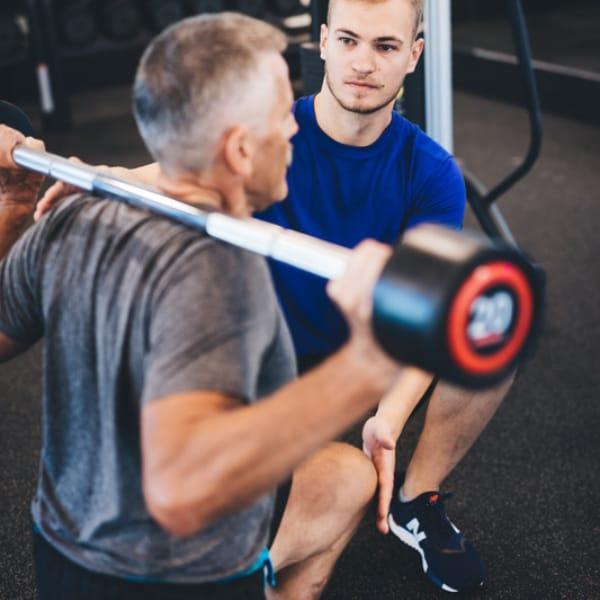
Here's what a balanced week might look like for an older adult aiming to maintain or rebuild strength and independence. It follows the guidelines from the American Heart Association, the CDC and the WHO,8,2,3 and it builds in easier days and a full rest day.
| Day | Focus | What to do |
|---|---|---|
| Monday | Strength and balance | Strength training for all major muscle groups, emphasizing posture and core (20–30 min); balance drills (10 min); gentle stretching (5 min); 20-minute walk |
| Tuesday | Harder cardio | Moderate-to-vigorous cardio at a challenging pace, such as brisk walking with hills or intervals (30 min); stretching (10 min) |
| Wednesday | Easier cardio and balance | Light-to-moderate cardio (30 min); balance drills (10 min) |
| Thursday | Active recovery | Light movement like gardening, housework or an easy 20-minute walk; optional stretching |
| Friday | Strength and balance | Strength training for all major muscle groups (20–30 min); balance drills (10 min); stretching (5 min); 20-minute walk |
| Saturday | Harder cardio | Intervals of brisk walking, cycling or swimming with effort-based bursts (30 min); stretching (10 min) |
| Sunday | Rest | Read a book, take a bath, do what makes you feel rejuvenated |
Weekly totals: about 150 minutes of cardio, 2 strength days, 3 balance sessions and stretching on most days. Balance drills can also be sprinkled through the day instead of done all at once.
Keep in mind that everyone is different. What works for most people might not work for you. The right frequency depends on your goals, current level and health considerations. You'll find more detail in Weekly Workout Plan for Seniors: A Balanced Week.
How Hard Should Exercise Feel?
"How much" isn't only about minutes. It's also about effort.
- Moderate cardio, like brisk walking, should have you breathing harder than usual, but you can still carry on a conversation. Vigorous cardio, like jogging or the fast portion of an interval, makes it hard to say more than a few words. One minute of vigorous activity counts about the same as two minutes of moderate activity toward your weekly goal.1
- Strength training doesn't have to mean bodybuilding or lifting extremely heavy weights. It means asking your muscles to work against enough resistance that they have a reason to adapt. The final repetitions of each set should feel meaningfully challenging while still allowing safe, controlled form.
- Balance training should feel a little wobbly, but safe. Stand near a counter or sturdy chair, and make it harder only when it feels easy.
If you're unsure where you're starting from, a simple self-test helps. The 2-Minute Step Test checks your cardio endurance at home, and our 30-second chair stand test checks your leg strength. Write down your scores and retest in several weeks.
A Starter Week If You're New or Coming Back
If the full plan sounds overwhelming, start much smaller. Even 5–10 minutes of movement a few times a week can be a meaningful first step. The guidelines themselves say that some physical activity is better than none,1,3 and even amounts of exercise below the recommended levels are linked to a lower risk of depression.9
A simple starter week:
- 2 days: a 10-minute strength and balance routine, like 10 sit-to-stands from a sturdy chair, wall push-ups, heel raises and a balance hold at the kitchen counter.
- 3 days: a short walk, as long as feels comfortable.
- Every day: get up and move a little whenever you've been sitting a while.
Then build slowly:
- Start with 2 days per week of strength-based movement.
- Add balance drills at the beginning or end of your workouts.
- Go for a brisk walk or do light activity on other days.
- Progress one thing at a time, like adding another set or another day.
Don't let "all or nothing" thinking keep you on the sidelines. Even one extra session per week makes a difference over time.
Short on Time? Exercise Snacks and 10-Minute Workouts
You don't need hours to make progress. Short bouts of activity count.
In one large study, short bursts of vigorous activity adding up to about 15 minutes a week were linked to an 18% lower risk of death during the study period.10 Research on "exercise snacks," short bursts of activity lasting 1–5 minutes done several times a day, shows they can improve fitness and metabolic health, especially when they break up long periods of sitting.11
Snacks don't even need their own time slot:
- Sit-to-stands with purpose. Instead of just standing up from a chair, pause and do 3–5 sit-to-stands.
- Heel raises at the sink. While brushing your teeth or washing dishes, rise up onto your toes 10–15 times.
- Balance while you wait. Try a tandem stance (one foot directly in front of the other) at the counter while the kettle boils.
- Park and walk. Park a little farther away at the store, church or gym.
Building balance and strength moves into daily activities like these reduced the rate of falls by about a third in one trial.12 For routines to try, see Exercise Snacks for Seniors and Is 10 Minutes of Exercise Enough?
Consistency Beats Perfection
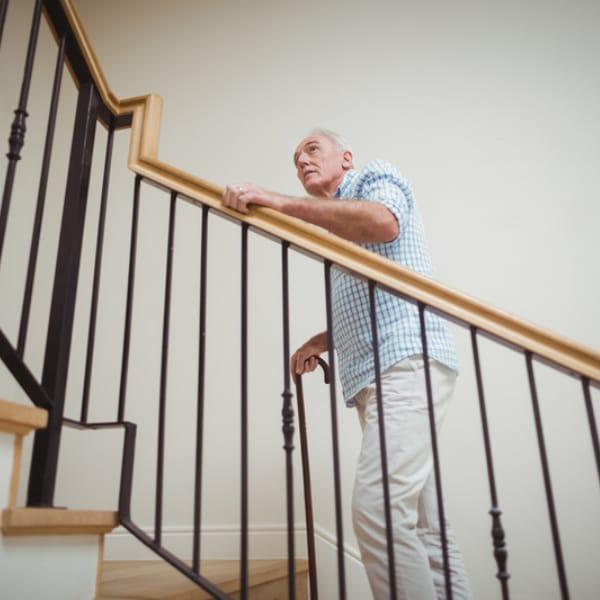
Consistency matters more than perfection. Start where you are, repeat what feels manageable, and build from there.
I like to remind clients: it takes less time to maintain than to rebuild. Research on "maintenance dosing" found that once strength gains are built, a reduced training schedule can hold on to much of them.13 But longer breaks are a different story. Older adults who stopped resistance training lost a significant amount of muscle size during detraining periods.14 The good news is that a short break won't erase your progress. Older adults who took just two weeks off after a 12-week program held on to their lower-limb strength and stability gains.15
The takeaway is simple: gains are fragile, but consistency protects them. When life gets busy, drop to your smallest routine instead of stopping. Over the holidays, for example, 5 minutes of marching in place, 10 sit-to-stands and a few heel raises keeps the habit alive (How to Stay Active Over the Holidays). In winter, adapt with indoor walking and home strength work (Staying Active in Winter).
How to Build an Exercise Habit That Lasts
The best way to start a new habit is to make it really, really small, so small you know you can accomplish it. Write down your goal, then make it smaller, then make it even smaller. Maybe it's putting on your shoes and walking to the end of the driveway. This is powerful because it creates momentum. I walk through this in How to Start an Exercise Habit That Sticks.
A few more things that help:
- Anchor it. Tie a new habit to an existing one, like 10 chair squats after you pour your morning coffee.
- Push through the first 10 minutes. The start of a workout often feels hardest because your brain is still catching up. Commit to just the first 10 minutes; chances are you'll feel ready to keep going (Why the First 10 Minutes Feel Hardest).
- Find a partner. Adults who joined a fitness program with their spouse had far better 12-month adherence than those who joined alone,16 and older adults who attended an exercise class with their spouse were more likely to keep walking six months later.17 More in Why a Workout Partner Makes Exercise Easier.
- Train for something. Several of our clients signed up for their first Senior Games races, and all of them said having a goal made training more motivating (Senior Games Training). Your goal might be a trip, a hike with grandkids, or walking through the store without feeling nervous.
Is It Too Late to Start?
It is never too late. In a classic study, nursing home residents in their 90s made large strength gains after just eight weeks of strength training.18
I see it with clients every week. My mom, Julie, rebuilt her strength after a hip replacement and says she feels "pretty strong for a 75-year-old" (her story). The clients who succeed, whatever their starting point, share one thing: hope that the decisions they make today can shape how they live tomorrow (Is It Too Late to Start Exercising?). That kind of freedom is earned one workout, one walk and one set of stairs at a time (Staying Independent as You Age).
What If Motivation, Pain or Fatigue Get in the Way?
It's normal to face obstacles. Life is busy, joints ache, and some days energy feels low. That's why routines need to be flexible and achievable.
- Keep sessions short. For most people, 20–30 minutes is enough.
- Mix up locations: living room, patio, or a walk outside.
- Use music for energy, stretch if you're stiff, and give yourself credit for every step.
- Rest when your body needs it. Recovery is part of the plan, and our guide to recovery, sleep and stress after 60 explains how to balance hard and easy days.
- If you're dealing with pain or coming back from an injury, start with guidance. Sharp or persistent pain is a signal to modify, not to push through.
If you'd like a plan built around your body and goals, our in-home personal training, online personal training and small group training create a weekly routine you can actually keep, with someone checking in to keep you going.
This guide is for general education and isn't medical advice. Please talk with your doctor before starting a new exercise, nutrition or supplement routine.
Read more from Kristen

Body · Balance
Sample 7-Day Workout Schedule for Adults Over 60
How much cardio, strength, balance and flexibility older adults need each week, with a sample 7-day workout plan that builds in recovery days.
February 22, 2025 · 3 min read

Body · Balance
Exercise Snacks for Seniors: 5-Minute Movement Breaks
Short 1–5 minute bursts of movement through the day add up. What the research says, plus three 5-minute snack routines for morning, midday and evening.
April 19, 2025 · 4 min read
Body
Is 10 Minutes of Exercise Enough? A Quick Workout
Even 10 minutes of movement can lift your mood and add up to real health benefits. What the research says, plus a simple 10-minute workout to try.
January 18, 2025 · 3 min read
Body
How to Start an Exercise Habit That Sticks
Start small, then smaller, then even smaller. A simple way to build an exercise habit that sticks, plus tips for anchoring habits and bouncing back.
March 7, 2026 · 5 min read

Body
Why a Workout Partner Makes Exercise Easier
Sticking with exercise matters more than starting. Research on spouses, groups and supportive accountability shows why a workout partner helps.
October 18, 2025 · 3 min read

Body · Brain
Why the First 10 Minutes of a Workout Feel Hardest
The first minutes of a workout feel hardest because your brain is still catching up. Here's what shifts around minute 10 and how to push through.
October 11, 2025 · 3 min read
Recipes to try

Snack
Egg & Herb Cottage Cheese Toast
Whole-grain toast topped with cottage cheese, sliced boiled egg, fresh herbs and cracked pepper — a protein-rich recovery snack ready in minutes.
1 serving

Dinner
One-Pan Lemon Herb Chicken & Vegetables
Chicken, baby potatoes, carrots and green beans roasted on one sheet pan with lemon, garlic and herbs — a simple, protein-rich dinner with easy cleanup.
3–4 servings
Breakfast
Easy Protein-Packed Granola
Homemade oat and nut granola with protein powder, chia or flax, cinnamon and honey — great sprinkled over Greek yogurt.
About 5 cups
Frequently asked questions
How often should seniors exercise each week?
Most days of the week, in some form. A good target is strength training 2–3 days, balance practice about 3 days, and moderate cardio like brisk walking on most days to reach 150 minutes.
Those don't have to be separate days. Many people combine strength and balance in one session and walk on the other days, keeping at least one day for rest.
Is 30 minutes of exercise a day enough for seniors?
Thirty minutes of brisk walking five days a week meets the aerobic guideline of 150 minutes a week, but older adults also need strength training at least two days a week and regular balance practice.
A 20–30 minute strength and balance session on two or three of those days rounds it out.
Can I exercise every day at 65 or older?
Yes, gentle daily movement like walking, stretching and balance practice is safe and helpful for most people. Harder workouts, like strength training or intervals, need recovery days in between.
Alternate harder and easier days and plan at least 1–2 full or active rest days a week. If you notice lingering fatigue, poor sleep or joint pain, ease back.
Do short bursts of exercise count toward the weekly guidelines?
Yes. U.S. guidelines count activity of any length toward your weekly total, and short 1–5 minute exercise snacks through the day can improve fitness and blood sugar control.
A 10-minute walk after each meal, a few sit-to-stands every time you get up, and heel raises at the sink all add up.
How long does it take to lose strength if I stop exercising?
A short break of a couple of weeks usually won't erase your progress, but longer breaks can lead to real losses in muscle and strength.
In one study, older adults who took two weeks off after a 12-week program kept their leg strength and stability gains. It takes less effort to maintain strength than to rebuild it, so even one session a week during a busy stretch is worth it.
Sources
- Piercy KL, Troiano RP, Ballard RM, et al. The Physical Activity Guidelines for Americans. JAMA. 2018;320(19):2020-2028. View source
- Centers for Disease Control and Prevention. Physical activity guidelines for older adults. View source
- Bull FC, Al-Ansari SS, Biddle S, et al. World Health Organization 2020 guidelines on physical activity and sedentary behaviour. Br J Sports Med. 2020;54(24):1451-1462. View source
- Chodzko-Zajko WJ, Proctor DN, Fiatarone Singh MA, et al. American College of Sports Medicine position stand. Exercise and physical activity for older adults. Med Sci Sports Exerc. 2009;41(7):1510-1530. View source
- Garber CE, Blissmer B, Deschenes MR, et al. American College of Sports Medicine position stand: quantity and quality of exercise for developing and maintaining cardiorespiratory, musculoskeletal, and neuromotor fitness in apparently healthy adults. Med Sci Sports Exerc. 2011;43(7):1334-1359. View source
- National Institute on Aging. Four types of exercise can improve your health and physical ability. View source
- Sherrington C, Fairhall NJ, Wallbank GK, et al. Exercise for preventing falls in older people living in the community. Cochrane Database Syst Rev. 2019;1(1):CD012424. View source
- American Heart Association. American Heart Association recommendations for physical activity in adults and kids. View source
- Pearce M, Garcia L, Abbas A, et al. Association between physical activity and risk of depression: a systematic review and meta-analysis. JAMA Psychiatry. 2022;79(6):550-559. View source
- Ahmadi MN, Clare PJ, Katzmarzyk PT, Del Pozo Cruz B, Lee IM, Stamatakis E. Vigorous physical activity, incident heart disease, and cancer: how little is enough? Eur Heart J. 2022;43(46):4801-4814. View source
- Islam H, Gibala MJ, Little JP. Exercise snacks: a novel strategy to improve cardiometabolic health. Exerc Sport Sci Rev. 2022;50(1):31-37. View source
- Clemson L, Fiatarone Singh MA, Bundy A, et al. Integration of balance and strength training into daily life activity to reduce rate of falls in older people (the LiFE study): randomised parallel trial. BMJ. 2012;345:e4547. View source
- Bickel CS, Cross JM, Bamman MM. Exercise dosing to retain resistance training adaptations in young and older adults. Med Sci Sports Exerc. 2011;43(7):1177-1187. View source
- Grgic J. Use it or lose it? A meta-analysis on the effects of resistance training cessation (detraining) on muscle size in older adults. Int J Environ Res Public Health. 2022;19(21):14048. View source
- Svobodová L, Sebera M, Vodička T, et al. The effect of 12-week long exercise intervention, and 2-weeks of detraining period on lower limbs strength parameters and postural stability in older adults: a linear mixed model analysis. BMC Geriatr. 2025;25(1):305. View source
- Wallace JP, Raglin JS, Jastremski CA. Twelve month adherence of adults who joined a fitness program with a spouse vs without a spouse. J Sports Med Phys Fitness. 1995;35(3):206-213. View source
- Osuka Y, Jung S, Kim T, Okubo Y, Kim E, Tanaka K. Does attending an exercise class with a spouse improve long-term exercise adherence among people aged 65 years and older: a 6-month prospective follow-up study. BMC Geriatr. 2017;17(1):170. View source
- Fiatarone MA, Marks EC, Ryan ND, Meredith CN, Lipsitz LA, Evans WJ. High-intensity strength training in nonagenarians: effects on skeletal muscle. JAMA. 1990;263(22):3029-3034. View source
This guide is for general education and isn't medical advice. Please talk with your doctor before starting a new exercise, nutrition or supplement routine. See our health disclaimer.

About the author
Kristen Nielsen
Kristen founded TogetherWON after watching what strength training could do for older adults — including her own grandparents. She's an ACE Certified Personal Trainer with 10+ years in functional aging, a University of Central Florida graduate, and a former Division I swimmer and track & field athlete.
Senior Fitness Specialist · Functional Aging Specialist · Parkinson's Disease Specialist · Brain Health Trainer · Corrective Exercise Specialist
want these in your inbox?
Get my Saturday letters
One idea for your body, brain or balance each week, usually with a recipe. Unsubscribe any time.