Walking for Seniors: Benefits and How to Get Started
By Kristen Nielsen, Founder & Senior Fitness Specialist · Updated · 10 minute read
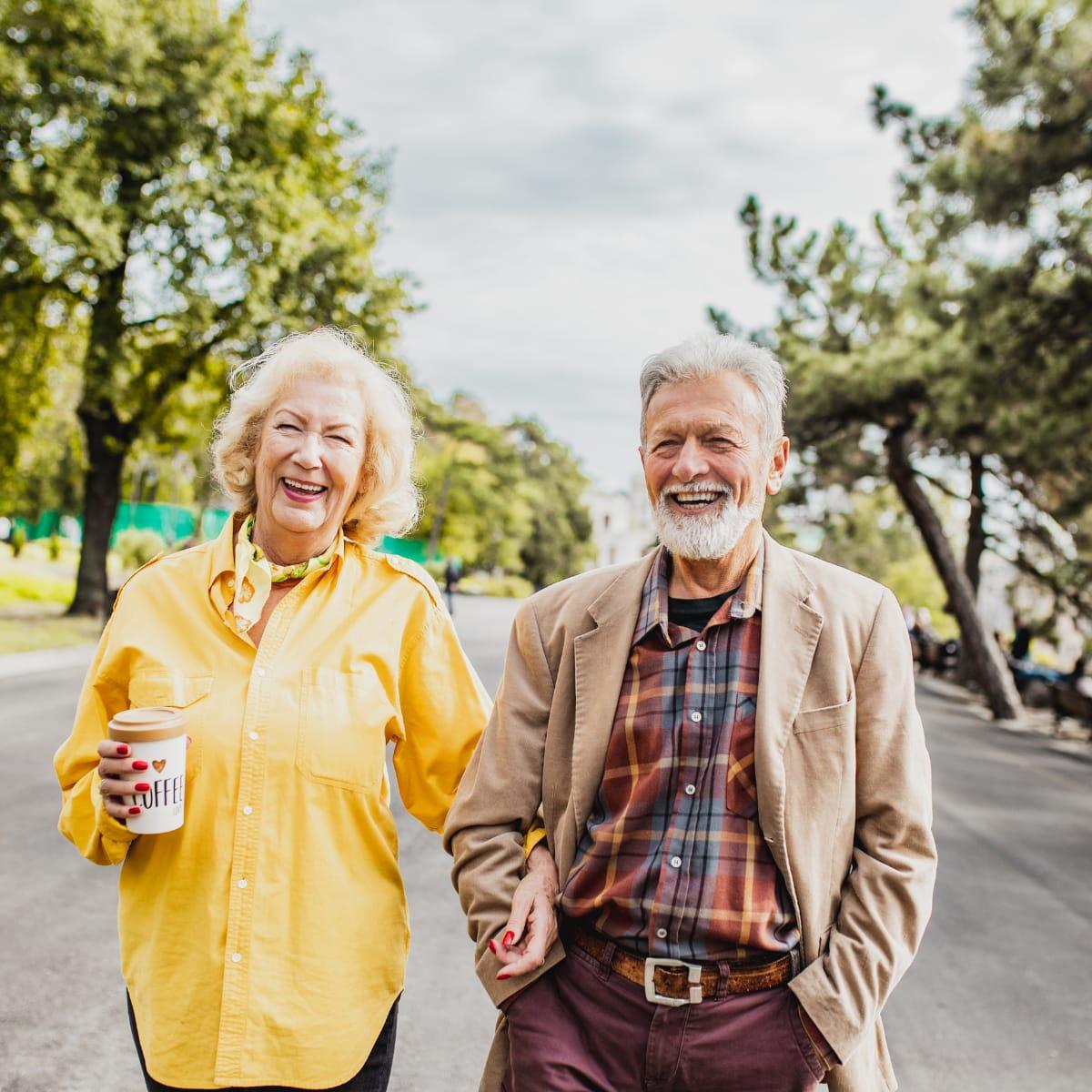
Walking is one of the best exercises for seniors. It strengthens your heart, legs and balance, supports memory and mood, and is linked to a longer life. Start with whatever feels comfortable, even one minute, and add about 30 seconds a day, working toward 150 minutes a week plus two days of strength training.
Key takeaways
- In one study of older adults, just 500 extra steps a day, about five minutes of walking, was linked to a 14% lower risk of heart disease, stroke or heart failure.
- In older women, 4,400 steps a day was linked to a lower risk of death than 2,700 steps, with the benefit leveling off around 7,500 steps.
- If walking is hard, start with one minute and add 30 seconds a day or every other day. If you already walk, add a weekly purpose walk, hills or intervals.
- Walking is a great foundation, but pair it with strength and balance training to cover what walking alone doesn't train.
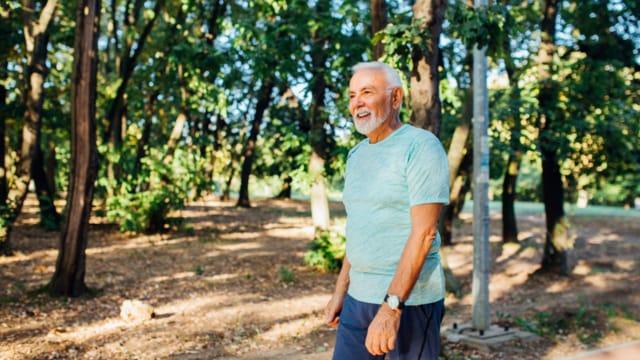
Walking is one of the simplest things you can do for your health, and your body loves it. Every step sends a message to your heart, muscles and brain that says, "We're still moving. We're still strong." It's accessible, inexpensive, easy to scale to your ability, and it's key to staying independent as we age.
And the truth is, you don't have to walk far to benefit. In this guide I've pulled together everything I've written about walking: what the research says it does for you, how much to aim for, how to start if walking feels hard, how to build on it if you already walk, and why walking works best as the foundation of a bigger plan.
What Walking Does for Your Heart
Your heart gets stronger. Your circulation improves, your blood pressure can drop, and your heart becomes more efficient.
In one study with older adults, just 500 extra steps a day, about five minutes of walking, was linked to a 14% lower risk of heart disease, stroke or heart failure.1 That's hope you can actually measure.
A review of randomized trials also found that regular walking improves aerobic fitness and lowers resting blood pressure.2 Walking is the most common way older adults meet the U.S. recommendation of at least 150 minutes a week of moderate-intensity activity, like brisk walking.3
Walking even a moderate number of steps is also linked to a longer life. A 2019 study in JAMA Internal Medicine found that women aged 62–101 who walked about 4,400 steps a day had a significantly lower risk of death than those who walked about 2,700 steps. The benefits leveled off at around 7,500 steps a day, so walking beyond that didn't add further reductions in mortality.4 You don't need 10,000 steps to benefit.
For more on the studies, see 7 Benefits of Walking for Seniors, Backed by Research.
Walking and Your Brain
Your brain lights up. Walking boosts blood flow to the brain, supports memory, and improves mood. Many people feel clearer, calmer and more confident after even a short walk.
In one well-known trial, older adults who walked for exercise for a year actually increased the size of the hippocampus, the part of the brain involved in memory, and their memory improved.5 An earlier study that followed older adults (average age 78) found that walking about 6–9 miles a week was linked to greater brain volume years later and a lower risk of memory and thinking problems.6
Where you walk matters too. Time outdoors in a park, by a lake or on a tree-lined street can enhance relaxation; in one study, spending time in nature lowered people's levels of the stress hormone cortisol.7
And your brain is working the whole time you walk, coordinating your steps and processing your surroundings. If you want to challenge it more on purpose, try dual-task walking exercises like counting backward from 20 as you walk.
Walking, Joints and Staying Independent
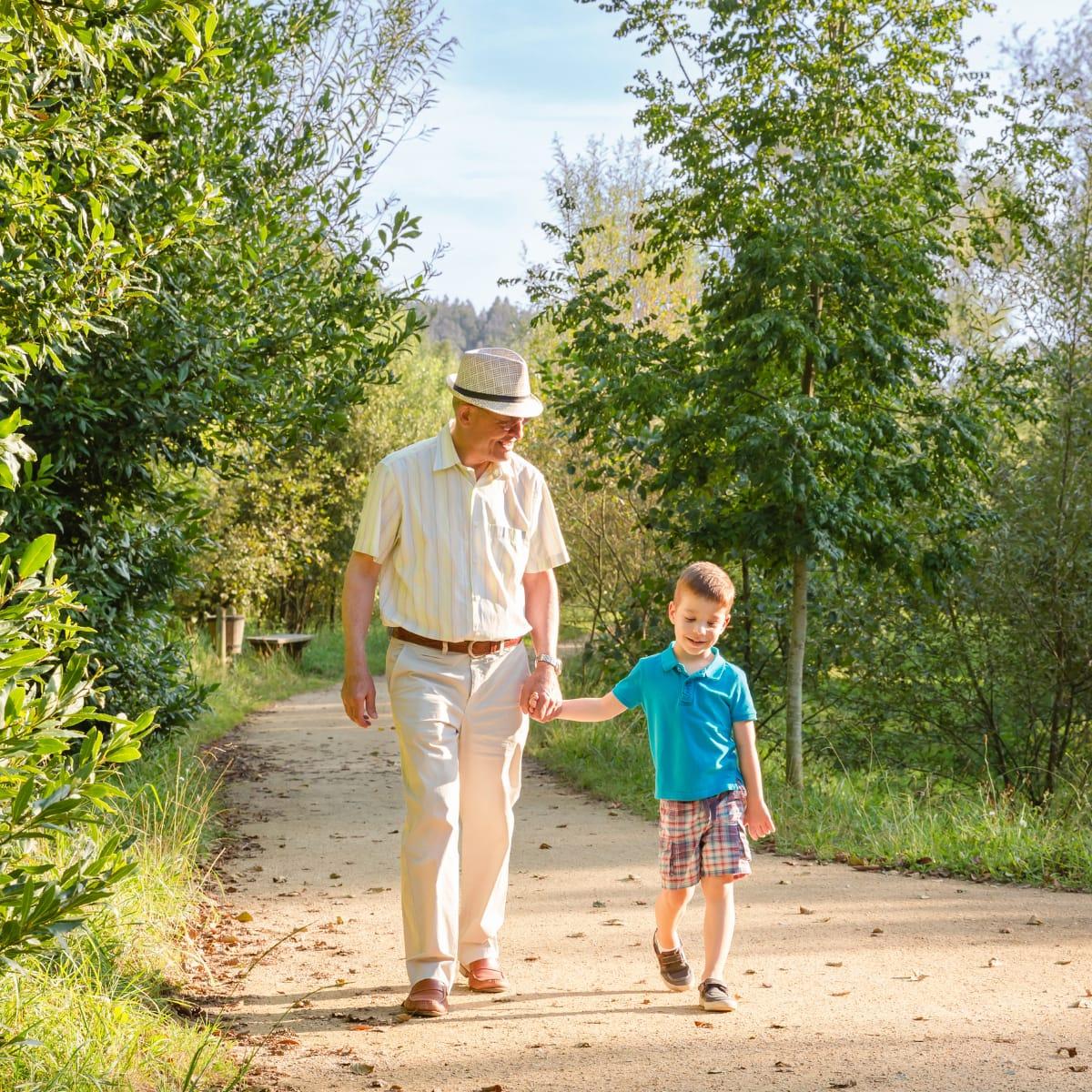
Your muscles and joints wake up. Walking strengthens your legs, improves balance, and keeps joints lubricated. It's gentle, but it's powerful, especially for staying steady and independent.
If you have knee arthritis, walking is a low-impact way to manage symptoms. Research from the Multicenter Osteoarthritis Study found that adults with or at risk of knee osteoarthritis who walked at least 6,000 steps a day were less likely to develop mobility limitations.8
Walking also helps protect your mobility as a whole. In the LIFE study, adults aged 70–89 who did a structured program of walking plus strength, flexibility and balance exercises were 18% less likely to experience major mobility disability than a comparison group.9 Notice that the program wasn't walking alone. That's a theme we'll come back to.
How Much Walking Do Seniors Need?
Here's a simple way to think about it:
- The goal: at least 150 minutes a week of moderate activity, such as brisk walking. That's about 30 minutes, 5 days a week.3
- In steps: the benefits in older women showed up at around 4,400 steps a day and leveled off near 7,500.4 Every 500 extra steps a day counts.1
- In short bouts: if long walks feel hard, break them into 10-minute walks spread through the day. They add up.
"Brisk" means you're breathing a little harder but can still talk. If you'd like a benchmark, try the 2-Minute Step Test, a simple at-home check of your cardio endurance where you march in place and count how many times your knee reaches a target height. Write down your score and retest in several weeks.10 You can also check your leg strength with our 30-second chair stand test, since strong legs make walking easier.
How to Start Walking If It Feels Hard
If walking feels hard, because of pain, balance issues, fatigue, or simply being out of practice, you can absolutely start small.
Begin with whatever feels comfortable:
- One minute down the hallway
- A slow indoor lap
- A walk from room to room
Then add 30 seconds more each day or every other day.
That tiny increase is where the magic happens. By the end of a month, you could be walking 15 minutes longer than when you started, without feeling overwhelmed.
Walk indoors, use a walker or cane if needed, or walk with someone you trust. What matters is consistency, not speed. Avoid pushing yourself too hard too quickly, as this can lead to injury. By slowly increasing your activity, both your body and heart will adjust safely.
If you're coming back from surgery, an injury or a fall, our post-rehab training can help you rebuild walking confidence step by step.
Start With a Walk After Meals
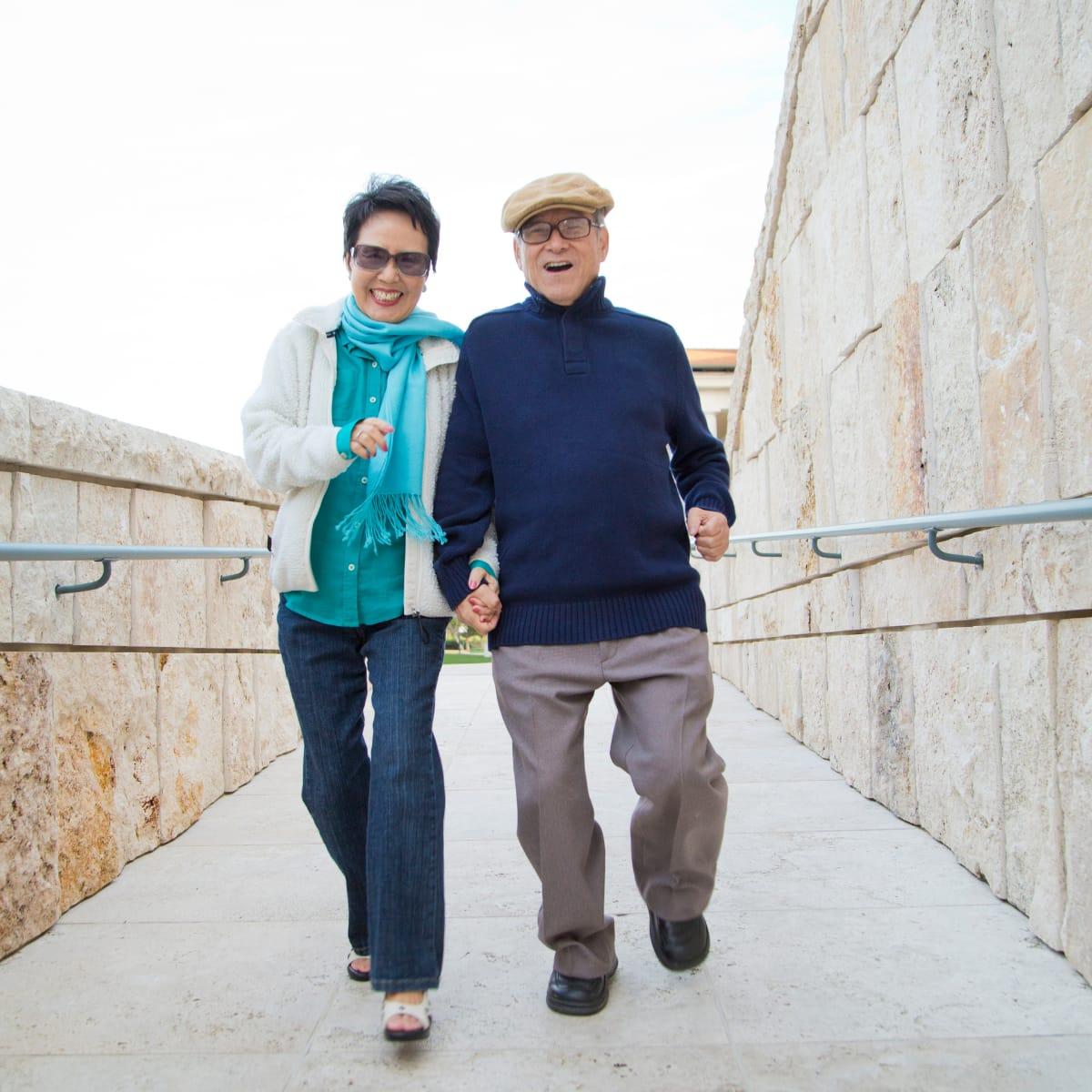
One of my favorite walking habits is a short walk after eating, especially after dinner.
Most people sit after meals. But even light movement after eating helps your muscles soak up blood sugar. A study in Diabetes Care found that in older adults at risk for high blood sugar, three 15-minute walks after meals were more effective at lowering the after-dinner blood sugar rise than one longer walk earlier in the day.11 And breaking up long periods of sitting with light walking improves markers of heart and metabolic health.12
It doesn't have to be long. A 10-minute stroll around the block, or a few laps of the house, is a great start. For more simple glucose habits, see How to Avoid Blood Sugar Spikes.
If You Already Walk, Take It Up a Notch
If you're already walking regularly, keep going. Your body is responding in ways you may not even notice:
- Your heart is stronger than it was a year ago.
- Your bones are better for every step you've taken.
- Your brain is benefiting every time you get outside.
- Your independence is being reinforced with every walk.
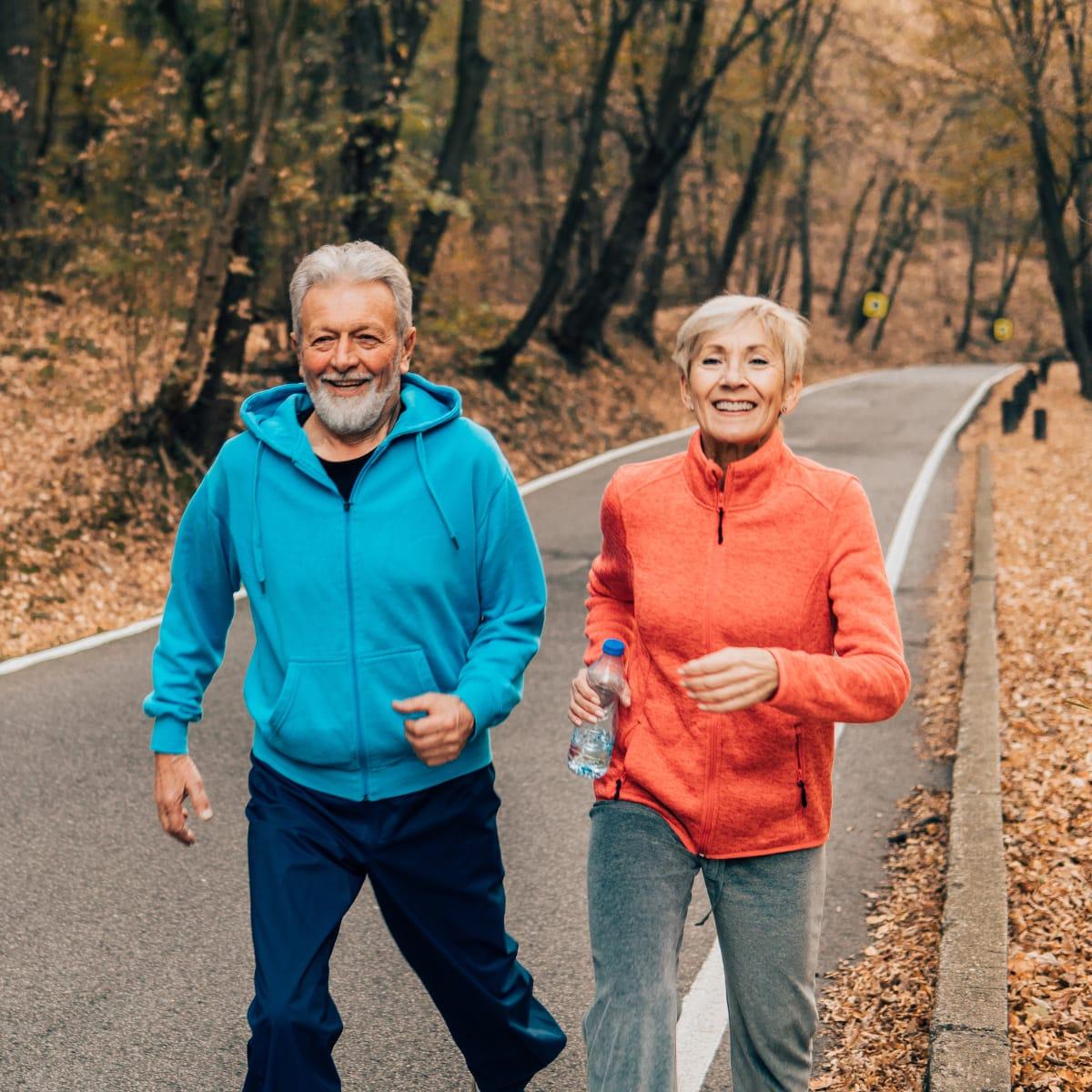
Here's a gentle challenge: add a "purpose walk" once a week. That might mean a slightly longer route, a walk with a friend, a hill you normally skip, or simply walking with the intention of noticing beauty and practicing gratitude.
When you're ready for more, here are three ways to challenge your heart and lungs:
- Intervals. Alternate short bursts of higher effort with recovery: 1 minute of fast walking, then 2 minutes of easy walking, repeated 5 times (15 minutes total). Adults with heart and metabolic conditions who did interval training improved their fitness more than those who did steady-paced cardio.13 See Interval Training for Seniors for an at-home version.
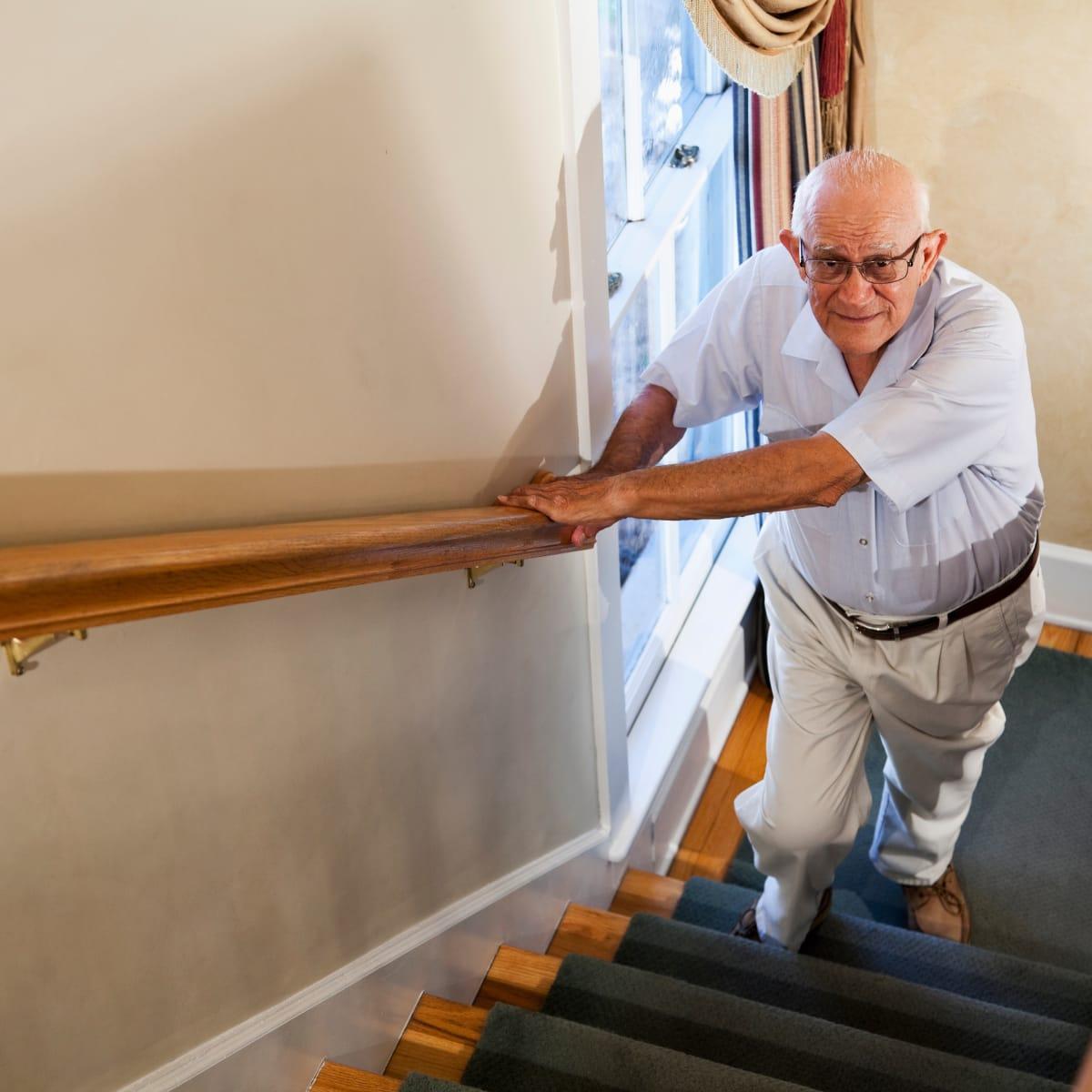
- Stairs. In a study of nearly 458,000 adults, climbing five flights of stairs a day (about 50 steps) was linked to a 20% lower risk of cardiovascular disease.14 Try the 10-minute stair workout, and always use a handrail if you need support.
- Play. Pickleball keeps you moving at a moderate intensity while challenging balance and agility, and it's wonderfully social. Here's how to get started with pickleball.
You're not starting from scratch. You're building on a foundation you've already created, and that momentum is powerful.
Walking Safely Through Every Season
Here in Colorado, winter can arrive with a good 18 inches of snow, and many people find themselves moving less when the weather turns. It doesn't have to be this way. Think of it like switching to a winter wardrobe: it's simply time to adjust for the season.
- Use the sunny days. Bundle up and head out when the weather is mild. In the winter months, I like to move my outdoor walks to the middle of the day for the most sun and warmth.
- Have an indoor plan. Malls, community centers and even your own hallway are safe options on icy days. Marching in place or stepping side to side still counts.
- Choose your surface. Flat, even paths are best when you're starting out or coming back after a break. Uneven ground is great balance practice later, once you feel steady.
- Use support when you need it. A handrail, cane, walker or walking partner is a tool, not a failure.
- Train your balance at home. A few minutes of heel-to-toe walking or standing on one leg at the kitchen counter helps reduce the risk of falls, which matters even more in slippery conditions.
For more ideas when it's cold or dark outside, see Staying Active in Winter and Changing Seasons.
How to Stay Motivated to Walk
Starting a new habit can be challenging, especially if you're not used to it. These are the ideas I share most often (there are more in How to Stay Motivated to Walk):
- Walk with purpose. Walk to the grocery store, post office or pharmacy, or park at the far end of the lot.
- Set a routine. Start the day with a 15–30 minute walk, or take a short walk after meals.
- Make it social. Join or form a walking group, or schedule regular walks with family or grandchildren.
- Use technology. A pedometer, smartwatch or free app (like Apple Health, Google Fit, Pacer, Strava or Walk Meter) can track your steps so you can set a goal and gradually increase it.
- Walk indoors when the weather turns. Malls and community centers often have safe indoor spaces for walking. You can also walk in place during TV commercials or around the house while you're on the phone.
- Change your route. Try scenic paths, walk to a café or park, or sign up for a charity walk.
- Walk your dog. Regular dog walks are a built-in routine.

Is Walking Enough?
If you are only going to do one form of exercise, walking is a fantastic choice. But it doesn't train every physical ability you need to remain strong, steady and independent.
Walking mainly challenges your heart and lungs. Many daily tasks, like standing from a low chair, climbing stairs, carrying groceries, getting up from the floor, or catching yourself after a stumble, require your muscles to produce more force than they do during a comfortable walk. That's why guidelines recommend muscle-strengthening activities on at least two days a week for adults 65 and older, separate from aerobic activity like walking.3
Walking uses balance, but a familiar walk on a flat surface may not challenge it enough to prepare you for uneven ground, quick turns or a caught toe. Balance training fills that gap.
A practical week might include several walks, two full-body strength sessions, and a few short balance or brain-body challenges. Even five or ten minutes of focused strength or balance work added to a walk can make your routine more complete. I explain this in detail in Is Walking Enough Exercise After 60?, and our guide to how much exercise seniors need shows how it fits into a week.
If you'd like help putting it together, our in-home personal training and small group training combine walking goals with the strength and balance work that make walking easier.
A Hopeful Final Thought
Walking is one of the clearest reminders that small actions, done consistently, shape our future. Wherever you're starting, taking your very first steps or adding new purpose to the miles you already walk, every step is an investment in your health, your confidence and your joy.
And the best part? You can take that next step today.
This guide is for general education and isn't medical advice. Please talk with your doctor before starting a new exercise, nutrition or supplement routine.
Read more from Kristen
Body
Walking Benefits for Seniors: What 7 Studies Found
What seven studies found about walking after 60: steps and longevity, brain volume, mood, heart health, mobility, falls and knee arthritis.
October 5, 2024 · 4 min read
Body · Balance
What to Add to Your Walking Routine After 60
Walking is a great foundation after 60, but it doesn't train everything. How to add strength, balance and brain-body work to your walks.
July 25, 2026 · 5 min read
Body
10 Easy Ways to Build a Daily Walking Habit
Ten practical ways to build a walking habit, from errands on foot and post-meal walks to walking groups, step counters and free apps to track your steps.
October 12, 2024 · 3 min read
Body
Interval Training for Seniors: Simple Cardio Workouts
Interval training challenges your heart and lungs in less time. Learn why it works as we age, plus two simple interval workouts to try.
July 26, 2025 · 2 min read
Body · Balance
Stair Climbing Benefits and a 10-Minute Stair Workout
Climbing stairs strengthens legs, heart and balance. See what the research says, plus a simple 5–10 minute stair workout you can do at home.
September 20, 2025 · 3 min read
Body
2-Minute Step Test: Check Your Cardio Fitness at Home
The 2-Minute Step Test is a simple at-home check of your endurance. Here's how to do it, how to compare your score, and why cardio fitness matters.
September 5, 2026 · 2 min read
Recipes to try

Breakfast
Black Bean & Spinach Egg Muffins
Make-ahead egg muffins with black beans and spinach — an easy grab-and-go breakfast with a solid dose of morning protein.
3 servings (6 muffins)
Frequently asked questions
How far should a 70-year-old walk each day?
There's no single distance, but about 20–30 minutes of brisk walking most days gets you to the 150 minutes a week that U.S. guidelines recommend for older adults.
If that's too much right now, start with what feels comfortable, even a minute or two, and add about 30 seconds a day. Steps count too: in one study of older women, benefits showed up at around 4,400 steps a day and leveled off near 7,500.
Is it better to walk in the morning or after meals?
The best time to walk is the time you'll actually stick with, but short walks after meals have an extra benefit for blood sugar.
In a study of older adults at risk for high blood sugar, three 15-minute walks after meals controlled blood sugar better than one longer walk in the morning. A morning walk is a great way to start the day and get natural light, so both are good choices.
What if walking hurts my knees?
Start shorter and slower rather than stopping altogether, because regular walking is linked to fewer mobility problems in people with knee osteoarthritis.
Walk on flat, even surfaces, break your walking into short bouts, and strengthen the muscles around your knees with moves like chair squats and seated leg extensions. If pain is sharp or keeps getting worse, check with your doctor or a physical therapist.
Can I walk with a cane or walker and still get the benefits?
Yes. What matters is consistency, not speed or how your walking looks.
Use a walker or cane if you need one, walk indoors where it's safe, or walk with someone you trust. As your strength and confidence grow, a trainer can help you work on the balance and leg strength that make walking easier.
How do I make my walks harder once they feel easy?
Add short bursts of faster walking, hills or stairs, rather than just walking longer.
Try 1 minute of fast walking followed by 2 minutes of easy walking, repeated 5 times. You can also choose a route with a hill you normally skip, or add a few flights of stairs.
Sources
- Dooley EE, Rippon B, Martinez-Amezcua P, et al. A quarter of a mile more steps are incrementally associated with lower risk of proximal CVD events among older adults: Atherosclerosis Risk in Communities (ARIC) study [abstract]. Circulation. 2023;147(suppl 1):A34. View source
- Murphy MH, Nevill AM, Murtagh EM, Holder RL. The effect of walking on fitness, fatness and resting blood pressure: a meta-analysis of randomised, controlled trials. Prev Med. 2007;44(5):377-385. View source
- Centers for Disease Control and Prevention. Older adult activity: an overview. Updated December 4, 2025. View source
- Lee IM, Shiroma EJ, Kamada M, et al. Association of step volume and intensity with all-cause mortality in older women. JAMA Intern Med. 2019;179(8):1105-1112. doi:10.1001/jamainternmed.2019.0899 View source
- Erickson KI, Voss MW, Prakash RS, et al. Exercise training increases size of hippocampus and improves memory. Proc Natl Acad Sci U S A. 2011;108(7):3017-3022. View source
- Erickson KI, Raji CA, Lopez OL, et al. Physical activity predicts gray matter volume in late adulthood: the Cardiovascular Health Study. Neurology. 2010;75(16):1415-1422. doi:10.1212/WNL.0b013e3181f88359 View source
- Hunter MR, Gillespie BW, Chen SY. Urban nature experiences reduce stress in the context of daily life based on salivary biomarkers. Front Psychol. 2019;10:722. View source
- White DK, Tudor-Locke C, Zhang Y, et al. Daily walking and the risk of incident functional limitation in knee osteoarthritis: an observational study. Arthritis Care Res (Hoboken). 2014;66(9):1328-1336. doi:10.1002/acr.22362 View source
- Pahor M, Guralnik JM, Ambrosius WT, et al. Effect of structured physical activity on prevention of major mobility disability in older adults: the LIFE study randomized clinical trial. JAMA. 2014;311(23):2387-2396. doi:10.1001/jama.2014.5616 View source
- Shirley Ryan AbilityLab. 2-Minute Step Test. Rehabilitation Measures Database. View source
- DiPietro L, Gribok A, Stevens MS, Hamm LF, Rumpler W. Three 15-min bouts of moderate postmeal walking significantly improves 24-h glycemic control in older people at risk for impaired glucose tolerance. Diabetes Care. 2013;36(10):3262-3268. View source
- Buffey AJ, Herring MP, Langley CK, Donnelly AE, Carson BP. The acute effects of interrupting prolonged sitting time in adults with standing and light-intensity walking on biomarkers of cardiometabolic health in adults: a systematic review and meta-analysis. Sports Med. 2022;52(8):1765-1787. View source
- Weston KS, Wisløff U, Coombes JS. High-intensity interval training in patients with lifestyle-induced cardiometabolic disease: a systematic review and meta-analysis. Br J Sports Med. 2014;48(16):1227-1234. View source
- Song Z, Wan L, Wang W, et al. Daily stair climbing, disease susceptibility, and risk of atherosclerotic cardiovascular disease: a prospective cohort study. Atherosclerosis. 2023;386:117300. View source
This guide is for general education and isn't medical advice. Please talk with your doctor before starting a new exercise, nutrition or supplement routine. See our health disclaimer.

About the author
Kristen Nielsen
Kristen founded TogetherWON after watching what strength training could do for older adults — including her own grandparents. She's an ACE Certified Personal Trainer with 10+ years in functional aging, a University of Central Florida graduate, and a former Division I swimmer and track & field athlete.
Senior Fitness Specialist · Functional Aging Specialist · Parkinson's Disease Specialist · Brain Health Trainer · Corrective Exercise Specialist
want these in your inbox?
Get my Saturday letters
One idea for your body, brain or balance each week, usually with a recipe. Unsubscribe any time.