Interval Training for Seniors: Simple Cardio Workouts
By Kristen Nielsen, Founder & Senior Fitness Specialist
· Updated · Body · 2 minute read

Part of our guide: Walking for Seniors: Benefits and How to Get Started
Key takeaways
- Interval training alternates short bursts of harder effort with recovery, such as 1 minute of fast walking and 2 minutes of easy walking, repeated 5 times for a 15-minute workout.
- Research suggests intervals can improve cardiovascular fitness more than steady-paced cardio, and they can be gentler on joints and take less time.
- You don't need fancy machines. Try a 15-minute walk-and-recover routine or a no-equipment circuit of step-ups, marching and side steps.
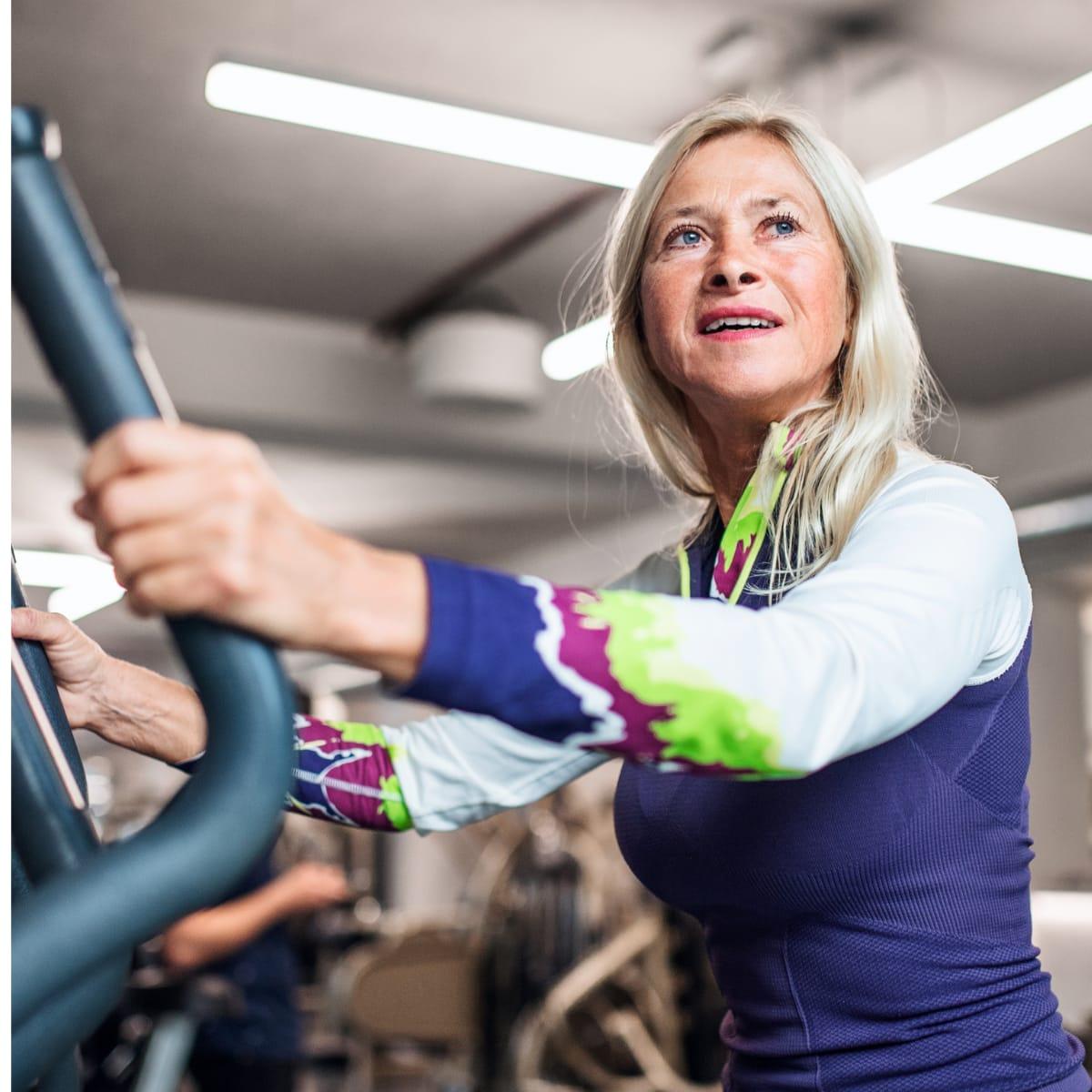
Interval training, which alternates short bursts of harder effort with easy recovery, is one of the best, most effective, and frankly most fun ways for older adults to strengthen the heart and lungs. It's also a simple way to take your walking routine up a notch.
I talk a lot about strength training, and for good reason. It's critical for preserving muscle, protecting joints, and keeping you active and independent. But cardiovascular fitness is just as important.
That means training your heart and lungs — not just getting your steps in or taking a stroll, but working in a way that truly challenges your cardiovascular system and makes it stronger.
What Is Interval Training?
Interval training alternates short bursts of higher effort with periods of recovery.
For example: walk briskly for 1 minute, then stroll for 2 minutes. Repeat.
You can do intervals while walking, biking, dancing, swimming — even using bodyweight moves like step-ups or high knees.

Why Is Interval Training Good for Seniors?
Intervals give your heart, lungs and brain a real challenge in less time.
- Heart Health: A 2014 review in the British Journal of Sports Medicine found that adults with lifestyle-related heart and metabolic conditions who did interval training saw greater improvements in VO2 max (a measure of cardiovascular fitness) than those who did steady-state cardio. This matters because VO2 max is one of the strongest predictors of longevity. (Curious where you stand? Try the 2-minute step test.)
- Lung Capacity & Endurance: Intervals train your lungs to become more efficient, helping you breathe easier during daily activities and recover faster after effort.
- Cognitive Protection: Research from the British Journal of Sports Medicine shows interval cardio enhances blood flow to the brain and boosts memory-related growth factors like BDNF. (More on cardio and brain health.)
- Joint-Friendly & Time-Efficient: Intervals can be gentler on joints and take less time than long cardio sessions.
- More Engaging: Let's be honest — 10 minutes of interval work is way more interesting than 45 minutes of slogging along at the same pace.
What's a Good Interval Workout for Beginners?
Start with a simple walk-and-recover routine, or try a no-equipment circuit at home.
1. Walk & Recover
- 1 minute fast walk
- 2 minutes easy walk
Repeat 5 times (15 minutes total).
Bonus: Use hills or stairs for the "work" portion.
2. Cardio Circuit at Home
No equipment needed.
- 30 sec step-ups
- 30 sec rest
- 30 sec marching in place with arm swings
- 30 sec rest
- 30 sec side steps or grapevine
- 30 sec rest
Repeat for 4–5 rounds.

Challenge Your Heart on Purpose
You don't need fancy machines or long workouts.
You just need to challenge your heart and lungs on purpose — and recover in between.
That's what makes your cardio effective.
If you're ready to boost your heart health and make cardio fun again, I'm here to help, one-on-one with in-home personal training or alongside others in small group training.
Kristen
Try the recipe: Here's a fun snack idea to make with the grandkids — get the recipe.
Sources
- Weston KS, Wisløff U, Coombes JS. High-intensity interval training in patients with lifestyle-induced cardiometabolic disease: a systematic review and meta-analysis. Br J Sports Med. 2014;48(16):1227-1234. View source
- Mandsager K, Harb S, Cremer P, Phelan D, Nissen SE, Jaber W. Association of cardiorespiratory fitness with long-term mortality among adults undergoing exercise treadmill testing. JAMA Netw Open. 2018;1(6):e183605. View source
This article is for general education and isn't medical advice. Please talk with your doctor before starting a new exercise, nutrition or supplement routine. See our health disclaimer.

About the author
Kristen Nielsen
Kristen founded TogetherWON after watching what strength training could do for older adults — including her own grandparents. She's an ACE Certified Personal Trainer with 10+ years in functional aging, a University of Central Florida graduate, and a former Division I swimmer and track & field athlete.
Senior Fitness Specialist · Functional Aging Specialist · Parkinson's Disease Specialist · Brain Health Trainer · Corrective Exercise Specialist
want these in your inbox?
Get my Saturday letters
One idea for your body, brain or balance each week, usually with a recipe. Unsubscribe any time.
Keep reading
Body · Stories
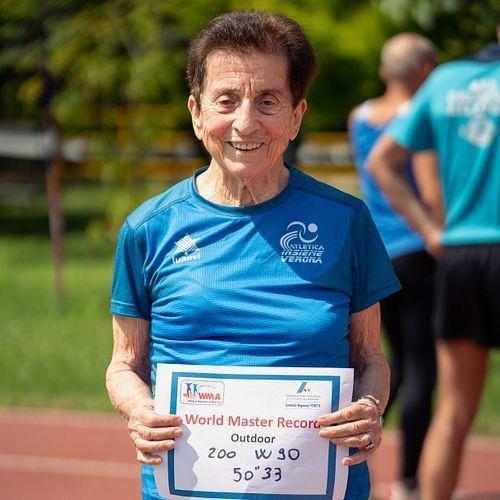
Building Muscle at 91: What a Sprinter Teaches Us
Researchers tested the muscles of a 91-year-old world-record sprinter. What they found shows why strength and power stay trainable as we age.
September 19, 2026 · 3 min read

Brain · Body
Music and Movement: A Brain-Body Workout to a Song
Pick a favorite song and let it set your pace. This simple music-and-movement workout challenges your brain and body at any fitness level.
September 12, 2026 · 2 min read
Body
2-Minute Step Test: Check Your Cardio Fitness at Home
The 2-Minute Step Test is a simple at-home check of your endurance. Here's how to do it, how to compare your score, and why cardio fitness matters.
September 5, 2026 · 2 min read