Stair Climbing Benefits and a 10-Minute Stair Workout
By Kristen Nielsen, Founder & Senior Fitness Specialist
· Updated · Body & Balance · 3 minute read
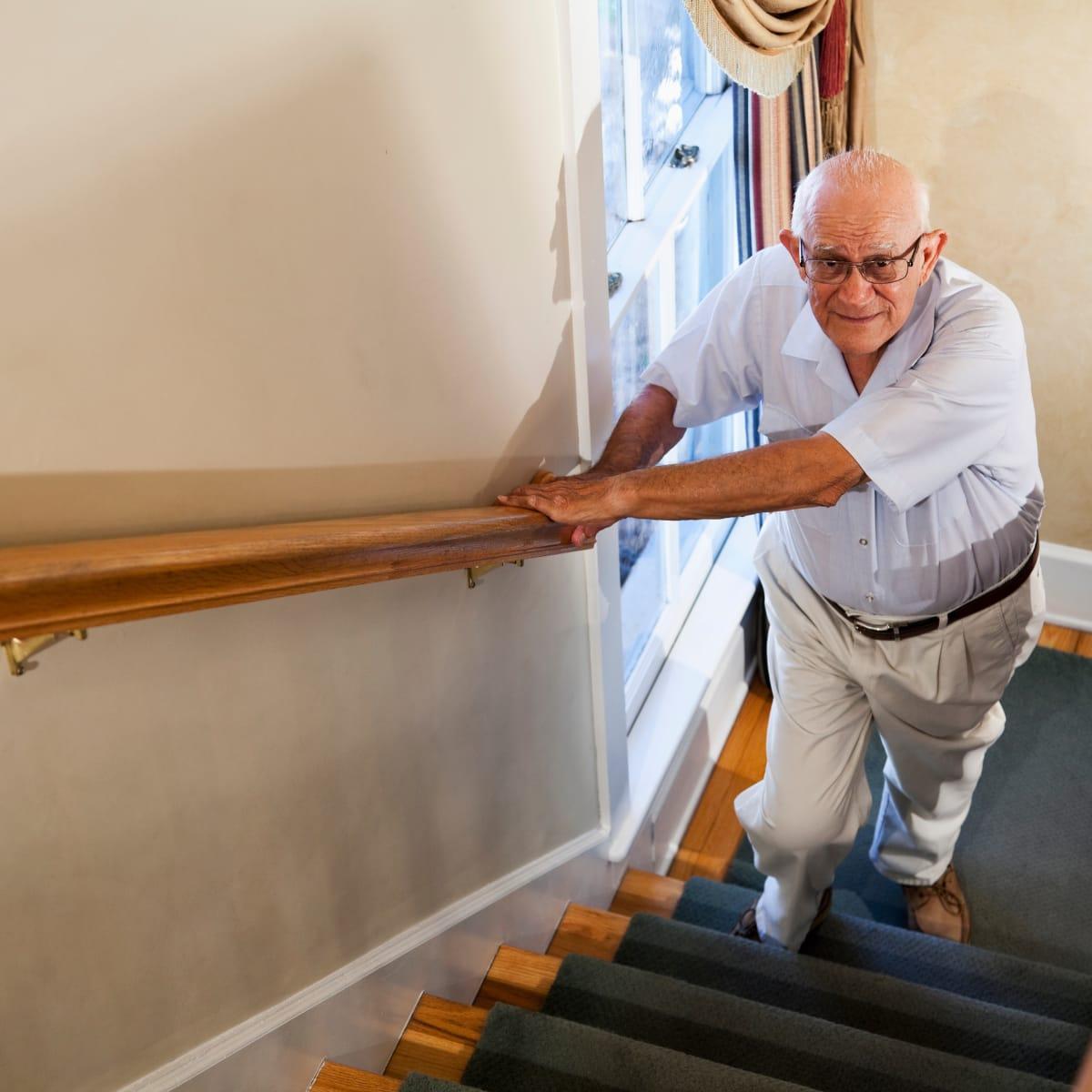
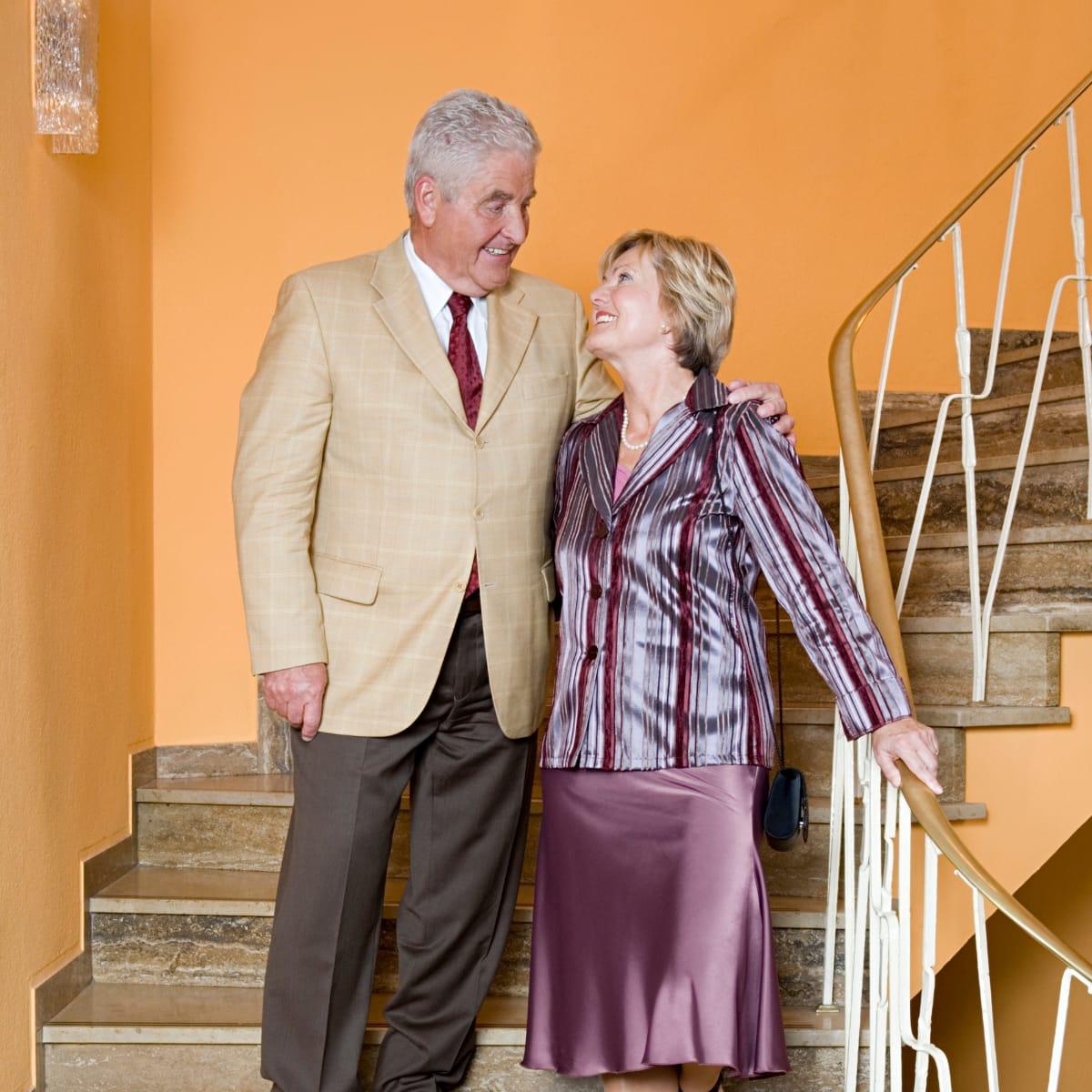
Part of our guide: Walking for Seniors: Benefits and How to Get Started
Key takeaways
- Climbing stairs strengthens legs, heart and balance: in a 2023 study of nearly 458,000 adults, five flights a day was linked to a 20% lower risk of cardiovascular disease.
- The same movement trains your legs, hips and the balance that helps prevent falls.
- A 5–10 minute stair workout can include step-ups, side steps, calf raises and balance holds. Use a handrail whenever you need support.
Climbing stairs builds leg strength, boosts heart health and trains your balance, and a 2023 study linked just five flights a day to a 20% lower risk of cardiovascular disease. Below you'll find the research plus a simple 5–10 minute stair workout.
It's easy to take the elevator or escalator, especially when we're in a hurry. But one of the simplest ways to stay strong, mobile, and independent as we age is to keep using the stairs. They're a natural next step once you're comfortable with regular walking.
What Are the Benefits of Climbing Stairs?
- Strengthens legs and hips – Every step builds the muscles that support walking, balance, and stability.
- Boosts heart health – Stair climbing gets your heart rate up quickly, improving cardiovascular endurance.
- Improves balance – Managing steps trains coordination and stability, key for preventing falls.
- Supports independence – The ability to climb stairs is closely linked to staying active and capable in daily life. (The chair stand test is a quick way to check the leg strength stairs depend on.)

How Many Flights of Stairs a Day Help Your Heart?
About five flights (roughly 50 steps) a day was enough to make a difference in one large study.
- Lower risk of heart disease: A 2023 study of nearly 458,000 adults found that climbing just five flights of stairs a day (about 50 steps) was linked to a 20% lower risk of cardiovascular disease.
- Metabolic health boost: A 2024 review of 24 studies showed that stair-climbing improved aerobic capacity, blood pressure, cholesterol, insulin sensitivity, and body composition — with changes showing up in as little as 4–8 weeks.
- Strength and power gains: In a 2025 study, older adults who climbed stairs for 12 weeks improved their leg power and functional ability nearly as much as those using gym strength machines.
The bottom line? The stairs aren't just for cardio — they help your heart, your muscles, and your overall independence.
Quick Stair Facts
Let's break it down and consider it this way:
- One flight of stairs = ~10–12 steps. Climbing five flights/day (≈50–60 steps) is linked with a 20% lower risk of heart disease.
- Climbing stairs uses over 200 muscles, especially in the legs, hips, and core.
- Just 4–8 weeks of stair workouts can improve blood pressure, cholesterol, and aerobic fitness.
- Older adults who climbed stairs for 12 weeks improved leg power nearly as much as gym strength training.
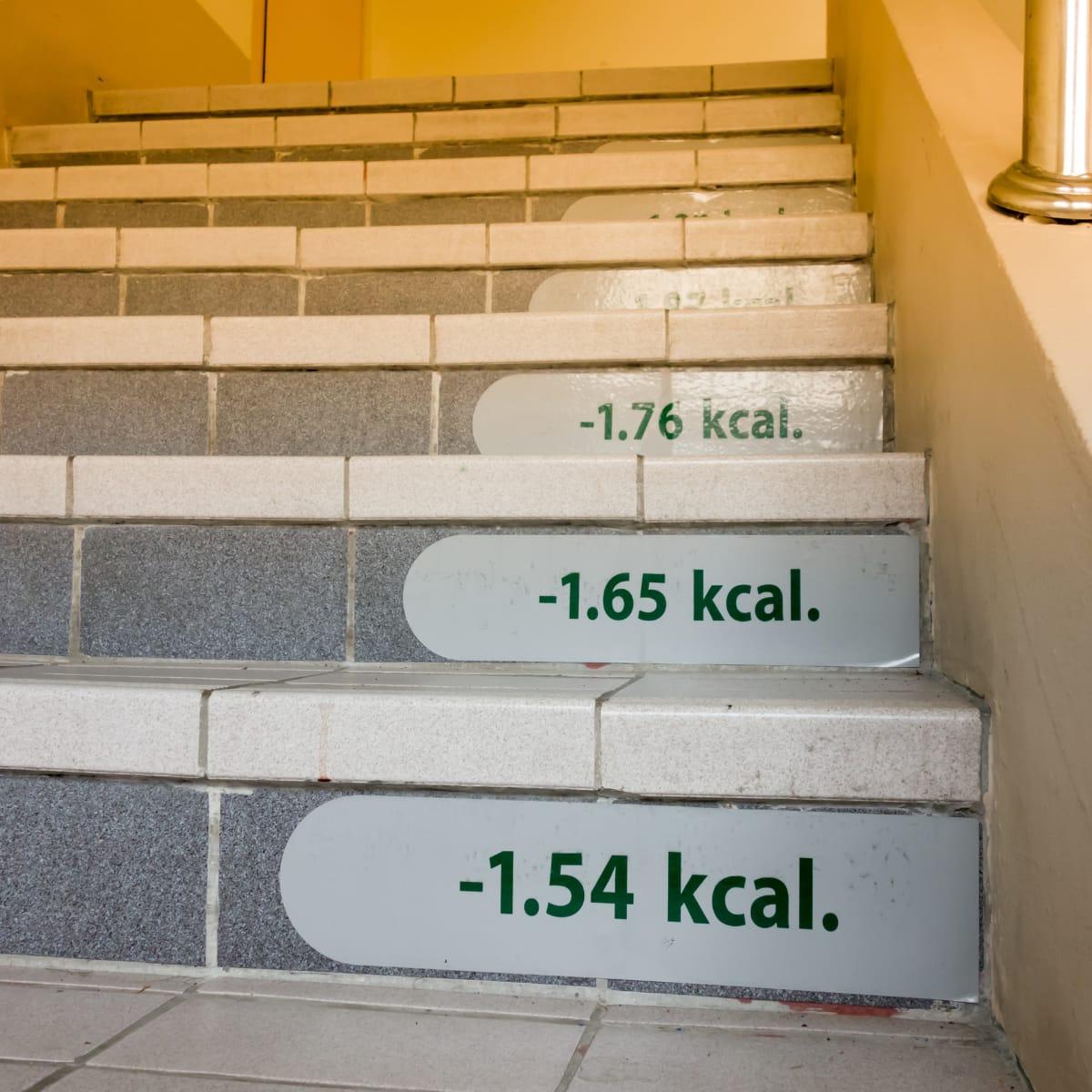
A 10-Minute Stair Workout You Can Do at Home
You don't need a gym — just a safe staircase at home, in a park, or in your building.
- Warm-up: March in place at the bottom of the stairs for 1 minute.
- Step climb: Walk up and down the stairs at a comfortable pace for 2 minutes.
- Step-ups: Stand facing the first step, step up with one foot, then the other. Step down and repeat for 30 seconds each leg.
- Side step climb: Face sideways and step up the stairs leading with one leg, then switch sides coming down. 30 seconds each direction.
- Stair calf raises: Stand on the edge of the bottom step with your heels hanging slightly off. Rise up onto your toes, then slowly lower your heels below step level. Do 10–15 reps.
- Balance hold: At the bottom step, step one foot onto the first step and hold for 10 seconds. Switch sides. Repeat 2x each leg.
- Cool-down: Gentle march in place and slow stretches for 1–2 minutes.
Pro tip: Always use a handrail if you need support, especially when first trying these exercises. If stairs feel unsteady, our fall prevention and balance training can help you build up to them safely.
Make the Stairs Part of Your Day
Instead of shying away from the stairs, think of them as one of the simplest, most efficient ways to boost your health, and a perfect exercise snack. I hope to run into you in the stairwell sometime!
Kristen
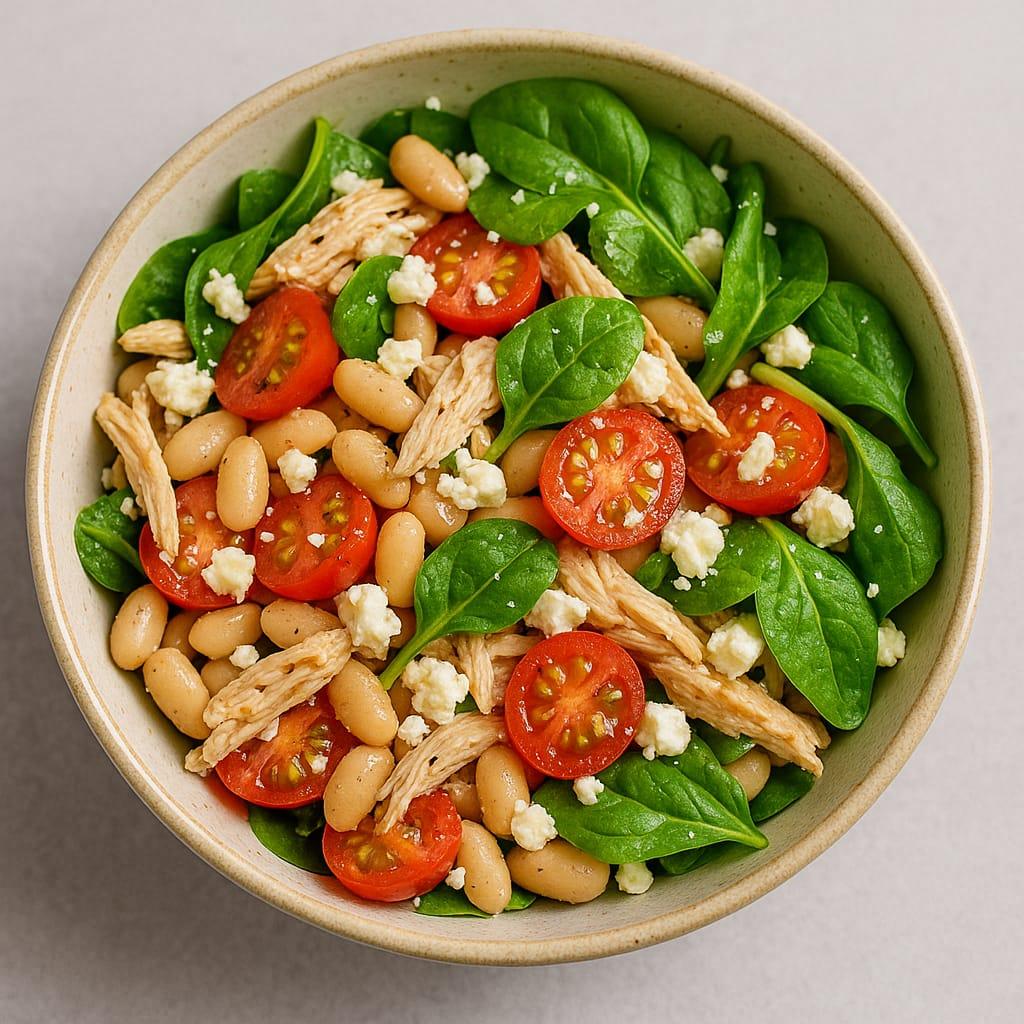
Try the recipe: This chicken and white bean power bowl is ready in under 10 minutes and pairs perfectly after a stair workout — get the recipe.
Sources
- Song Z, Wan L, Wang W, et al. Daily stair climbing, disease susceptibility, and risk of atherosclerotic cardiovascular disease: a prospective cohort study. Atherosclerosis. 2023;386:117300. View source
- Ghosal AM, Chandrasekaran B. Stair-climbing interventions on cardio-metabolic outcomes in adults: a scoping review. J Taibah Univ Med Sci. 2024;19(1):136-150. View source
- Van Roie E, van Uffelen J, Delecluse C. Stair-climbing versus machine-based resistance exercise to improve muscle power among older adults: a noninferiority trial. J Strength Cond Res. 2025;39(3):e496-e505. View source
This article is for general education and isn't medical advice. Please talk with your doctor before starting a new exercise, nutrition or supplement routine. See our health disclaimer.

About the author
Kristen Nielsen
Kristen founded TogetherWON after watching what strength training could do for older adults — including her own grandparents. She's an ACE Certified Personal Trainer with 10+ years in functional aging, a University of Central Florida graduate, and a former Division I swimmer and track & field athlete.
Senior Fitness Specialist · Functional Aging Specialist · Parkinson's Disease Specialist · Brain Health Trainer · Corrective Exercise Specialist
want these in your inbox?
Get my Saturday letters
One idea for your body, brain or balance each week, usually with a recipe. Unsubscribe any time.
Keep reading
Body · Balance
Is One Side Weaker? How to Fix Muscle Imbalances
Favoring your stronger side can hide weakness and widen the gap between sides. How to notice the pattern and give your weaker side safe practice.
August 8, 2026 · 5 min read
Body · Balance
What to Add to Your Walking Routine After 60
Walking is a great foundation after 60, but it doesn't train everything. How to add strength, balance and brain-body work to your walks.
July 25, 2026 · 5 min read
Body · Balance
3 Common Exercise Mistakes Older Adults Make
Doing only cardio, skipping balance work and training at the wrong intensity are three common exercise mistakes after 60. Here's what to do instead.
February 7, 2026 · 3 min read