What to Add to Your Walking Routine After 60
By Kristen Nielsen, Founder & Senior Fitness Specialist
· Updated · Body & Balance · 5 minute read
Part of our guide: Walking for Seniors: Benefits and How to Get Started
Key takeaways
- Keep walking, and add strength training on at least 2 days a week plus short balance and brain-body challenges, because walking alone doesn't train every ability you need after 60.
- Adults 65 and older are advised to do muscle-strengthening activities on at least two days a week, because daily tasks like stairs and carrying groceries take more strength than walking.
- A practical week might include several walks, two full-body strength sessions, and a few short balance or brain-body challenges.
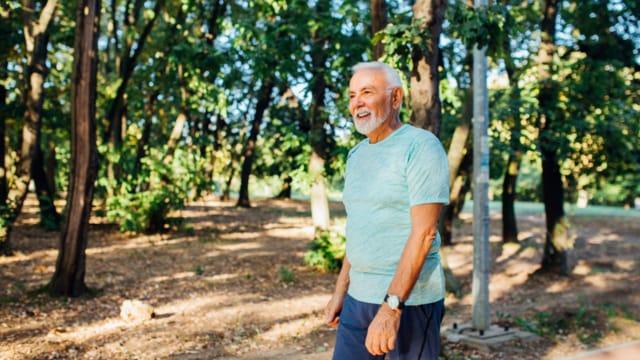
If you are only going to do one form of exercise, walking is a fantastic choice.
It is accessible, inexpensive, easy to scale to your ability, and beneficial for cardiovascular health, endurance, mood, and overall activity levels. For many adults over 60, walking is one of the most practical ways to stay active consistently.
So this is not an argument against walking.
It is an argument for building on it.
Walking gives you an excellent foundation, but it does not train every physical ability you need to remain strong, steady, and independent.
Why Isn't Walking Enough to Build Strength?
Walking primarily challenges your cardiovascular system and improves your ability to continue walking, so it doesn't ask your muscles for much more force than a comfortable stroll.
Endurance supports everyday activities such as shopping, traveling, participating in social events, and moving through your community without becoming overly fatigued.
However, many important daily tasks require more strength than ordinary walking provides.
Think about:
- Standing from a low chair
- Climbing stairs
- Carrying groceries
- Lifting something onto a shelf
- Getting up from the floor
- Opening a heavy door
- Catching yourself after a stumble
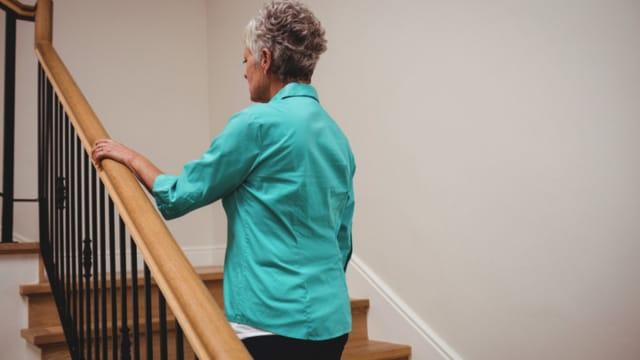
These tasks require your muscles to produce more force than they typically do during a comfortable walk.
That is why walking should be supplemented with strength training.
Current physical activity guidance recommends that adults 65 and older perform muscle-strengthening activities involving the major muscle groups on at least two days each week. This recommendation is separate from aerobic activity because the two types of exercise provide different benefits. (CDC)
Strength training does not have to mean bodybuilding or lifting extremely heavy weights. It simply means asking your muscles to work against enough resistance that they have a reason to adapt. (Curious where your legs stand today? Try the 30-second chair stand test.)
That may include:
- Chair stands or squats
- Step-ups
- Resistance-band rows
- Wall or counter push-ups
- Carrying weights
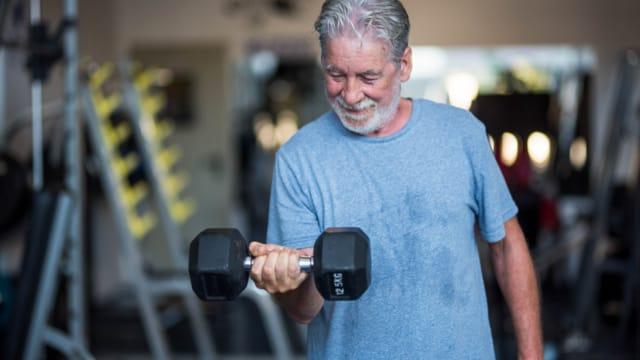
- Lifting dumbbells or household objects
The appropriate exercise and resistance will vary from person to person, but the final repetitions should feel meaningfully challenging while still allowing you to maintain safe, controlled form. (To learn more about how to properly strength train, see Are You Strength Training Hard Enough to Get Stronger?)
Does Walking Improve Your Balance?
Walking uses balance, but on its own it may not train it enough to help you handle the unexpected. Every step involves briefly supporting yourself on one leg while moving your body forward.
However, normal walking is also something your brain and body have practiced for decades. Walking at a comfortable pace on a familiar, level surface may not challenge your balance enough to improve your ability to respond to more difficult situations.
Real life requires more than walking straight ahead.
You may need to:
- Step around an obstacle
- Turn quickly
- Walk on uneven ground
- Recover after catching your toe
- Look to the side while continuing forward
- Carry something while walking
- Change direction unexpectedly
Balance training prepares you for these less predictable demands.
This might include practicing weight shifts, controlled stepping, direction changes, obstacle negotiation, or walking while safely turning your head. The goal is not to make an exercise dangerous. The goal is to create an appropriate challenge while maintaining access to support when needed.
How Can You Make Walking Challenge Your Brain?
You can make a walk challenge your brain by adding a safe mental or coordination task, because walking is not purely physical. Your brain is constantly coordinating movement, processing your surroundings, and adjusting your steps.
But a familiar walking route can become highly automatic.
To challenge the brain more intentionally, you can occasionally add a safe mental or coordination task, such as:
- Counting backward while walking
- Naming items in a category
- Changing speed in response to a cue
- Following a simple stepping pattern
- Walking around obstacles
- Alternating between longer and shorter steps
- Carrying on a conversation while maintaining your pace
These are examples of brain-body training, and I share more ideas in dual-task walking exercises. They ask the brain to process information while the body continues moving.
This matters because daily life rarely allows us to focus on only one task at a time. We often walk while talking, carrying something, looking for an address, or deciding where to step next.
The challenge should always match the person. Someone with significant balance difficulty may need to practice these activities with a trainer or another qualified professional rather than independently.
What Does a Complete Week Look Like Besides Walking?
A complete week keeps your walks and adds strength, balance and brain-body work around them.
Walking is not "just walking." It is a valuable form of exercise and one of the best habits you can maintain.
But if walking is the only exercise you do, some important abilities may go untrained.
A more complete approach includes:
- Walking for endurance and cardiovascular health
- Strength training for muscle, power, and everyday function
- Balance training for stability and fall recovery
- Brain-body training for coordination, attention, and adaptability

You do not need a complicated routine.
A practical week might include several walks, two full-body strength sessions, and a few short balance or brain-body challenges.
Even five or ten minutes of focused strength or balance work added to a walk can begin making your routine more complete. If you'd like help putting it together at home, that's exactly what we do in in-home personal training.
Walking Is the Foundation — Not the Whole Structure
If you are only going to do one thing, walk.
It is useful, realistic, and far better than remaining inactive.
But when you are ready to do more, do not assume that walking faster or farther will train every ability you need.
Keep walking, and add the strength, balance, and brain challenges that help you remain capable when life asks for more than a walk around the block.
Kristen
Try the recipe: These easy fish tacos pack in protein and can be ready in about 20 minutes — get the recipe.
Sources
- Centers for Disease Control and Prevention. Physical activity guidelines for older adults. View source
This article is for general education and isn't medical advice. Please talk with your doctor before starting a new exercise, nutrition or supplement routine. See our health disclaimer.


About the author
Kristen Nielsen
Kristen founded TogetherWON after watching what strength training could do for older adults — including her own grandparents. She's an ACE Certified Personal Trainer with 10+ years in functional aging, a University of Central Florida graduate, and a former Division I swimmer and track & field athlete.
Senior Fitness Specialist · Functional Aging Specialist · Parkinson's Disease Specialist · Brain Health Trainer · Corrective Exercise Specialist
want these in your inbox?
Get my Saturday letters
One idea for your body, brain or balance each week, usually with a recipe. Unsubscribe any time.
Keep reading

Body · Balance
Is One Side Weaker? How to Fix Muscle Imbalances
Favoring your stronger side can hide weakness and widen the gap between sides. How to notice the pattern and give your weaker side safe practice.
August 8, 2026 · 5 min read

Body · Balance
3 Common Exercise Mistakes Older Adults Make
Doing only cardio, skipping balance work and training at the wrong intensity are three common exercise mistakes after 60. Here's what to do instead.
February 7, 2026 · 3 min read

Body · Balance
Suitcase Carry: The Best Core Exercise for Real Life
The one-arm carry trains your core to keep you centered under uneven loads like groceries. Why it helps balance, and how to practice it safely at home.
January 10, 2026 · 2 min read