How Heavy Should Seniors Lift? The 8–10 Rep Rule
By Kristen Nielsen, Founder & Senior Fitness Specialist
· Updated · Body · 3 minute read
Part of our guide: Strength Training for Seniors: The Complete Guide
Key takeaways
- Lift heavy enough that the last of 8 to 10 repetitions feels very hard to complete with good form, with only one or two more reps left in you.
- If you can finish 10 reps and easily keep going, the exercise may be too easy to build strength, so the weight, band or movement may need to progress.
- Muscle fatigue is expected, but sharp pain, joint pain, dizziness, numbness or feeling unsteady are signs to stop or modify.
To get stronger, choose a weight or band heavy enough that the last of 8 to 10 repetitions feels very hard to finish with good form, with only one or two more reps left in you. That's the level of effort that tells your muscles to grow, and it's the heart of strength training for seniors.
When we think about exercise, it is easy to focus on movement itself: taking a walk, stretching, doing a few light exercises, or staying generally active. All of those things matter. But when it comes to building strength, protecting bone density, and maintaining independence, our muscles need something more specific.
They need a reason to grow.
Muscle growth does not happen by accident. The body adapts when the muscles are challenged enough to create a response. In simple terms, the muscles need enough tension, effort, and consistency to say, "We need to get stronger for this."
So how do you know if you are working hard enough?
How Many Reps Should You Do to Build Strength?
With many of our clients, we use a general range of 8 to 10 repetitions for each strength exercise. By the end of those 8 to 10 repetitions, the exercise should feel very hard to complete with good form. You should feel like you could maybe do one or two more repetitions, but not many more.
If you finish all 10 repetitions and feel like you could easily keep going, the exercise may not be challenging enough to stimulate growth. That could mean the weight is too light, the band is too easy, the movement is too small, or the exercise needs to be progressed in some way. (If you feel stuck, here's how to get past a fitness plateau.)
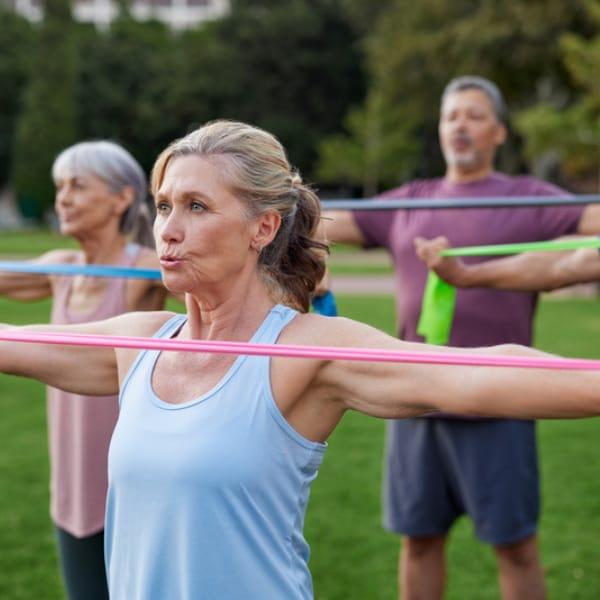
That does not mean exercise should be painful, unsafe, or extreme. Muscle fatigue is expected. Sharp pain, joint pain, dizziness, numbness, or feeling unsteady are signs to stop or modify. The goal is to challenge the muscle, not to force the body through something it is not ready for.
Why Does Lifting Hard Enough Matter After 60?
It matters for much more than muscle tone. Stronger muscles help support balance, walking, stairs, posture, joint protection, and fall prevention. They also place healthy stress on the bones, which is one of the reasons strength training is so important for maintaining bone density as we age.
And the benefits may go beyond the body. Research continues to show a relationship between strength training and brain health. Resistance training may support better blood flow, improved insulin sensitivity, reduced inflammation, and more confidence with movement — all of which matter for maintaining both physical and cognitive function over time.
How Do You Know If an Exercise Is Too Easy or Too Hard?
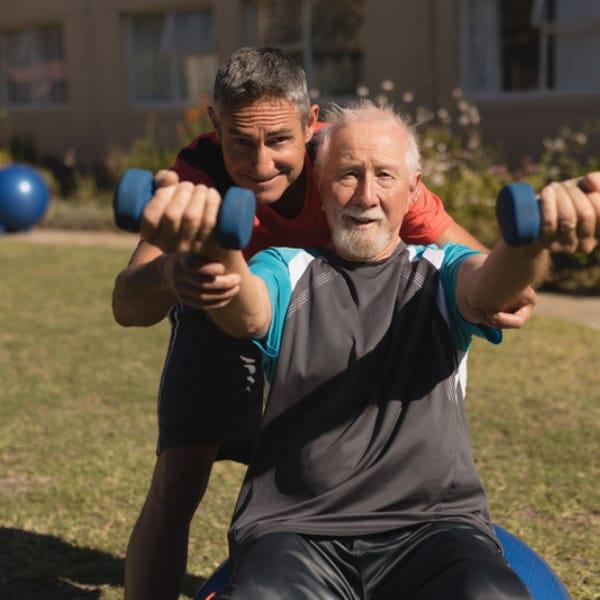
Too little effort may not create change, and too much, too soon can increase the risk of pain, compensation, or injury. The key is finding the right level of challenge. A good strength program should be progressive, safe, and appropriate for your body, which is what we build for each client in in-home personal training.
Your muscles are meant to work.
And with the right kind of challenge, they can help you stay stronger, steadier, and more independent.
Kristen
Try the recipe: This egg bake is easy to make ahead, reheats well, and includes lots of protein to help build muscle — get the recipe.
Sources
- Fragala MS, Cadore EL, Dorgo S, et al. Resistance training for older adults: position statement from the National Strength and Conditioning Association. J Strength Cond Res. 2019;33(8):2019-2052. View source
- Watson SL, Weeks BK, Weis LJ, Harding AT, Horan SA, Beck BR. High-intensity resistance and impact training improves bone mineral density and physical function in postmenopausal women with osteopenia and osteoporosis: the LIFTMOR randomized controlled trial. J Bone Miner Res. 2018;33(2):211-220. View source
- Northey JM, Cherbuin N, Pumpa KL, Smee DJ, Rattray B. Exercise interventions for cognitive function in adults older than 50: a systematic review with meta-analysis. Br J Sports Med. 2018;52(3):154-160. View source
- Li Z, Peng X, Xiang W, Han J, Li K. The effect of resistance training on cognitive function in the older adults: a systematic review of randomized clinical trials. Aging Clin Exp Res. 2018;30(11):1259-1273. View source
This article is for general education and isn't medical advice. Please talk with your doctor before starting a new exercise, nutrition or supplement routine. See our health disclaimer.


About the author
Kristen Nielsen
Kristen founded TogetherWON after watching what strength training could do for older adults — including her own grandparents. She's an ACE Certified Personal Trainer with 10+ years in functional aging, a University of Central Florida graduate, and a former Division I swimmer and track & field athlete.
Senior Fitness Specialist · Functional Aging Specialist · Parkinson's Disease Specialist · Brain Health Trainer · Corrective Exercise Specialist
want these in your inbox?
Get my Saturday letters
One idea for your body, brain or balance each week, usually with a recipe. Unsubscribe any time.
Keep reading
Body · Stories
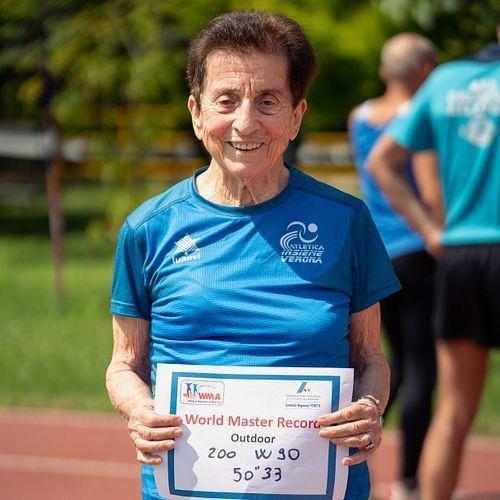
Building Muscle at 91: What a Sprinter Teaches Us
Researchers tested the muscles of a 91-year-old world-record sprinter. What they found shows why strength and power stay trainable as we age.
September 19, 2026 · 3 min read

Brain · Body
Music and Movement: A Brain-Body Workout to a Song
Pick a favorite song and let it set your pace. This simple music-and-movement workout challenges your brain and body at any fitness level.
September 12, 2026 · 2 min read
Body
2-Minute Step Test: Check Your Cardio Fitness at Home
The 2-Minute Step Test is a simple at-home check of your endurance. Here's how to do it, how to compare your score, and why cardio fitness matters.
September 5, 2026 · 2 min read