2-Minute Step Test: Check Your Cardio Fitness at Home
By Kristen Nielsen, Founder & Senior Fitness Specialist
· Updated · Body · 2 minute read
Part of our guide: Walking for Seniors: Benefits and How to Get Started
Key takeaways
- You can check your cardio fitness at home with the 2-Minute Step Test, counting how many times your right knee reaches a target height as you march in place for 2 minutes.
- Compare your score with published norms for your age and gender, then write it down and retest in several weeks to see how much you've improved.
- Cardio doesn't have to mean running. Brisk walking, step-ups, marching, dancing and sit-to-stands all count, and better endurance gives you more reserve for life.
The easiest way to check your cardio fitness at home is the 2-Minute Step Test: march in place for 2 minutes and count how many times your right knee reaches a set height. It's part of the Senior Fitness Test used with older adults, and all you need is a wall, a piece of tape and a timer.
Cardiovascular fitness affects far more than exercise. It can influence how easily you climb stairs, walk through a store, travel, keep up with family, or simply get through the day without feeling exhausted. (It's also one of the big reasons I love walking for older adults.)
How Do You Do the 2-Minute Step Test?
Stand near a wall or sturdy counter for support.
Find the point halfway between the top of your kneecap and the top of your hip bone, and mark that height.
Then march in place for 2 minutes, bringing your knees toward that height.
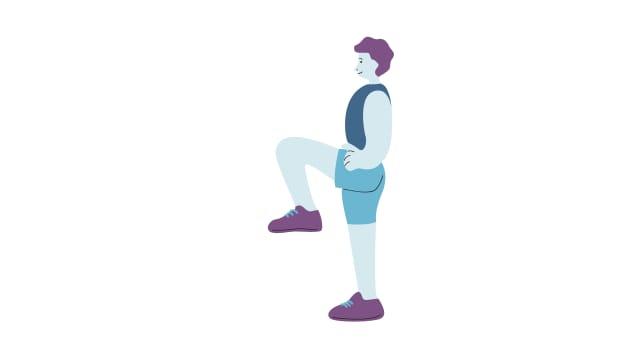
Count how many times your right knee reaches the target. That number is your score.
How Does Your Score Compare?
Published norms can help give your score some context by showing how your result compares with other adults your age and gender.
See the published 2-Minute Step Test norms here.
At the same time, one of the most useful things you can do is record your score now, work on your cardiovascular fitness, and repeat the test several weeks from now.
Why Does Cardio Fitness Matter After 60?
Cardio fitness matters because it gives you the energy and reserve to do everyday things without running out of steam. Research shows that adults over 60 can significantly improve cardiorespiratory fitness through exercise. And cardio doesn't have to mean running. Brisk walking, stair climbing and step-ups, marching, dancing, strength circuits, and repeated sit-to-stands can all challenge your cardiovascular system.
Why does that matter?
Better cardiovascular fitness is associated with better mobility, lower cardiovascular disease risk, reduced frailty, and greater longevity.
But perhaps most importantly:
Better endurance gives you more reserve for life.
The stairs feel easier. You can walk farther. You recover faster. And your fitness is less likely to be the thing that limits what you want to do.
How Can You Improve Your Step Test Score?
You can improve your score by challenging your heart and lungs a few times a week and retesting every several weeks. Short bursts work well: try the interval training ideas for seniors I use with clients, or work on it with a trainer through in-home personal training.
Take the 2-Minute Step Test and write down your score. Then use both pieces of information:
How do you compare today, and how much can you improve from here?
Want to check your leg strength too? Try our free 30-second chair stand test.
Kristen
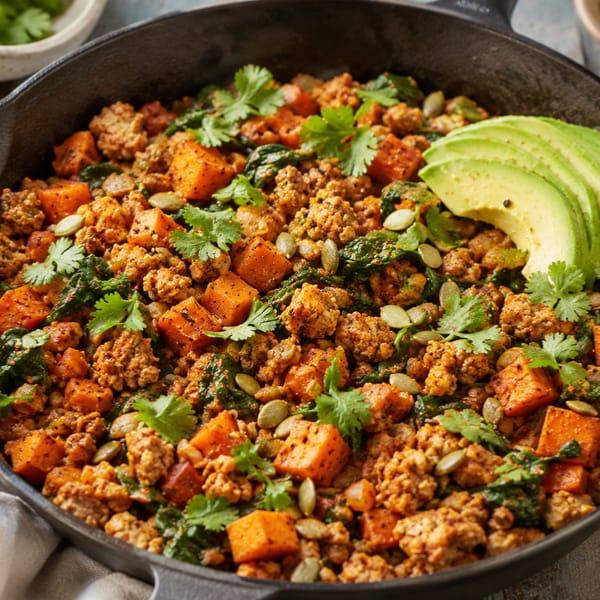
Try the recipe: For a simple, hearty one-pan meal with plenty of protein, fiber and flavor, try this turkey and sweet potato skillet — get the recipe.
Sources
- Shirley Ryan AbilityLab. 2-Minute Step Test. Rehabilitation Measures Database. View source
This article is for general education and isn't medical advice. Please talk with your doctor before starting a new exercise, nutrition or supplement routine. See our health disclaimer.

About the author
Kristen Nielsen
Kristen founded TogetherWON after watching what strength training could do for older adults — including her own grandparents. She's an ACE Certified Personal Trainer with 10+ years in functional aging, a University of Central Florida graduate, and a former Division I swimmer and track & field athlete.
Senior Fitness Specialist · Functional Aging Specialist · Parkinson's Disease Specialist · Brain Health Trainer · Corrective Exercise Specialist
want these in your inbox?
Get my Saturday letters
One idea for your body, brain or balance each week, usually with a recipe. Unsubscribe any time.
Keep reading
Body · Stories
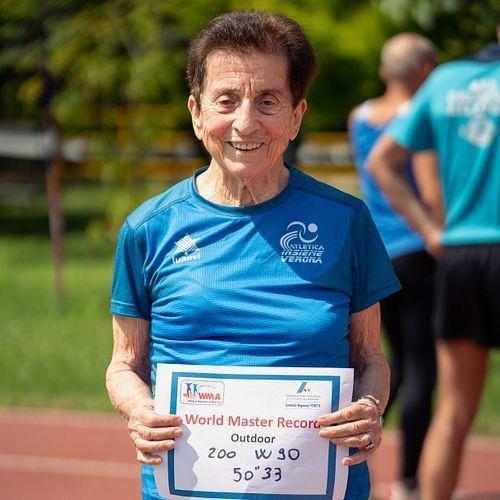
Building Muscle at 91: What a Sprinter Teaches Us
Researchers tested the muscles of a 91-year-old world-record sprinter. What they found shows why strength and power stay trainable as we age.
September 19, 2026 · 3 min read
Brain · Body
Music and Movement: A Brain-Body Workout to a Song
Pick a favorite song and let it set your pace. This simple music-and-movement workout challenges your brain and body at any fitness level.
September 12, 2026 · 2 min read
Body
Home Workout for Seniors Using Everyday Objects
No gym needed. Ten strength exercises using a soup can, a water bottle and a milk jug for a full-body workout at home in 20–30 minutes.
August 29, 2026 · 3 min read