Senior Games Training: Why Having a Goal Motivates
By Kristen Nielsen, Founder & Senior Fitness Specialist
· Updated · Stories & Body · 2 minute read
Part of our guide: How Much Exercise Do Seniors Need? A Weekly Plan
Key takeaways
- Having a goal makes training more motivating because it gives the work a purpose; every TogetherWON athlete who competed in the 2026 Senior Games said so.
- When you work toward something specific, exercise starts to feel less like a task and more like preparation.
- Your goal doesn't have to be a race; it could be climbing stairs, traveling with family, gardening or keeping up with grandkids.
Having a goal makes training more motivating because it turns exercise into preparation. Sometimes the most powerful part of training is not the exercise itself — it is having a reason to show up, whether you're doing the amount of exercise seniors need each week or getting ready for a race.
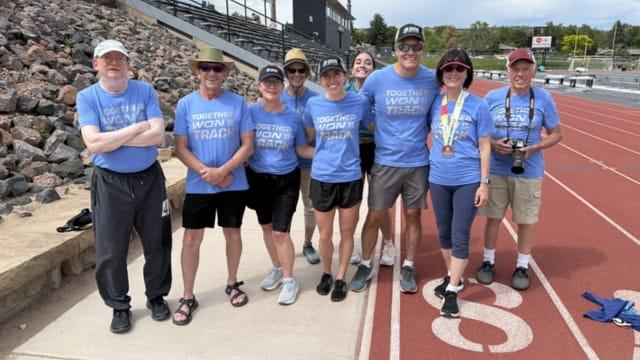
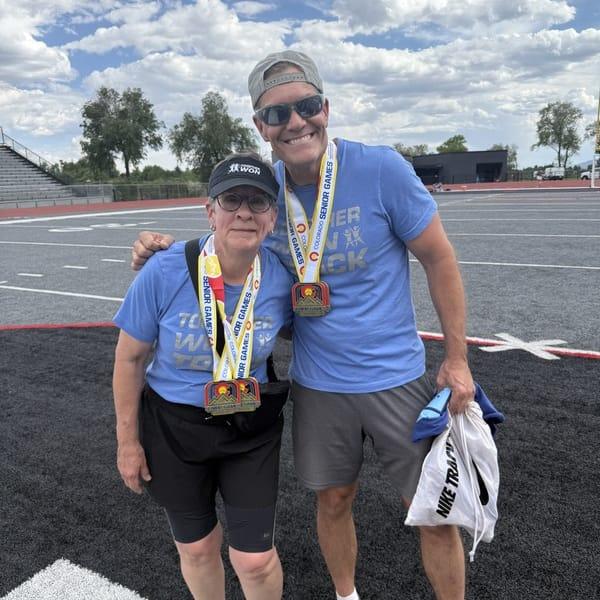
In 2026, several TogetherWON athletes signed up to participate in the Senior Games, and for some of them, it was their very first race. That may sound like a simple thing, but it was a meaningful step. For some, it meant stepping outside of their comfort zone. For others, it meant trying something they had never imagined themselves doing.
Across the board, they all said the same thing: having a goal made training more motivating.
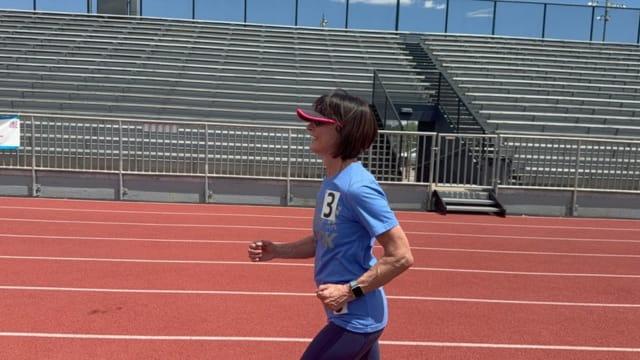
Adele (competing with a smile!) in her 1500m powerwalk!
Why Does Having a Goal Make Exercise More Motivating?
A goal gives every workout a job to do. When we are working toward something specific, exercise starts to feel less like a task and more like preparation. A walk is not just a walk. It is practice for crossing the finish line (here's what a first Senior Games track race is really like). A balance exercise is not just standing on one foot. It is building confidence for moving through the world with more freedom. A strength exercise is not just a set of repetitions. It is helping the body stay ready for the things that matter.
And the goal does not have to be a race.
For one person, the goal might be participating in the Senior Games. For another, it might be walking through the grocery store without feeling nervous, getting up from a chair more easily (the chair stand test is a great way to track that), traveling with family, playing pickleball, gardening, climbing stairs, or keeping up with grandkids.
The goal simply gives the work a purpose.
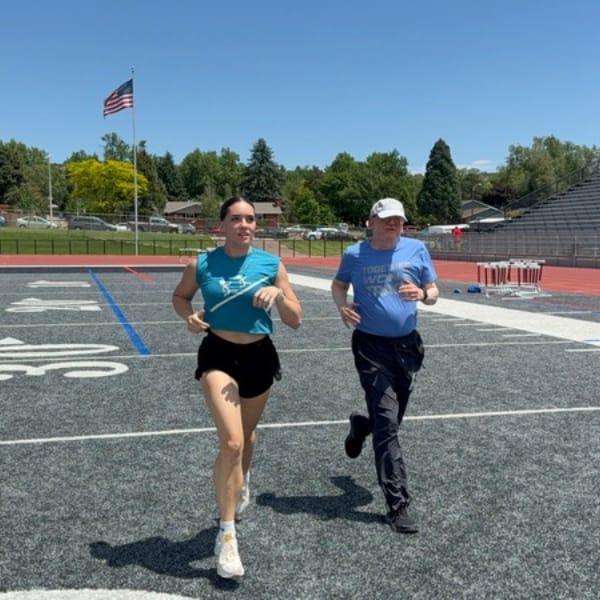
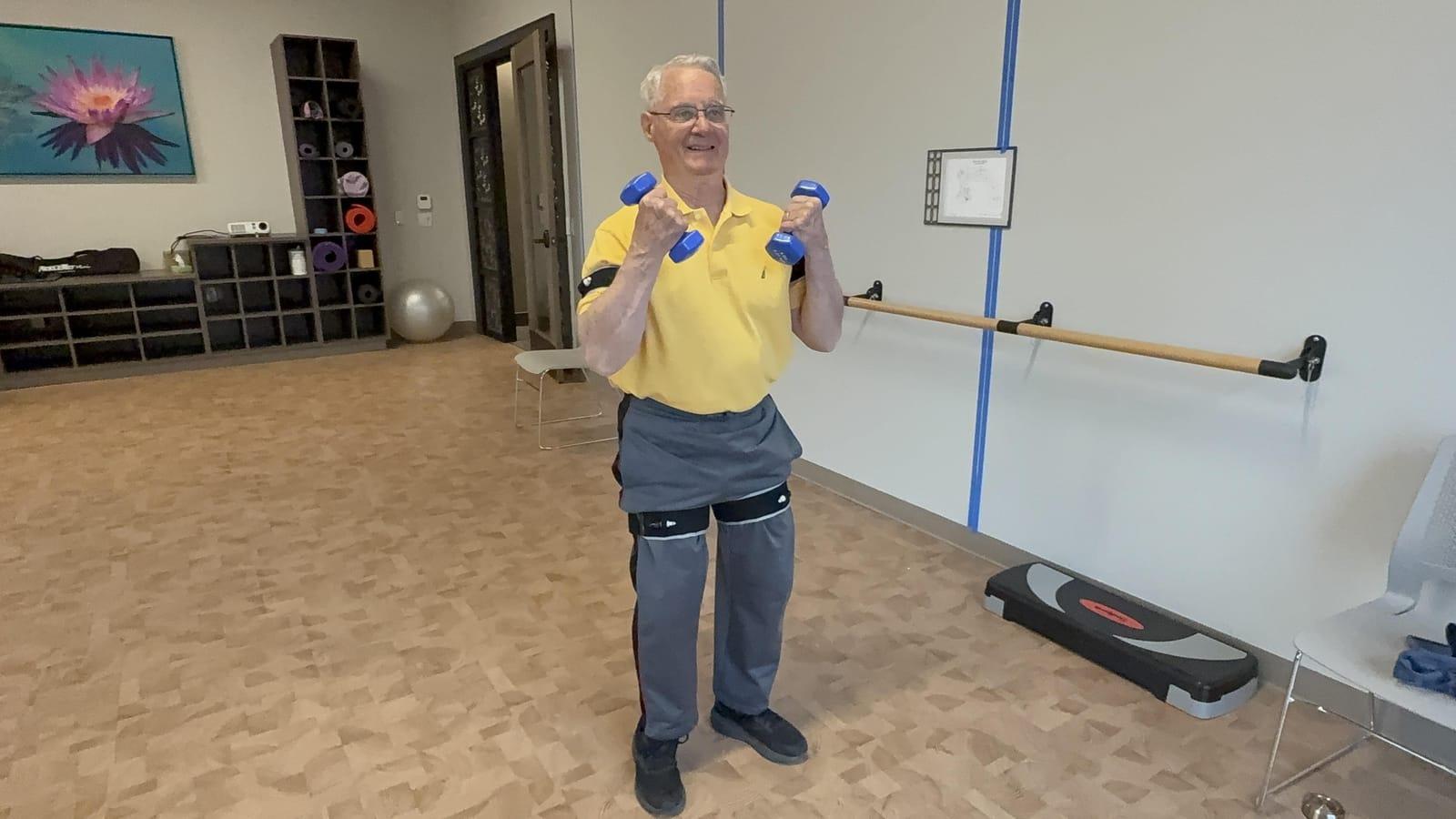
TogetherWON trainer Heidi, warming up with Richard
Does Trying Something New Build Confidence?
It does, and it was the biggest win we saw. One of the best parts of watching our athletes take on this challenge was seeing how much confidence came from trying. They were not focused on being the fastest or comparing themselves to anyone else. They were focused on showing up, doing something meaningful, and proving to themselves that they could.
And maybe the best part? They all plan to compete again.
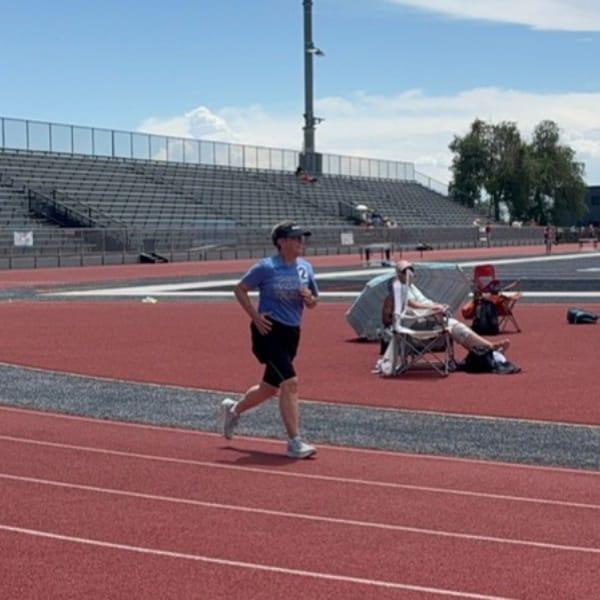
Karol rounding the curve to finish out her first ever 1500m race!
How Do You Pick a Training Goal?
Start with what you want your body to help you keep doing. At TogetherWON, we believe training should connect to real life. We are not just counting exercises or checking boxes. We are asking, "What do you want your body, brain, and balance to help you keep doing?"
So consider this question:
What is one thing you would like to feel stronger, steadier, or more confident doing?
That goal may be more motivating than you think.
Kristen
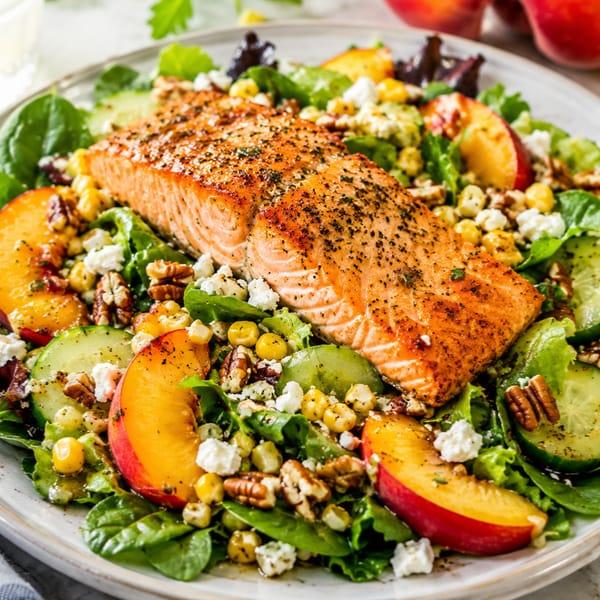
Try the recipe: This fresh summer salmon, corn & peach salad is colorful, satisfying, and full of flavor — get the recipe.
This article is for general education and isn't medical advice. Please talk with your doctor before starting a new exercise, nutrition or supplement routine. See our health disclaimer.
About the author
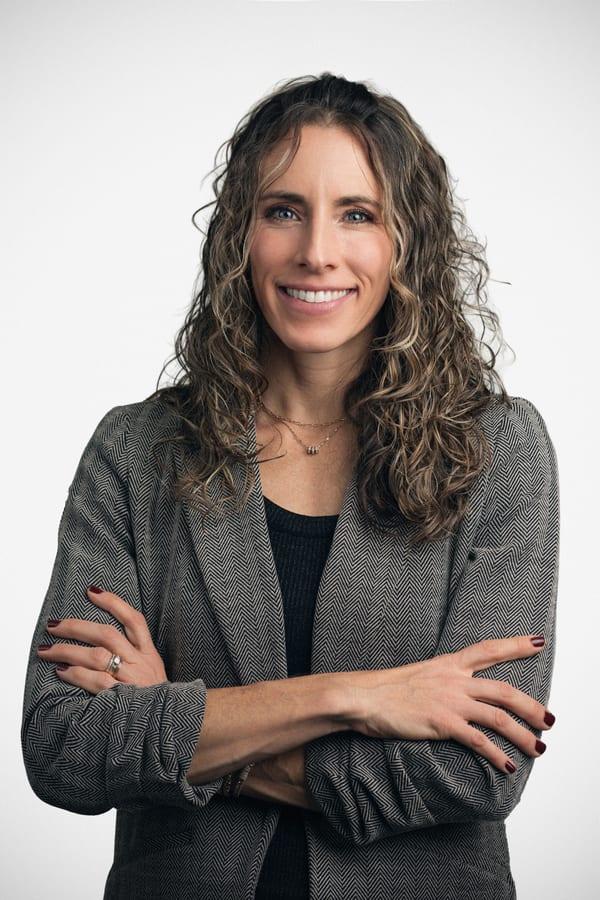
Kristen Nielsen
Kristen founded TogetherWON after watching what strength training could do for older adults — including her own grandparents. She's an ACE Certified Personal Trainer with 10+ years in functional aging, a University of Central Florida graduate, and a former Division I swimmer and track & field athlete.
Senior Fitness Specialist · Functional Aging Specialist · Parkinson's Disease Specialist · Brain Health Trainer · Corrective Exercise Specialist
want these in your inbox?
Get my Saturday letters
One idea for your body, brain or balance each week, usually with a recipe. Unsubscribe any time.
Keep reading
Body · Stories
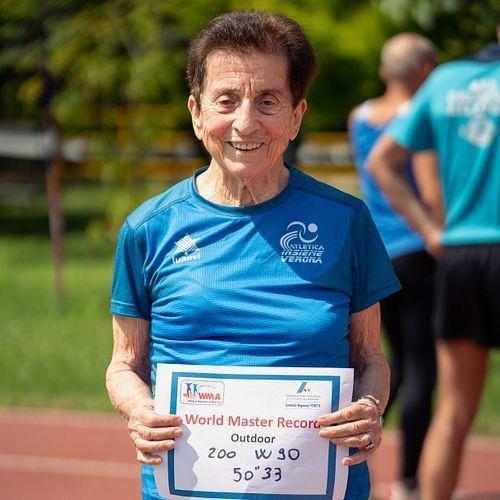
Building Muscle at 91: What a Sprinter Teaches Us
Researchers tested the muscles of a 91-year-old world-record sprinter. What they found shows why strength and power stay trainable as we age.
September 19, 2026 · 3 min read

Body · Stories
Staying Independent as You Age: Freedom Is Earned
The freedom to move independently is earned one workout, walk and set of stairs at a time. A Fourth of July reflection on effort and independence.
July 4, 2026 · 2 min read
Stories · Body
Can You Get Stronger at 82? Pat's BFR Training Results
In 13 blood flow restriction (BFR) sessions, 82-year-old Pat got stronger in every measured category using light weights. Here are his results.
May 16, 2026 · 4 min read