Why a Workout Partner Makes Exercise Easier
By Kristen Nielsen, Founder & Senior Fitness Specialist
· Updated · Body · 3 minute read

Part of our guide: How Much Exercise Do Seniors Need? A Weekly Plan
Key takeaways
- A workout partner makes exercise easier to stick with: studies show people who exercise with a spouse or group are more likely to keep it up over time.
- Sticking with exercise matters more than starting, because a long break can undo your progress.
- A workout partner provides supportive accountability, a blend of encouragement and expectation that keeps you showing up.
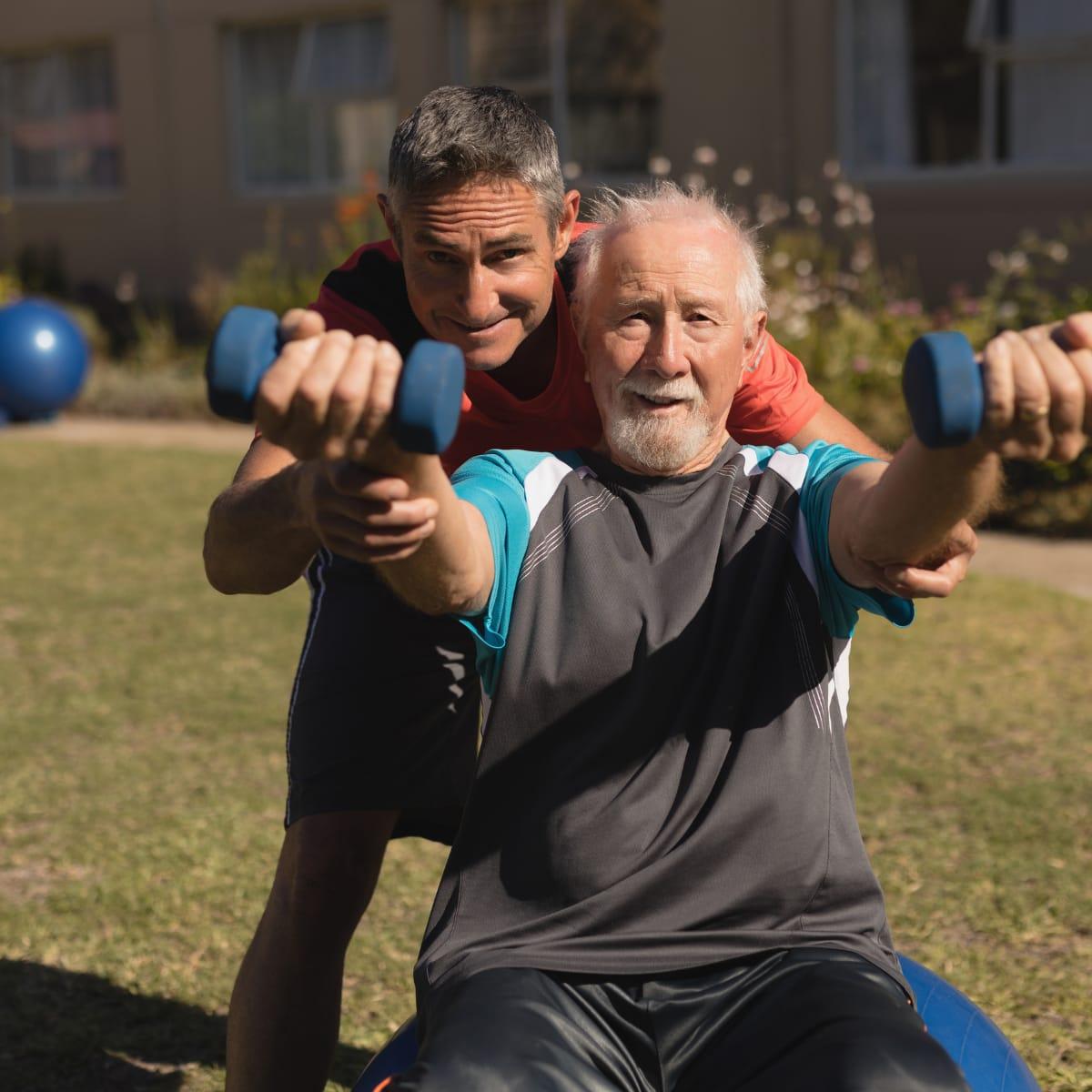
A workout partner makes exercise easier because it's far easier to keep showing up when someone is expecting you. We all know that exercise is good for us — but the real challenge isn't starting. It's sticking with it.
For older adults, that consistency matters more than anything else, whatever amount of exercise seniors need you're aiming for.
What Happens When You Stop Exercising?
Over a long break, you start to lose the muscle you've built. Research has shown that longer breaks from exercise can undo the progress you've worked for.
A 2022 meta-analysis in the International Journal of Environmental Research and Public Health found that older adults who stopped resistance training experienced a significant loss of muscle size during detraining periods (Grgic, 2022).
Another review, in the journal Muscles, looked at how long strength and muscle gains last once training stops, and found there isn't yet enough high-quality research to say exactly how quickly they fade (Encarnação et al., 2022).
The good news: a 2025 study in BMC Geriatrics found that older adults who took just two weeks off after a 12-week program held on to their lower-limb strength and stability gains (Svobodová et al., 2025). A short break won't erase your progress — but a long one can.
The takeaway is simple: gains are fragile, but consistency protects them.
Does Exercising With a Partner Help You Stick With It?
Yes. Accountability is the secret ingredient. Most people don't stop exercising because they stop caring — they stop because they lose connection.
Having a partner changes everything.
- In one classic study, adults who joined a fitness program with their spouse had far better 12-month adherence than those who joined alone (Journal of Sports Medicine and Physical Fitness, 1995).
- Another study found that older adults who attended an exercise class with their spouse were more likely to keep up their walking six months after the program ended (Osuka et al., 2017, BMC Geriatrics).
- Group programs show the same pattern — participation rates stay near 70% when social support is built in.
In short: most people don't stay consistent because of willpower — they stay consistent because someone else is counting on them.
Why Does a Workout Partner Keep You Motivated?
Researchers call this supportive accountability — the blend of encouragement and expectation that keeps us showing up.
A paper in the Journal of Medical Internet Research describes it as the key element that makes health behavior change programs work long-term (Mohr et al., 2011).
When someone exercises with us, or even checks in, our motivation rises, our effort increases, and we build habits that last.
The Köhler motivation effect — where individuals work harder in a team setting — has even been shown in exercise settings (Feltz et al., 2011, Journal of Sport & Exercise Psychology).
Who Can Be Your Workout Partner?
Whether it's a friend, spouse, or caregiver, the message is clear — we're better together.

If you've been struggling to stay consistent, find someone to move with you. Check in, share progress, and make accountability part of your plan. A trainer can play that role too; it's a big part of why in-home personal training works for so many people. For more ideas on making it stick, see my post on how to start an exercise habit.
Partnership builds consistency, and consistency builds results — in strength, confidence, and life.
Kristen
Try the recipe: When it feels like fall outside, this roasted sweet potato and apple harvest bowl is hard to beat — get the recipe.
Sources
- Grgic J. Use it or lose it? A meta-analysis on the effects of resistance training cessation (detraining) on muscle size in older adults. Int J Environ Res Public Health. 2022;19(21):14048. View source
- Encarnação IGA, Viana RB, Soares SRS, Freitas EDS, de Lira CAB, Ferreira-Júnior JB. Effects of detraining on muscle strength and hypertrophy induced by resistance training: a systematic review. Muscles. 2022;1(1):1-15. View source
- Svobodová L, Sebera M, Vodička T, et al. The effect of 12-week long exercise intervention, and 2-weeks of detraining period on lower limbs strength parameters and postural stability in older adults: a linear mixed model analysis. BMC Geriatr. 2025;25(1):305. View source
- Wallace JP, Raglin JS, Jastremski CA. Twelve month adherence of adults who joined a fitness program with a spouse vs without a spouse. J Sports Med Phys Fitness. 1995;35(3):206-213. View source
- Osuka Y, Jung S, Kim T, Okubo Y, Kim E, Tanaka K. Does attending an exercise class with a spouse improve long-term exercise adherence among people aged 65 years and older: a 6-month prospective follow-up study. BMC Geriatr. 2017;17(1):170. View source
- Mohr DC, Cuijpers P, Lehman K. Supportive accountability: a model for providing human support to enhance adherence to eHealth interventions. J Med Internet Res. 2011;13(1):e30. View source
- Feltz DL, Kerr NL, Irwin BC. Buddy up: the Köhler effect applied to health games. J Sport Exerc Psychol. 2011;33(4):506-526. View source
This article is for general education and isn't medical advice. Please talk with your doctor before starting a new exercise, nutrition or supplement routine. See our health disclaimer.


About the author
Kristen Nielsen
Kristen founded TogetherWON after watching what strength training could do for older adults — including her own grandparents. She's an ACE Certified Personal Trainer with 10+ years in functional aging, a University of Central Florida graduate, and a former Division I swimmer and track & field athlete.
Senior Fitness Specialist · Functional Aging Specialist · Parkinson's Disease Specialist · Brain Health Trainer · Corrective Exercise Specialist
want these in your inbox?
Get my Saturday letters
One idea for your body, brain or balance each week, usually with a recipe. Unsubscribe any time.
Keep reading
Body · Stories
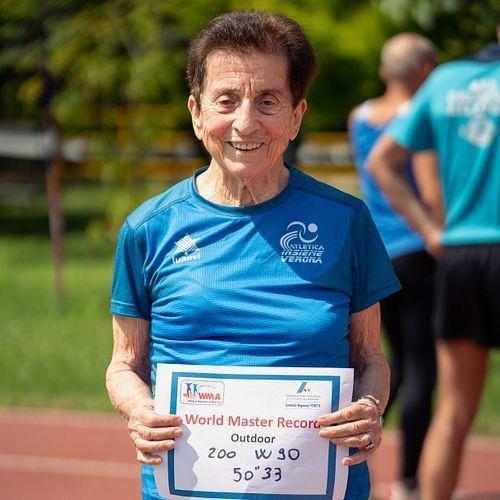
Building Muscle at 91: What a Sprinter Teaches Us
Researchers tested the muscles of a 91-year-old world-record sprinter. What they found shows why strength and power stay trainable as we age.
September 19, 2026 · 3 min read

Brain · Body
Music and Movement: A Brain-Body Workout to a Song
Pick a favorite song and let it set your pace. This simple music-and-movement workout challenges your brain and body at any fitness level.
September 12, 2026 · 2 min read
Body
2-Minute Step Test: Check Your Cardio Fitness at Home
The 2-Minute Step Test is a simple at-home check of your endurance. Here's how to do it, how to compare your score, and why cardio fitness matters.
September 5, 2026 · 2 min read