Stretching for Seniors: Daily Stretches and How Long to Hold
By Kristen Nielsen, Founder & Senior Fitness Specialist · Updated · 8 minute read
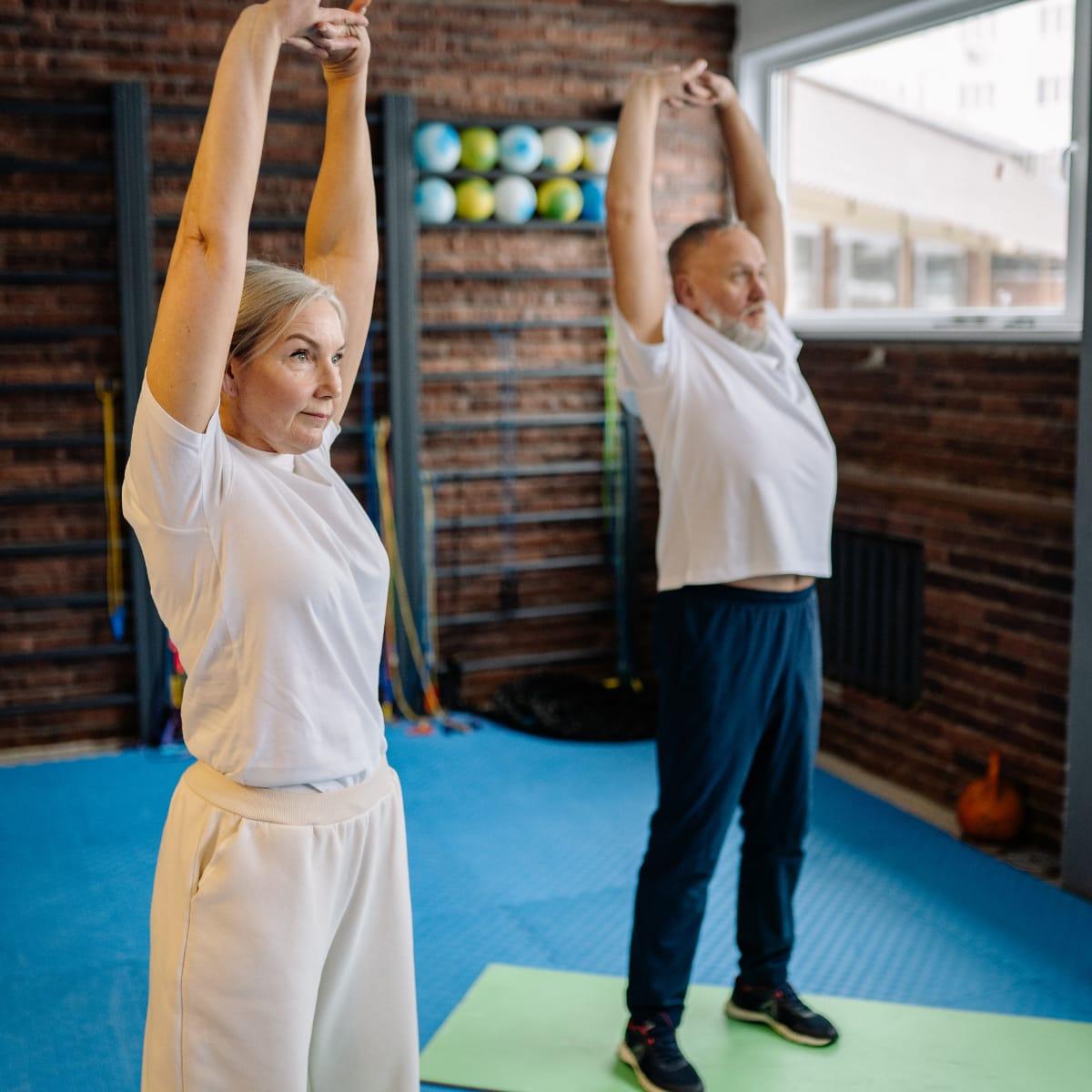
Hold each stretch for about 30 seconds and repeat it 2–4 times, for roughly a minute of stretching per muscle. Stretch at least 2–3 days a week (daily is best), when your muscles are warm, to the point of mild tightness, never pain. Stretching improves range of motion, but it works best alongside strength and balance exercise, not instead of it.
Key takeaways
- Hold each stretch for about 30 seconds and repeat it 2–4 times. In one study of people in their 80s, 60-second holds gained flexibility fastest, so stubborn muscles can take longer.
- Stretch at least 2–3 days a week, ideally daily, after a walk or a strength workout when your muscles are warm.
- A stretch should feel like mild tightness, never pain. Don't bounce, and keep breathing.
- Stretching improves range of motion but doesn't prevent soreness, so pair it with strength and balance work.
- If you have osteoporosis, avoid stretches that round your spine forward, like toe touches.
Hold each stretch for about 30 seconds, repeat it two to four times, and stretch at least two or three days a week, ideally every day. Stretch when your muscles are warm, only to the point of mild tightness, and breathe the whole time. This guide explains why those numbers matter, gives you eight daily stretches with a seated version of each, and shares the morning and evening routines I love. It's one piece of our guide to exercises for seniors.
Stiffness creeps up slowly. One day you notice it's harder to look over your shoulder when you back out of the driveway, or to reach the top shelf, or to bend down and tie your shoes. Stretching is how you keep those everyday movements feeling easy.
What's the Difference Between Stretching and Mobility?
Flexibility is about stretching: how far a muscle can lengthen. Mobility is how well a joint moves through its range with control and strength, like how smoothly your hips move when you get up from a chair.
You need both, and they work best together. Stretching gives you the range; strength and mobility exercises teach you to use it. I explain the difference, with four easy mobility moves, in mobility vs. flexibility.
Does Stretching Help as You Get Older?
Yes, in a specific way. Stretching programs in older adults improve range of motion, but the research on whether stretching alone makes everyday tasks easier is mixed.5 Stretching also doesn't prevent muscle soreness after exercise,6 and experts still aren't sure whether it prevents injuries.2
So I think of stretching as the finishing touch. It keeps your joints moving freely so the strength and balance you build can do their job. If you only have 20 minutes, spend most of them on strength and balance, and save a few minutes for stretching.
How Long Should Seniors Hold a Stretch?
Here's what the American College of Sports Medicine recommends, adjusted for older adults:1,2
| What to aim for | |
|---|---|
| Hold | About 30 seconds (10–30 seconds for most adults; older adults may benefit from 30–60) |
| Repeat | 2–4 times, for about 60 seconds of total stretching per muscle |
| How often | At least 2–3 days a week; daily brings the biggest gains |
| How it should feel | Tightness or slight discomfort, never pain |
| When | When your muscles are warm |
Why about 30 seconds? In a study of people in their 80s, hamstring stretches held for 60 seconds improved flexibility faster than 30- or 15-second holds, and the gains lasted longer after people stopped.3 But a more recent trial in adults aged 60–65 found 30 seconds was the sweet spot, and the authors suggested avoiding very long holds.4 Thirty seconds is a good default. For a stubborn muscle, two 30-second holds give you the full minute without straining.
When Is the Best Time to Stretch?
Stretch when your muscles are warm: after a walk, after a strength workout, or after a few minutes of marching in place. Warm muscles stretch more easily.1 The National Institute on Aging puts it simply: stretch when your muscles are warmed up and after endurance or strength exercises, remember to breathe, and don't stretch so far that it hurts.8
Before a workout, keep it short and moving. Long stretch holds right before strength work can briefly reduce how much force a muscle produces, while short stretches followed by active movement don't seem to.7 That's why I like to start with gentle movement, like the routine in the first 10 minutes of exercise, and save the longer holds for afterward.
8 Daily Stretches for Seniors
Do each stretch on both sides. Hold for about 30 seconds, and repeat each one 2–3 times. Every stretch has a seated version, so you can do the whole routine from a chair if you need to.
Chin Tucks
Hold 5 seconds, 10 times
- Sit or stand tall.
- Gently tuck your chin straight back, as if making a double chin, without tilting your head down.
- Hold for 5 seconds and release.
- Make it easier
- Make the movement very small.
- Make it harder
- Do them lying on your back, pressing the back of your head gently into the pillow.
Chin tucks ease neck tension and help undo the forward-head posture so many of us slip into. For a stretch along the side of your neck, gently tilt your ear toward your shoulder and hold.
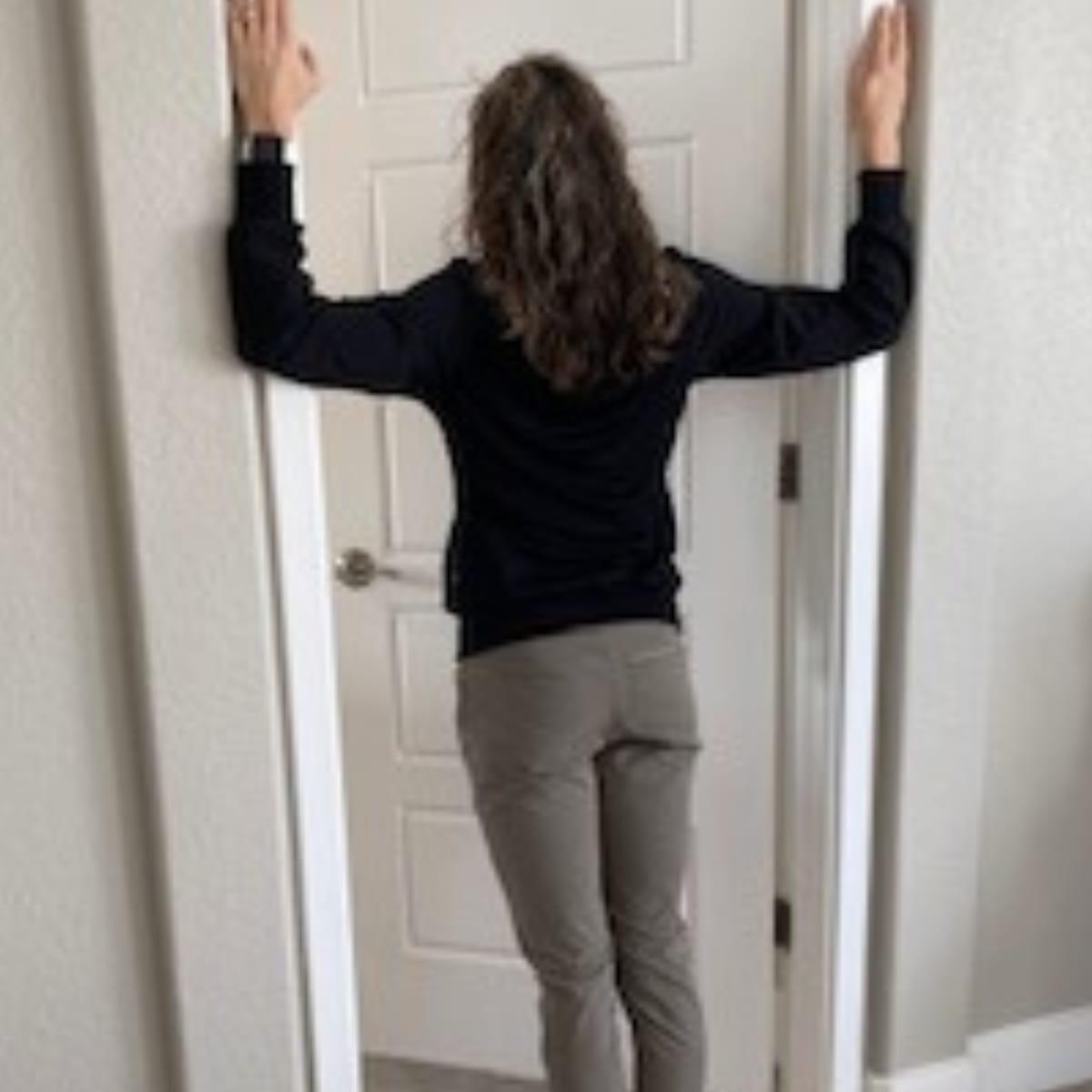
Doorway Chest Stretch
20–30 seconds, 2–3 times
- Stand in an open doorway and place your forearms or hands on the frame at about shoulder height.
- Step one foot forward and gently lean your chest through the doorway until you feel a stretch across your chest and the front of your shoulders.
- Hold, breathing slowly, then step back.
- Make it easier
- Seated: clasp your hands behind your lower back or the chair and gently lift your chest.
- Make it harder
- Step a little further forward, or move your hands slightly higher on the frame.
Overhead Side Reach
30 seconds each side, 2–3 times
- Stand tall beside a counter or sit tall in a chair.
- Reach one arm up and over your head toward the opposite side.
- Lean gently until you feel a stretch along your side, and breathe into it. Switch sides.
- Make it easier
- Seated: rest your other hand on the chair seat for support.
- Make it harder
- Cross the leg on the stretching side behind the other while standing.
Upper Back Hug
30 seconds, 2–3 times
- Sit or stand tall.
- Wrap your arms around yourself as if giving yourself a hug, hands reaching toward your shoulder blades.
- Gently round your upper back and let your chin drop slightly. Breathe into your back, then release.
- Make it easier
- Just reach your hands forward and round your upper back gently.
- Make it harder
- Hold a little longer and breathe into the space between your shoulder blades.
If you have osteoporosis, keep this one very gentle or skip it, and do the chest stretch instead.
Standing Hip Flexor Stretch
30 seconds each side, 2–3 times
- Stand behind a sturdy chair or at a counter, holding on with both hands.
- Step one foot back into a small lunge, with your back heel lifted.
- Tuck your hips under slightly until you feel a stretch at the front of the back hip. Keep your body upright. Switch sides.
- Make it easier
- Seated: sit sideways on a chair and let one leg drop back behind you, knee pointing down.
- Make it harder
- Reach the arm on the stretching side up overhead.
Hip flexors get tight from sitting, and tight hip flexors can pull on your lower back and shorten your stride. The kneeling version, the runner's lunge, is in my lower back pain exercises post.
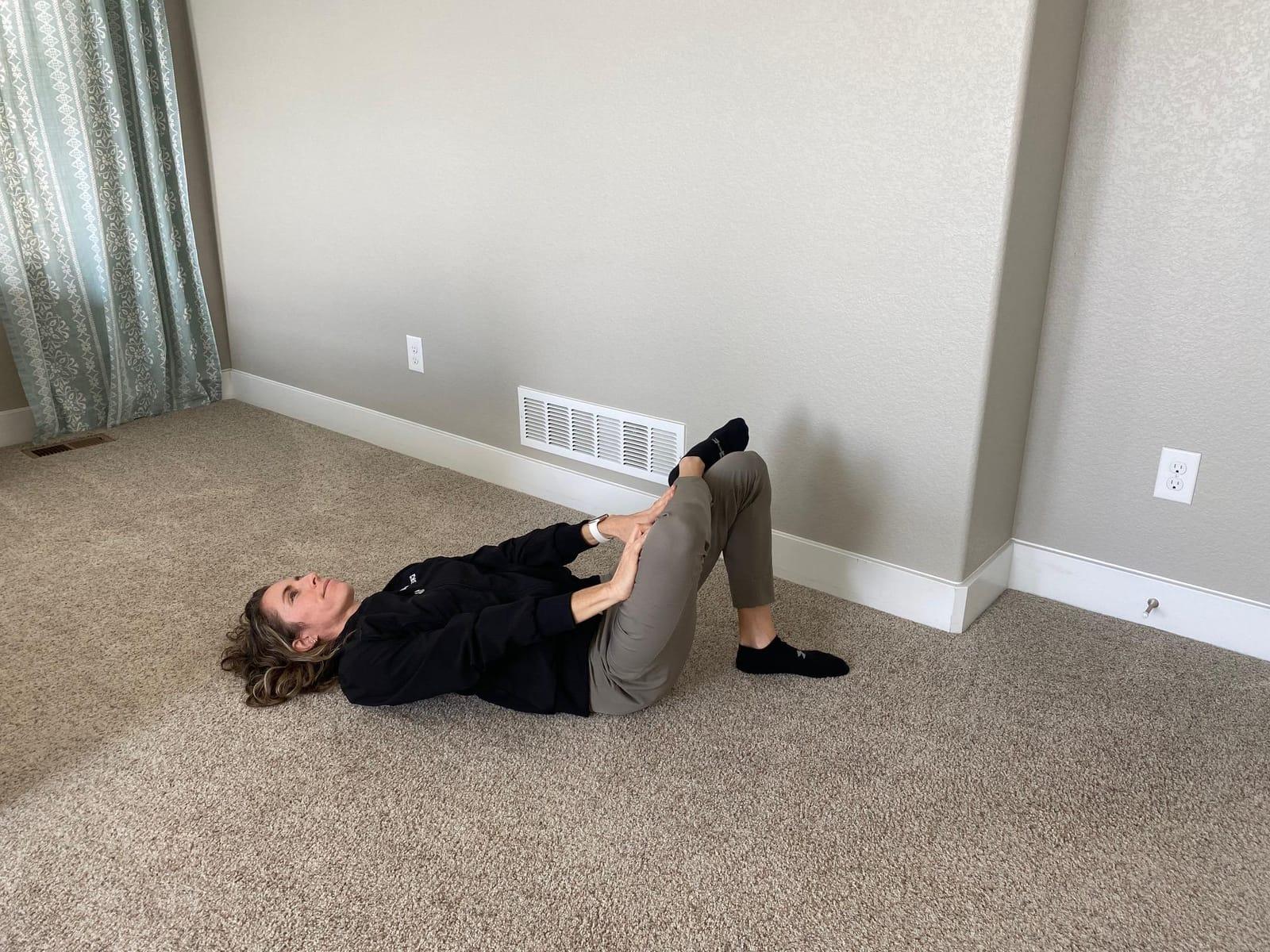
Figure 4 Stretch
20–30 seconds each side, 2–3 times
- Lie on your back with your knees bent and feet flat.
- Place your right ankle over your left knee.
- Gently press your right knee away from your body with your hand until you feel a stretch in your right hip. Switch sides.
- Make it easier
- Seated: cross one ankle over the opposite knee and sit tall; lean forward only slightly.
- Make it harder
- Lying down, pull the bottom knee gently toward your chest.
After a hip replacement, check with your surgeon or physical therapist before crossing your legs or doing this stretch.
Seated Hamstring Stretch
30 seconds each side, 2–3 times
- Sit toward the front of a sturdy chair. Straighten one leg in front of you with the heel on the floor.
- Keeping your back straight and chest lifted, hinge forward from your hips until you feel a stretch along the back of that thigh.
- Hold, breathing slowly, then switch legs.
- Make it easier
- Keep the straight leg's knee slightly bent.
- Make it harder
- Lift the toes of the straight leg toward you.
Hinging from the hips with a long back, rather than rounding forward to reach your toes, is the safer way to stretch your hamstrings, especially with osteoporosis.
Wall Calf Stretch
30 seconds each side, 2–3 times
- Stand facing a wall with your hands on it at shoulder height.
- Step one foot back, keeping that heel on the floor and the leg straight.
- Bend your front knee and lean gently toward the wall until you feel a stretch in the back calf. Switch sides.
- Make it easier
- Seated: loop a towel around the ball of your foot and gently pull your toes toward you.
- Make it harder
- Step the back foot farther from the wall.
Flexible calves and ankles help you clear your toes when you walk and recover when you trip. For ankle mobility, add the heel-to-toe rocking from mobility vs. flexibility.
Which Stretch Helps Which Tight Spot?
| If this feels tight… | Try | More in |
|---|---|---|
| Neck and upper shoulders | Chin tucks, gentle side tilts | Posture exercises |
| Chest and rounded shoulders | Doorway chest stretch | Posture exercises |
| Lower back | Figure 4 stretch, hip flexor stretch | Lower back pain exercises |
| Hips | Hip flexor stretch, figure 4 stretch | Glute exercises |
| Back of the thighs | Seated hamstring stretch | |
| Calves and ankles | Wall calf stretch, heel-to-toe rocking | Mobility vs. flexibility |
A 5-Minute Morning Mobility Routine
Mornings are when stiffness is usually worst, and gentle movement is the best way to shake it off. This is my morning mobility snack:
Morning mobility
about 5 minutes
- March in place30 seconds
- Arm circles30 seconds
- Toe and heel raises1 minute
- Gentle spinal twists30 seconds each side
- Side steps with a reach2 minutes
- Deep breathing30 seconds
It boosts joint mobility and circulation and wakes up your nervous system. Hold the counter for the marching and heel raises if you need to.
An Evening Wind-Down Stretch
In the evening, slower, longer stretches help your body and mind settle before bed.
Evening wind-down
about 5 minutes
- Seated forward fold (or seated hamstring stretch)1 minute
- Gentle neck stretches1 minute
- Calf stretch, at the wall or seated1 minute
- Slow belly breathing2 minutes
More ideas like these are in exercise snacks, and the cyclic sigh is a lovely way to end the day.
Is Stretching Safe With Osteoporosis or a Joint Replacement?
Mostly yes, with a few changes:
- Osteoporosis: avoid stretches that round your spine forward, like toe touches, sit-ups and rounding down to reach the floor. Bending from the waist can raise the risk of a spine fracture.9 Hinge from your hips with a long back instead, and choose the seated hamstring stretch over a forward fold. More in our guide to bone and joint health after 60.
- Hip or knee replacement: follow the movement precautions your surgeon or physical therapist gave you, especially about crossing your legs and bending past 90 degrees at the hip.
- Everyone: move slowly, don't bounce, and don't hold your breath. Sharp pain, joint pain, or numbness and tingling mean ease off.
How Do You Make Stretching a Habit?
Attach it to something you already do. Stretch your calves while the coffee brews, do chin tucks at red lights, and stretch your chest in the doorway every time you walk into the kitchen. A few minutes, most days, is what makes the difference.
If you'd like a routine built around your own tight spots, our trainers can put one together with you, in your home in the Colorado Springs and Tri-Lakes area or online.
This guide is for general education and isn't medical advice. Please talk with your doctor before starting a new exercise, nutrition or supplement routine.
Read more from Kristen
Body · Balance
Mobility vs. Flexibility: What's the Difference?
Flexibility is how far a muscle stretches; mobility is how well a joint moves with control. Learn why mobility matters and try 4 simple boosters.
August 9, 2025 · 3 min read
Body · Balance
Posture Exercises for Seniors: Why Posture Matters
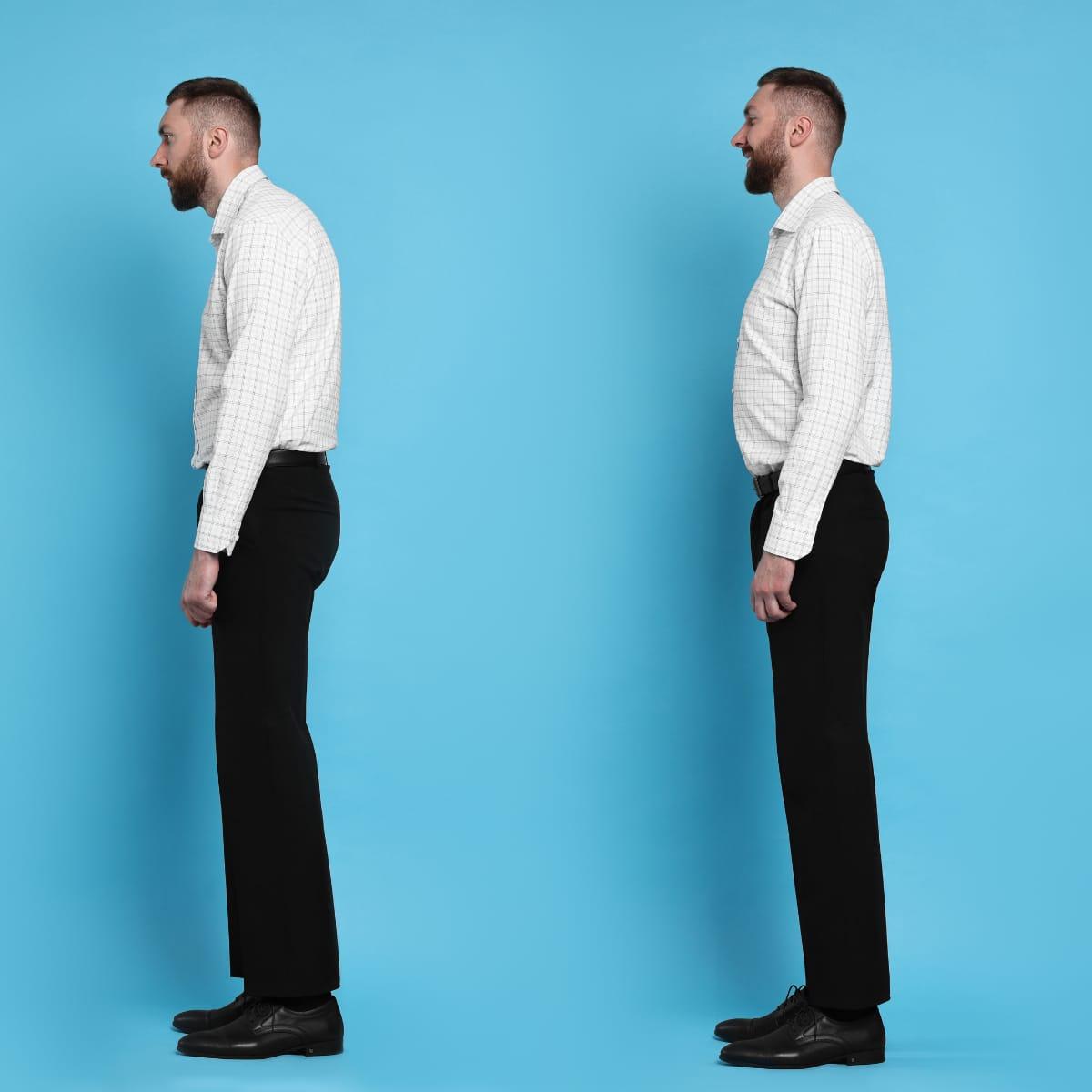
Good posture is about more than looks. It affects your balance, breathing and back. Try a quick arm-lift test, then five simple posture exercises.
January 11, 2025 · 5 min read
Body · Recovery
Lower Back Pain Exercises for Seniors
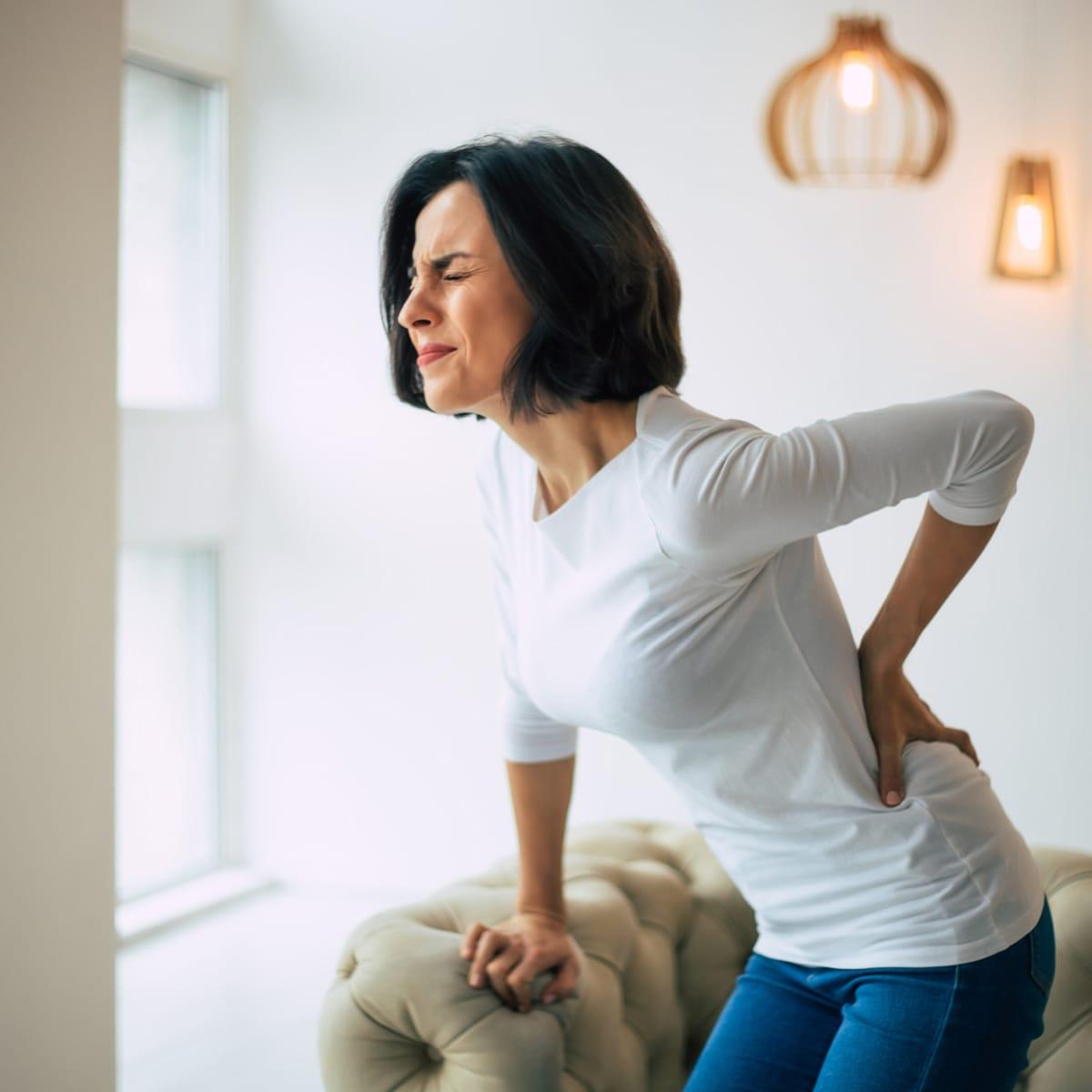
Which kinds of back pain respond to exercise, when to see a doctor instead, and eight simple moves to strengthen and loosen a sore lower back.
February 1, 2025 · 6 min read
Body · Balance
Exercise Snacks for Seniors: 5-Minute Movement Breaks
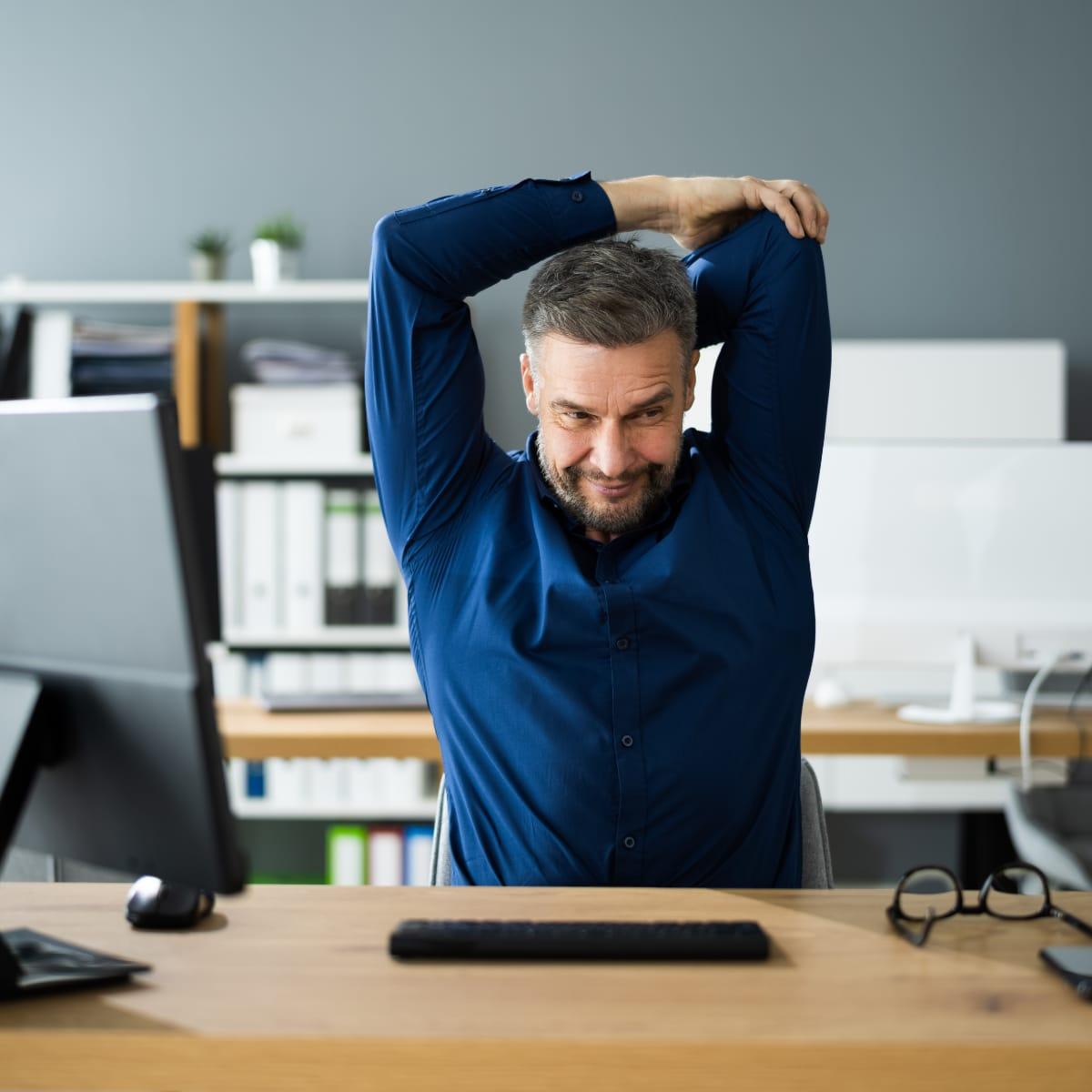
Short 1–5 minute bursts of movement through the day add up. What the research says, plus three 5-minute snack routines for morning, midday and evening.
April 19, 2025 · 4 min read
Recovery · Body
Post-Workout Recovery Tips for Older Adults
Nine ways to recover better after exercise, from hydration, protein and foam rolling to sleep, warm soaks, active recovery and breath training.
February 15, 2025 · 3 min read

Body · Brain
Why the First 10 Minutes of a Workout Feel Hardest
The first minutes of a workout feel hardest because your brain is still catching up. Here's what shifts around minute 10 and how to push through.
October 11, 2025 · 3 min read
Frequently asked questions
Is it better to stretch in the morning or at night?
Whichever you'll actually do. Your muscles stretch more easily when they're warm, so a short walk, a warm shower or a few minutes of marching in place first makes any time of day better.
Many people like gentle movement in the morning to ease stiffness and slower, longer stretches in the evening to wind down. Both routines are in this guide.
Should stretching hurt?
No. Stretch to the point where you feel tightness or slight discomfort in the muscle, then breathe and hold. Sharp pain, pain in a joint, or numbness or tingling are signs to ease off.
Can stretching improve your balance?
Not much on its own. Stretching improves how far your joints can move, but balance improves when you practice balancing and build strength. Better ankle and hip range of motion helps, so stretching is a useful partner to balance exercises rather than a replacement.
Sources
- Garber CE, Blissmer B, Deschenes MR, et al. American College of Sports Medicine position stand. Quantity and quality of exercise for developing and maintaining cardiorespiratory, musculoskeletal, and neuromotor fitness in apparently healthy adults: guidance for prescribing exercise. Med Sci Sports Exerc. 2011;43(7):1334-1359. doi:10.1249/MSS.0b013e318213fefb View source
- Nelson ME, Rejeski WJ, Blair SN, et al. Physical activity and public health in older adults: recommendation from the American College of Sports Medicine and the American Heart Association. Circulation. 2007;116(9):1094-1105. doi:10.1161/CIRCULATIONAHA.107.185650 View source
- Feland JB, Myrer JW, Schulthies SS, Fellingham GW, Measom GW. The effect of duration of stretching of the hamstring muscle group for increasing range of motion in people aged 65 years or older. Phys Ther. 2001;81(5):1110-1117. doi:10.1093/ptj/81.5.1110 View source
- Moustafa IM, Ahbouch A, Palakkottuparambil F, Walton LM. Optimal duration of stretching of the hamstring muscle group in older adults: a randomized controlled trial. Eur J Phys Rehabil Med. 2021;57(6):931-939. doi:10.23736/S1973-9087.21.06731-9 View source
- Stathokostas L, Little RM, Vandervoort AA, Paterson DH. Flexibility training and functional ability in older adults: a systematic review. J Aging Res. 2012;2012:306818. doi:10.1155/2012/306818 View source
- Herbert RD, de Noronha M, Kamper SJ. Stretching to prevent or reduce muscle soreness after exercise. Cochrane Database Syst Rev. 2011;(7):CD004577. doi:10.1002/14651858.CD004577.pub3 View source
- Behm DG, Blazevich AJ, Kay AD, McHugh M. Acute effects of muscle stretching on physical performance, range of motion, and injury incidence in healthy active individuals: a systematic review. Appl Physiol Nutr Metab. 2016;41(1):1-11. doi:10.1139/apnm-2015-0235 View source
- National Institute on Aging. Three types of exercise can improve your health and physical ability. View source
- Bone Health & Osteoporosis Foundation. Proper body alignment. View source
This guide is for general education and isn't medical advice. Please talk with your doctor before starting a new exercise, nutrition or supplement routine. See our health disclaimer.

About the author
Kristen Nielsen
Kristen founded TogetherWON after watching what strength training could do for older adults — including her own grandparents. She's an ACE Certified Personal Trainer with 10+ years in functional aging, a University of Central Florida graduate, and a former Division I swimmer and track & field athlete.
Senior Fitness Specialist · Functional Aging Specialist · Parkinson's Disease Specialist · Brain Health Trainer · Corrective Exercise Specialist
want these in your inbox?
Get my Saturday letters
One idea for your body, brain or balance each week, usually with a recipe. Unsubscribe any time.