Mobility vs. Flexibility: What's the Difference?
By Kristen Nielsen, Founder & Senior Fitness Specialist
· Updated · Body & Balance · 3 minute read

Part of our guide: Balance Exercises for Seniors: How to Prevent Falls
Key takeaways
- Flexibility is a muscle's ability to lengthen, while mobility is how well a joint moves through its full range with control and strength.
- You can be flexible and still have poor mobility, which can lead to stiffness, aches, or a higher risk of falling or injury.
- Simple moves like shoulder rolls, seated knee lifts, heel-to-toe rocking and a wall reach and twist can help you move with more ease.
Flexibility is how far a muscle can lengthen; mobility is how well a joint moves through its full range with control and strength. We often hear these words used interchangeably, but mobility and flexibility are not the same — and understanding the difference can have a huge impact on how you move, feel, and function in daily life. Good mobility is also a foundation for the balance exercises for seniors that help prevent falls.
What Is the Difference Between Mobility and Flexibility?
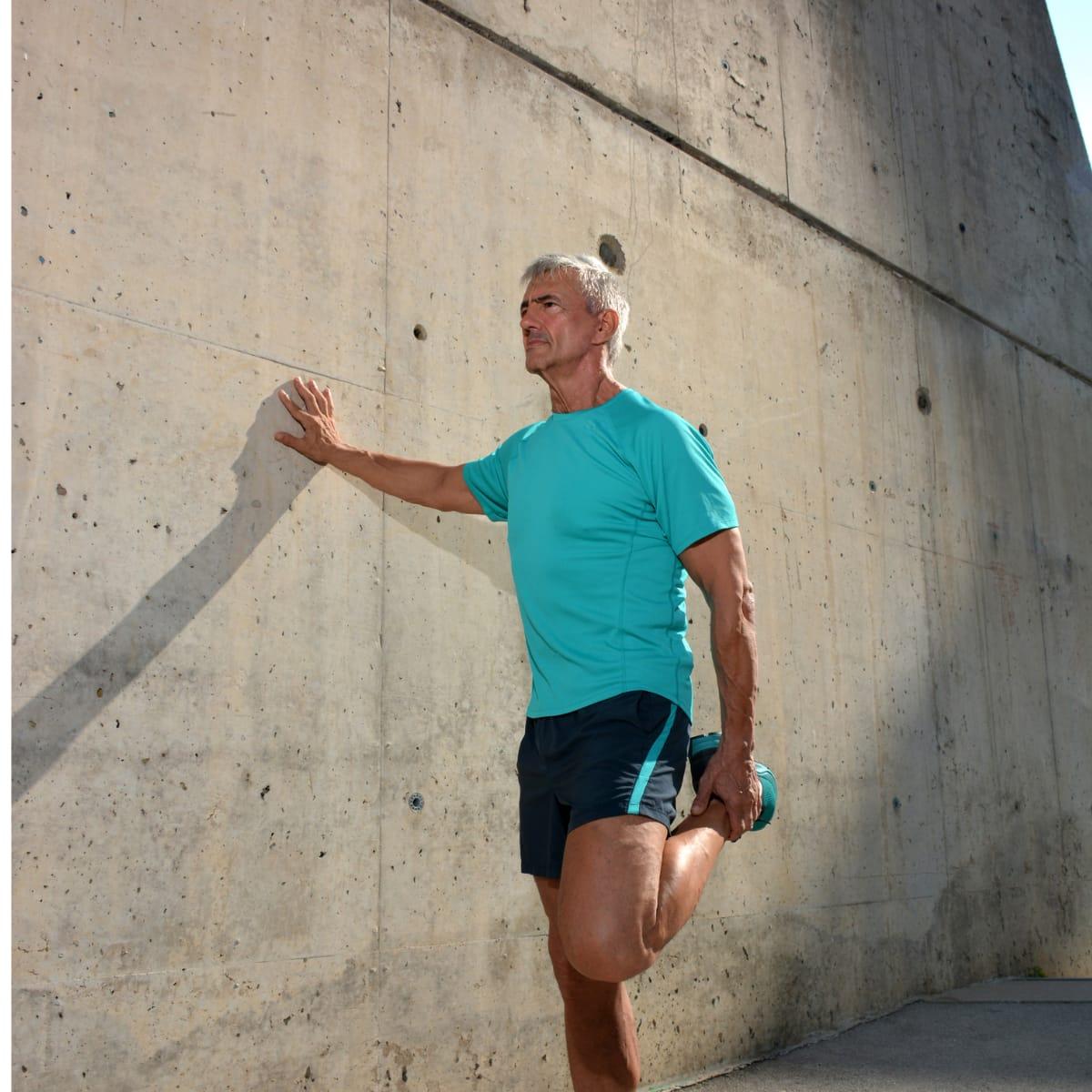
Flexibility is about stretching. It's the ability of a muscle to lengthen.
Think: reaching for your toes or stretching your hamstrings.
Mobility is about movement. It's how well a joint moves through its full range with control and strength.
Think: how smoothly your hips move when getting up from a chair, or how far your shoulder can reach when grabbing something off a high shelf.
You can be flexible but still have poor mobility. And that can lead to stiffness, aches, or a higher risk of falling or injury.
Why Does Mobility Matter So Much as You Age?
Mobility is what allows you to move with ease and safety. It's what helps you:
- Put on shoes without straining your back
- Step up onto a curb or stairs without wobbling
- Reach overhead or behind you without shoulder discomfort
- Walk with a smoother, more confident stride
- Turn, pivot, and move without feeling stiff or unstable
And here's the good news: improving your mobility doesn't take hours. Working a couple of mobility exercises into your day is very manageable.
What Are Easy Mobility Exercises for Seniors?
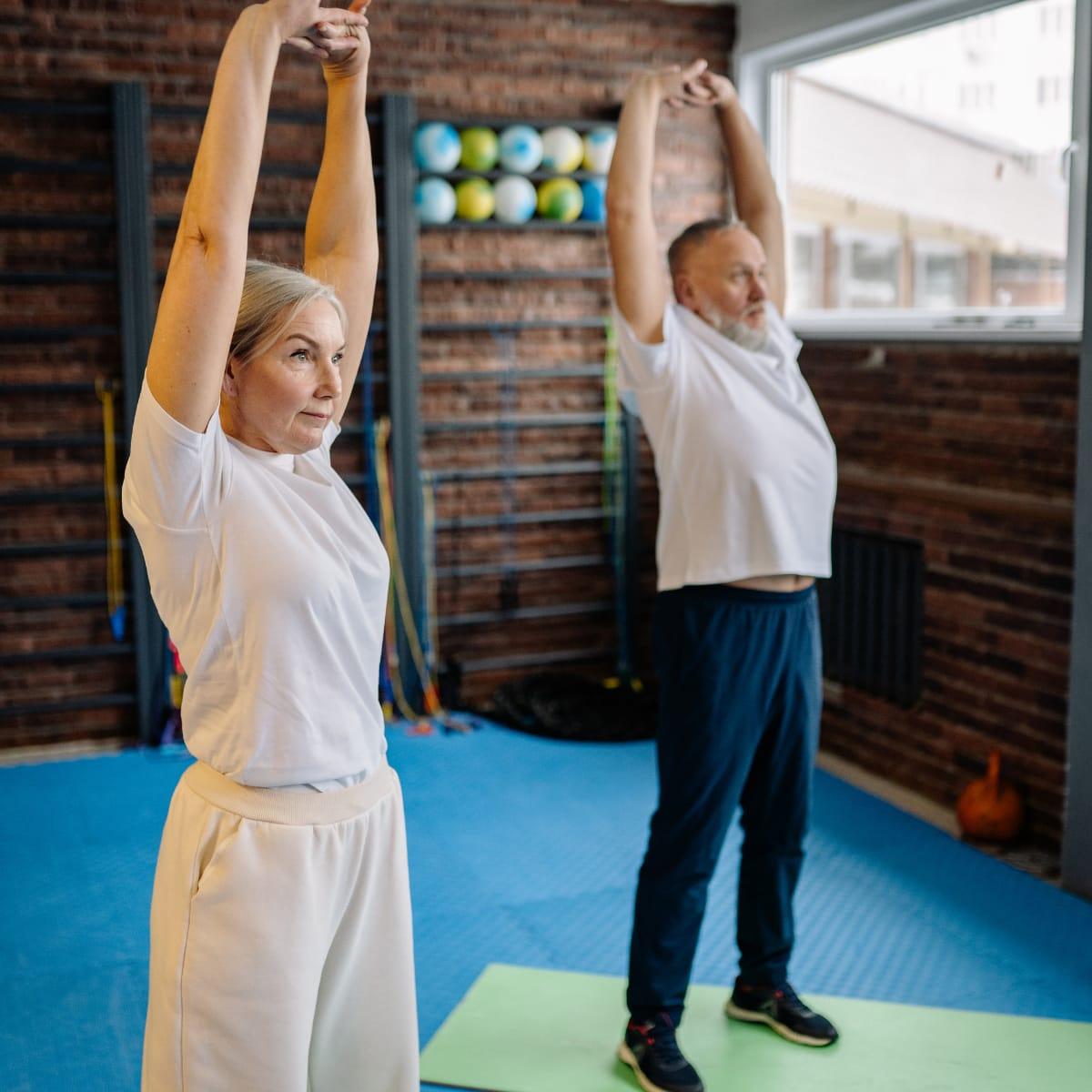
These 4 mobility boosters are simple, low-impact movements that work for nearly everyone:
1. Shoulder Rolls With Posture Reset
- Sit or stand tall.
- Roll your shoulders backward 10 times, then pause and hold them gently down and back.
- Great for easing shoulder tension and opening your chest. (For more, see these posture exercises.)
2. Seated Knee Lifts
- Sit in a chair with good posture.
- Slowly lift one knee as high as is comfortable, lower with control, then switch sides.
- This gently mobilizes your hips and strengthens core muscles.
3. Heel-to-Toe Rocking
- Stand near a counter or wall.
- Shift your weight from heels to toes and back, lifting heels, then toes.
- Improves ankle mobility and balance — especially helpful for walking and fall prevention.
4. Wall Reach and Twist
- Stand tall, facing a wall.
- Reach both arms overhead and slowly rotate your upper body side to side, tapping the wall if reachable.
- This gently mobilizes your spine and shoulders.
What Research Says About Mobility and Independence
A 2020 study published in Geriatrics & Gerontology International followed adults over age 65 and found that mobility — not just strength — was a key factor in maintaining independence and reducing fall risk. Participants who performed simple joint mobility movements along with walking and light strength work had better balance, posture, and daily function after just 12 weeks.
Mobility isn't about how far you can stretch — it's about how well you can move through life.
Make it part of your routine, alongside a few daily moves to protect your joints, and your joints, balance, and confidence will improve.
Kristen
Try the recipe: This one-pot chicken, broccoli and quinoa skillet is a simple meal full of nutrition — get the recipe.
Sources
- Sherrington C, Fairhall NJ, Wallbank GK, et al. Exercise for preventing falls in older people living in the community. Cochrane Database Syst Rev. 2019;1(1):CD012424. View source
This article is for general education and isn't medical advice. Please talk with your doctor before starting a new exercise, nutrition or supplement routine. See our health disclaimer.


About the author
Kristen Nielsen
Kristen founded TogetherWON after watching what strength training could do for older adults — including her own grandparents. She's an ACE Certified Personal Trainer with 10+ years in functional aging, a University of Central Florida graduate, and a former Division I swimmer and track & field athlete.
Senior Fitness Specialist · Functional Aging Specialist · Parkinson's Disease Specialist · Brain Health Trainer · Corrective Exercise Specialist
want these in your inbox?
Get my Saturday letters
One idea for your body, brain or balance each week, usually with a recipe. Unsubscribe any time.
Keep reading

Body · Balance
Is One Side Weaker? How to Fix Muscle Imbalances
Favoring your stronger side can hide weakness and widen the gap between sides. How to notice the pattern and give your weaker side safe practice.
August 8, 2026 · 5 min read
Body · Balance
What to Add to Your Walking Routine After 60
Walking is a great foundation after 60, but it doesn't train everything. How to add strength, balance and brain-body work to your walks.
July 25, 2026 · 5 min read

Body · Balance
3 Common Exercise Mistakes Older Adults Make
Doing only cardio, skipping balance work and training at the wrong intensity are three common exercise mistakes after 60. Here's what to do instead.
February 7, 2026 · 3 min read