Building Muscle at 91: What a Sprinter Teaches Us
By Kristen Nielsen, Founder & Senior Fitness Specialist
· Updated · Body & Stories · 3 minute read
Part of our guide: Strength Training for Seniors: The Complete Guide
Key takeaways
- Yes, muscle stays trainable at 91. Testing on sprinter Emma Maria Mazzenga found that about 57% of her muscle fibers were fast-twitch, an unusually high share for her age.
- She had not escaped aging, but much of her muscle, heart and nerve function had been preserved, showing that exercise helps you keep capacity even though it doesn't stop aging.
- Muscle power stays trainable later in life, and power training can be scaled to any level, such as standing up from a chair a little more quickly.
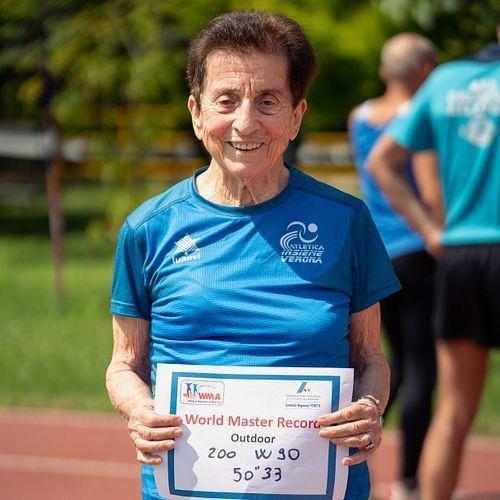
Can you still build muscle and power at 91? The muscles of a 91-year-old world-record sprinter suggest that a surprising amount of strength and speed can be kept, and trained, very late in life. It's one of my favorite reminders of why strength training for seniors matters at every age.
In two studies published in 2026, scientists had the rare opportunity to look inside those muscles.
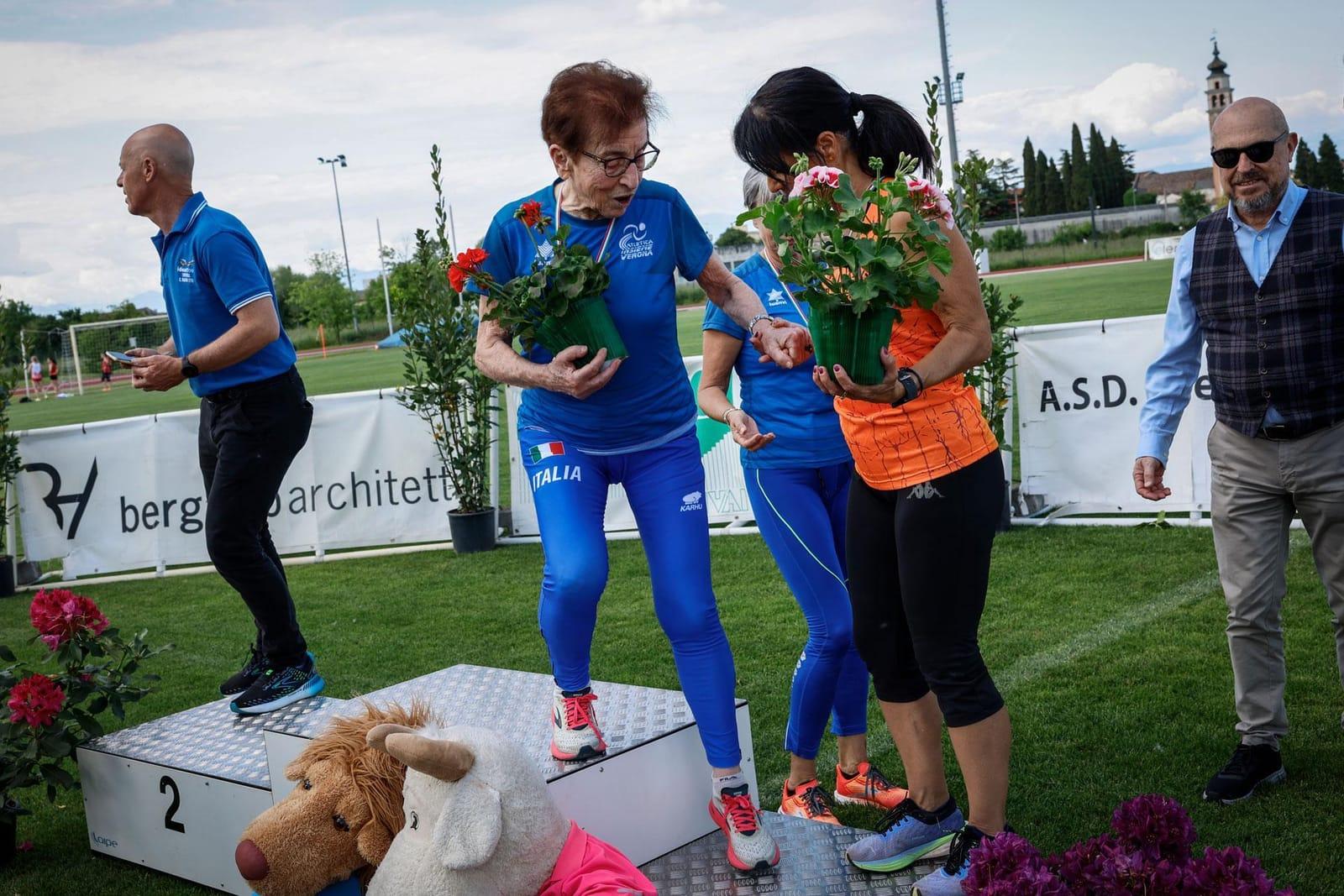
At age 91, Emma Maria Mazzenga, an Italian masters sprinter who holds the world record in the 200 meters for women over 90, underwent extensive testing — including a biopsy of her thigh muscle. Researchers looked at everything from her muscle fibers and mitochondria to her cardiovascular fitness and the nerves controlling her muscles.
What they found was fascinating.
What Did Researchers Find in Her Muscles?
Researchers found that her muscles were aging, but far better preserved than expected. About 57% of her muscle fibers were fast-twitch fibers — the fibers we rely on when we need to produce force quickly. Think catching yourself when you trip, getting up from a chair with some speed, climbing a step, or moving quickly when something unexpected happens. That was an unusually high proportion for a woman her age.
But here's the part I find even more interesting: she had not escaped aging.
Her fast-twitch fibers were considerably smaller than her slow-twitch fibers. In other words, even decades of sprint training hadn't completely prevented the age-related loss that tends to hit our powerful fast fibers particularly hard.
And yet so much had been preserved.
Her muscle still contained a large population of fast fibers. Her slow-twitch fibers were unusually large and well supplied with blood vessels. Her muscle's ability to use oxygen was remarkably preserved. Her cardiovascular fitness resembled values reported in women decades younger, and the behavior of the motor units — the communication between her nervous system and her muscles — was similar to that seen in women approximately 20 years younger.
Can Older Adults Still Build Muscle Power?
Yes, and that is the important lesson here.
Exercise doesn't stop aging. But aging doesn't mean we have to simply surrender our capacity either.
We can't look at one extraordinary 91-year-old athlete and say that everyone who trains will develop muscles like hers. This was a case study, not a clinical trial. But her results fit into a much larger body of research showing that older adults can improve strength, power and physical function with appropriate resistance training. Research comparing traditional strength training with training performed with the intention of moving quickly also suggests that muscle power remains trainable later in life and may be particularly important for physical function.
Being strong is important. Being able to use that strength quickly is important too.
What Does Power Training Look Like After 60?
Power training after 60 means practicing moving with a little more speed, at a level that fits you. That doesn't mean I'm suggesting everyone over 70 heading outside to run sprints. (Although if you want to, join the TogetherWON track team!!! My husband, Aaron, shares what his first Senior Games track race was like.) Power training can be scaled to almost any ability level. It might mean standing up from a sturdy chair a little more quickly while sitting back down slowly and under control. (Our 30-second chair stand test is a simple way to see where you're starting.) It might mean pushing a resistance band with more intention. For someone else, it might mean faster step-ups, medicine-ball work or, yes, even sprinting.
The exercise has to match the person. That's why, in in-home personal training, we scale speed and resistance to each client rather than avoiding them.
We also don't want to automatically remove speed, resistance and challenge from exercise just because someone has another birthday.
Your body is remarkably adaptable. At 60. At 70. At 80. And apparently, at 91.
We can't stop the clock. But we can give our muscles a very good reason to keep showing up.
Watch Emma Sprint
Enjoy this video of Emma!
Kristen
Try the recipe: My husband and I love making these creamy Tuscan meatballs, and they're delicious every time — get the recipe.
Sources
- Colosio M, Pilotto AM, Ansaldo M, et al. One half of the sprinting coin: the oxygen transport cascade of a 91-yr-old female world-record sprinter. J Appl Physiol. 2026;140(6):1649-1657. View source
- Colosio M, Dobrzycki I, Teigen LE, et al. The other half of the sprinting coin: the neuromuscular profile of a 91-yr-old female world record sprinter. J Appl Physiol. 2026;140(6):1605-1613. View source
This article is for general education and isn't medical advice. Please talk with your doctor before starting a new exercise, nutrition or supplement routine. See our health disclaimer.


About the author
Kristen Nielsen
Kristen founded TogetherWON after watching what strength training could do for older adults — including her own grandparents. She's an ACE Certified Personal Trainer with 10+ years in functional aging, a University of Central Florida graduate, and a former Division I swimmer and track & field athlete.
Senior Fitness Specialist · Functional Aging Specialist · Parkinson's Disease Specialist · Brain Health Trainer · Corrective Exercise Specialist
want these in your inbox?
Get my Saturday letters
One idea for your body, brain or balance each week, usually with a recipe. Unsubscribe any time.
Keep reading

Body · Stories
Staying Independent as You Age: Freedom Is Earned
The freedom to move independently is earned one workout, walk and set of stairs at a time. A Fourth of July reflection on effort and independence.
July 4, 2026 · 2 min read
Stories · Body
Senior Games Training: Why Having a Goal Motivates
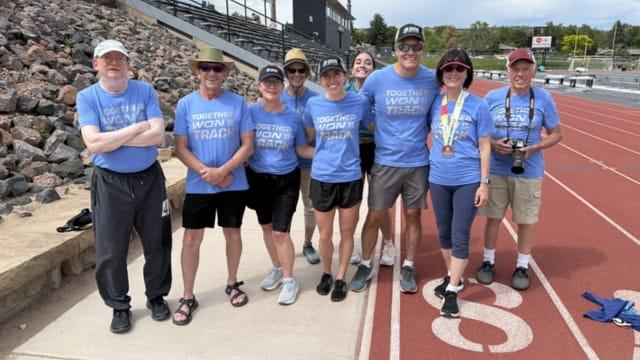
Several TogetherWON athletes ran their first Senior Games races in 2026. Here's why having a goal, race or not, makes training more motivating.
June 20, 2026 · 2 min read
Stories · Body
Can You Get Stronger at 82? Pat's BFR Training Results
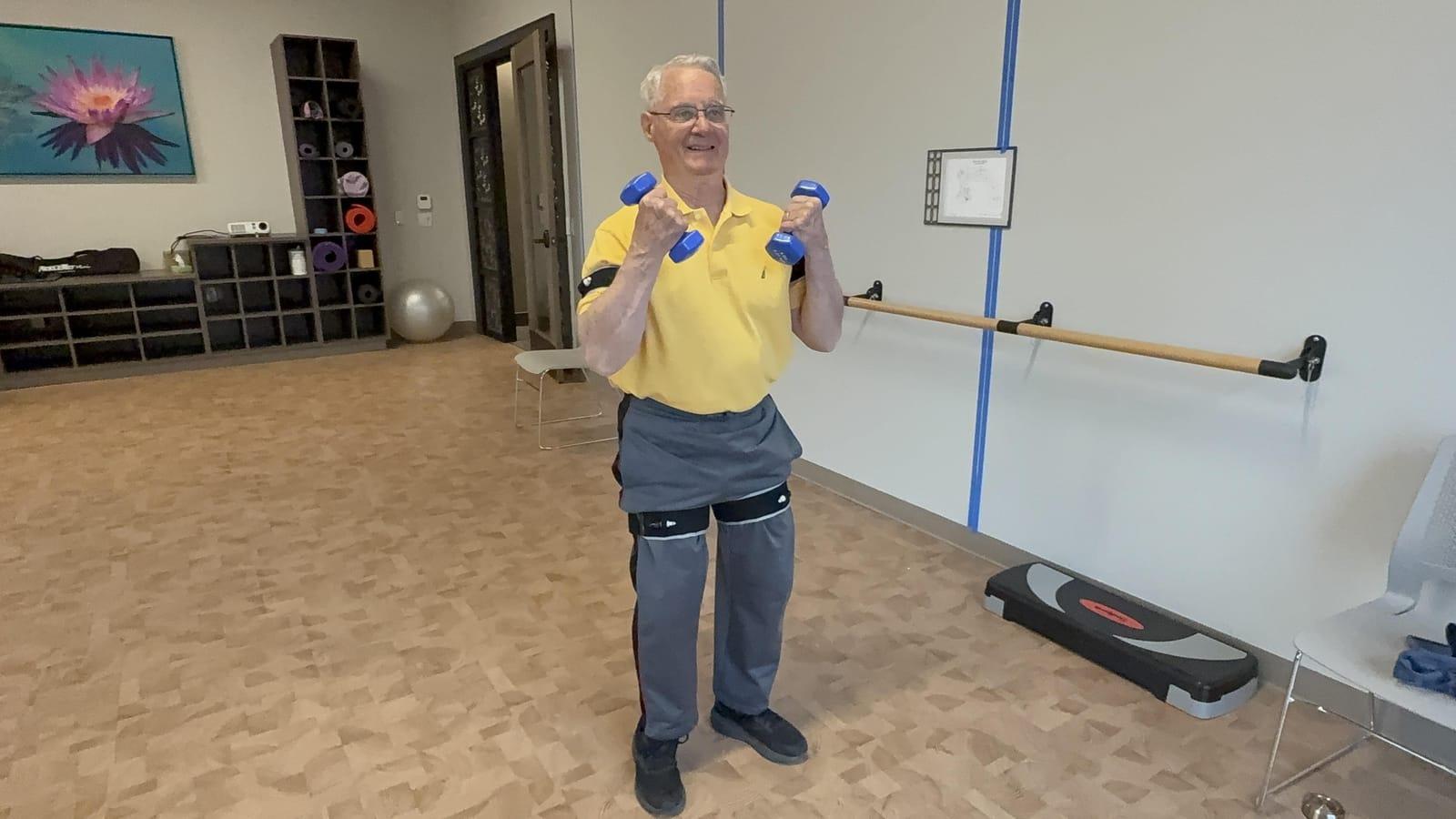
In 13 blood flow restriction (BFR) sessions, 82-year-old Pat got stronger in every measured category using light weights. Here are his results.
May 16, 2026 · 4 min read