Exercises for Knee Pain After 60: An Arthritis-Friendly Plan
By Kristen Nielsen, Founder & Senior Fitness Specialist · Updated · 8 minute read
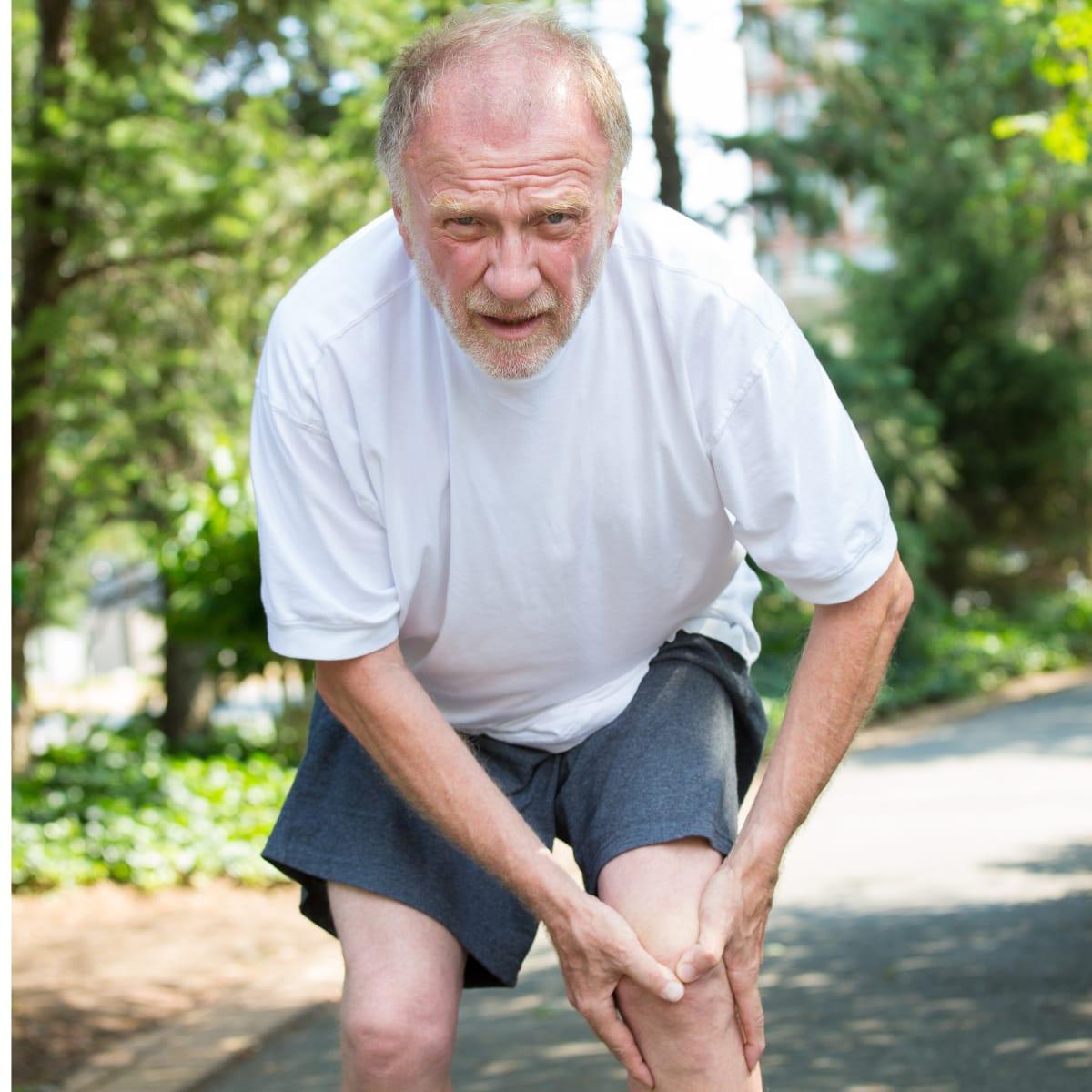
Exercise is one of the first treatments guidelines recommend for knee arthritis. Strengthen the muscles around the knee (especially your thighs and hips), move in a comfortable range, and use a simple pain rule: up to about 5 out of 10 during exercise is acceptable if it settles by the next morning. Start gently, build up over weeks, and get any red-flag symptoms checked first.
Key takeaways
- Exercise is a first-line treatment for knee arthritis in major guidelines. In trials it eased pain and improved function, though the benefit is modest for many people.
- Some discomfort is okay. Pain up to about 5 out of 10 during exercise is acceptable if it's back to your usual level by the next morning.
- Strong thigh and hip muscles take load off the knee. Exercises that target the quadriceps reduced pain more than general leg exercise.
- Sudden swelling, a knee that locks or gives way, heat and redness with a fever, or calf pain and swelling need a doctor before you exercise.
If your knees hurt, the right exercise is one of the most helpful things you can do for them. Strengthen the muscles that support the knee, move within a range that feels manageable, and use a simple pain rule to know when to keep going and when to ease off. This guide gives you that rule, a three-stage plan to follow at home, and the warning signs that mean you should see a doctor first. It builds on our broader guide to bone and joint health after 60.
So many people tell me their knees are the reason they stopped exercising. It makes sense: when something hurts, our instinct is to protect it. But with arthritis, doing less usually means the muscles around the knee get weaker, the joint takes more of the load, and getting up from a chair or climbing stairs gets harder still. Exercise helps break that cycle.
Is It Safe to Exercise With Knee Pain?
For most people with knee arthritis, yes, and it's one of the first treatments recommended. The American College of Rheumatology and Arthritis Foundation guideline strongly recommends exercise for people with knee arthritis,3 and the international osteoarthritis guidelines list a structured exercise program as core treatment, alongside education and weight management.4
In research, exercise eases pain and improves day-to-day function. In an earlier Cochrane review, the pain relief from exercise was similar in size to estimates reported for anti-inflammatory pain medicines.2 The 2024 update of that review, with 139 trials, found exercise probably improves function and may reduce pain in the short term, though for many people the benefit is modest.1 I'd rather you hear that honestly: exercise isn't a miracle cure, but it's a safe, inexpensive treatment that most people can do at home, and it makes the rest of life easier.
One thing we know is that the type of exercise matters less than doing it consistently.1 So choose moves you can stick with.
How Much Pain Is Okay During Exercise?
Some discomfort during exercise is normal with arthritis. It doesn't mean you're damaging the joint. I use a simple scale from 0 (no pain) to 10 (the worst you can imagine):
Green light
0–2 out of 10
Keep going. Mild discomfort is normal with arthritis and doesn’t mean you’re damaging the joint.
Yellow light
3–5 out of 10
Proceed with caution. Shorten the range, slow down or lighten the load.
Red light
6 or more
Back off or modify. Switch to a gentler version or stop for today.
This is based on a pain-monitoring approach first described by Swedish physical therapist Roland Thomeé.6 In a program for people aged 60 to 77 with severe hip or knee arthritis that used the same zones, the typical pain after a session was 2 out of 10, 93% of sessions stayed in the acceptable range, and nobody dropped out because of joint pain.5 The key is the next morning: if your knee is back to its usual level, the session was fine. If it's still sorer or more swollen, do a little less next time. It also tends to get easier: in another 8-week program, people's knee and hip pain went down overall, and the flares after each session got smaller as the weeks went on.14
After a flare-up, restart at about half of what you were doing and build back over two to four weeks. I explain that "50% rule" in how to rebuild strength after an injury.
Which Muscles Protect Your Knees?
Your knee sits between two big muscle groups: the quadriceps on the front of the thigh, which straighten the knee and absorb load every time you step down, and the hip muscles, which keep the knee from collapsing inward. When they're strong, the joint itself takes less of the work.
A review of 48 trials found that exercise targeting the quadriceps reduced pain more than general leg exercise did, and that programs done at least three times a week worked better than less frequent ones.7 Strengthening the hip muscles helps too: in one trial, 12 weeks of hip exercises reduced knee pain and improved function.8
A Three-Stage Knee Plan
Start at the stage that matches your knees today. Stay there until the moves feel easy and your pain stays in the green or yellow zone, then move on. Most people spend at least two to three weeks at each stage.
Stage 1: Calm It
For a sore, stiff knee, or when you're just starting. These are done seated or lying down, so the knee works without carrying your body weight.
Ankle Pumps
30 seconds each foot
- Sit in a chair and lift one foot slightly.
- Gently point your toes, then pull them back toward your shin.
- Keep it smooth, then switch feet.
- Make it easier
- Do both feet together, slowly.
- Make it harder
- Add slow ankle circles afterward.
Seated Leg Extension
10 each leg
- Sit tall in a chair.
- Slowly lift one foot, straightening your leg.
- Hold for 3 seconds, then lower with control.
- Make it easier
- Straighten only partway.
- Make it harder
- Hold for 5 seconds, or add a light ankle weight.
Straight-Leg Raise
8–10 each leg
- Lie on your back (on a bed is fine) with one knee bent and that foot flat.
- Tighten the thigh muscle of your straight leg so the knee is firmly straight.
- Lift that leg to the height of your bent knee, then lower slowly.
- Make it easier
- Lift only a few inches.
- Make it harder
- Hold at the top for 3 seconds, or add a light ankle weight.
Heel Slides
10 each leg
- Lie on your back or sit with your legs out in front of you.
- Slowly slide one heel toward you, bending your knee.
- Slide it back out until your leg is straight.
- Make it easier
- Slide only as far as is comfortable.
- Make it harder
- Pause for 3 seconds at the bend.
Stage 2: Build It
Now the knee starts carrying your body weight, with support.
Sit-to-Stand From a Higher Seat
8–10, 2–3 rounds
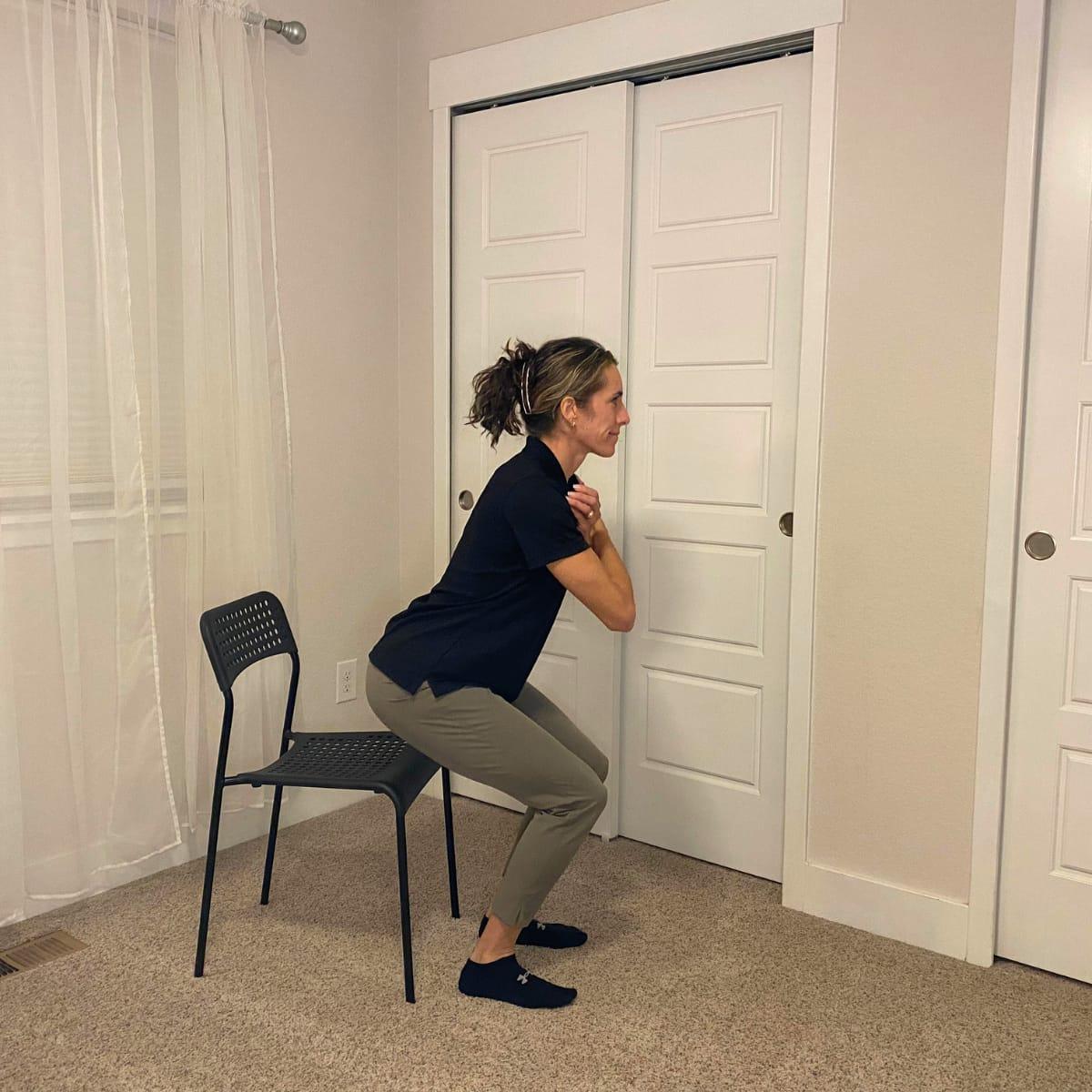
- Sit toward the front of a sturdy chair, raised with a firm cushion if you need it, feet flat and shoulder-width apart.
- Press through your heels to stand, thinking "glutes first," with your knees pointing the same way as your toes.
- Lower slowly back down. Don't collapse into the chair.
- Make it easier
- Add a firm cushion to raise the seat, and push off with your hands.
- Make it harder
- Use a standard-height chair, then cross your arms.
Lower the seat a little every week or two as it gets easier. Getting up from a standard chair without your hands is a great goal, and the 30-second chair stand test is how to track it.
Glute Bridge
8–10, holding 3–5 seconds
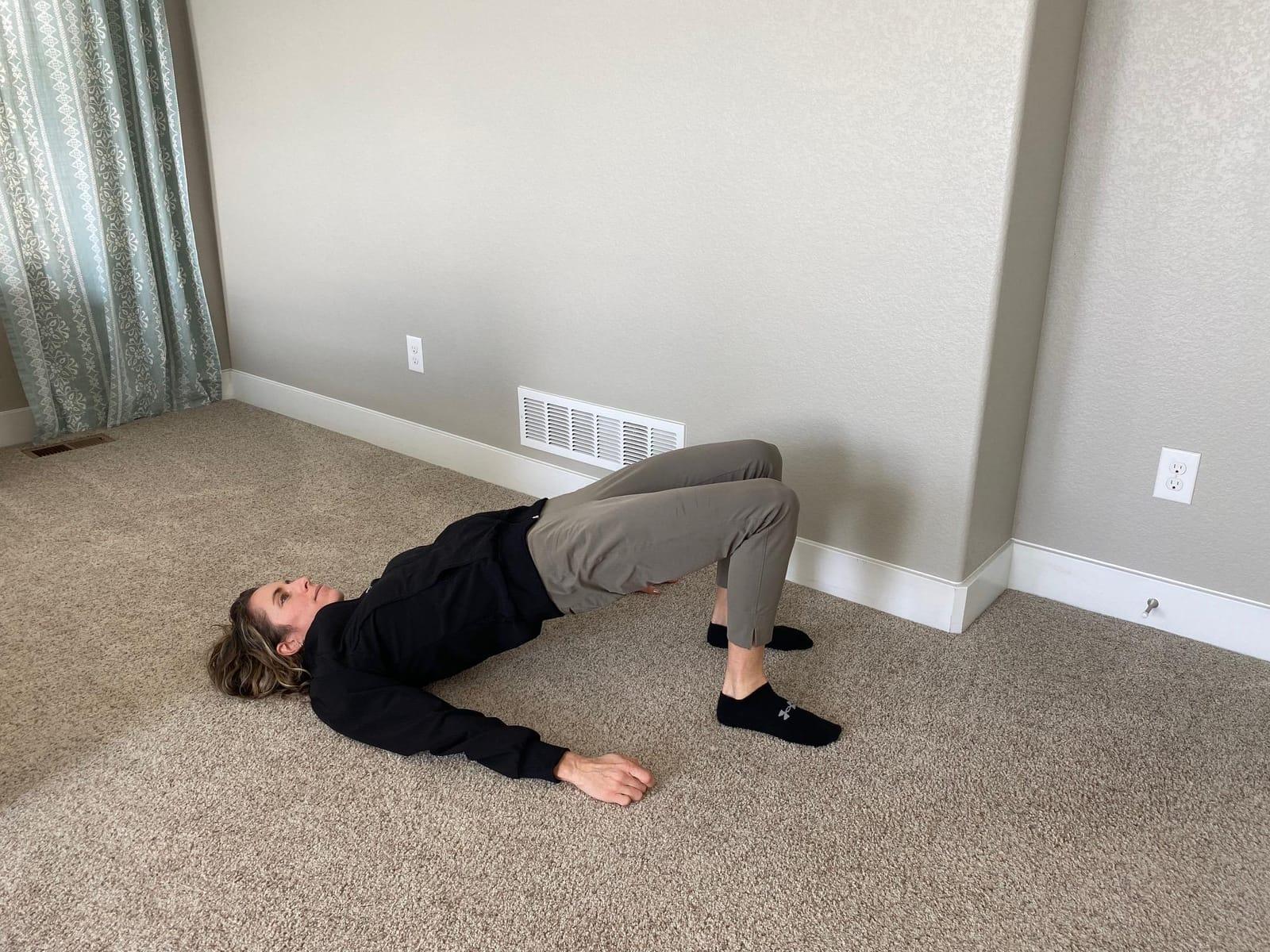
- Lie on your back with your knees bent and feet flat, hip-width apart.
- Squeeze your glutes and lift your hips until your body makes a line from shoulders to knees.
- Hold, then lower slowly.
- Make it easier
- Lift your hips just an inch or two.
- Make it harder
- Hold for 10 seconds, or march your feet slowly while you hold.
Side Leg Raise
8–10 each leg
- Stand tall behind a sturdy chair or at a counter, holding on.
- Keeping your toes forward and your body upright, lift one leg out to the side.
- Lower slowly without leaning, then switch legs.
- Make it easier
- Make the lift smaller.
- Make it harder
- Hold the top for 2 seconds, or add a light ankle weight.
Heel Raises
10–15
- Stand holding a counter or chair back, feet hip-width apart.
- Rise onto the balls of your feet.
- Lower slowly.
- Make it easier
- Rise only partway.
- Make it harder
- Pause at the top for 2 seconds, or do one leg at a time.
Stage 3: Load It
These moves look most like daily life: stairs, curbs and getting in and out of the car.
Step-Up
8–10 each leg
- Stand facing the bottom step of a staircase, holding the railing.
- Step up with one foot, pressing through the whole foot to straighten that leg and bring the other foot up.
- Step back down slowly with the same leg, then repeat. Switch legs.
- Make it easier
- Use the lowest step and hold the railing with both hands.
- Make it harder
- Use a higher step, or hold a light weight in your free hand.
Mini Squat at the Counter
8–10, 2–3 rounds
- Stand facing a counter, hands resting on it, feet shoulder-width apart.
- Push your hips back and bend your knees as if starting to sit, keeping your knees over your toes.
- Stand back up, squeezing your glutes at the top.
- Make it easier
- Bend just a few inches.
- Make it harder
- Go a little lower, or hold the bottom for 3 seconds.
Add the suitcase carry here too: carrying a grocery bag in one hand while you walk is a great way to load the legs and challenge your balance in a way that feels like real life.
How Often Should You Do Knee Exercises?
Two to three times a week for the strengthening moves, with a day in between. More frequent programs tend to work better,7 so if three sessions feel good, that's ideal. The Stage 1 moves are gentle enough to do daily, and many people like them first thing in the morning to ease stiffness.
Each time, aim for the last couple of reps of each exercise to feel hard, while your knee pain stays in the green or yellow zone. When that's easy, add reps, slow down, add a little weight or move up a stage.
Is Walking Good for Knee Arthritis?
For most people, yes. In a study of 1,788 people with or at risk of knee arthritis, every extra 1,000 steps a day was linked to a lower risk of developing problems with daily activities over two years, and about 6,000 steps a day was a useful threshold.9 That was an observational study, so it shows a link rather than proof, but it's encouraging.
If walking flares your knees, build up slowly, choose flat routes and supportive shoes, and mix in lower-impact options like a stationary bike or water exercise. Our walking guide has a gradual plan.
Is Tai Chi Good for Knee Arthritis?
It can be. The American College of Rheumatology guideline strongly recommends tai chi for knee arthritis.3 In a trial of 204 people with knee arthritis, 12 weeks of tai chi twice a week improved pain and function about as much as standard physical therapy, with extra benefits for mood.10 If you enjoy it, it's a lovely way to combine gentle leg strengthening with balance. Our balance guide has more on tai chi and how to find a class.
Facing a Knee Replacement?
Getting stronger before surgery helps. A review of 35 trials found that exercise and education before a knee replacement led to better function and thigh strength afterward and a shorter hospital stay.11 Our trainers work with people before a knee or hip replacement, after they come home and once physical therapy ends.
My mom, Julie, is a good example of what's possible after a joint replacement. She calls her replaced hip one of her better joints now. Read her story in strong at 75 after a hip replacement.
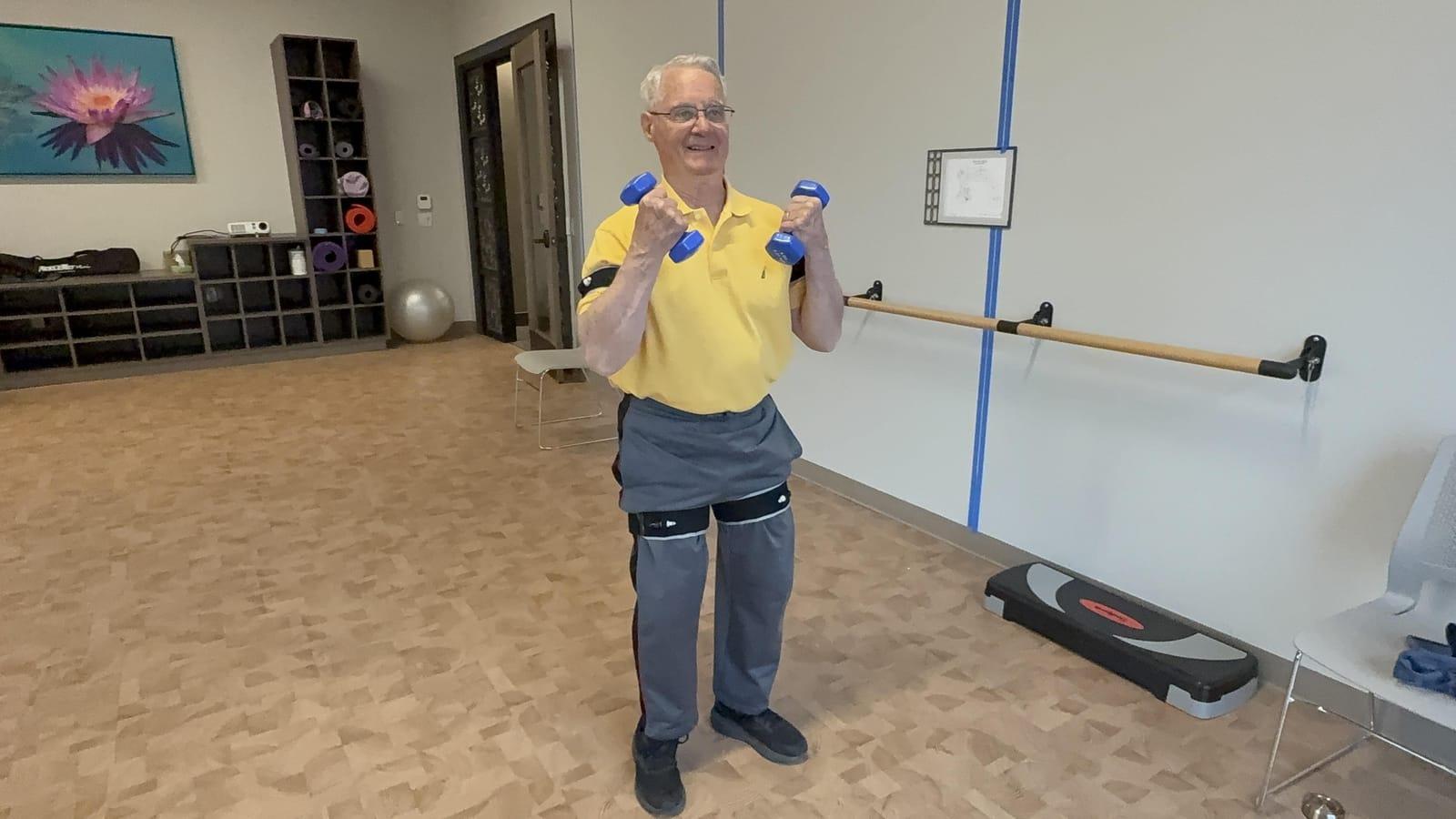
And if heavy weights bother your knees, blood flow restriction training is one option for building strength with light loads. One of our clients, Pat, trained his legs this way at 82 without making his knee arthritis worse. He shares his results in can you get stronger at 82?
Should You See a Physical Therapist or a Trainer?
If your knee is newly injured, recently operated on, or not improving, start with your doctor or a physical therapist. Once you have a diagnosis and you're cleared to exercise, a trainer who specializes in older adults can help you build strength over the long term. Our guide to choosing a trainer or a physical therapist explains when you need which.
This guide is for general education and isn't medical advice. Please talk with your doctor before starting a new exercise, nutrition or supplement routine.
Read more from Kristen
Body
3 Daily Moves to Protect Your Joints as You Age
Exercise is one of the best tools for easing arthritis symptoms. Try these 3 simple daily moves for your knees, hips and ankles, plus a hydrating snack.
May 24, 2025 · 3 min read
Recovery · Body
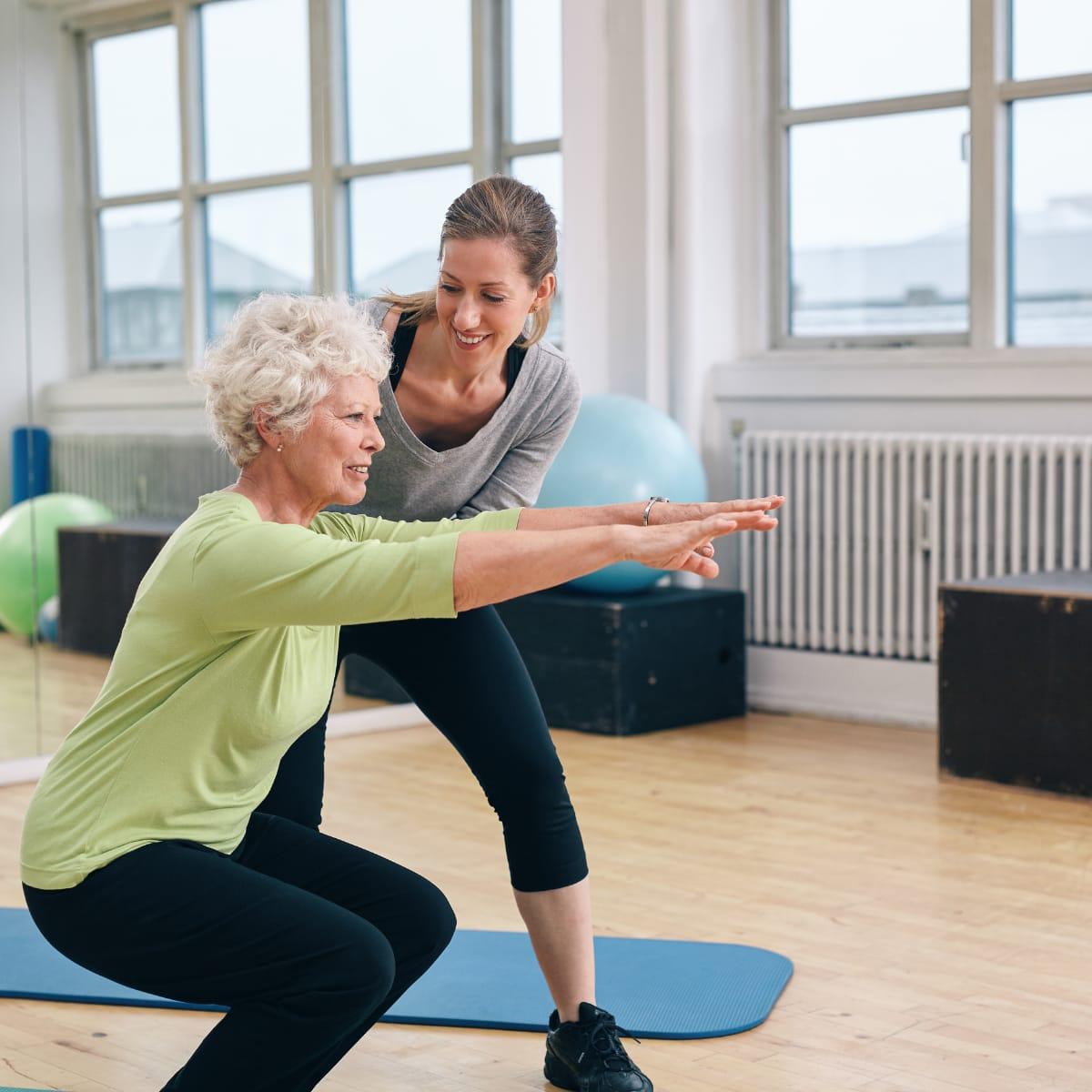
How to Rebuild Strength After an Injury Over 60
Coming back from an injury after 60? Six steps to rebuild strength safely, from respecting healing time and easing back into load to using pain as a guide.
July 12, 2025 · 3 min read
Stories · Body
Can You Get Stronger at 82? Pat's BFR Training Results
In 13 blood flow restriction (BFR) sessions, 82-year-old Pat got stronger in every measured category using light weights. Here are his results.
May 16, 2026 · 4 min read
Body
What Is Blood Flow Restriction (BFR) Training?
Blood flow restriction (BFR) training builds muscle with very light weights. How it works, what the research says, and why it may be kinder to joints.
February 21, 2026 · 2 min read

Body · Balance
Glute Exercises for Seniors: Why Strong Glutes Matter
Strong glutes protect your back and knees, steady your balance and make stairs easier. Try the seated glute squeeze and a "glutes first" habit.
November 8, 2025 · 2 min read

Stories
Strong at 75 After a Hip Replacement: Julie's Story
For Mother's Day, Kristen interviews her first and longest-standing client, her mom Julie, on hip replacement, consistency and being strong at 75.
May 10, 2025 · 5 min read
Frequently asked questions
Are squats bad for your knees?
Not when they're matched to what your knee can handle. A squat is simply the movement you use to sit down and stand up, and keeping it strong is one of the best things you can do for your knees.
Start by sitting down to and standing up from a higher seat, keep your weight in your heels, and only go as low as stays within the green or yellow zone of the pain scale. Lower the seat gradually over weeks.
Should I rest my knee or keep moving when it hurts?
For everyday arthritis aches, keep moving, but adjust. Complete rest tends to leave the muscles weaker and the joint stiffer. Choose gentler versions, a smaller range or fewer reps for a few days, and use the pain scale to guide you.
A new injury, a hot or very swollen knee, or a knee that locks or gives way is different: get it checked before you exercise it.
How long does it take for exercise to help knee pain?
Most people need several weeks of consistent work. In one study, people with knee and hip arthritis averaged 3.6 out of 10 for pain at the start of an 8-week exercise program and 2.6 at the end, and the pain flares after each session got smaller as the weeks went on.
Give a program at least 8 to 12 weeks, two or three times a week, before you judge it.
Should I wear a knee brace when I exercise?
Some people with knee arthritis find a brace helpful, and the American College of Rheumatology guideline recommends knee braces for some people with knee arthritis. A brace is a support, not a substitute for strengthening the muscles around the knee.
Ask your doctor or physical therapist which kind, if any, suits your knee.
Sources
- Lawford BJ, Hall M, Hinman RS, et al. Exercise for osteoarthritis of the knee. Cochrane Database Syst Rev. 2024;12(12):CD004376. doi:10.1002/14651858.CD004376.pub4 View source
- Fransen M, McConnell S, Harmer AR, Van der Esch M, Simic M, Bennell KL. Exercise for osteoarthritis of the knee. Cochrane Database Syst Rev. 2015;1(1):CD004376. doi:10.1002/14651858.CD004376.pub3 View source
- Kolasinski SL, Neogi T, Hochberg MC, et al. 2019 American College of Rheumatology/Arthritis Foundation guideline for the management of osteoarthritis of the hand, hip, and knee. Arthritis Care Res (Hoboken). 2020;72(2):149-162. doi:10.1002/acr.24131 View source
- Bannuru RR, Osani MC, Vaysbrot EE, et al. OARSI guidelines for the non-surgical management of knee, hip, and polyarticular osteoarthritis. Osteoarthritis Cartilage. 2019;27(11):1578-1589. doi:10.1016/j.joca.2019.06.011 View source
- Ageberg E, Link A, Roos EM. Feasibility of neuromuscular training in patients with severe hip or knee OA: the individualized goal-based NEMEX-TJR training program. BMC Musculoskelet Disord. 2010;11:126. doi:10.1186/1471-2474-11-126 View source
- Thomeé R. A comprehensive treatment approach for patellofemoral pain syndrome in young women. Phys Ther. 1997;77(12):1690-1703. doi:10.1093/ptj/77.12.1690 View source
- Juhl C, Christensen R, Roos EM, Zhang W, Lund H. Impact of exercise type and dose on pain and disability in knee osteoarthritis: a systematic review and meta-regression analysis of randomized controlled trials. Arthritis Rheumatol. 2014;66(3):622-636. doi:10.1002/art.38290 View source
- Bennell KL, Hunt MA, Wrigley TV, et al. Hip strengthening reduces symptoms but not knee load in people with medial knee osteoarthritis and varus malalignment: a randomised controlled trial. Osteoarthritis Cartilage. 2010;18(5):621-628. doi:10.1016/j.joca.2010.01.010 View source
- White DK, Tudor-Locke C, Zhang Y, et al. Daily walking and the risk of incident functional limitation in knee osteoarthritis: an observational study. Arthritis Care Res (Hoboken). 2014;66(9):1328-1336. doi:10.1002/acr.22362 View source
- Wang C, Schmid CH, Iversen MD, et al. Comparative effectiveness of tai chi versus physical therapy for knee osteoarthritis: a randomized trial. Ann Intern Med. 2016;165(2):77-86. doi:10.7326/M15-2143 View source
- Moyer R, Ikert K, Long K, Marsh J. The value of preoperative exercise and education for patients undergoing total hip and knee arthroplasty: a systematic review and meta-analysis. JBJS Rev. 2017;5(12):e2. doi:10.2106/JBJS.RVW.17.00015 View source
- National Health Service. Knee pain. View source
- MedlinePlus. Knee pain. U.S. National Library of Medicine. View source
- Sandal LF, Roos EM, Bøgesvang SJ, Thorlund JB. Pain trajectory and exercise-induced pain flares during 8 weeks of neuromuscular exercise in individuals with knee and hip pain. Osteoarthritis Cartilage. 2016;24(4):589-592. doi:10.1016/j.joca.2015.11.002 View source
This guide is for general education and isn't medical advice. Please talk with your doctor before starting a new exercise, nutrition or supplement routine. See our health disclaimer.

About the author
Kristen Nielsen
Kristen founded TogetherWON after watching what strength training could do for older adults — including her own grandparents. She's an ACE Certified Personal Trainer with 10+ years in functional aging, a University of Central Florida graduate, and a former Division I swimmer and track & field athlete.
Senior Fitness Specialist · Functional Aging Specialist · Parkinson's Disease Specialist · Brain Health Trainer · Corrective Exercise Specialist
want these in your inbox?
Get my Saturday letters
One idea for your body, brain or balance each week, usually with a recipe. Unsubscribe any time.