Anabolic Resistance: Why Older Muscles Need More Protein
By Kristen Nielsen, Founder & Senior Fitness Specialist
· Nutrition & Body · 3 minute read

Part of our guide: Protein for Older Adults: How Much and How to Get It
Key takeaways
- Older muscles respond less to protein, a change called anabolic resistance, so it takes more protein to get the same muscle-building response.
- In one study, men around 71 needed about 0.40 g of protein per kg in a meal, versus about 0.24 g/kg for men around 22. At 150 pounds, that's about 27 grams versus 16.
- Many researchers now recommend 1.2–1.6 g per kg a day for healthy, active older adults, well above the 0.8 g/kg RDA.
- Spread protein through the day, and pair it with strength training: protein gives your body the building blocks, and strength training gives it the reason to use them.
Do you need more protein as you get older? Yes. Most people assume that as we get older, we probably need less food, and maybe less protein too. But when it comes to protein, the opposite may actually be true. As we age, our muscles become less responsive to the protein we eat. In other words, it takes a little more protein to get the same muscle-building response we had when we were younger. There's even a name for this: anabolic resistance. (For the full picture, including daily targets, see our guide to protein for older adults.)
How Much More Protein Do Older Muscles Need?
One study compared younger men, around age 22, with older men, around age 71. Researchers looked at how much protein it took in one meal to maximally stimulate muscle protein synthesis, the process your body uses to repair and build muscle.
The younger men needed about 0.24 grams of protein per kilogram of body weight, while the older men needed about 0.40 grams per kilogram. That's a pretty big difference. For someone who weighs 150 pounds, that would be roughly 16 grams of protein for the younger adult versus about 27 grams for the older adult to get a similar muscle-building response.
How Much Protein Do You Need Each Day After 60?
You'll hear different recommendations. The traditional RDA is only 0.8 grams per kilogram of body weight per day, but more recent research on aging and muscle tends to recommend more, often around 1.2–1.6 grams per kilogram per day for healthy, active older adults.
Some doctors and researchers who focus heavily on muscle and longevity go even higher. Dr. Peter Attia often talks about aiming for around 1 gram of protein per pound of body weight, and Dr. Gabrielle Lyon recommends a similar amount based on ideal body weight. Andrew Huberman has also discussed these higher protein targets when talking about maintaining muscle as we age.
I don't think everyone needs to obsess over hitting one perfect number. But I do think the bigger message is important:
Protein shouldn't become less important as we get older. It should become more important, especially if we want to hang onto our muscle.
How Can You Add More Protein Through the Day?
This is where I see people struggle. Breakfast might be toast and coffee. Lunch might be a small salad. Then dinner is the first time there's really much protein on the plate.
Instead, try thinking about protein throughout the day:
- Could you add eggs or Greek yogurt at breakfast?
- Chicken or tuna at lunch?
- Cottage cheese as a snack?
- Beans or lentils with dinner?
Those small additions can make a pretty big difference by the end of the day. If your appetite is small, these tips on how to eat more protein when you're not hungry can help.
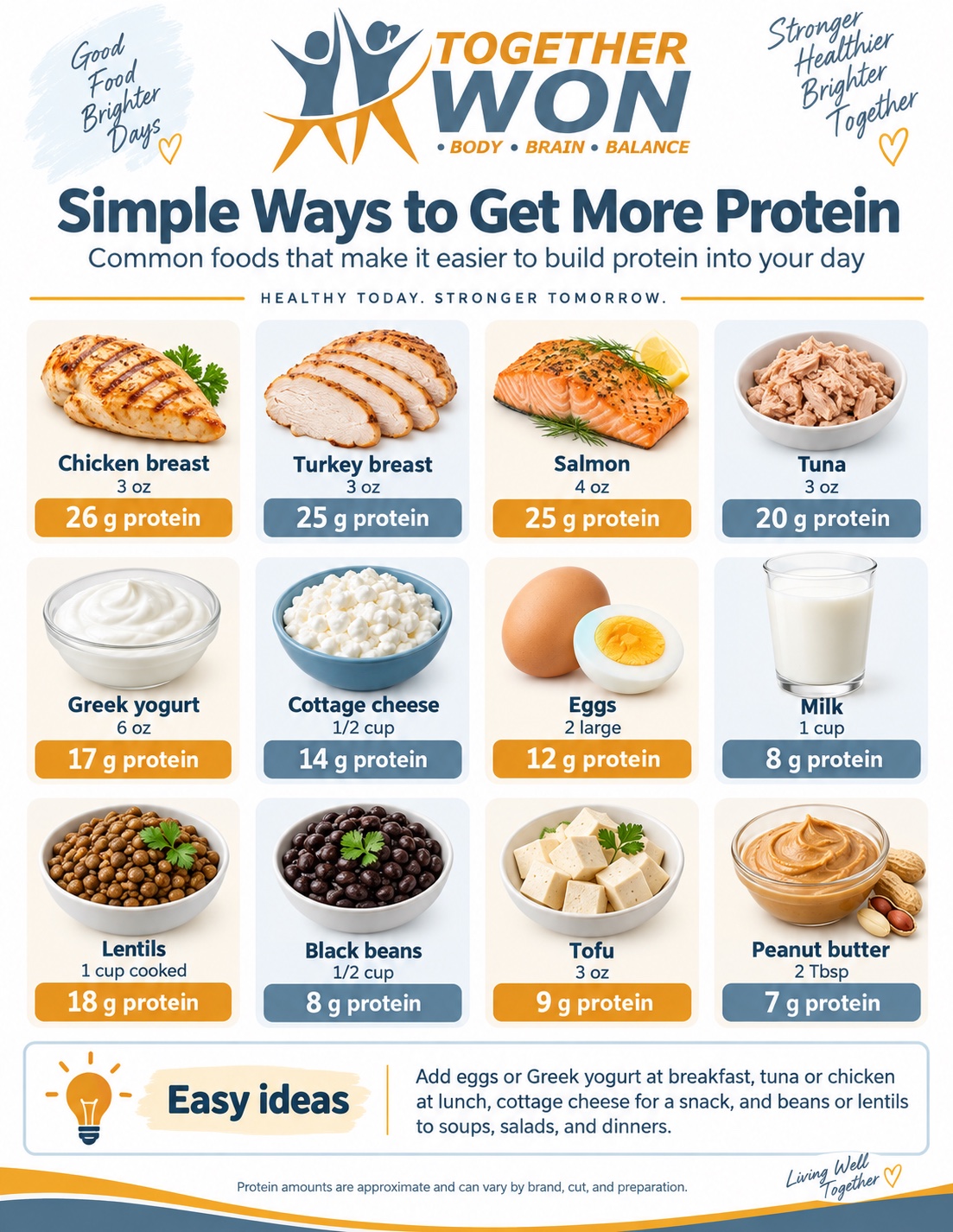
My handout, Simple Ways to Get More Protein, shows the protein content of foods you're probably already eating, so you can quickly see where you might be able to add a little more.
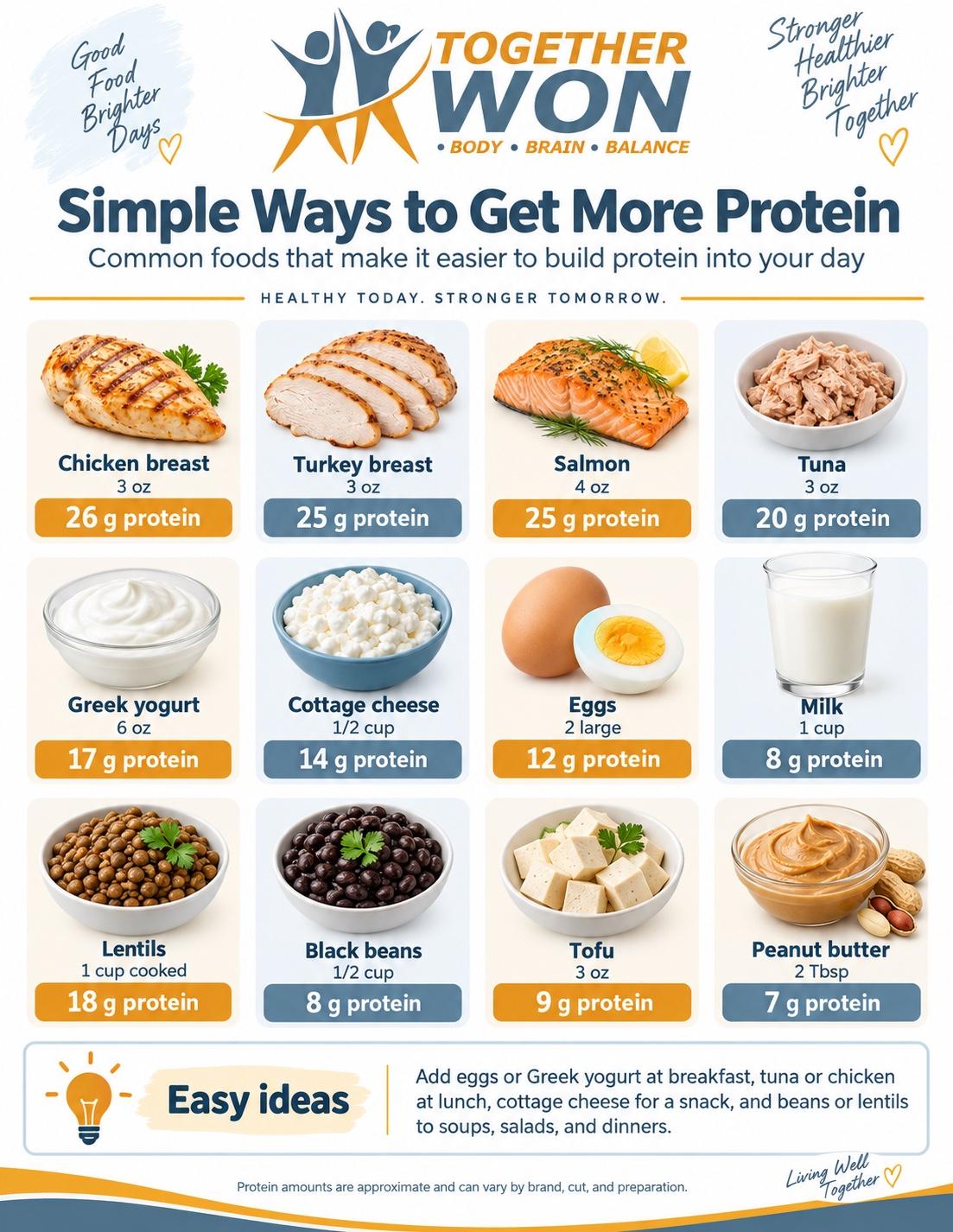
Open the protein chart full size to save or print it
Why Do You Need Strength Training Too?
Protein gives your body the building blocks for muscle, but strength training gives your body the reason to use them. We need both. Our guide to strength training for seniors is a good place to start, or work with a trainer through in-person personal training.
If you have kidney disease or another medical condition that affects how much protein you should eat, talk with your doctor or dietitian before significantly increasing your intake.
Kristen
Try the recipe: For an easy high-protein lunch or dinner with all the flavor of pizza, try this cottage cheese pizza bowl — get the recipe.
Sources
- Moore DR, Churchward-Venne TA, Witard O, et al. Protein ingestion to stimulate myofibrillar protein synthesis requires greater relative protein intakes in healthy older versus younger men. J Gerontol A Biol Sci Med Sci. 2015;70(1):57-62. View source
- Traylor DA, Gorissen SHM, Phillips SM. Perspective: Protein requirements and optimal intakes in aging: are we ready to recommend more than the recommended daily allowance? Adv Nutr. 2018;9(3):171-182. View source
This article is for general education and isn't medical advice. Please talk with your doctor before starting a new exercise, nutrition or supplement routine. See our health disclaimer.


About the author
Kristen Nielsen
Kristen founded TogetherWON after watching what strength training could do for older adults — including her own grandparents. She's an ACE Certified Personal Trainer with 10+ years in functional aging, a University of Central Florida graduate, and a former Division I swimmer and track & field athlete.
Senior Fitness Specialist · Functional Aging Specialist · Parkinson's Disease Specialist · Brain Health Trainer · Corrective Exercise Specialist
want these in your inbox?
Get my Saturday letters
One idea for your body, brain or balance each week, usually with a recipe. Unsubscribe any time.
Keep reading
Body · Nutrition
GLP-1s and Muscle Loss: What Strength Training Can Do
A trainer's look at GLP-1 medications like Ozempic and Zepbound — how much lean mass is lost, and why strength training and protein matter.
August 22, 2026 · 4 min read

Nutrition · Body
How to Avoid Blood Sugar Spikes: Simple Glucose Tips
How you eat, not just what you eat, shapes blood sugar. Simple glucose hacks like veggies first and a walk after meals can steady energy and cut cravings.
September 13, 2025 · 3 min read

Body · Nutrition
The COMB Study: Can Supplements Raise Bone Density?
What the COMB micronutrient study found about bone density, and how resistance training, impact exercise and balance work can build on it.
May 31, 2025 · 3 min read