Brain Exercises for Seniors: Build Cognitive Reserve
By Kristen Nielsen, Founder & Senior Fitness Specialist
· Updated · Brain & Body · 3 minute read

Part of our guide: Exercise for Brain Health After 60
Key takeaways
- The best brain exercises for seniors pair movement with a mental challenge, like counting back by 3's while standing up from a chair, to build cognitive reserve.
- Brain health is fluid, not fixed, and it is shaped by exercise, sleep, stress, nutrition and environment.
- Cognitive reserve helps your brain stay resilient as you age, and you can build it at any age regardless of your risk factors.
The best brain exercises for seniors combine movement with a mental challenge, because pairing the two is one of the most powerful ways to build cognitive reserve. That's why brain training is a key part of how I think about exercise for brain health.
Brain health refers to the overall well-being and functioning of the brain, including the ability to think clearly, remember things, learn, and manage emotions. It involves maintaining mental sharpness, emotional balance, and preventing cognitive decline as we age. Brain training is a key component of my training practice because the health of the brain impacts the entire body. It's important to note that brain health is fluid, not fixed.
Can You Improve Your Brain Health as You Age?
Yes, because brain health is fluid, not fixed. Our brains are impacted by many of the same factors that affect blood pressure:
- Exercise
- Sleep
- Stress
- Nutrition
- Environment
Understanding how these factors affect our brains also brings the empowering realization that we can influence our brain health! While the brain's ability to change decreases with age, we can still actively promote change and build what's known as "cognitive reserve."
What Is Cognitive Reserve?
Cognitive reserve is the brain's capacity to handle challenges like aging or injury by using alternative methods to maintain normal thinking and memory functions. It helps the brain stay resilient and adaptable over time. When our cognitive reserve is high, our brain can function at a higher level even when faced with natural aging, brain injury, or diseases such as dementia.
How Do You Build Cognitive Reserve?
Most people know that doing puzzles like Sudoku can help build cognitive reserve. However, many don't realize that exercise is also a highly effective way to boost brain function. Best of all, when you combine mental and physical exercises, it becomes the most powerful way to build cognitive reserve. This is because pairing movement with mental challenges creates the most new neural pathways!
5 Brain and Body Exercise Ideas
For a step-by-step example, try the Rule-Switch March. Here are more ideas:
- Stand up and down in a chair while counting back by 3's
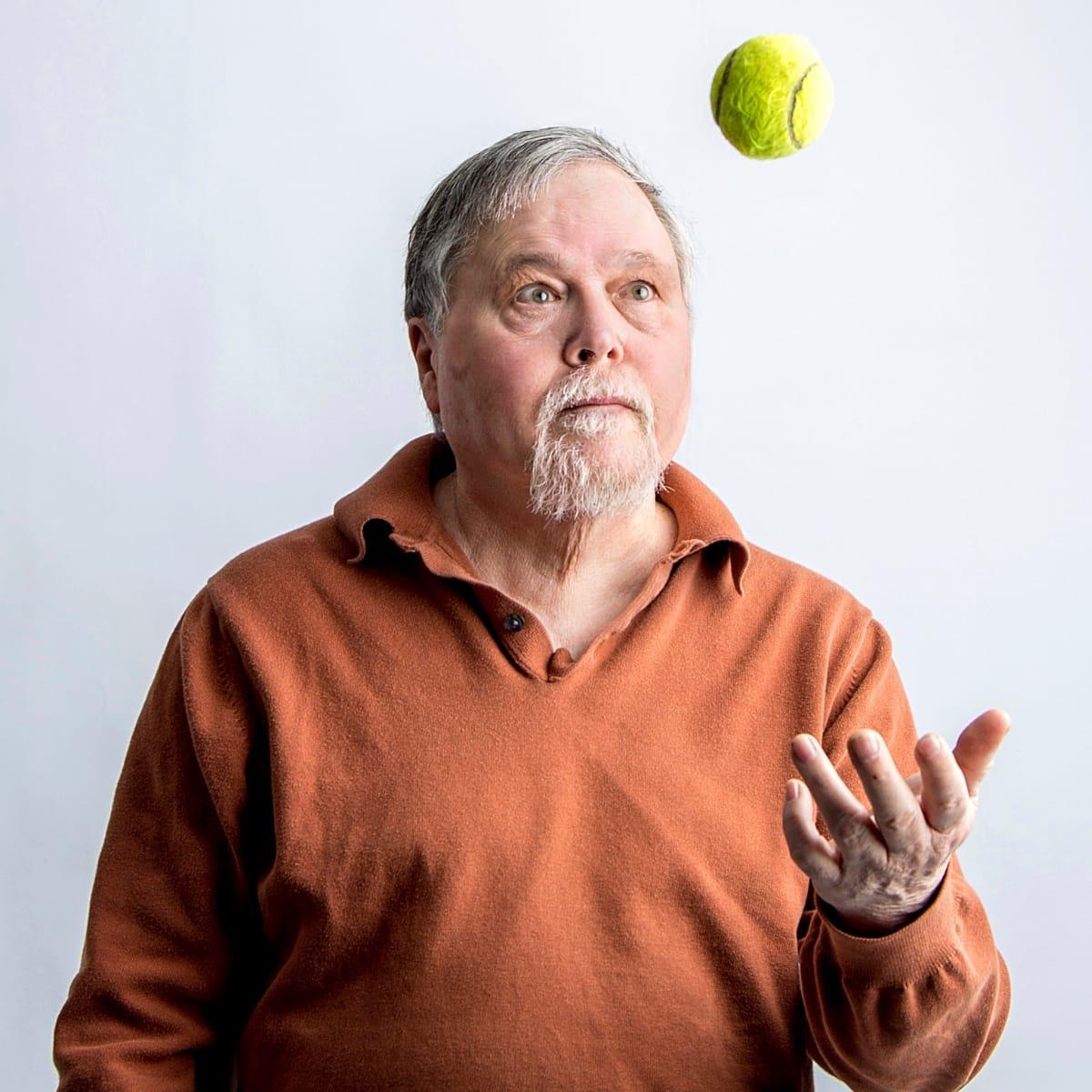
- Toss and catch a ball while marching in place
- Assign different exercises to a number and have someone call off the numbers while you do the exercises (ex. curls = 1, squat = 2, side-arm raise = 3)
- Memorize a poem or scripture while walking
- Call off as many items as you can in a category while doing overhead presses (ex. category = capital cities)
Challenging the Brain Using Fun Technology
One of the fun, brain-challenging tools I use with my in-home personal training clients are "Rox Pro" lighted pods. I program the pods to create various mental and physical challenges. They can also be purchased for personal use. If you're interested, check out the following links:
It's Never Too Late to Build Cognitive Reserve
Regardless of your risk factors for cognitive decline, you have the power to strengthen your cognitive reserve. Start incorporating brain and body exercises, like these dual-task walking exercises, and take control of your brain health!
Questions for the Trainer
What's the best strength exercise for adults over 60?
A "best" exercise always depends on the individual and their abilities. That being said, a fantastic exercise for most people over 60 is the sit-to-stand exercise. It's simple, functional, and helps build strength in the legs, glutes, and core, which is essential for daily activities like standing up from a chair or bed. Our free 30-second chair stand test uses the same movement to measure your leg strength.
How to Do It
- Start seated in a sturdy chair, feet flat on the ground, and shoulder-width apart.
- Engage your core and press through your heels to stand up, keeping your back straight.
- Slowly lower yourself back down to a seated position, with control. Repeat 10–15 times, several times a day.
- Hold a heavy object in your hands for added challenge.
Benefits
- Improves leg strength, balance, and mobility.
- Helps maintain independence in daily tasks.
- Requires no equipment and is easy to do anywhere.
For additional strength, exercises like lunges, modified push-ups, and resistance band exercises are also great options!
Kristen
Try the recipe: In honor of my hummus-loving husband, Aaron, here's my homemade hummus — get the recipe.
Sources
- Stern Y. Cognitive reserve in ageing and Alzheimer's disease. Lancet Neurol. 2012;11(11):1006-1012. View source
- Gheysen F, Poppe L, DeSmet A, et al. Physical activity to improve cognition in older adults: can physical activity programs enriched with cognitive challenges enhance the effects? A systematic review and meta-analysis. Int J Behav Nutr Phys Act. 2018;15(1):63. View source
- Centers for Disease Control and Prevention. Physical activity benefits for adults 65 or older. Updated December 4, 2025. View source
This article is for general education and isn't medical advice. Please talk with your doctor before starting a new exercise, nutrition or supplement routine. See our health disclaimer.


About the author
Kristen Nielsen
Kristen founded TogetherWON after watching what strength training could do for older adults — including her own grandparents. She's an ACE Certified Personal Trainer with 10+ years in functional aging, a University of Central Florida graduate, and a former Division I swimmer and track & field athlete.
Senior Fitness Specialist · Functional Aging Specialist · Parkinson's Disease Specialist · Brain Health Trainer · Corrective Exercise Specialist
want these in your inbox?
Get my Saturday letters
One idea for your body, brain or balance each week, usually with a recipe. Unsubscribe any time.
Keep reading

Brain · Body
Music and Movement: A Brain-Body Workout to a Song
Pick a favorite song and let it set your pace. This simple music-and-movement workout challenges your brain and body at any fitness level.
September 12, 2026 · 2 min read
Brain · Body
Brain-Body Exercises for Seniors: The Rule-Switch March
Brain-body exercises pair movement with a mental challenge. Try the Rule-Switch March, a simple standing or seated drill for focus and balance.
July 11, 2026 · 3 min read

Brain · Body
What Super Agers Teach Us About Brain Health
A Nature study found super agers over 80 have more immature neurons in the hippocampus. What that means, and why we train body and brain together.
April 18, 2026 · 2 min read