How Gratitude Benefits Your Heart, Sleep and Health
By Kristen Nielsen, Founder & Senior Fitness Specialist
· Updated · Recovery · 3 minute read


Part of our guide: Recovery After 60: Rest, Sleep and Stress
Key takeaways
- Gratitude is linked to better heart health, better sleep and longer life. In a 2024 Nurses' Health Study analysis, the most grateful women had a 9% lower risk of death than the least grateful.
- In a 2009 study, people with higher gratitude fell asleep faster, slept longer and reported better sleep quality.
- Simple ways to practice gratitude include writing down three things you're thankful for each day, thanking someone who has impacted you, and giving thanks in prayer.
Gratitude does more than lift your mood. Research links it to healthier heart rhythms, better sleep and a lower risk of dying from cardiovascular disease, which makes it a simple tool for recovery, sleep and stress after 60.
As I take time to consider my blessings, I often feel overwhelmed by the abundance in my life — and I imagine many of you feel the same.
Many of us are familiar with scriptures like 1 Thessalonians 5:18: "Give thanks in all circumstances..." But have you ever stopped to consider why we are encouraged to practice gratitude? It's incredible to see how gratitude impacts more than just our emotional and spiritual well-being. Modern science is uncovering that gratitude has profound effects on our physical health as well. Studies now suggest that gratitude can tangibly and measurably enhance our overall well-being. Let's dive into some of these remarkable connections between gratitude and health!
Is Gratitude Good for Your Heart?
Several studies suggest it is.
Heart rate variability and blood pressure: A 2016 study in Psychosomatic Medicine found that gratitude journaling was linked to improved heart rate variability and lower markers of inflammation in people with early heart failure, and another study found that a brief gratitude practice lowered diastolic blood pressure. This aligns with broader evidence on gratitude activating the parasympathetic nervous system, reducing stress on the heart.
Gratitude and cardiovascular health: Research from the Nurses' Health Study, published in JAMA Psychiatry in 2024, found that women with the highest gratitude levels had a 9% lower risk of all-cause mortality than those with the lowest, with cardiovascular disease showing the most significant reduction. Gratitude was also associated with improved heart health even when controlling for other factors like lifestyle and mental health.
Enhanced cardiovascular function via positive emotions: A study in Applied Psychology showed that positive emotional states, like gratitude, directly benefit cardiovascular health by reducing systemic inflammation and supporting heart health. The research emphasizes gratitude's ability to mitigate stress, a key factor in hypertension.
Does Gratitude Help You Sleep Better?
It seems to. According to a 2009 study in the Journal of Psychosomatic Research, people with higher levels of gratitude fell asleep faster, slept longer, and reported better sleep quality.

If you often wake in the night, here's what to do when you wake up at night.
Enhanced Immune Function
A study from Psychological Science suggests that positive emotions, including gratitude, can strengthen the immune system, making the body more resilient to illness.
Longevity and Emotional Resilience
The Harvard T.H. Chan School of Public Health noted that gratitude fosters emotional resilience, which can positively influence physical health and lifespan. Their study linked higher gratitude to a lower risk of death, especially from cardiovascular disease.
How Can You Practice Gratitude Every Day?
A few small habits make gratitude part of your routine.

Start a gratitude journal: Write down three things you're thankful for each day. Review what you've written on a regular basis.
Express gratitude to others: Take time to thank someone who has positively impacted your life. This makes a big impact on both of you! Gratitude and connection go hand in hand, and social connection is a strong predictor of longevity too. It's one reason I love the encouragement in small group training.
Incorporate gratitude into prayer: Use prayer time as a time to thank God for blessings, big and small.
Practice ongoing gratitude: Take moments throughout your day to pause and notice the beauty around you — a sunrise, a kind gesture, or even the simple act of breathing. If you find it challenging to feel grateful, try setting a timer on your phone or watch as a gentle reminder to practice gratitude periodically throughout the day.
Gratitude is more than just a fleeting feeling; it's a powerful practice that can transform your health and outlook on life.
As modern science affirms the timeless wisdom of scripture, we see that cultivating gratitude benefits both body and soul!
Kristen
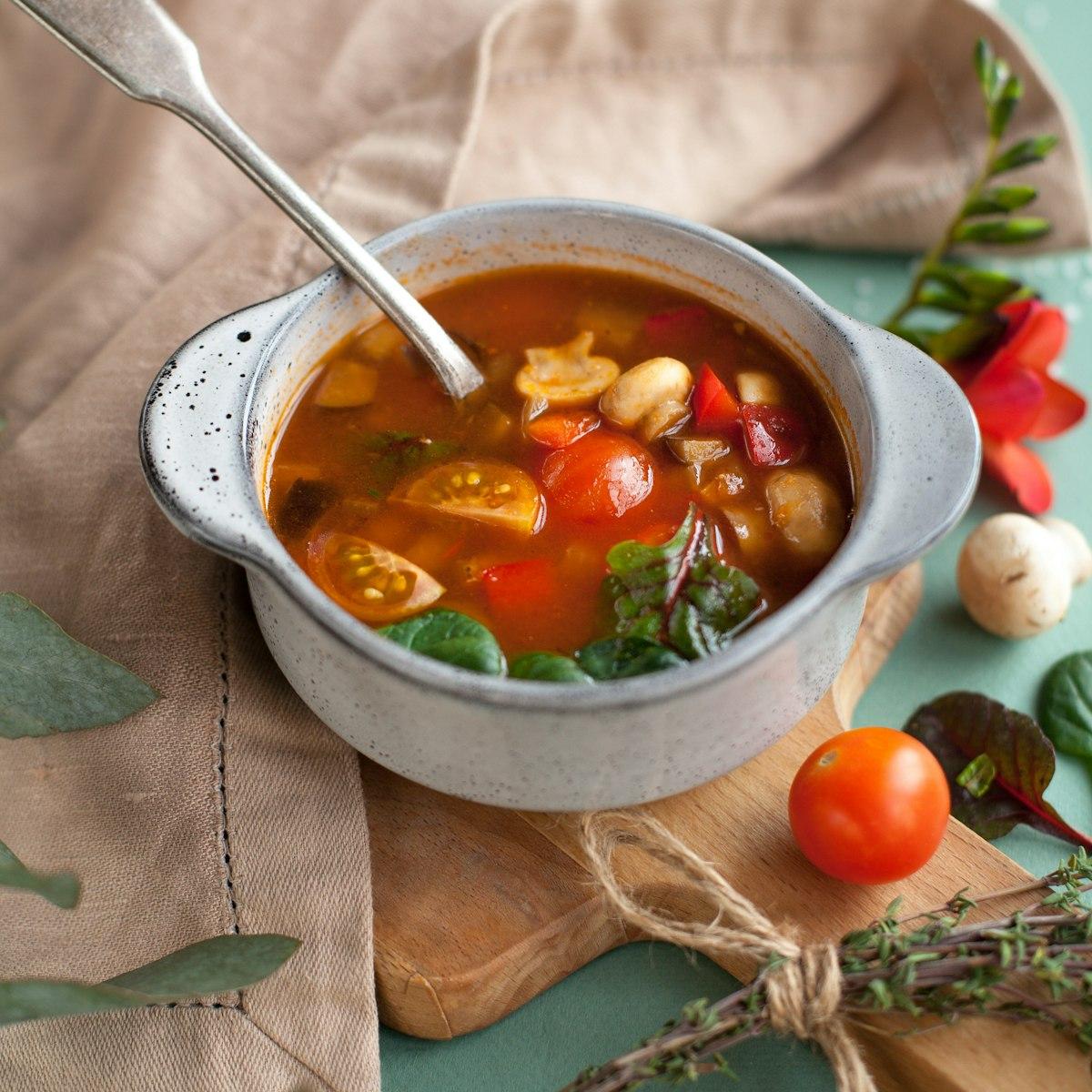
Try the recipe: This turkey and vegetable soup is a healthy and delicious way to use up leftover turkey — get the recipe.
Sources
- Redwine LS, Henry BL, Pung MA, et al. Pilot randomized study of a gratitude journaling intervention on heart rate variability and inflammatory biomarkers in patients with stage B heart failure. Psychosom Med. 2016;78(6):667-676. View source
- Jackowska M, Brown J, Ronaldson A, Steptoe A. The impact of a brief gratitude intervention on subjective well-being, biology and sleep. J Health Psychol. 2016;21(10):2207-2217. View source
- Chen Y, Okereke OI, Kim ES, Tiemeier H, Kubzansky LD, VanderWeele TJ. Gratitude and mortality among older US female nurses. JAMA Psychiatry. 2024;81(10):1030-1038. View source
- Wood AM, Joseph S, Lloyd J, Atkins S. Gratitude influences sleep through the mechanism of pre-sleep cognitions. J Psychosom Res. 2009;66(1):43-48. View source
- Digdon N, Koble A. Effects of constructive worry, imagery distraction, and gratitude interventions on sleep quality: a pilot trial. Appl Psychol Health Well Being. 2011;3(2):193-206. View source
This article is for general education and isn't medical advice. Please talk with your doctor before starting a new exercise, nutrition or supplement routine. See our health disclaimer.

About the author
Kristen Nielsen
Kristen founded TogetherWON after watching what strength training could do for older adults — including her own grandparents. She's an ACE Certified Personal Trainer with 10+ years in functional aging, a University of Central Florida graduate, and a former Division I swimmer and track & field athlete.
Senior Fitness Specialist · Functional Aging Specialist · Parkinson's Disease Specialist · Brain Health Trainer · Corrective Exercise Specialist
want these in your inbox?
Get my Saturday letters
One idea for your body, brain or balance each week, usually with a recipe. Unsubscribe any time.
Keep reading
Recovery · Brain
Break the Stress Loop with a 60-Second Brain-Body Reset
When stress keeps replaying, movement that needs focus can interrupt the loop. Try this 60-second brain-body reset, seated or standing, to ease tension.
June 27, 2026 · 3 min read
Brain · Recovery
Gardening for Brain Health: Why a Little Dirt Helps
Gardening combines movement, planning, sunlight and purpose. Here's what research says about gardening, stress and dementia risk, and easy ways to start.
April 25, 2026 · 4 min read

Recovery
The Cyclic Sigh: A 1-Minute Breathing Exercise for Calm
The cyclic sigh is a simple breathing technique that calms your body's stress response. Here's how to do it, what the Stanford study found, and when to use it.
April 4, 2026 · 3 min read